Advent Calendar – Dec 8: Ernst

December 8th window: ‘Ernst‘ which translates as, well… Ernst.

What on earth is an Ernst you might wonder? Well, the question should rather be ‘who’ is Ernst.

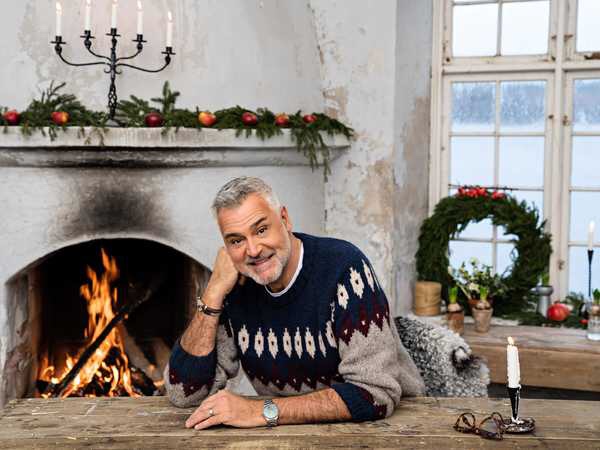
Ernst Kirschsteiger is a person who, by many, is considered to be Mr Christmas in Sweden. He is a very popular interior designer who hosts a show called Ernst’s Christmas.

In his program he simply explodes festive spirit. He decorates and bakes and creates. He wallpapers and chisels and hammers. He sews and paints and he crafts. I would describe his design ethic as a nature-oriented retro scandi chic. He has a poetic, philosophical attitude to interior design coupled with practical solutions.

One week he made, for example, Christmas decorations out of mandarin peel and wire and inspired us with a wreath of dried garden flowers, moss and brussel sprouts.

Some people find him very cheesy and goofy but he has definitely cornered the market on Christmas coziness. Many viewers see him as the idea of male perfection – a sensitive man who cooks, builds and decorates the home – all wrapped up in one sweet Christmas treat.

Since his tv debut in 2000, Ernst Kirschsteiger has grown to be a phenomena who only needs referring to by his first name, like Cher, Madonna and Prince. So popular is he that a book of his quotes and poetic wisdoms called ‘Ernstologi’ was released in 2006 and became a popular Christmas present that year.

If you want to witness the phenomena (in Swedish however), watch this YouTube clip and enjoy!

The ABC of Swedish town planning

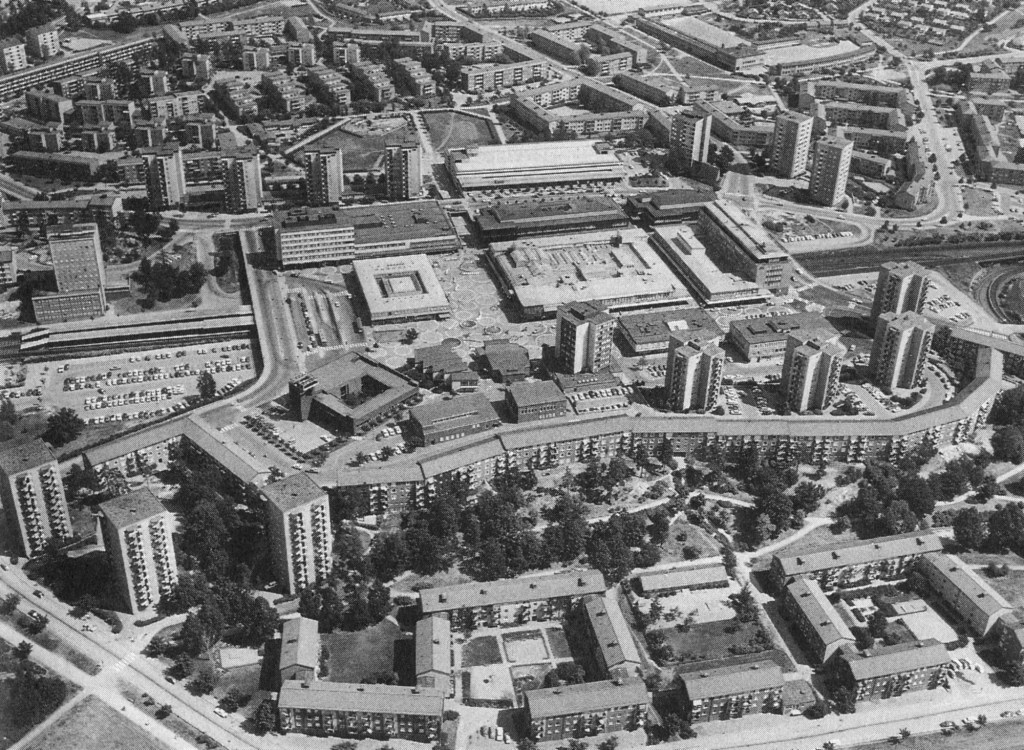
ABC is a concept in Swedish town planning, said to have been minted by Stockholm city planner Sven Markelius around 1952. ABC refers to the approach of building a suburb where modern families have easy access to work, dwelling and services, such as shops. A stands for ‘arbete’ (work), B stands for ‘bostad’ (accommodation) and C stands for ‘centrum’ (center for services and shops).

ABC city planning was introduced mid 1950’s and it expanded suburban Stockholm to the north and south. This growth was spurred on by the influx of people to the capital after the Second World War, and the severe shortage of accommodation.

In the original development plan from 1952, Markelius suggests that blocks of flats should be constructed within 450m of the centre, small houses should be built within 900m of the centre and light industry 600m from the centre. Everything should be built compactly in order to facilitate daily life for its 16000 residents. An underground system would connect the ABC suburb to the rest of the city and Stockholm’s downtown.

If you’d like to visit an ABC suburb, the two that are mostly still in tact are Vällingby to the north of Stockholm, and Farsta to the south.

Why does Sweden still need Pride?

This week is Stockholm Pride. It culminates on Saturday with a huge parade. The event has gone on for over 25 years, and some people question if it is still needed or relevant.

The answer, unfortunately, is more than ever.

But we’ll come to that later.

Currently there are 73 Pride festivals in Sweden during the year. From Arctic Pride way up in the north to Malmö Pride in the south, it is possible to celebrate throughout the year.

This indicates that many Swedes seem to have embraced the concept of Pride with open arms. There is, of course, a commercial benefit but the main reason seems to be that LGBTQI+ Pride resonates well with the societal Swedish values of equality, tolerance and acceptance.

However, like everything, it has its opponents.

Sweden’s current conservative government is in power, solely with the support of a right-wing populistic party. This party has consistently attacked LGBTQI+ people and the Pride movement.

This leads to aggressive counter demonstrations, homophobic, anti-Pride propaganda and personal physical attacks. LGBTQI+ people are still regularly abused, discriminated against and attacked in Sweden. It happened to a person I know in Stockholm just last week.

And if we lift our eyes to the broader world, we see examples of LGBTQI+ rights being restricted or removed, and same sex relations being criminalized and punishable with the death penalty. Human rights are under attack all throughout Europe, USA and many other countries.

At Stockholm Pride’s opening ceremony yesterday, we heard from a lesbian who is being deported to Uganda, just because she cannot prove she is ‘lesbian enough’ to stay in Sweden with her Swedish wife. She is being returned to imprisonment and possible death. If you’d like to know more about this specific case, see the petition here: https://www.mittskifte.org/petitions/urgent-appeal-to-stop-the-deportation-of-davita-nassuna-facing-lifetime-or-death-row-in-uganda

This is one of the many reasons why Pride is still needed, not only as a celebration, but as a political manifestation of human rights.

If you’d like to know where a Pride is near you, go to http://www.svenskapride.se which collects all the Swedish events in one place.

Swedish Monsters: 10) the Troll

When I was at the open-air museum Skansen, I heard a story about mythical creatures. This started me on a series of Swedish monsters. Today, I wrap the series up with one remaining creature – the Troll!

Today – the Troll

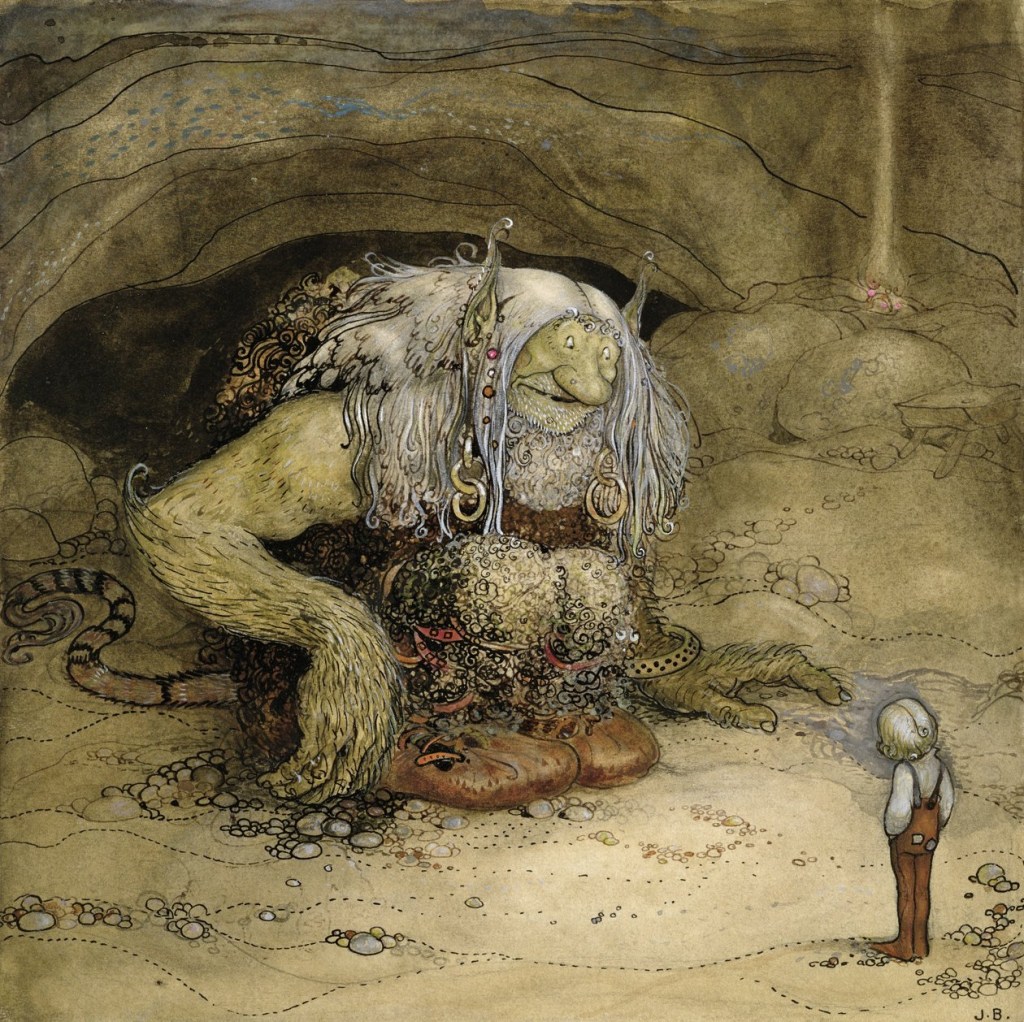
The trolls in Scandinavian legend are not the same as the cute shock-haired characters in the animated movies that came out in the late 2010’s. Oh no, they are something altogether more sinister.

According to legend, trolls are described as being extremely old, hairy, very strong, with bulging eyes and large noses. Some are giants and some are dwarves. They are depicted as slow and dim-witted. They are voracious – feared for eating livestock, and children.

However, noticing a troll isn’t always easy. Trolls can actually take the shape of anything, including human beings. Sometimes they have a tail that they hide under their clothes. They reside far away from human habitation but frequently kidnap people and overrun farmsteads and human dwellings.

Living in forests, mountains and caves, trolls are said to fear iron and steel. Placing items made of those materials on your threshold prevents them from entering.

Trolls are also said to turn to stone in the sunlight. Luring them out of their hideaways and into the light is a way to get rid of them. Petrified trolls are associated with stony Scandinavian landmarks such as Trolltungen (troll tongue) Trollstigen (troll path), Trollveggen (troll wall) and Trollberget (troll mountain).

Trolls have been sighted everywhere in Sweden – from Värmland to Småland, Norrland to Skåne. So be careful this summer when you are strolling through the forests of Sweden and Scandinavia!

Illustration: John Bauer

Swedish Monsters: 9) Skogsrå

When I was at the open-air museum Skansen, I heard a story about trolls. This got me thinking about other mythological creatures and monsters that inhabit Sweden. And a new series was born!

Today – Skogsrå

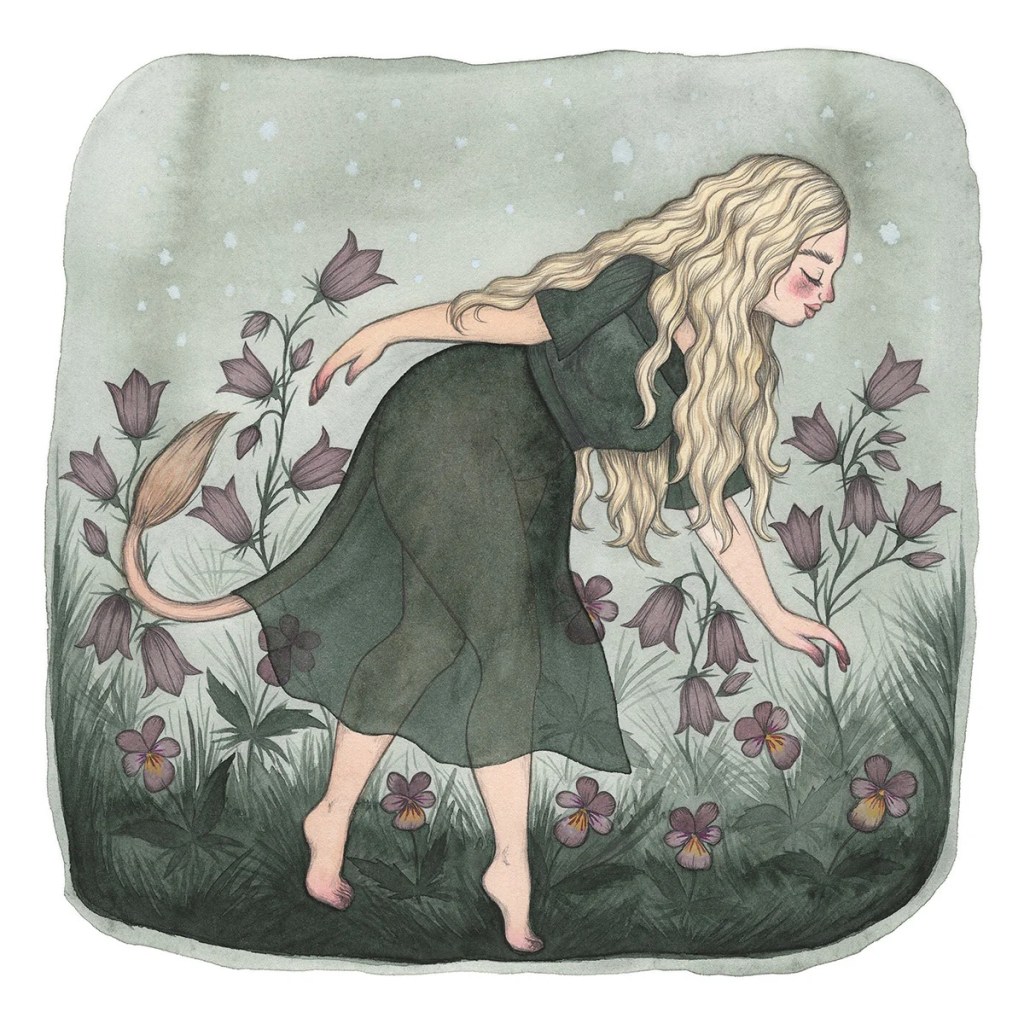
Another Swedish creature is the Skogsrå. A forest spirit, she is often depicted as a fair-haired beautiful woman, with the skill of seduction as her most prominent weapon. Using her skills, she lures men deep into the woods, to their peril.

The Skogsrå have hollowed-out backs, concealed from view. They also have a long cow’s tail. Of course, they have to also hide this from sight if their seduction is to work. The only way for a Skogsrå to lose her tail is if she gets married inside a church, when her tail will drop off, and she’ll transform into a human.

Similar to the legend of the sea-based Sirens, these forest nymphs lure men into the woods with their beautiful singing or harp-playing. They are also hypnotic dancers. It is said that if a human male has sex with a Skogsrå, he becomes sick and dies.

There are several ways to break the spell if you become bewitched by a Skogsrå. These include burning her with an ignited log and throwing tar in her face. To protect yourself, wear your clothes inside out and, under no circumstances give her your real name. If you do you will never break the enchantment.

Illustration: Kajsa Wallin

Swedish Monsters: 8) The Stalo

When I was at the open-air museum Skansen, I heard a story about trolls. This got me thinking about other mythological creatures and monsters that inhabit Sweden. And a new series was born!

Today – The Stalo.

The far north of Sweden, in the area known as Lapland, is home territory for the Stalo. According to Sami legend, this demon is a one-eyed giant troll that wears impenetrable black iron clothing. Stalo is rich, evil, and very strong. He hunts and devours people and reindeer. Locals who live nearby are expected to leave offerings on an altar to the giant. If they don’t, Stalo sends packs of wolves into the village to wound and kill its inhabitants.

However frightening he is, he is also not very intelligent and is easy to trick.

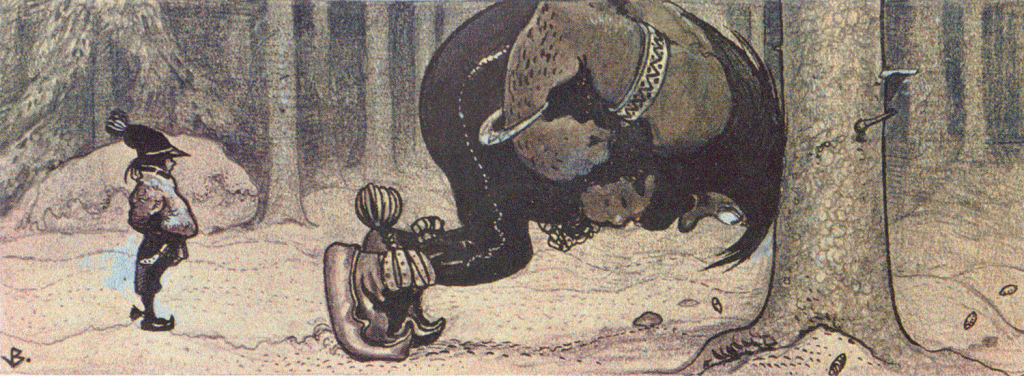
Legends exist that involve luring him onto a frozen lake, where he falls into a hole in the ice and can’t get up again. Yet another, depicted below, shows a boy called Kauras who tricks Stalo into a competition where he butts his head into a tree trunk, rendering himself unconscious. Other, more complex tales, describe children, who have been trapped by the Stalo, escaping by crushing his hands with boulders and pouring molten lead onto his face.


Image: John Bauer, Stalo and Kauras

Swedish Monsters: 7) Näcken

When I was at the open-air museum Skansen, I heard a story about trolls. This got me thinking about other mythological creatures and monsters that inhabit Sweden. And a new series was born!

Today – Näcken.

Summer is a time associated with bathing. But if you are bathing in-land, in a lake or stream or beck, keep an eye open for Näcken!

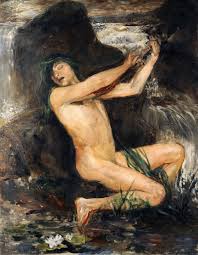
Näcken is a mythological creature in the shape of a naked man. He sits by waterways, or on lily pads, and plays beautiful music, often on a fiddle, but sometimes on a flute. With this music, he lures innocents into the water where they drown.

In certain legends, it is believed that Näcken can change his shape into, for example, a dragon, a worm or a beautiful white horse called Bäckahästen. As Bäckahästen, Näcken entices children to ride on his back and he carries them out the water to drown them. It doesn’t matter how many children there are, Bäckahästen’s back simply grows longer to accommodate them.

The name Näcken doesn’t come from the word ‘näck’ meaning naked in Swedish, as one might think. It comes from the Nordic word ‘nykr’ which meant ‘sea monster’ or ‘hippopotamus’.

So if you see a naked man playing a fiddle by the edge of a waterway – flee!

Painting: Ernst Josephson Strömkarlen

Swedish Monsters: 6) Torspjäsku

When I was at the open-air museum Skansen, I heard a story about trolls. This got me thinking about other mythological creatures and monsters that inhabit Sweden. And a new series was born!

Today – Torspjäsku.

It’s a shame that so much rain is forecast this week, because then you have to be on the look out for Torspjäsku – especially if you are on the island of Gotland.

This monster is a kind of giant troll that from the front looks like a kind, friendly and normal woman. However from the back, she is a hollowed-out tree trunk.

When it is thundering and lightning, Torspjäsku wants to take shelter inside a house to protect herself from the wrath of Thor. But whatever you do, don’t let her in, she is not very nice! In what way she is not nice, nobody knows as there are no survivors to tell the tale.

To protect yourself from this monster, put a piece of steel on your threshold, for example a pair of scissors. Then she cannot cross.

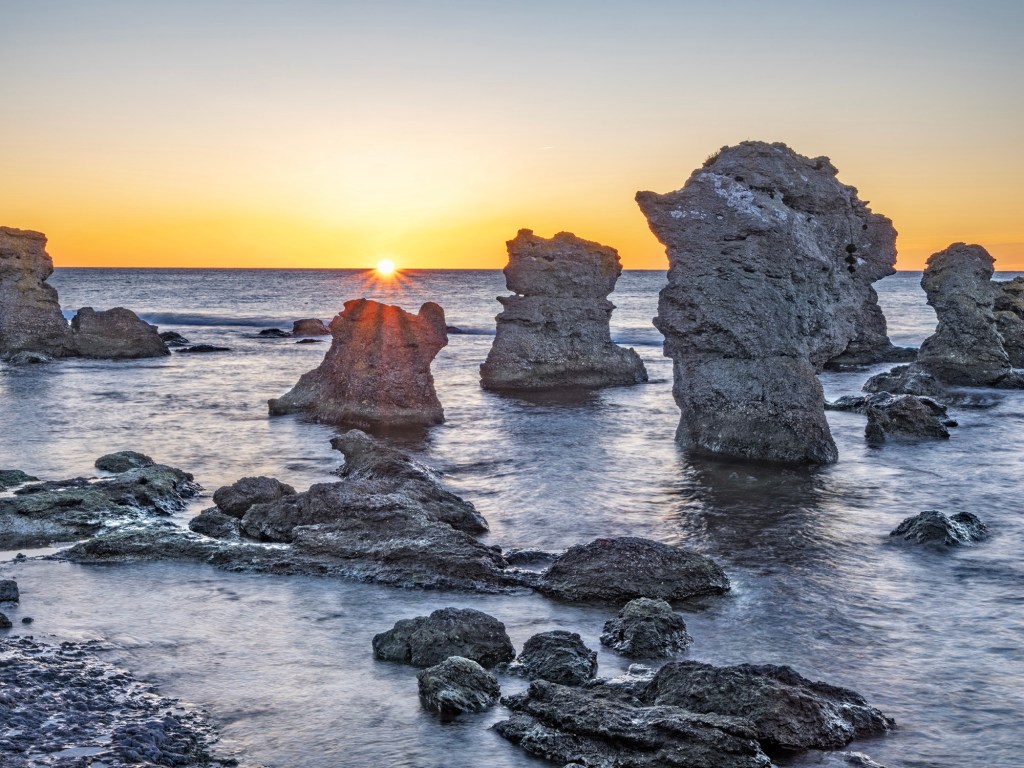
So secretive is she, that I don’t even have a picture to share! So here’s a picture by photographer Claes Grundsten of the mystical Gotlandic rock formations (rauker) instead!

Swedish Monsters: 5) Gloson

When I was at the open-air museum Skansen, I heard a story about trolls. This got me thinking about other mythological creatures and monsters that inhabit Sweden. And a new series was born!

Today – Gloson.

If you think pigs are cute, you might not after you hear about Gloson.

A monster from the southern part of Sweden, Gloson is a ghost-like creature that takes the shape of a giant wild boar or pig. It has piercing flaming eyes, sharp tusks and fangs and a strange snout.

Along its back, there is a spiky razored ridge which it uses to run between people’s legs and split them open at their crotch. Scary!

Picture: Freja Hammar

Swedish Monsters: 5) Gloson

When I was at the open-air museum Skansen, I heard a story about trolls. This got me thinking about other mythological creatures and monsters that inhabit Sweden. And a new series was born!

Today – Gloson.

If you think pigs are cute, you might not after you hear about Gloson.

A monster from the southern part of Sweden, this creature is a ghost-like creature that takes the shape of a giant wild boar or pig. It has piercing flaming eyes, sharp tusks and fangs and a strange snout.

Along its back, there is a spiky razored ridge which it uses to run between people’s legs and split them open at their crotch. Scary!

Picture: Freja Hammar