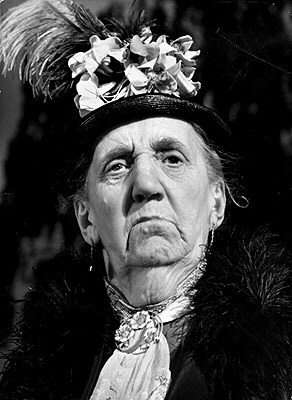
The legendary actress Julia Caesar was born in 1885 in Stockholm. And yes, that was her real name – Julia Maria Vilhelmina Caesar.
From a young age, she became typecast in the roles she was given, and frequently played the opinionated but loveable, old woman – often in comedies. They could be a mother in law, a cook, a nosy neighbour or a housekeeper – but they were always a battleax who were outspoken and candid. They weren’t always two dimensional characters, however. In many cases, she depicted strong feminist views and railed against the patriarchy.
You might not have heard of Julia Caesar, but she was a very popular and prolific actor with a career that spanned over 60 decades. In fact, she holds the record for the Swedish actress who has appeared in most films – 136 of them. In addition to this, she played many classic theatre roles and performed in reviews and cabaret.
Julia Caesar was enormously loved and had a huge following – she was an institution in Swedish theatre and film. In the Stockholm park area of Tanto, where she frequently performed in the outdoor theatre, there is a street named after her.
She died in Stockholm in 1971, aged 86. Privately, she lived a discrete life together with opera singer Frida Falk. Although Frida died 23 years prior to Julia Caesar, they are buried together in Caesar’s family grave in the cemetery of Bromma Church.
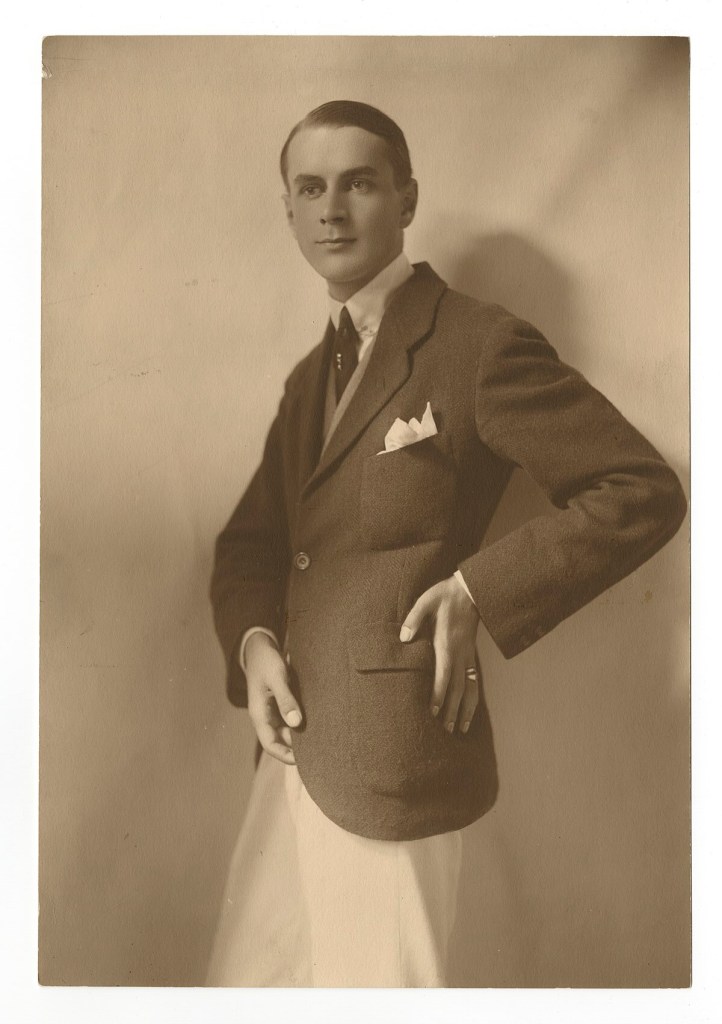
Nils von Dardel was born in 1888 in Bettna, Södermannland. He is considered one of Sweden’s most important post impressionist artists and his painting ‘Vattenfall’ is the most expensive modernistic Swedish painting ever to be sold at auction.
Born into a wealthy, cultural elite, Nils Dardel was able to spend his life as a nomad. On his travels around Europe, USA, Peru, Mexico, Asia, he painted people from varying backgrounds and all types of situations. He lived a self-destructive hedonistic lifestyle, which is apparent in several of his works , especially those from his pre-war burlesque Paris era.
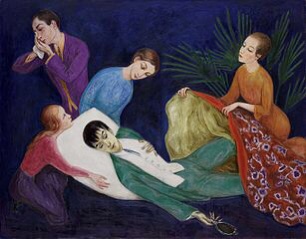
His paintings are often very colourful and depict eccentricity and ambiguous sexuality. One of his famous paintings is ‘The Dying Dandy’ which today hangs in Stockholm’s Modern Museum, and is perhaps one of the most recognisable pieces of art from Sweden. Some of his other paintings are today on display around Sweden as well as in Paris, Oslo and Hamburg.
For 12 years, Nils Dardel was married to painter and author Thora Dardel although, given his hectic and bohemian lifestyle, he had affairs with both men and women. Together, they had one child – Ingrid – also herself an artist. She, in turn, became mother to two contemporary and acclaimed artists Henry Unger and Nils Ekwall.
Nils Dardel died of a heart attack in 1953 in the artist hotel The Beaux Arts on 44th Street in New York. He is buried on the island of Ekerö outside Stockholm.
Today, 20 April is Chinese Language Day. The day was inaugurated by the UN to celebrate the linguistic diversity of the organisation. The date was chosen to pay tribute to Cangjie, a mythical figure who is presumed to have invented the Chinese alphabet 5,000 years ago. According to legend, he had four eyes and the gods and ghosts cried and the sky rained millet after his invention.
The first documented Chinese person in Sweden arrived on a Swedish East Indian Company boat in 1786. His name was ‘Afock’ and he was considered so ‘exotic’ that he was given an audience with the King. According to Sweden’s Statistical Bureau, there are 45,868 Chinese-born people registered as living in Sweden today.
It wasn’t until the 1970’s/80’s that immigration from China to Europe became common, and many of those who initially arrived supported themselves by opening restaurants. The first Chinese restaurant in Sweden, called ‘The Chinese Wall’, opened however in 1959 in Gothenburg.
Today, there are many Chinese restaurants and several Chinese shops and supermarkets. Unlike many other cities, such as London, San Francisco, Singapore, New York, Stockholm does not have a ‘Chinatown’. Many Chinese people who move to Sweden now come to study, and continue to work, often in the IT and Tech sectors.
A few Chinese-inspired pieces of architecture exist in Sweden. Three in Stockholm are The China Theatre, built 1928, the Chinese Pavilion in Haga Park and the UNESCO listed Chinese Palace built in 1753 in the grounds of Drottningholm Palace.
Perhaps the most bizarre piece of architecture is Dragon Gate, a monstrous compound built by the motorway outside the small town of Älvkarleby. This is intended to be a cultural meeting place for Swedes and Chinese and includes a temple, a museum, a copy of the Terra-cotta Army, monuments, restaurant, hotel, kungfu school and a huge square. It has been an economic failure since its opening and today is closed.
A recent survey carried out by the Swedish Institute looked at Chinese attitudes to Swedes and Sweden. The survey focused on Chinese people living in China, and not those who emigrated. Various perceptions were that Swedes are obedient, relaxed, lazy and introvert. Sweden was perceived as rich, beautiful and clean but expensive, with high taxes and a depressing climate.
Interestingly, many Chinese confuse Sweden with Athens! The probable explanation is that Sweden in Madarin is Ruidian and Athens is Yadian.
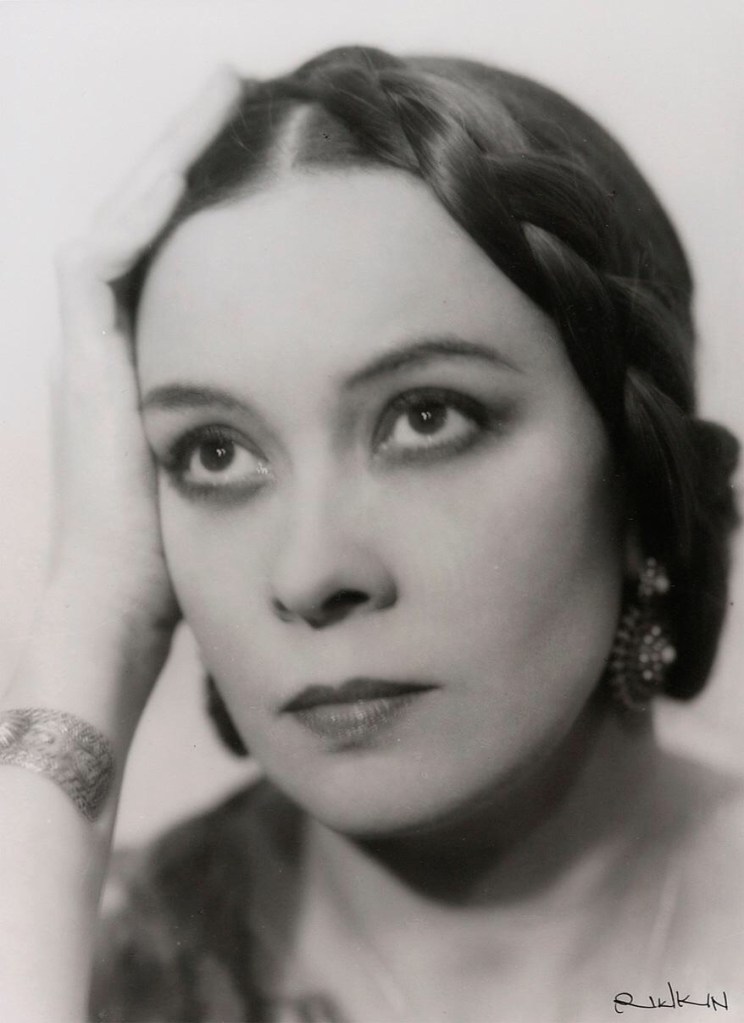
Carina Ari was born Maria Karina Viktoria Jansson in Stockholm in 1897. She went on to become one of Sweden’s most successful dancers and choreographers throughout history. For most Swedes, she may be unknown, but she certainly made a lasting mark on Swedish and international cultural life.
Carina Ari started dancing at a young age to support her infirm mother, who died when Ari was 16. Shortly afterwards, she was employed as a dancer at the Royal Theatre and within two years was promoted to solo dancer. During the 1920’s, she danced and choreographed many acclaimed performances in Stockholm, Copenhagen and in Paris for a variety of institutions and companies. In Paris, she was the prima ballerina at the controversial and experimental Swedish Ballet. In 1924, she toured Europe with her highly successful Scènes dansées. In 1927, she choreographed a much talked-about performance for the French President Loubet at the Élysée Palace. In1930, she was appointed Director of Balletat the Algiers Opera, where she created for many years before returning to the Opera Comique in Paris. During her active years, she was the darling of dance, a somewhat controversial prima donna and a sought-after choreographer. Married to French composer Désiré-Émile Inghelbrecht, they were a power couple on the cultural scene.
In the late 1930’s, mid divorce, Ari was holidaying in the south of France when she met, and fell in love with, a Dutch businessman. When the Second World War approached, they moved to Argentina, where they married and lived the rest of their lives. Upon his death, she inherited a great fortune and was able to maintain a residence in Stockholm and studio in Paris, both of which she frequently visited. In Argentina, she became a grand old dame, living a life of culture, entertainment and fine dining. She frequently visited the Teatro Colón and watched their dance performances. Although considered one of the best opera houses in the world, she was apparently vocally critical of the quality of their dancers.
As part of her legacy, the Carina Ari Foundation gives financial support to young, promising dancers and to older dancers who have fallen on hard times. On Holländargatan in Stockholm is the Carina Ari Library, which is the largest library of dance in Northern Europe. Additionally, the Carina Ari Medal is occasionally awarded to people who have contributed to the art of dance in Sweden.
However, her legacy is not only in dance. Carina Ari was also an accomplished sculptor. She specialized in portrait busts and some of her works are displayed at Sweden’s National Museum. Her bust of Birgit Nilsson is at the Opera House in Stockholm and her bust of Dag Hammarskjöld is located in New York in the square that bears his name.
Carina Ari died in 1970 in Buenos Aries after complications from breaking her leg, and is buried with her husband in Haarlem in the Netherlands.
I had the weirdest of nightmares the other day involving the former British Prime Minister, Margaret Thatcher. When I checked her out, I discovered oddly that the very day was the 8th anniversary of her death.
No British Prime Minister in history has been so reviled, and also loved, as Margaret Thatcher. My dad absolutely hated her. With a vengeance. He blamed her for single-handedly causing the economic and social depression that utterly destroyed the north of England, where I’m from.
It made me think about what Swedish politician has been so despised through history. Who in Sweden is the most reviled?
While Swedish Prime Ministers such as Carl Bildt, and Göran Persson were not always popular, probably topping the list is Social Democratic Olof Palme. He was a legendary Prime Minister who was loved by many. On the other hand, there were a lot of people who absolutely loathed him, his ‘arrogance’ and his ‘radical’ politics. He was Prime Minister for 17 years, in two different periods, up until his assassination in 1986. One person said about him – ‘He had a very special personality, he was so intense, so brilliant but his brilliancy was a problem for him as well because many people got hurt by his harsh words.’
Palme was most controversial in his overseas politics than his domestic ones. This gave him many enemies. He was often alone among political leaders in the western world in expressing his stand against colonialism. He railed against the Soviet crackdown in Czechoslovakia, criticized Spanish dictator Franco, befriended Cuba’s Fidel Castro and crusaded against apartheid in South Africa. He was anti Vietnam war, and therefore perceived by many as anti-US, who love to use the classic rhetoric ‘you’re either with us, or against us’.
Just like Thatcher, what people thought of Palme depended on their political leanings. For many, Palme was a beacon of hope – a living manifestation of the social-democratic ideology. For others, he was a socialist, a meddler and a rabble-rouser. Thatcher and Palme, I’m sure, detested each other. They were politically very far apart – she hated both socialism and feminism – two things that he firmly believed in.
Palme’s murder is considered by many to be the end of Swedish innocence. Margaret Thatcher wrote ‘ He will be grievously missed, not only in Sweden but really the world over.″ She herself had escaped an IRA assassination attempt in 1984, and said that other world leaders ‘have to carry on taking risks for democracy and not be deflected.’
A lot of mystery surrounded Olof Palme’s assassination. 16 years later in 2020, the perpetrator was identified as graphic designer Stig Engström. However, many people do not believe this conclusion.
Olof Palme, loved or hated, meddler or mediator, peace-keeper or political activist, is buried in the churchyard at Adolf Fredrik Church in Stockholm.
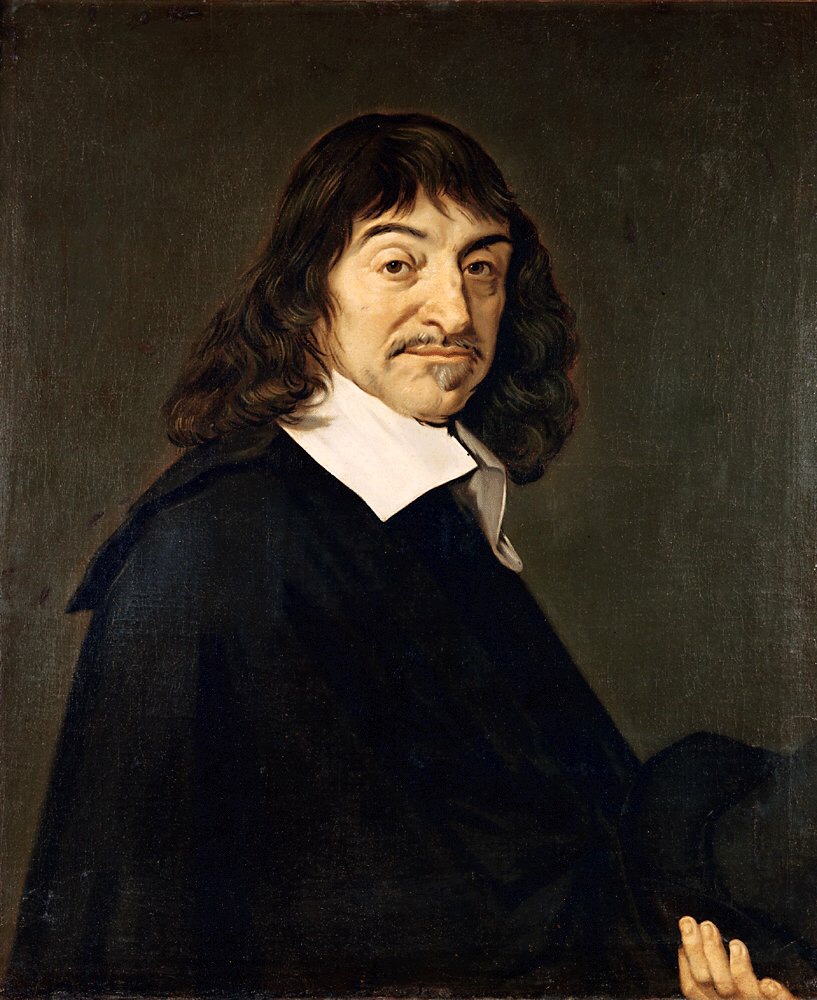
Yesterday, I learned something I didn’t know. Every day, as they say, is a school day. I learned that the iconic French philosopher, scientist and mathematician René Descartes died, and was buried, in Stockholm.
When I studied philosophy at university, I was fascinated by Descartes. Said to be the father of modern Western philosophy, his list of notable ideas is long. Radically, Descartes shifted the debate from God to Man by asking ‘of what can I be certain?’ rather than ‘what is true?’ The latter question relies on belief in an external authority, whereas Descartes instead relied on the judgement of the individual. This was an extreme, and dangerous, thought as it emancipated the individual from religious doctrine and equipped mankind with autonomous reasoning.
This controversial thought sparked the Age of Enlightenment – the fascinating intellectual and philosophical movement that dominated the world of ideas in Europe during the 17th and 18th centuries. How we reason today in the western world is profoundly based on this period – our embrace of doubt and our attitudes towards pursuit of happiness, sovereignty of reason, search for liberty, progress and secularism are all based on Descartes initial ponderings. On top of this, his scientific and mathematical theories later inspired the works of Leibniz and Newton.
Perhaps his most known legacy is a famous quote. In his ‘Discourse on the Method’, he wrote ‘je pense, donc je suis’. This appeared later in the Latin form it is today famous for – ‘cogito, ergo sum’ – ‘I think, therefore I am’. As Descartes explained it, “we cannot doubt of our existence while we doubt.” He was the father of doubt – challenging the blind faith that was the norm of his time.
Descartes was active when Queen Christina was the ruler in Sweden. Intrigued by his philosophies, she invited him to visit her in Stockholm. The idea was that Descartes would organise a new scientific academy in Sweden and tutor the Queen in science, philosophy and love.
Descartes moved to the Swedish capital in the middle of winter, and lived in a cold and draughty building near the palace. It became clear after a couple of visits that he and Queen Christina did not like each other, and on February 11 1650, Descartes died from pneumonia. Another theory is, however, that he was poisoned by a Catholic missionary who opposed his controversial views.
He was buried in the cemetery of Adolf Fredrik’s Church in Stockholm, where there is today a memorial to him. In 1666, his corpse was transferred to France and his skull is on display in the Musée de l’Homme in Paris.
It was surprising to learn that this giant of intellectual thinking died in Sweden. It makes me wonder what other non-Swedish, internationally-noted people spent their last days in this frozen country of the north. If you know of any, please share your insights with me and the rest of the readers.
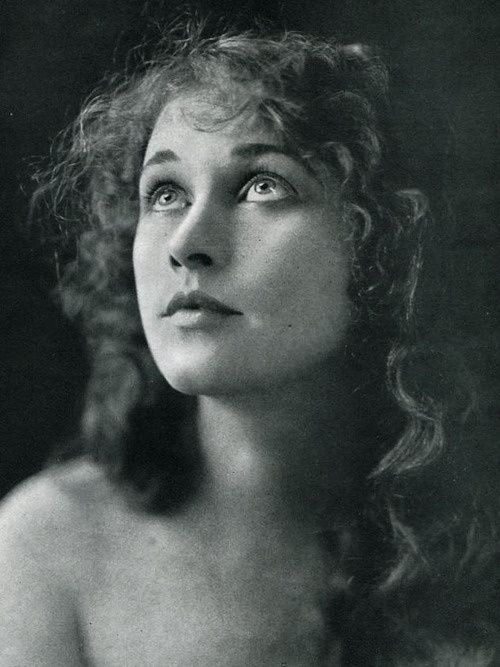
In 1907, Anna Q Nilsson was named the most beautiful woman in America. Born in 1888 in Ystad, Southern Sweden, Anna Quirentia Nilsson emigrated to the USA and became one of the most famous actresses of her time.
Her era was the golden era of the silent movies. During her career, she appeared in almost 200 films, but she didn’t successfully make the transition into the talkies. Her most important films are considered to be Adam’s Rib, They Died with their Boots On, The Luck of the Irish and The Thirteenth Commandment. A qualified pilot, she was well known for being daring and she carried out her stunts herself. Consequently she was burned, broken and bruised throughout her career. She was also the first woman to smoke and wear trousers on camera.
She broke the record in fan mail, and was the first Swedish actor to receive a star on the Hollywood Walk of Fame on Hollywood Boulevard. She appeared opposite legendary actors such as John Barrymore, Loretta Young, Errol Flynn and a young Elisabeth Taylor.
Her final credited appearance was with Buster Keaton and other contemporaries playing themselves in cameo parts in the classic ‘Sunset Boulevard.’ After this, she appeared uncredited in movies such as Showboat, An American in Paris and Seven Brides for Seven Brothers. Her final movie appearance was in 1954.
Aged 85, Anna Q Nilsson died in 1974 in Sun City, California. When she died, tv channels in the US interrupted their broadcasting to make the announcement. Her ashes were scattered in the Pacific Ocean.
Today is the International Day of Transgender Visibility. The day is dedicated to honouring the victories and contributions of the transgender and non binary communities while also bringing awareness to the work that is still needed to protect trans lives. In the USA during 2020, 45 trans and gender nonconforming individuals were murdered. So far in 2021, the figure is 11.
Transgender in Sweden: It has been a long and rocky road for the transgender population to receive legal protection in Sweden. This road has been lined with demands on enforced divorce and enforced sterilization. In fact, it wasn’t until 2013 that the requirements to be sterilized and undergo sex reassignment surgery in order to change gender became unconstitutional. Sterilization had been in effect since 1972, and enforced on 500 to 800 transgender people.
Today, the transgender community is protected under the Anti-Discrimination Law of 2009. Additionally, in 2018, “transgender identity and expression” was added to the hate crime legislation.
It would however be naive to believe that this has eradicated this type of discrimination and crime in Sweden. In fact, many transgender people report a constant feeling of insecurity and vulnerability in society. Around 12% of the reported hate crime in Sweden has a homophobic or transphobic motive. Who knows how much happens that isn’t reported?
Days like International Day of Transgender Visibility are hugely important for breaking the negative cycle of hate. If you would like some input on how to support the trans and non binary people in your life, go to http://www.thetrevorproject.org and look under Resources.
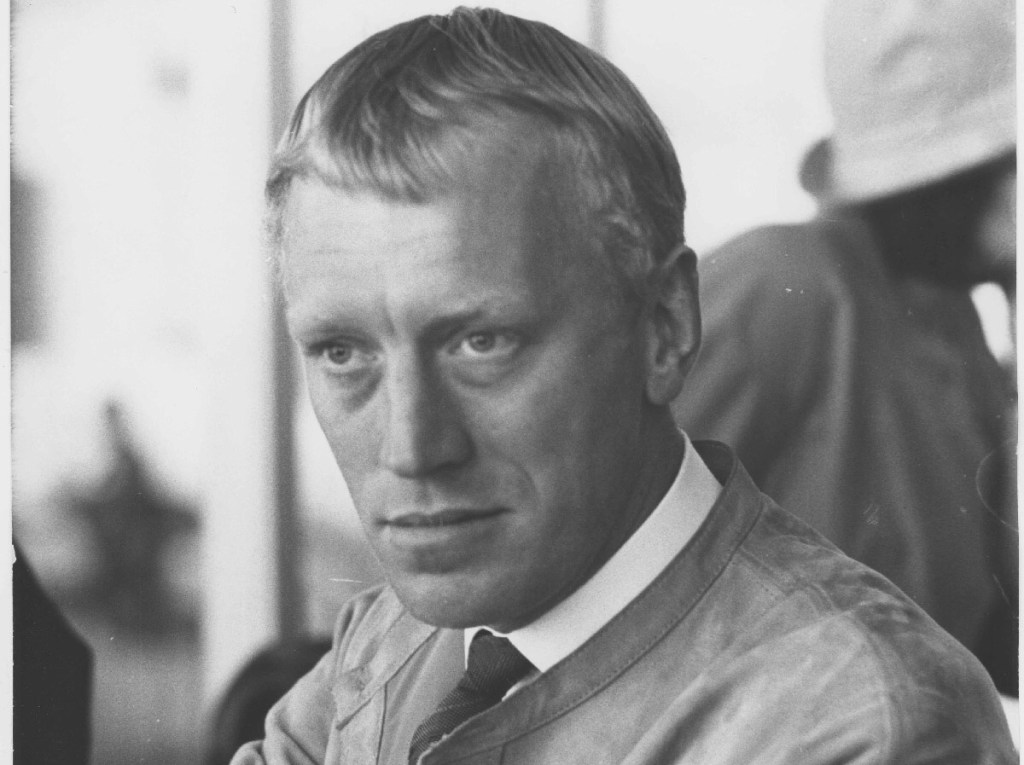
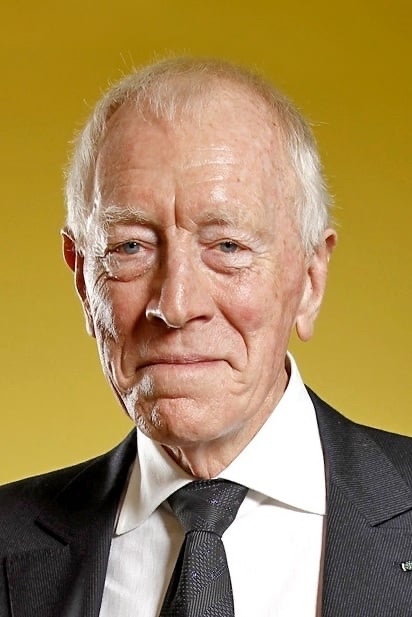
What words can be used to describe Swedish acting legend Max von Sydow’s career? Extensive? Impressive? Formidable? Whatever the word, there is no doubt that this man, whose career spanned 70 years, is a true Swedish icon.
In 1929, Carl Adolph von Sydow was born into an academic family in the university town of Lund. In early adult life, he moved to Stockholm to start studying at Sweden’s Royal Dramatic Theater in Stockholm. Here, he also took the name Max as people kept spelling his name incorrectly.
Max von Sydow’s career spanned theater, television, many genres and over 150 movies. To some he is known as an Ingemar Bergman actor, and especially known for playing chess with death in The Seventh Seal. In total, he starred in 11 Bergman films.
To others he’s known as the actor who played Karl Oskar in the epic Swedish film series The Emigrants about poor Swedes who emigrate from Småland, Sweden, to Minnesota in the mid-19th century.
To mention some other films, he starred in classics such as The Greatest Story Ever Told, The Exorcist, Flash Gordon, Pelle the Conqueror, Dune, Hannah and Her Sisters, The Quiller Memorandum, Minority Report, Never Say Never Again, Shutter Island, Robin Hood and Star Wars: The Force Awakens. Younger generations might remember him as the enigmatic Three-Eyed Raven in HBO’s Game of Thrones.
Max von Sydow had a enormously successful international career. But it wasn’t always destined to be so. Early on, he was satisfied with his life in Sweden, and consequently turned down iconic roles such as Captain Von Trapp in The Sound of Music and Dr No.
Towards the end of his life, Max von Sydow became a French citizen and had to relinquish his Swedish passport. He died in Provence and was survived by his wife and four sons.
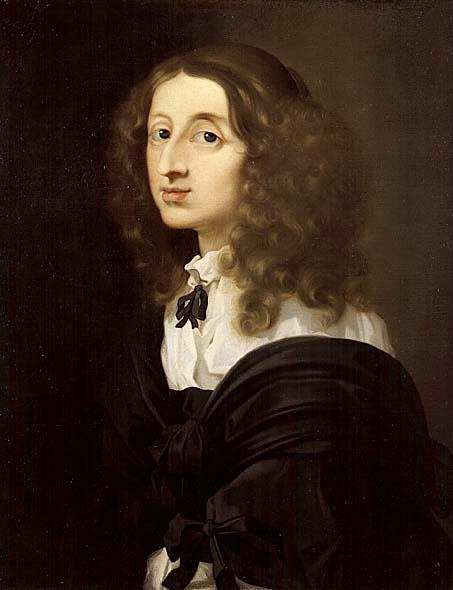
Great Britain has its strident Queen Elisabeth I, France has its flamboyant Marie Antoinette and Russia has its legendary Catherine the Great. For Sweden, there is one Queen to measure up against them in icon status – the notorious Queen Christina.
Born 1626, Christina was the Queen of Sweden from 1632 to 1654, although the country was governed by a regency council until she reached the age of 18.
She is known to have been an independent, outspoken and untraditional woman, and as such has ignited the imagination of novelists, play-writes and film makers throughout history.
Christina’s father was Gustav II Adolph, one of Sweden’s warrior kings, a military commander credited with the rise of Sweden as a great European power. He wanted Christina to be raised in the same way a boy would be – so Christina was an unorthodox and controversial person already at an early age. She studied 10 hours per day, could hunt and fight, was knowledgeable in politics and could speak seven languages other than Swedish.
This learned young woman who was ‘masculine’ and ‘rough around the edges’, was a great sponsor of the arts. Wanting to turn Stockholm into a centre of learning and culture, she attracted many great minds to her court. This was, however, very expensive and eventually the dream died – gaining her a reputation for being wasteful and extravagant in the process.
She was also a peace maker, negotiating peace that ended the 30 Year War. Under her reign, Sweden settled New Sweden in the USA, which is today in the area of Joe Biden’s hometown Delaware.
However, she is mostly remembered for three main things. Firstly, her refusal to marry. Secondly, her unprecedented abdication in 1654. And thirdly, her scandalous conversion to Catholicism.
Christina expressed a distaste for marriage and felt pressure to provide an heir. She realised that if she married she would effectively hand power to her husband. She is quoted as saying ‘I am unsuited for marriage.’ In today’s terms, she would have been defined as lesbian, and she had several mistresses – the most important one being Ebba Sparre, who she called ‘La Belle Comtesse.’
She gave up the throne partly because of her refusal to marry, but mostly due to her increasing unpopularity and pending religious conversion. After her abdication, she shook off the shackles of court protocol and dressed more frequently in male clothes. Historians often describe Christina as unattractive and androgynous in her physical appearance. Whether this is true, or whether her ‘ugly’ appearance was exaggerated in order to undermine her position is unknown. After her cousin took over the throne, Christina quickly left Sweden and ultimately settled in Italy. Although she made several attempts to regain power in Europe, she never succeeded and eventually died in Rome aged 62.
Queen Christina’s funeral was held at St Peters Basilica, reflecting her provenance, prominence and influence. She is one of only three women to buried in the Vatican. That alone is enough to earn her icon status.






 Watching the Swedes