IKEA’s secret Swedish code


Anyone who’s ever been in one of the 350 + IKEAs in the world, has experienced a tiny slice of Sweden. 

In the stores, one thing that reflects Swedish and Scandinavian culture is the name of the thousands of products. 

What many people don’t know is that there are strict rules for the naming of the merchandise. Fascinatingly, these rules were devised by IKEA’s founder Ingvar Kamprad because he struggled with dyslexia and had trouble remembering the order of numbers in item codes of the inventory. 

So what’s the secret? Here are the guidelines: 

  • Bathroom articles = Names of Swedish lakes and bodies of water
  • Bed textiles = Flowers and plants
  • Beds, wardrobes, hall furniture = Norwegian place names
  • Bookcases = Professions, Scandinavian boy’s names
  • Bowls, vases, candle and candle holders = Swedish place names, adjectives, spices, herbs, fruits and berries
  • Boxes, wall decoration, pictures and frames, clocks = Swedish slang expressions, Swedish place names
  • Children’s products = Mammals, birds, adjectives
  • Desks, chairs and swivel chairs = Scandinavian boy’s names
  • Fabrics, curtains = Scandinavian girl’s names
  • Garden furniture = Scandinavian islands
  • Kitchen accessories = Fish, mushrooms and adjectives
  • Lighting = Units of measurement, seasons, months, days, shipping and nautical terms, Swedish place names
  • Rugs = Danish place names
  • Sofas, armchairs, chairs and dining tables = Swedish place names

There are some exceptions to these rules where the product’s name is a Swedish verb reflecting the function of the item, eg a spice mill called ‘krossa’ (to crush) or a lamp called ‘böja’ (to bend). 

Obviously, IKEA’s branders try to vet any words that are offensive locally. And with a few notable exceptions, they seem to succeed. More about this in a later blog. 
Weird Swedish rhubarb

rhubarb

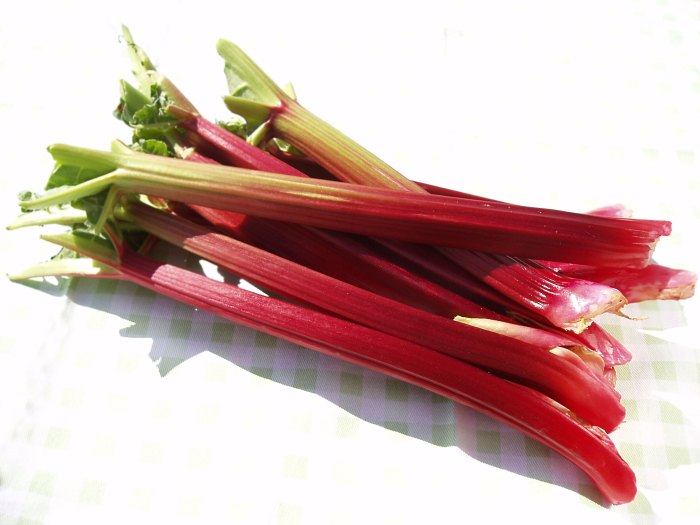
Watching TV this morning, I heard an expression I have never heard before in Swedish. It was an idiom – ‘att lägga rabarber på nåt’. Translated into English directly that is ‘to put rhubarb on something’.

This is a great example of an idiom and the fascinating thing about idioms is when translated directly, they mean nothing to those who are not initiated. But they have a clear and obvious meaning to those who understand its context. ‘Att lägga rabarber på nåt’ in English idiom would be something like ‘to stake a claim on something’ – in itself an idiom.

But why are Swedes putting rhubarb on things when they want them for themselves? Isn’t that a bit weird? Not when you understand where the saying comes from.

From the beginning, the expression was ‘att lägga embargo på nåt’ – embargo not rhubarb. The word embargo at that time was an unknown, strange word borrowed from Spanish and it meant ‘confiscate’. As it was an unusual word, it became quickly switched out for a more familiar similar-sounding one and ’embargo’ became ‘rabarber.’


English words that tickle the Swedes

laughing minions

I have written a lot about funny Swedish words, such as prick, fart and slut.

I was wondering the other day about how many funny English words there are….words that Swedes find funny? To be honest, I could only actually think of a few.

Please help me to add to this list!

English words that Swedes find funny

  • Pink – a delightful color in English – means pee in Swedish
  • Kiss – a gesture of love in English – means pee in Swedish
  • Goodbyes – as in ‘saying your goodbyes’ – means good poo in Swedish
  • Pippa – the posh girl’s name as in Pippa Middleton – means to shag in Swedish
  • Bra – as in supportive underwear – means good in Swedish
  • Fan – a tool for cooling us down – means fuck (as in damn) in Swedish
  • Rap – the music form – ironically means burp in Swedish
  • Skit – as in a satirical sketch – means shit in Swedish


How I have been Swedified 


After my last blog about Swedish geography, somebody commented that it is hysterical that there is a place in Sweden called Norrbotten. 
This got me thinking. 

When first moving to Sweden and learning the language, I saw all sorts of funny words which made me giggle. Now, some two decades later, I don’t even see those funny words any more – I have been Swedified. 

  • ‘Plopp’ to me is a chocolate bar, and nothing else
  • ‘Puss’ is a kiss and not a little kitty or a body part
  • ‘Kiss’ isn’t a romantic exchange between consenting people. Kiss is urine
  • ‘Slut’ is simply the end of something
  • ‘Avfart’ on a motorway is just the exit 
  • ‘Rea’ is a sale and not an old British singer 
  • ‘Kök’ and ‘kock’ are the kitchen and the chef, not a body part
  • I don’t even see the squidginess of the ‘slutspurt’ any more. All I see is that it’s the end of the sale. 
  • I don’t titter any more when someone says ‘shit’ to describe the putty around the window or the number six is the same as ‘sex’. 
  • ‘Prick’ is a dot and not an insult 

It is with a smidgen of regret that I guess I have been integrated – at least linguistically! 

Swedish farts

Infart

One of the fun things about learning a foreign language are the words that are rude, or funny in your own language.

Swedish has a few of them: slut, kräpp, plopp, kock, spurt

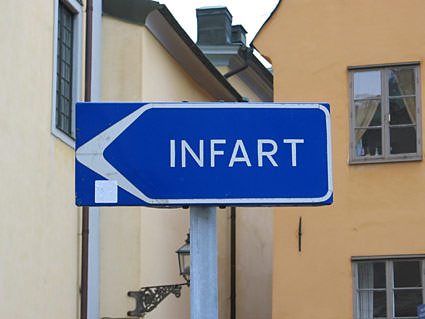
But the funniest one is probably the most purile; it is the ever prevailing ‘fart’, especially when you see it on street signs. This is the word that has most visitors to Sweden holding their sides with laughter.

Even after all these years, I can still have a little giggle when I think about the word ‘fart’ and its various usages in Swedish. In Swedish, ‘fart’ can mean a lot of things such as speed, drive, route, pace, spirit, vivacity, rate. But it is when it is put together with another word that it becomes amusing. Childish, I know…but here we go…

  1. utfart – ‘out fart’ – exit from a building
  2. uppfart – ‘up fart’ – driveway
  3. infart – ‘in fart’ (sounds painful) – entrance
  4. avfart – ‘of fart’ – exit from a motorway
  5. framfart – ‘forward fart’ (quite an accomplishment) – progress
  6. fartkamera – ‘fart camera’ (didn’t know these existed) – speed camera
  7. kringfart – ‘circular fart’ (also sounds painful) – causeway
  8. fartfylld -‘full of fart’ (know a few people like that) – speedy
  9. krypfart – ‘crawl fart’ – crawl
  10. luftfart – ‘air fart’ (the worst) – air travel
  11. fartrand – ‘fart stripe’ – go faster stripe on a car
  12. maxfart -‘maximum fart’ – top speed
  13. farthållare – ‘fart holder’ (dangerous) – cruise control
  14. blixtfart – ‘flash fart’ – flash speed
  15. fjärrfart -‘distant fart’ – transocean traffic
  16. halvfart – ‘half fart’ – half speed
  17. snigelfart – ‘snail fart’ – snail speed
  18. förbifart – ‘passing fart’ – ring road
  19. fartgräns – ‘fart limit’ – speed limit
  20. marschfart – ‘marching fart’ (like a hit and run!) – cruise speed
  21. överljudsfart – ‘supersonic fart’ (impressive!) – supersonic speed
  22. fartblind – ‘fart blind’ (although deaf is probably preferable) – when you become desensitised to the speed you are driving and stop noticing it


Top ten English words originally from Swedish

moped

As we all know, language is organic and we constantly borrow and interchange words between languages. The word kiosk is for example originally Turkish, restaurant is French, gnu is African Knoisan and alcohol is Arabic.

But what words has Sweden contributed with that have been adpoted into English, and even into other languages?

Well, there are a few…

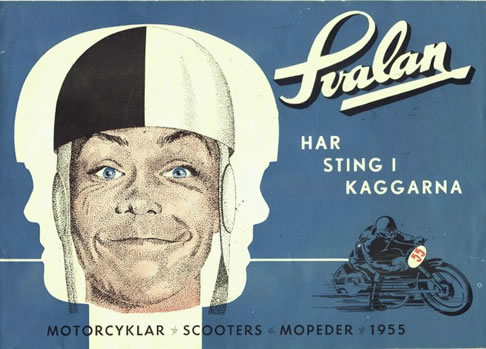
  1. Moped – comes from ‘trampcykel med motor och pedaler’
  2. Smorgasbord – from the Swedish ‘smörgåsbord’ meaning buffet
  3. Gravlax – from the Swedish ‘gravad lax’ meaning cured salmon
  4. Ombudsman – a Swedish word meaning representative
  5. Orienteering – from Sweden’s ‘orientering’
  6. Tungsten – Heavy stone in Swedish
  7. Monday, Tuesday, Wednesday, Thursday, Friday, Saturday, Sunday – ok, technically Norse but partially Sweden!
  8. To glean – from the Swedish dialectal verb ‘att glena’
  9. Gauntlet – from Sweden’s ‘gatlopp’
  10. Canoodle – debated, but likely to be from Sweden’s word for fornicate – ‘knulla’

This list is probably incomplete. Any other words you would like to add?

The top 10 most satisfying Swedish words to pronounce

mumsfillibababba

I’ve spent over 20 years struggling with the Swedish language. Grammar is always a challenge for me – but it is pronunciation that still continues to drag me down.

That said, there are a few Swedish words that I just love to say. They have to be the most fun words in the Swedish language. Here, in no particular order, are my top 10.

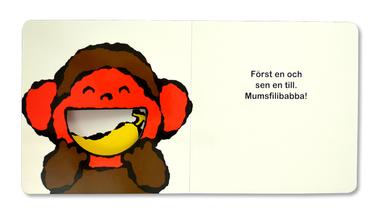
  1. Mumsfilibaba – a hysterically satisfying way to say that something is really delicious
  2. Sjuksköterska – the Swedish word for nurse – try saying it after a couple of beers – it’s really fun
  3. Kackerlacka – the Swedish word for cockroach is somewhat onomatopoeic – the perfect way to describe these disgusting little bugs
  4. Sura uppstötningar – horrible to experience acid reflux but really fun to say the word
  5. Smidig – a useful word that’s fun to say and that means everything from easy and adaptable to flexible and pliable and even loose-limbed.
  6. Yxskaft – the handle of an axe – ok not a word that you say very often, but enromously satisfying when you get the chance
  7. Grönsaksbuljongtärning – a long word for a vegetable stock cube. Sometimes I go inte a supermarket and ask a shop assistant where to find them just so I get a chance to say it.
  8. Toppen – an uplifting way to say that all is good
  9. Hjärnsläpp – the Swedish word for drawing a blank. But it doesn’t matter if you can’t remember what you were going to say – because then you get to say ‘hjärnsläpp’ instead.
  10. Bajskorv – childish I know, but the Swedish word for ‘poo sausage’ is just hysterical.


Other Swedish words I love are ‘ångestframkallande‘, ‘slickepott’, ‘snöslask’, ‘oroväckande‘, ‘knäckebröd‘, ‘mångata’ and ‘underrättelsetjänsten‘.

What are some of your most satisfying Swedish Words to pronounce?

Let me know in the comments below….


Trump in Swedish

The other day I heard a new Swedish word. I guess it stuck in my head because it felt contemporary. I was so amused by the word that I had to look it up. And imagine my pleasure when I found its definition! 

The Swedish word I’m referring to is ‘trumpen’. Contemporary for obvious reasons, the word is an adjective and translates as the following: 

  • Glum
  • Moody
  • Morose
  • Stuffy
  • Surly 

Could it be more appropriate?! 

Top 5 Rude Swedish Place Names 


In Britain, and Sweden, there are many places with funny or rude names. 

What’s in a name? Does the name of a place say anything about its residents? For example, are the people of Uppsala upwardly mobile people? Or are the people of Sundsvall very sound in their values and morals? Maybe. If the name of place represents the type of people who live there, what does it say about the residents of these top 5 rude place names in Sweden? 

5) In the town of Mora there is a place called Rövhålet, which translates as ‘butt hole’. 

4) Bögs gård, north of Stockholm, literally means ‘Gay’s farm’

3) Kattsjärten in the county of Värmland is the evocative ‘cat’s arse’ in English 

2) Way up in the north of Sweden, you will find Sexträsk, which is the exotic place of ‘sex swamp’

1) But the most embarrassing must be the place called Djupröven, which is just outside of Uppsala. It means ‘Deep Ass’ in English. Says it all. 

There’s also a suburb of Stockholm which I’m always embarrassed to say. The suburb of Fittja sounds very much like the offensive word for female genitalia. Best to avoid saying it if you’re a foreign speaker of Swedish. 

What other funny or rude place names in Sweden do you know? 

Please share this blog, if you enjoyed it. 

10 Swedish ways to describe this summer 

  
So far, this is one of the rainiest and coldest Swedish summers on record. Scanning Facebook and other media, I’ve come up with the top 10 Swedish ways to describe this usually happy season: 

1) Pissväder ( pissy weather)

2) Sommar-ångest (Summer anxiety)

3) Höstlikt (similar to autumn)

4) Sommar?? (Is this really summer??)

5) Trött på detta (sick of this)

6) Äntligen sol! (Finally – sun!)

7) Vafaan!? (What the hell!?)

8) Regn, regn, regn (rain, rain, rain)

9) Sjuktkallt (extremely cold)

10) Semesterbubbel (holiday bubbly)