Ice, ice baby: 15 Swedish words for ice

Currently in the depths of winter, the Swedish landscape is covered in snow and ice.

I previously published a blog about 50 Swedish words for snow. So I became curious about how many words are there to describe ice.

I was surprised to find an enormous number of words. I guess it’s not so surprising for a Nordic country with so many lakes, rivers and waterways that there are many words to describe the different stages and shapes of frozen water.

Here are 15 of the words I found: 15 words for ice.

  1. Is – the standard word for ice
  2. Blankis – ice that shines like a mirror
  3. Nyis – ice that’s only a couple of centimeters thick and transparent
  4. Fast is – thick ice, often not transparent
  5. Issörja – when the air is cold but the water is moving, a kind of ice slop forms
  6. Tallrikis – plates of ice that form when above mentioned ice slop clusters together
  7. Pannkaksis- similar to tallriksis but formed when water with different amount of salt content meet each other
  8. Svallis – the kind of yellowish ice that freezes on mountainsides or rocky walls
  9. Drivis – large pieces of ice that float on the water and are driven by wind
  10. Isflak – a large, loose sheet of ice floating on water
  11. Rutten is – literally ‘rotten ice’, the first stage of thawing ice
  12. Skruvis – when thin ice layers itself on top of each other, like filo pastry.
  13. Istapp – icicle
  14. Svartis – black ice on the ground
  15. Glattis – an evenly compact layer of ice on the ground

What other words for ice do you know?

Follow me on Instagram! Watchingtheswedes!

Swedish expressions: ‘Drunk as a jackdaw’


kaja-2

In English, we have vivid sayings such as ‘pissed as a fart’, ‘drunk as a skunk’ and ‘pissed as a newt’. In Sweden, one of the expressions to describe an intoxicated person is ‘drunk as a jackdaw‘ (Swedish: full som en alika). It might seem odd, but there is an explanation.

The most popular theory has to do with the small breweries that populated the Swedish countryside in the past. At the end of the brewing process, the brewers would through the unusable remnants out into the yard. This meant that there were attractive piles of sweet mush distributed all over the countryside. The local jackdaws were rather partial to this mashy, mushy goo, and they would swoop down to eat it. While getting food in themselves, they also imbibed alcohol, and after a while, they would stagger away across the yard in blissed inebriation. The local population of course loved this, and coined the phrase ‘drunk as an jackdaw’.

In Swedish, there is another expression for being a drunk, this time in a noun form – ‘fyllekaja’ – which also means ‘drunk jackdaw’. The word ‘kaja’ is the word for jackdaw in most of Sweden. ‘Alika’ is a regional word used mostly in the southern counties.

Top 10 English words borrowed from Swedish

Yesterday I wrote about the word quisling, meaning traitor, which is used in English but is actually borrowed from Norwegian. This made me curious about what English words are borrowed from the Swedish language.

After a little research, here are the top 10 (in alphabetical order):

  • 1. Angstrom, the measurement, after the Swedish scientist Anders Jonas Ångström
  • 2. Celcius – the international measure of temperatures – is named after Swedish scientist Anders Celcius.
  • 3. Gauntlet (as in ‘run the gauntlet’) – from the Swedish word gatlopp
  • 4. Gravlax, marinated salmon, from the Swedish gravad lax
  • 5. Moped – Swedish shortening of trampcykel med motor och pedaler (“engined bike with motor and pedals”)
  • 6. Ombudsman – a person who acts as a trusted intermediary between an organization and some internal or external constituency.
  • 7. Orienteering – from orientering
  • 8. Rutabaga – the root vegetable, (from Swedish dialectal word rotabagge)
  • 9. Smorgasbord – from the Swedish smörgåsbord, (literally “sandwich table”), which in Swedish either refers to a buffet with very specific types of food, or is used as a metaphor
  • 10. Tungsten, literally “heavy stone”
  • Top 10 English words borrowed from Swedish

    Yesterday I wrote about the word quisling, meaning traitor, which is used in English but is actually borrowed from Norwegian. This made me curious about what English words are borrowed from the Swedish language.

    After a little research, here are the top 10 (in alphabetical order):

    1. Angstrom, the measurement, after the Swedish scientist Anders Jonas Ångström
    1. Celcius – the international measure of temperatures – is named after Swedish scientist Anders Celcius.
    2. Gauntlet (as in ‘run the gauntlet’) – from the Swedish word gatlopp
    1. Gravlax, marinated salmon, from the Swedish gravad lax
    2. Moped – Swedish shortening of trampcykel med motor och pedaler (“engined bike with motor and pedals”)
    1. Ombudsman – a person who acts as a trusted intermediary between an organization and some internal or external constituency.
    2. Orienteering – from orientering
    1. Rutabaga – the root vegetable, (from Swedish dialectal word rotabagge)
    2. Smorgasbord – from the Swedish smörgåsbord, (literally “sandwich table”), which in Swedish either refers to a buffet with very specific types of food, or is used as a metaphor
    3. Tungsten, literally “heavy stone”.

    What exactly is a quisling?

    Sweden might have a government soon. Months after the general election, an unconventional middle coalition seems to be forming, which includes former opposition parties from left and right. All of this is an attempt to keep an extreme right wing party out of the government. However, it’s not without its critics.

    One party in particular – the right-oriented Center Party- have been strongly criticized for being turncoats and traitors. One disgruntled politician called the leader of the Center party a quisling. While we use this term in English, I was curious to check into where the word comes from and why it is such a serious insult.

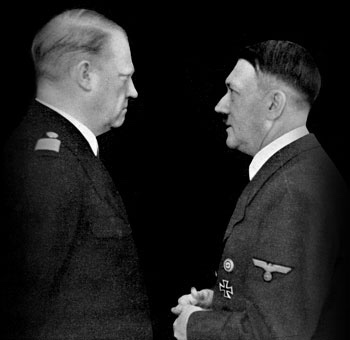
    According to Wiki, quisling is a term originating in Norway, which is used in all the Scandinavian languages and in English for a person who collaborates with an enemy occupying force – or more generally as a synonym for traitor. The word originates from the surname of the Norwegian war-time leader Vidkun Quisling who headed a domestic Nazi regime during the Second World War.

    Interestingly, the use of the word quisling predates the war though. In 1933, the term was used to describe the followers of Quisling who was in the process of starting a national fascist party based on the German nazi model.

    In 1940, Quisling attempted to seize power in Norway, as he wanted to collaborate with Hitler. His coup d’etat failed, and he and his followers were declared criminals. In the British Times the headline was ‘Quislings everywhere’, and the term became synonymous with traitor – a word to ‘carry the scorn of mankind throughout the centuries’, to quote Winston Churchill.

    So there we have it. A word taken from a pitiful, slithering fascist who was a traitor to his country and collaborated with an enemy power. Sounds more like a description of Trump if you ask me.

    It seems then definitely out of proportion that the word is currently being used to describe the leader of Sweden’s Center party.

    Of course many people are disappointed, and she has had to make some difficult compromises. But there is one promise she has not backed down on, however difficult it might be – to never give fascists a position of power in Swedish politics. And though not ideal for her, she has moved to the middle to prevent this.

    The irony then is in the fact that she is being called a quisling. She is not a quisling, she is in fact the complete opposite.

    Sweden, Swedeland or Sweorice? Why is Sweden called Sweden?

    The Swedish word for Sweden is Sverige. Have you ever wondered why then Sweden is called Sweden in English?

    Well, like all etymology of words, the explanation can be found centuries back and in a different country. In fact, the English name was loaned from the Dutch language in the 17th century. It is based on Middle Dutch Zweden, the Dutch name of Sweden. In turn, the name Zweden is the dative plural of  Zwede (Swede). Country names based on a dative plural and adding -n were the norm in German and Dutch in the 15th century – other examples are the German Italien “Italy” and Spanien“Spain”. These are also actually the words in Swedish for those countries.

    What about before the 17th century when England borrowed the name Sweden from the Dutch? Well, clearly Sweden existed, and indeed it was called something else – Swedeland. And in early Old English, the country was known as Sweoland or Sweorice. Sweorice translates as the realm of the Sveonas – who were a Germanic tribe of the Sviar (a Norse tribe).

    It’s not clear why the English suddenly changed to the Dutch version, but it may have been due to siding in conflicts or to make trading and communication easier.

    So yesterday’s Swedeland is today’s Sweden. Personally, I think Sweorice has a nice ring to it, and is seems closer to the Swedish word Sverige.

    Why Swedes celebrate their names

    Today is Svea’s Name’s Day. And October 8th is my Name’s Day. Well, not quite….but almost. It is Nils. And since I’m called Neil, well, I take Nils as my day.

    Some of you might be wondering what the hell I’m talking about. What is a ‘Name’s Day’? Well, it’s like this. In Sweden, every day has a name, sometimes two. And if your name happens to be represented in this way in the calender, then you can celebrate your day. Strange? Maybe. Unusual? Not really.

    A Name’s Day is actually a tradition in lots of countries such as Bulgaria, Croatia and Ukraine. According to Wiki, the custom originated with the Christian calendar of saints: believers named after a saint would celebrate that saint’s feast day. In Sweden, however, there is no longer any explicit connection to Christianity. It’s been a tradition since the Middle Ages and started because the church wanted the people to celebrate Name’s Days instead of birthdays which they viewed as a pagan tradition.

    There are different lists though some names are celebrated on the same day in many countries. In 1901 a comprehensive modernization was made in Sweden to make the list up to date with current names. This also happened in Finland, but not in other countries.

    But Name’s Days are not without their controversy. The monopoly on calenders, held by the Royal Swedish Academy of Sciences, expired in 1972 and so did the official name day list. And then all hell broke loose. Competing lists emerged and finally in 1986 a new list with three names on each day was designed to create harmony in the Name’s Day chaos. But people weren’t happy. Seven years later, this list was revised and reduced to two names per day. But Swedes were still dissatisfied with this and the Swedish Academy produced a new two-name list which was finally accepted and brought into use in 2001. Although it does not have the official status of older lists, it is now universally used in Sweden.

    One alternative calender, however, is the Diversity Calender which appoints each day with a more diverse selection of names to represent modern-day society.

    How this tradition arrived in Sweden is unclear. Maybe it was imported by foreign religious leaders or merchants, or maybe it’s to do with the fact that the Swedish Protestant Church retains some traditions similar to the Catholic. Whatever the origin, it’s a reason to celebrate. And Swedes love to celebrate!

    So, come on Svea, today’s your day – January 2nd! Happy Name’s Day to you!!

    If you’d like to check out if you’re privileged to have a Name’s Day go to www.dagensnamnsdag.nu

    Groan-worthy Swedish humour in the city of Gothenburg

    Humour is one of the things that often doesn’t translate too well interculturally. Sarcastic, ironic humour is one example – which can be perceived as rude by other cultures. The British style of self-deprecating humour is often seen as incomprehensible by others who take it literally.

    But the biggest type of humour that doesn’t translate is the pun. Because it is language based, it simply doesn’t translate linguistically.

    In Sweden, the west coast city of Gothenburg is known for its puns. The humour is based on witty plays with words, the more groan-worthy the better. In English, we refer to these as Dad jokes – pun-filled quips that make every child’s eyes roll and every father’s heart fill with pride and accomplishment. No matter how bad they are, these jokes always manage to get at least a chuckle out of us. Maybe deep down we actually think they’re funny, or maybe we just love to see our dads smile because they made us laugh. Here are a couple of Gothenburg jokes, which simply don’t translate…

    Which country has the cheapest meat?’

    ‘Ko-rea’ (Cow sale)

    ‘What noise comes out of a court?’

    ‘Rättsväsendet’ (Word for judicial system, but also translates as justice hiss’)

    So, as these didn’t translate. Let me present you with some of the best English dad jokes that would make any Gothenburger proud.

    1. ‘Why don’t crabs give to charity?’

    ‘Because they’re shellfish’

    2. ‘I got hit in the head with a can of Diet Coke today. But don’t worry, it was a soft drink.’

    3. ‘A ham sandwich walks into a bar. Sorry, says the bar tender, we don’t serve food here.’

    4. ‘How do you make an octopus laugh?’

    ‘With ten tickles’

    5. ‘My wife asked me to sync her phone. So I threw it in the ocean.’

    And my own dad’s favourite joke that he used to say every time we went past a cemetery –

    ‘You know that’s the dead centre of town. People are dying to get in there.’

    Do you know any Gothenburg puns? Please share them!

    Swedish expressions – ‘to buy a pig in a sack.’

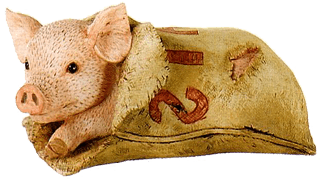
    In Swedish, this is a common phrase used to describe a situation where somebody has bought something without first fully examining it. And it proves to be a costly mistake. It’s also used to describe situations where somebody says yes to something without really knowing what it is – to their detriment. The expression ‘köpa grisen i säcken’ is the equivalent of the little-used English phrase ‘to buy a pig in a poke.’

    But where does the expression come from?

    Well, it dates back to the late Middle Ages when livestock was sold in the market places. Small animals were transported in sacks so as to make it easy to carry them. When you bought an animal, if you didn’t look in the sack, you might be in for a big surprise when you got home. You thought you bought a piglet, for example, but on opening the sack you realize it contains a rat or a cat.

    It’s a bit like voting for a person or a party without fully understanding their politics and then being shocked afterwards. You really shouldn’t have bought that pig in the sack.

    Swedish expressions – ‘more stupid than the train’


    prins albert

    The Swedish train system is notorious for its lack of reliability and continuous delays. Anybody who travels by train in Sweden has probably called it stupid, or worse, in anger or frustration. However, this is not where the Swedish expression (you are) ‘more stupid than the train’ comes from.

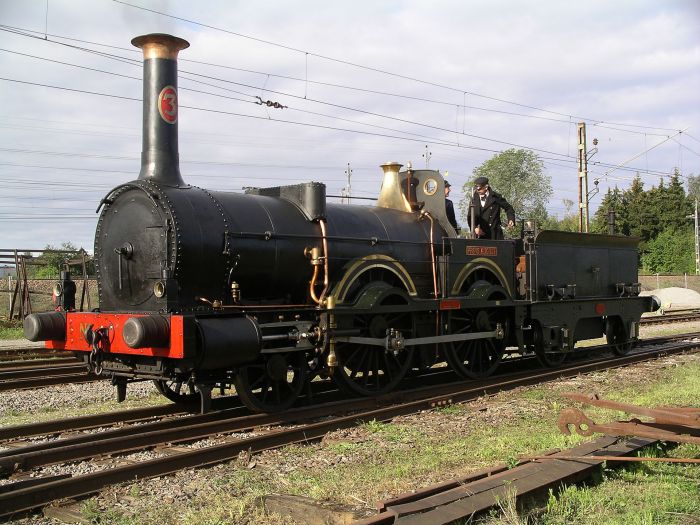
    To understand the origin of this expression, we have to travel to my home country of England and to the end of the Industrial Revolution. In the 1800’s the rail industry was booming and in 1856 Sweden imported a train from the UK, pictured above.

    A Swedish tradition is to give names to trains, and this particular train was christened ‘Prince August’ after King Oskar I’s youngest son. Prince August was well-known across the country for not being the brightest light in the Christmas tree. His weak intellect was well referred to in stories of the time. This was a period in history, however, when open criticism of the Royal family borded upon treason. So, the people created an expression – more stupid than the train – to describe somebody’s idiocy while at the same time referring ‘discretely’ to the royal fool by referencing the train of the same name.

    This tradition of naming trains, and train carriages, still exists in Sweden today. Only this morning I travelled in a carriage called Pippi, but I’m afraid it wasn’t much of an adventure. Here is a list of all the carriage names on the Stockholm underground – see if your is there!