The longest Swedish word

A Swedish word you often hear this time of year is ‘högsommartemperaturer’. You hear it on the tv, radio, and read it in the newspapers. Literally translated, it means ‘high summer temperatures’. It is used in weather forecasts to describe the hot sunny days and evenings that we experience this time of year.

This is also a great example of Swedish language structure. Putting separate words together, in this case ‘hög’, ‘sommar’ and ‘temperaturer’ to form a longer word. This is one of the reasons why Swedish words often seem inscrutable to the foreign eye. It also means that Swedish words can sometimes get very long.

According to the Guinness Book of Records, the longest Swedish word is:

‘Nordösterssjökustartilleriflygspaningssimulatoranläggningsmaterielunderhållsuppföljningssystemdiskussionsinläggningsförberedelsearbetensplanering‘.

Scary to read, huh? Well, try saying it. It translates as something like “Coast artillery flight searching simulator area material maintaining follow-up system discussion preparation tasks planning of the Northern Baltic Sea”. Still doesn’t really make sense even when separated into individual words!

By the way, did you know that the fear of long words is called ‘hippopotomonstrosesquipedaliophobia’? Now that’s ironic isn’t it?

Swedish expression: Between the bird cherry and the lilac.

Right now in Stockholm we are between the bird cherry and the lilac. This Swedish expression ‘Mellan hägg och syren’ is used to describe this short period between when these two bushes blossom. At the moment the bird cherry is blossoming, but not yet the lilac. The period reflects the early days of summer and for many Swedes it is the most delightful time of the year. A friend of mine nostalgically said yesterday that ‘it smells like end of school’.

So where does this expression come from? Well, the common theory is that it was first used by a cobbler who put a sign up in the window of his shop. He had decided to take a brief holiday, and the sign read ‘closed between the bird cherry and the lilac’.

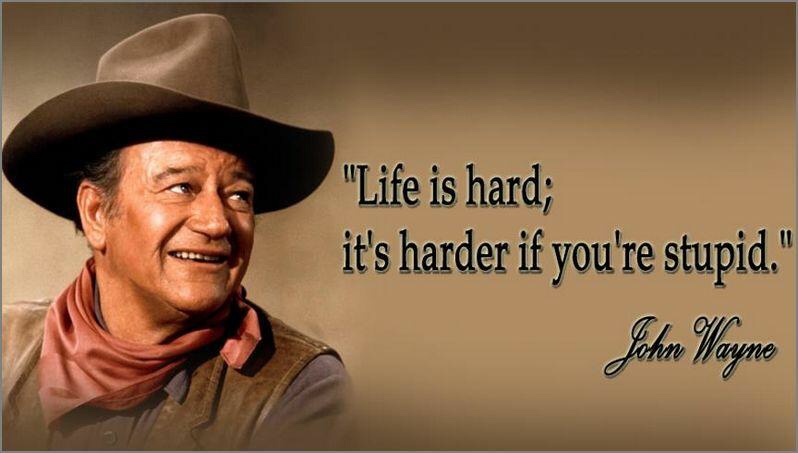
Stupid Swedes

Sitting with some friends yesterday, we discussed why the Swedish word ’korkad’ (corked) means stupid. After much research, we couldn’t find an answer but we guessed it had something to do with the fact that cork is empty, light and flighty. Another thought was once you have uncorked a bottle and drunk it, it is an empty vessel.

We might not have found the origin of the word ‘korkad’ but we did find lots of expressions in Swedish to call somebody stupid. Here are 15 of them!

1) Bakom flötet – behind the float (fishing)

2) Tjockskallig – thick skulled

3) Tappad bakom en vagn – dropped behind a carriage

4) Tappad i backen – dropped on the ground

5) Ut och cyklar – out cycling

6) Dum i huvudet – stupid in the head

7) Fårskalle – sheep skull

8) Obegåvad – ungifted

9) Har inte alla hästar i stallet/hemma – doesn’t have all his/her horses in the stable / at home

10) Inte den vassaste kniven i lådan – not the sharpest knife in the drawer

11) Hjulet snurrar men hamstern är död – the wheel is turning but the hamster is dead

12) Född i farstun – born in the porch

13) Har inte alla kottar i granen – doesn’t have all the cones on his/her fir tree

14) Jubelidiot – celebrated idiot

15) Hissen går inte hela vägen upp – the lift doesn’t go all the way to the top floor

Then there are lots of words like ‘korkad’ that are fun to say and all mean stupid. For example, ’trög, bombad, knasig, knäpp, puckad, pantad, pundig, beng, bläng, boll, ding, fläng, prillig, stollig, svagsint, rubbad, koko, blåst’.

Who knew there were so many ways to call somebody stupid in Swedish? I tend to just say ‘dum’ but I’m now going to practice a few more of these words and expressions.

Swedish expression: Cake on cake

The Swedish expression ‘kaka på kaka’ or ’tårta på tårta’ is translated as ‘cake on cake’. It is quite a commonly-used expression – but what does it mean?

Swedes use ‘kaka på kaka’ to describe something that is an unnecessary addition that becomes a bit too much, or even over the top. For example, ‘buying another television when we already have two is a bit cake on cake.

It can also mean an unnecessary repetition. In English – superfluous – ‘when you gave that example in your presentation, it was a cake on cake’.

The saying itself is an example of tautology – a concept in language where we unnecessarily repeat a word and it adds no meaning, eg chai tea (chai means tea), or salsa sauce (salsa means sauce) or naan bread (naan is bread). So the expression ‘cake on cake’ feeds into this concept by emphasising that one of the cakes is unnecessary.

The original meaning of the saying was related to overindulgence. So cake on cake meant basically you can’t get too much of a good thing – bring on the cake!! Over the years, and with the influence of Swedish moderation, it changed to mean too much that is not necessary.

Stockholm Syndrome – what is it?

The names Birgitta Lundblad, Elisabeth Oldgren, Sven Säfström and Kristin Ehnmark are not known to many people. However, they played an important role in the concept called Stockholm Syndrome.

On 23 August 1973, the four were taken hostage in Kreditbanken in Stockholm, by Jan-Erik Olsson – who was later joined by a former prison mate. Six days later when the siege ended, it became evident that the hostages had developed a positive relationship with their captors. They defended them, saying they were, for example, kind, generous and thoughtful. One of them even appealed on their behalf to Prime Minister Olof Palme. They refused to testify, and started a campaign to raise money for their kidnappers’ defense.

The syndrome was identified by criminologist Nils Bejerot. Psychiatrist Dr Frank Ochberg went on to define the syndrome as a situation where victims form positive attachment to their oppressors. He developed the process that people suffering from Stockholm Syndrome go through.

Firstly, there is an initial experience that is surprising and terrifying. The victims are certain they are going to die. Then they experience a type of infantilisation – where, like a child, they are unable to eat, speak or go to the toilet without permission. Small acts of kindness – such as being given food – prompts a primitive gratitude for the gift of life. The hostages experience a powerful, primitive positive feeling towards their captor. They are in denial that this is the person who put them in that situation. In their mind, they think this is the person who is going to let them live.

One of the Swedish hostages, Elisabeth Oldgren was allowed to leave the vault that had become their prison but only with a rope fixed around her neck. She said that at the time she thought it was “very kind” of Olsson to allow her to move around the floor of the bank.

One famous case of Stockholm Syndrome is Patty Hearst who was kidnapped by revolutionary militants in 1974. She appeared to develop sympathy with her captors and even became their partner in crime.

Natascha Kampusch was another case. Kidnapped and molested as a 10-year-old by Wolfgang Priklopil, she was incarcerated in a basement for eight years, but yet she mourned his death and lit a candle for him. Years after her escape in 2006 she still carried a photo of him in her wallet.

Today, psychologists see Stockholm Syndrome arising in other situations than kidnapping: abusive marriages, trafficking and sports coaching, for example. In popular culture, the excellent Netflix series ‘Le Casa De Papa’ depicts a robbery in the National Treasury and the ‘Síndrome de Estocolmo’ that several hostages experience.

In 2019, a film called Stockholm was released. Starring Ethan Hawke and Noomi Rapace it loosely tells the story of those fateful 6 days in 1973.

Stockholm Syndrome – what is it?

The names Birgitta Lundblad, Elisabeth Oldgren, Sven Säfström and Kristin Ehnmark are not known to many people. However, they played an important role in the concept called Stockholm Syndrome.

On 23 August 1973, the four were taken hostage in Kreditbanken in Stockholm, by Jan-Erik Olsson – who was later joined by a former prison mate. Six days later when the siege ended, it became evident that the hostages had developed a positive relationship with their captors. They defended them, saying they were, for example, kind, generous and thoughtful. One of them even appealed on their behalf to Prime Minister Olof Palme. They refused to testify, and started a campaign to raise money for their kidnappers’ defense.

The syndrome was identified by criminologist Nils Bejerot. Psychiatrist Dr Frank Ochberg went on to define the syndrome as a situation where victims form positive attachment to their oppressors. He developed the process that people suffering from Stockholm Syndrome go through.

Firstly, there is an initial experience that is surprising and terrifying. The victims are certain they are going to die. Then they experience a type of infantilisation – where, like a child, they are unable to eat, speak or go to the toilet without permission. Small acts of kindness – such as being given food – prompts a primitive gratitude for the gift of life. The hostages experience a powerful, primitive positive feeling towards their captor. They are in denial that this is the person who put them in that situation. In their mind, they think this is the person who is going to let them live.

One of the Swedish hostages, Elisabeth Oldgren was allowed to leave the vault that had become their prison but only with a rope fixed around her neck. She said that at the time she thought it was “very kind” of Olsson to allow her to move around the floor of the bank.

One famous case of Stockholm Syndrome is Patty Hearst who was kidnapped by revolutionary militants in 1974. She appeared to develop sympathy with her captors and even became their partner in crime.

Natascha Kampusch was another case. Kidnapped and molested as a 10-year-old by Wolfgang Priklopil, she was incarcerated in a basement for eight years, but yet she mourned his death and lit a candle for him. Years after her escape in 2006 she still carried a photo of him in her wallet.

Today, psychologists see Stockholm Syndrome arising in other situations than kidnapping: abusive marriages, trafficking and sports coaching, for example. In popular culture, the excellent Netflix series ‘Le Casa De Papa’ depicts a robbery in the National Treasury and the ‘Síndrome de Estocolmo’ that several hostages experience.

In 2019, a film called Stockholm was released. Starring Ethan Hawke and Noomi Rapace it loosely tells the story of those fateful 6 days in 1973.

Stockholm Syndrome – what is it?

The names Birgitta Lundblad, Elisabeth Oldgren, Sven Säfström and Kristin Ehnmark are not known to many people. However, they played an important role in the concept called Stockholm Syndrome.

On 23 August 1973, the four were taken hostage in Kreditbanken in Stockholm, by Jan-Erik Olsson – who was later joined by a former prison mate. Six days later when the siege ended, it became evident that the hostages had developed a positive relationship with their captors. They defended them, saying they were, for example, kind, generous and thoughtful. One of them even appealed on their behalf to Prime Minister Olof Palme. They refused to testify, and started a campaign to raise money for their kidnappers’ defense.

The syndrome was identified by criminologist Nils Bejerot. Psychiatrist Dr Frank Ochberg went on to define the syndrome as a situation where victims form positive attachment to their oppressors. He developed the process that people suffering from Stockholm Syndrome go through.

Firstly, there is an initial experience that is surprising and terrifying. The victims are certain they are going to die. Then they experience a type of infantilisation – where, like a child, they are unable to eat, speak or go to the toilet without permission. Small acts of kindness – such as being given food – prompts a primitive gratitude for the gift of life. The hostages experience a powerful, primitive positive feeling towards their captor. They are in denial that this is the person who put them in that situation. In their mind, they think this is the person who is going to let them live.

One of the Swedish hostages, Elisabeth Oldgren was allowed to leave the vault that had become their prison but only with a rope fixed around her neck. She said that at the time she thought it was “very kind” of Olsson to allow her to move around the floor of the bank.

One famous case of Stockholm Syndrome is Patty Hearst who was kidnapped by revolutionary militants in 1974. She appeared to develop sympathy with her captors and even became their partner in crime.

Natascha Kampusch was another case. Kidnapped and molested as a 10-year-old by Wolfgang Priklopil, she was incarcerated in a basement for eight years, but yet she mourned his death and lit a candle for him. Years after her escape in 2006 she still carried a photo of him in her wallet.

Today, psychologists see Stockholm Syndrome arising in other situations than kidnapping: abusive marriages, trafficking and sports coaching, for example. In popular culture, the excellent Netflix series ‘Le Casa De Papa’ depicts a robbery in the National Treasury and the ‘Síndrome de Estocolmo’ that several hostages experience.

In 2019, a film called Stockholm was released. Starring Ethan Hawke and Noomi Rapace it loosely tells the story of those fateful 6 days in 1973.

21 ways to die in Swedish

Yesterday was the sombre funeral of Prince Philip in St George’s Chapel in Windsor, UK. In the House of Nobility in Stockholm, his coat of arms was also hung as he was a member of the noble Swedish Serafimer order.

All this got me thinking about the different ways you can describe somebody dying. In English, we have expressions like ‘bite the dust’, ‘pop your clogs’, ‘join the choir’, ‘go to meet your maker’, ‘kick the bucket’ and ‘shuffle off your mortal coil’. I wondered how many words or expressions there are in Swedish – and I found 21!

Att dö – to die

Att avlida – to die

Att gå ur tiden – literally to ’go out of time’

Att gå bort – to ’go away’

Att somna in – to ’sleep in’

Att trilla av pinn – to fall off the stick

Att stupa – to fall (often in battle)

Att gå i graven – to go to the grave

Att gå hädan – to go away

Att samlas till sina förfäder – to be gathered by your ancestors

Att ta ned skylten – to ‘take down the sign’

Att kola vippen – untranslatable, meaning to die

Att bita i gräset – to bite the grass

Att duka under – to go under

Att dra sitt sista andetag – to take your final breath

Att vinkla upp tofflorna – to point up your slippers

Att dra på sig träfracken – to put on your wooden suit

Att ge upp andan – to give up breathing

Att krepera – to die

Att lämna jordelivet – to leave this earthly life

Att kila vidare – to die, to ‘run onwards’

Can you think of any more expressions or words to add to this list?

French kiss, Irish coffee and Swedish fish!

There are many adjectives that include a nationality, such as French kiss, Danish pastry, Turkish bath, Spanish Flu, Mexican Wave, Brazilian Wax…..

How many such combinations are combined with the word Swedish? A quick look on line and I find the following five:

Swedish……meatballs

Swedish……massage

Swedish……Chef

Swedish……Bikini Team

Swedish……Fish

Can you think of any more to add to the list?

International Romani Day-Roma in Sweden

Today, 8 April, is International Romani Day. It marks the first World Romani Congress that was held in London in 1971, making today the 50th occasion it has been celebrated. The day exists to shine a light on the ongoing persecution and abuse that the Roma population of the world has been forced to endure throughout history.

The Romani originate from northern India. They are dispersed, and their most concentrated populations are located in Europe, and Western Asia, since around 1007. Nobody really knows why the Roma left India in the first place, as no records were kept. However theories abound: from early persecution based on caste, to banishment from angering the king, and religious war.

The estimated 12 million Roma are consequently a nomadic people with no land to call their own. Their mobility and the fact that they lived in temporary camps contributed through the centuries to associations with poverty and accusations of high rates of crime. The discomfort that others felt about their presence led to perceptions of the Roma as antisocial, unsophisticated or even dangerous. Partly for this reason, discrimination against the Romani people has continued to the present day.

Romani have existed in Sweden since at least the 1500’s and today they are classed as one of Sweden’s five national minority groups (together with Jews, Sami, Swedish Finns and Tornedalers). Romani chib has the status of official minority language.

Over the centuries, the people of Sweden discriminated against, marginalised and excluded its Roma population. For 40 years, Sweden had a legal policy of enforced sterilization of people to avoid ‘unacceptable offspring’. Much suggests that Roma women were particularly subjected to this abuse, and mostly it was involuntary. Sweden removed this law in 1976. The Pew Research Poll of 2016 found that 42% of Swedes held strong anti-Roma views (compared to 82% in Italy, and 37% in Holland).

A Romani political activist in Sweden was Singoalla Millon, who died in 2020, and spent her entire life fighting for education, housing and acceptance. Another was Katarina Taikon who dedicated herself to improving conditions for Romani people in Sweden. She tried to convince the Swedish government to see the Romani as political refugees. She died in 1995. Today, the politician Soraya Post has worked as an EU politician defending the rights of the Romani and other minorities.

In 2012, the Swedish government introduced an 20-year equal opportunities strategy for Roma people. The strategy includes objectives and measures within several areas such as schooling, employment; housing, health, social care, culture and language. Of course, discrimination and marginalization are still very real in Sweden, but this is at least a step in the right direction.