It’s the first of Advent today, which is an atmospheric and almost romantic time in Sweden.
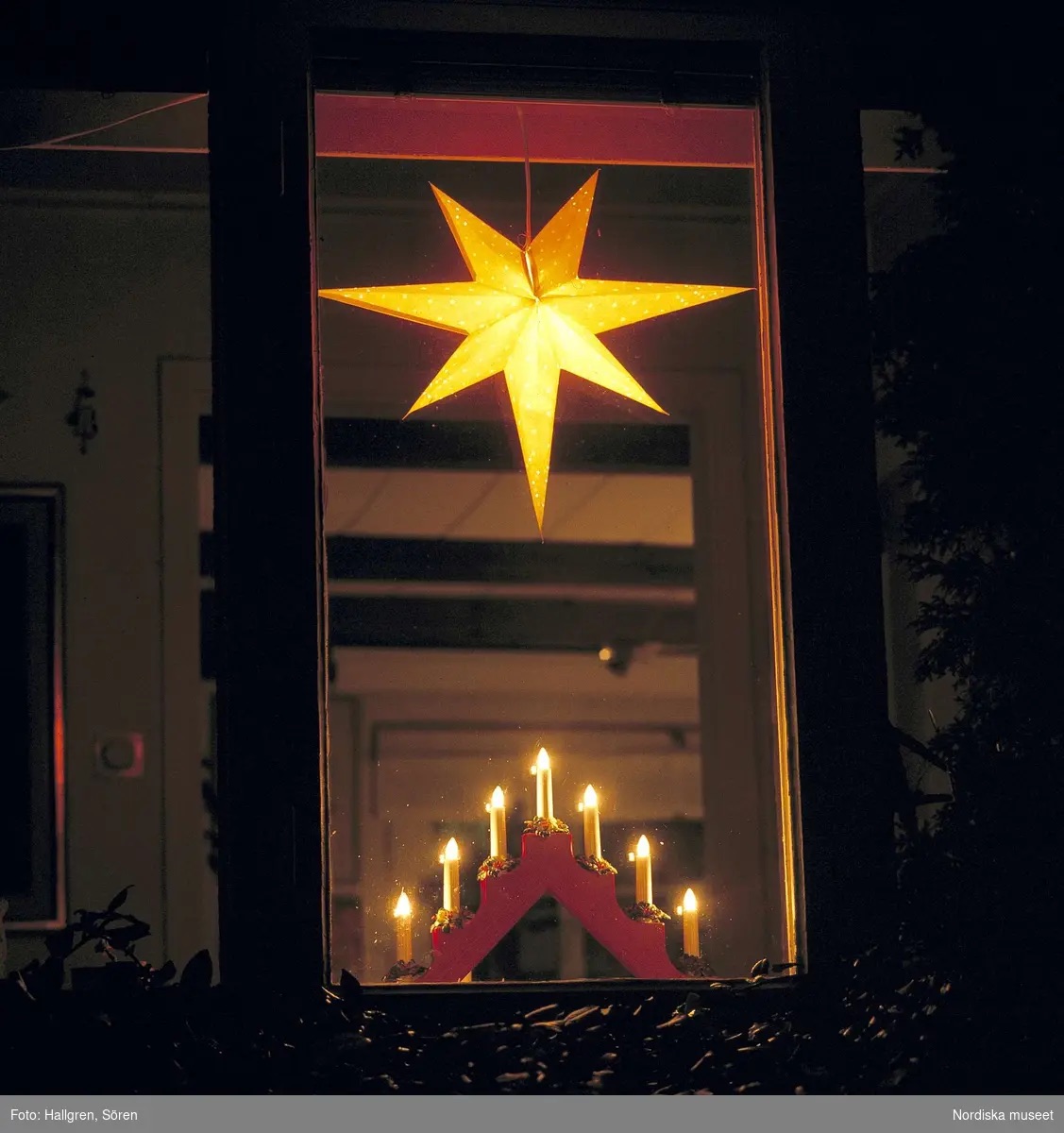
Swedes decorate their houses, apartments and windows with lights. From ceilings, illuminated stars are hung. On window ledges, electric advent candles are placed. On tables, four candles are positioned and one is lit every Sunday up until Christmas. Small candles, often red, are dotted about the home. People eat gingerbread and drink mulled wine. Some people go to an advent concert in their local church or concert house. I personally went to a very atmospheric and cosy concert in Stockholm’s City Hall yesterday.
Some years, there is already deepish snow at the first of Advent. But this year in Stockholm, it is warm, so there isn’t any. Instead, it is very dark. The collective advent decoration is a definite reprieve from this darkness as light is spread into these murky places.
The word ‘advent’ comes from the Latin ‘adventus’ which means ‘arrival’ and is traditionally the start of the period where we wait for the arrival of nativity, or Christmas. Some religions also see it as waiting for the second coming of Christ. But in this secular society that is Sweden, the waiting is probably for the snow to come, the cold to hit, the water to freeze to ice and for winter to clasp its fingers firmly around us.
It’s the first of Advent today, which is an atmospheric and almost romantic time in Sweden.
Swedes decorate their houses, apartments and windows with lights. From ceilings, illuminated stars are hung. On window ledges, electric advent candles are placed. On tables, four candles are positioned and one is lit every Sunday up until Christmas. Small candles, often red, are dotted about the home. People eat gingerbread and drink mulled wine.
Some years, there is already deepish snow at the first of Advent. But this year in Stockholm, it is unseasonably warm, so there isn’t any. Instead, it is very dark. The collective advent decoration is a definite reprieve from this darkness as light is spread into these murky places.
The word ‘advent’ comes from the Latin ‘adventus’ which means ‘arrival’ and is traditionally the start of the period where we wait for the arrival of nativity, or Christmas. Some religions also see it as waiting for the second coming of Christ. But in this secular society that is Sweden, the waiting is probably for the snow to come, the cold to hit, the water to freeze to ice and for winter to clasp its fingers firmly around us.
Last night, the final of Sweden’s ‘Melodifestivalen’ took place. The winner gets sent to the Eurovision Song Contest in Liverpool in May. Many Swedes take this competition very seriously – the process of selection takes 6 weeks!
But finally, last night, the victor was crowned. The winner this year was Loreen – again. Loreen won Eurovision Song Contest in 2012 for Sweden with the fantastic song Euphoria.
After two failed attempts, she finally gets to once again represent Sweden 2023 with the song Tattoo. The song, along with her performance and the tv production is a very strong contender to take home the victory. Many Swedes are already feeling triumphant. But Eurovision is often an unpredictable animal – since musical taste levels between the competing countries vary drastically. What is popular in the Nordic countries is usually not as popular in, for example, the Balkans.
So the question remains, will Loreen deliver Sweden’s 7th victory and thereby equal the record for most victories currently held by Ireland?
There is an iconic song in Swedish about the capital city of Stockholm. The reason it is iconic is that everybody has heard it once a week for almost 30 years, throughout the summer. It is the opening song of the unceasingly popular 8-episode summer TV show Allsång på Skansen.
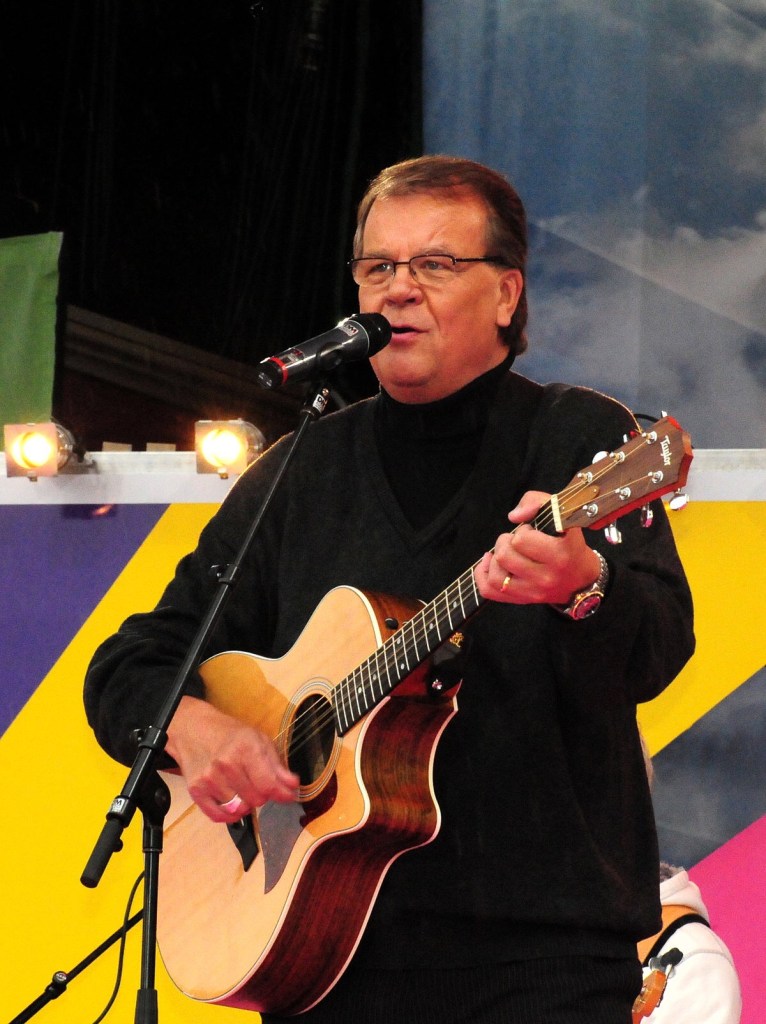
The song is called ’Stockholm i mitt hjärta’ and translates as ’Stockholm in my heart’. It was released by singer Lasse Berghagen in 1992, and written to celebrate the inauguration of Stockholm’s mayor that year.
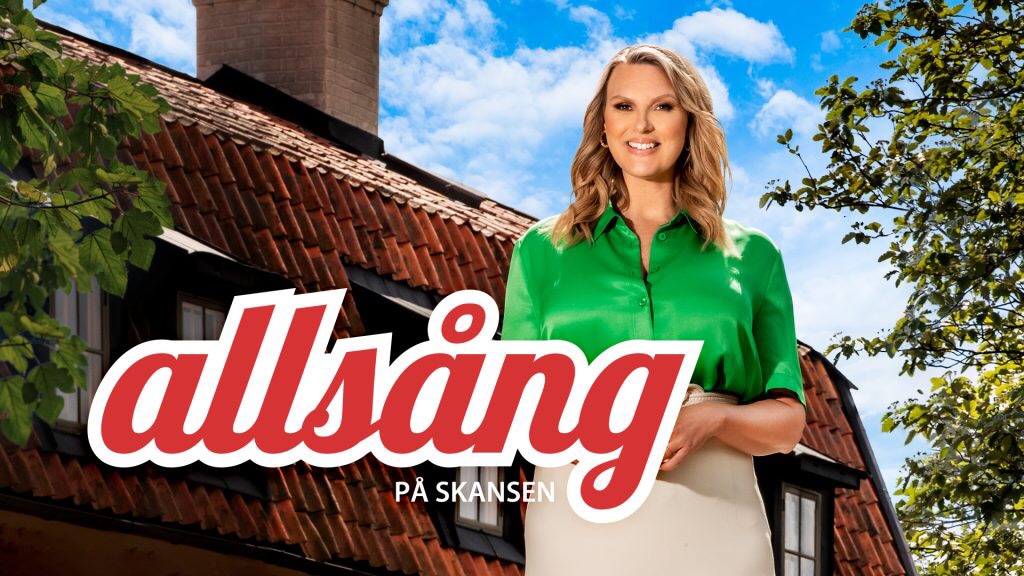
The program Allsång på Skansen has had many hosts. Lasse Berhagen hosted the show between 1994-2003. He is one of Sweden’s most loved national treasures. The program is currently hosted by popular singer Sanna Nielsen.
The program is a live stage show with various artists singing and performing. The crucial element is the audience sing-a-long, the ‘allsång’, where even the viewers at home are encouraged to join in and sing the lyrics that are published on the tv screen.
The whole show is broadcast from a hilltop overlooking the city’s harbour. With Stockholm as a majestic backdrop, it is easy to see why the city is ‘in everybody’s heart.’
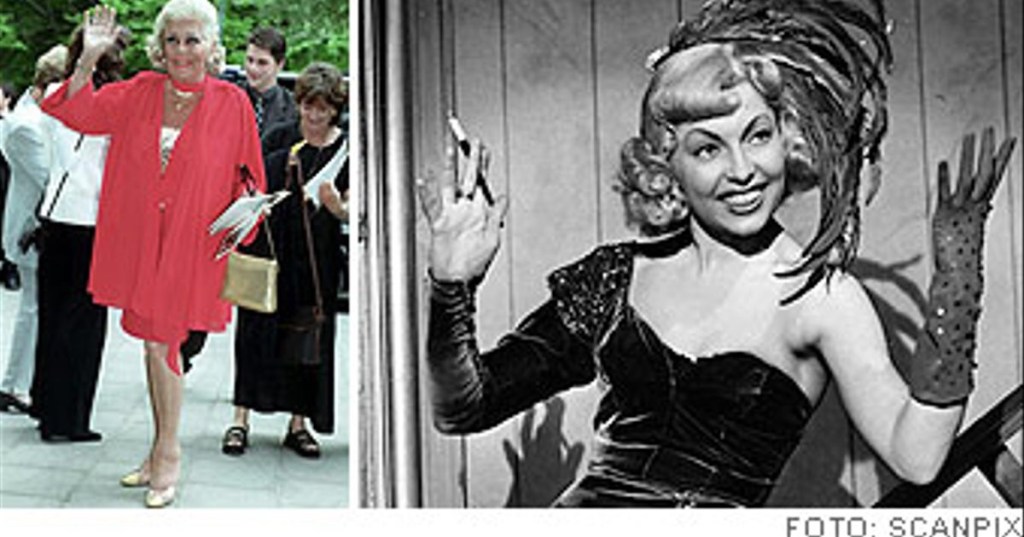
Today, 2 July, marks 15 years since the death of the Swedish actress, singer and femme fatale Git Gay. Born in Karlshamn in 1921, she went on to become one of Sweden’s most popular and notorious prima donnas.
A classically trained concert pianist, Git Gay made her name as an extravagant review artist and larger-than-life tv host. She was given her stage name in 1949 by review artist Karl Gerhard, who undoubtably thought it was more showbiz than her real name Birgit Agda Carp.
By the end of her career, she had appeared in many films and shows as well as recorded numerous records, and the name Git Gay was synonymous with glamour and glitz. In fact, the word ‘kalaspingla’, roughly meaning party babe, is said to have been of her making.
After her death, in accordance with her will, a foundation was set up in her name to give cash awards to working Swedish musical and theatrical artists. The last award was given in a grand gala, Git Gay style, in 2018.
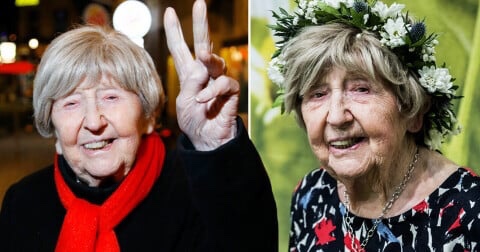
Dagny Carlsson, the world’s oldest blogger, has died. She started blogging at the age of 100, and became a celebrity and influencer. She died just short of her 110th birthday. RIP Dagny! ❤️
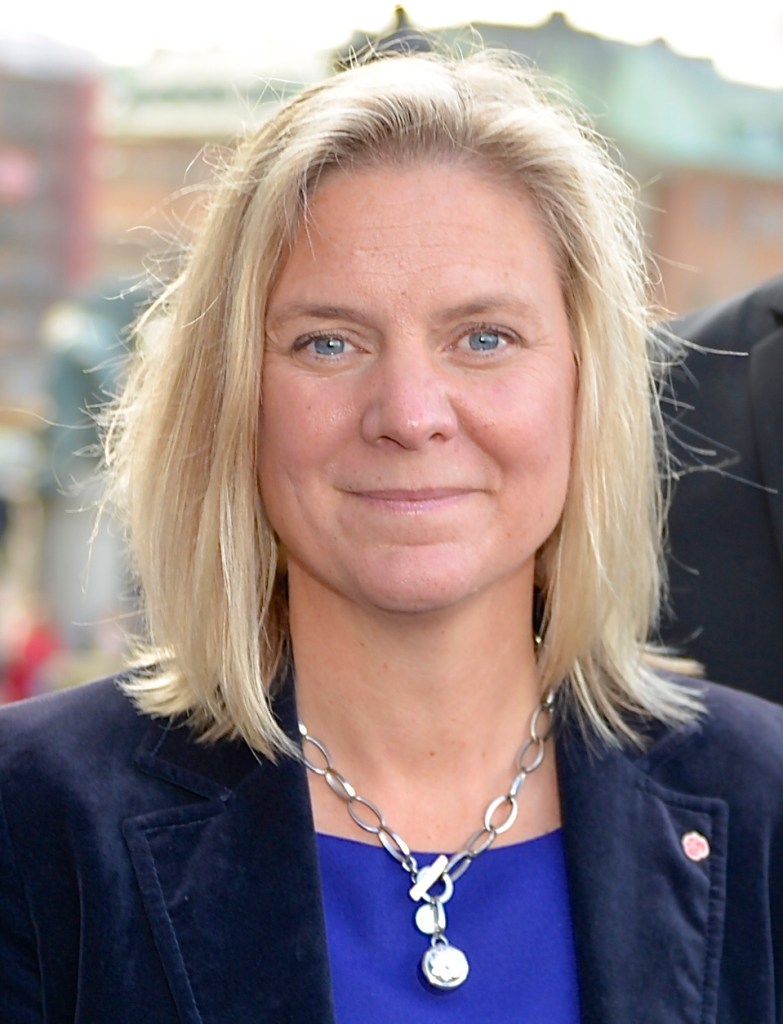
Today is a historic day in Sweden. Magdalena Andersson has been chosen by the Parliament as Prime Minister, and as such, is the first woman to have the post in the history of Swedish politics. A great day for equality, and not a day too soon. It seems rather odd that it took Sweden so long.
Around the world, women have been politically appointed as state head since the 1940’s. However, the first woman to be democratically elected as prime minister was Sirimavo Bandaranaike of Ceylon (present-day Sri Lanka) in 1960. The first woman democratically elected president of a country was Vigdis Finnbogadottir of Iceland in 1980.
The other Nordic countries have a better track record than Sweden. Norway has had two female Prime Ministers to date, the first being Gro Harlem Brundtland in 1981. Denmark has had two – Helle Thorning Schmidt was first elected in 2011. Finland has had three female Prime Ministers with the first, Anneli Tuulikki Jäätteenmäki, elected in 2003.
With the appointment of Magdalena Andersson, four of the five current leaders of the Nordic countries are female.
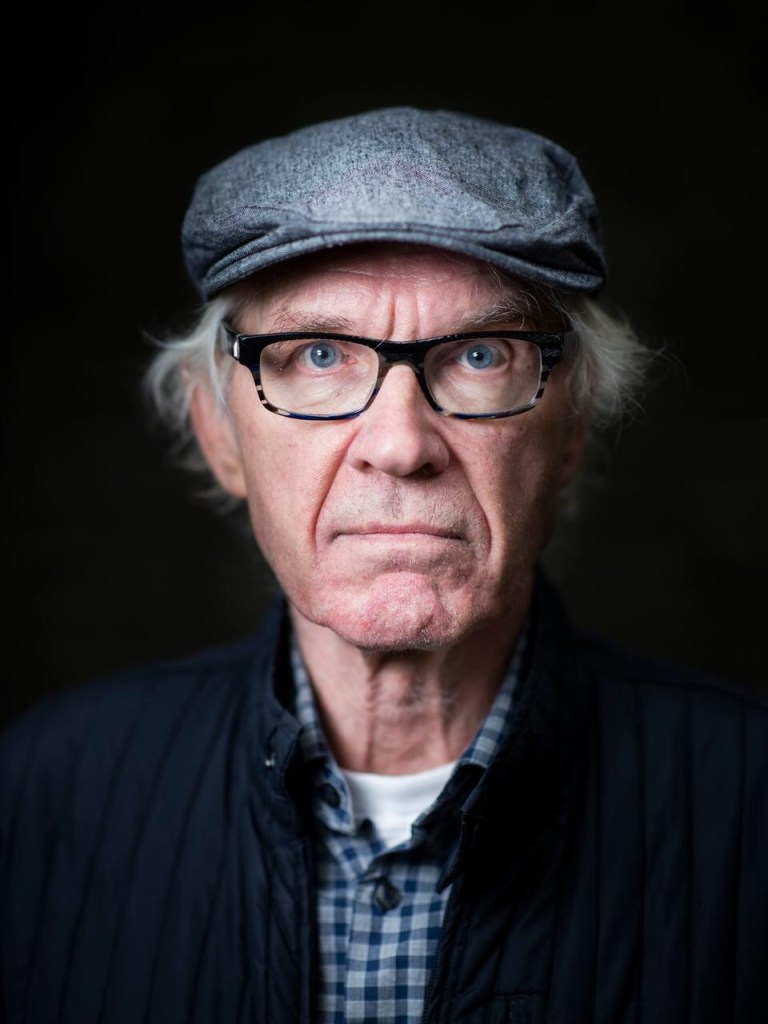
On Sunday, Lars Vilks, a controversial Swedish artist was killed in a car crash on a motorway in Sweden. Police are investigating the death for suspicious circumstances. It seems as if a tire exploded causing his car to break the central barrier and crash head on into an oncoming lorry. In the vehicle with him were two policemen – his protection.
Lars Vilks had 24-hour police protection as he was living under a fatwa issued by al Qaida. The price on his head was 100,000 USD and an extra 150, 000 if the perpetrator slit his throat.
The fatwa was a response to a series of drawings that Lars Vilks produced in 2007 in a local art show. His pictures depicted the prophet Muhammad, something that is considered blasphemous in anti-iconic Islamic tradition. To create double impact, Vilks depicted the prophet as a so-called ‘roundabout dog’ – a type of street art in Sweden. Depicting the prophet as a dog was deemed extra offensive. It caused such a local and international response that some newspapers in Sweden printed some of his drawings in articles about freedom of speech – causing even more fury.
The whole Lars Vilks case generated huge debate around issues of freedom of speech, respect, art, censorship, religious influence and terror. Throughout the years, he was the victim of many attacks and murder attempts, including bombing and arson.
The catalyst for Vilks’ work was the ‘Jyllands-Posten Muhammad cartoons controversy’ which began after the Danish newspaper Jyllands-Posten published 12 editorial cartoons in 2005. Most of the pictures showed Muhammad. The newspaper announced that this was a debate about criticism of Islam and self-censorship. Muslim groups in Denmark complained, and the issue eventually led to protests around the world, including violent demonstrations, deaths and riots in some Muslim countries.
Vilks saw the specific response to his cartoons as part of the artwork itself. All of the consequences, all the reactions, all of the outrage and all of the violence was an integral part of the art, and a political comment. By that definition, even this blog has become a part of the artwork.
One can, however, wonder if he thought it was worth it in the end.
Lars Vilks was 75 when he died, and he produced a great deal of other work during the decades. He was always conceptual and often controversial and the debate he contributed to will continue long after his death.
In my local park, there is a little urban zoo where you can see goats, sheep, rabbits, hens and two portly pigs. The hog is called Lasse and the sow is called Maja. They are named after a man called Lasse-Maja – a legendary name in Swedish culture.
It struck me, however, that I’ve only really heard his name – I didn’t really know who he was. So I researched him. And I was met by a story that was fascinating and tragic in equal measure.
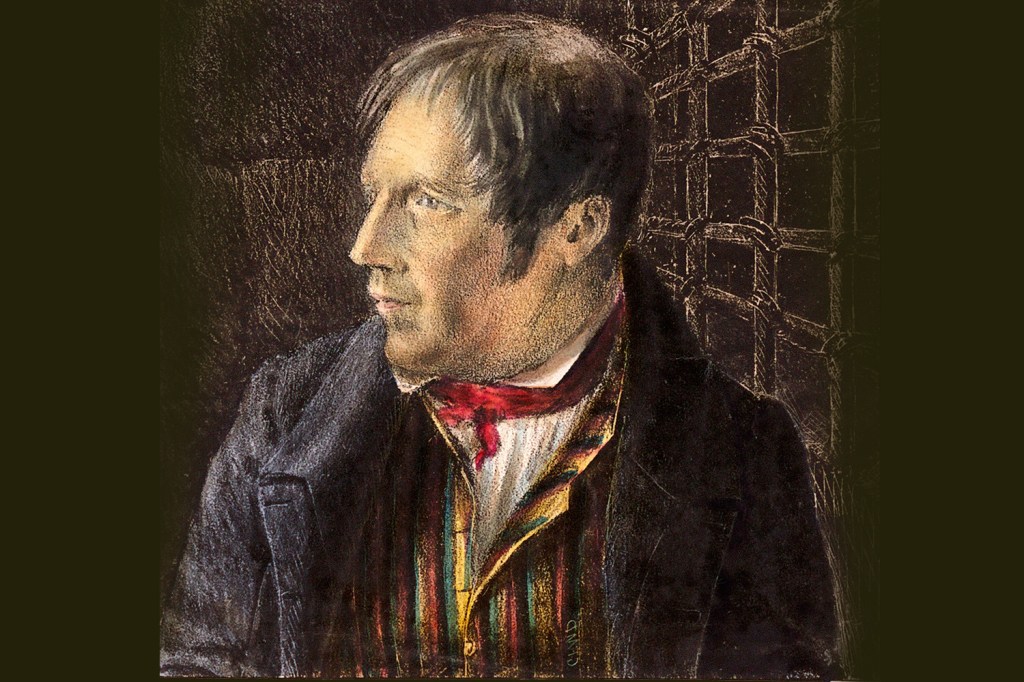
Lars Larsson, later Molin, was born in 1785, and went on to become one of Sweden’s most notorious criminals. He wrote a sensational autobiography about his escapades in 1833 and this book was extremely popular because it contained adventure and, not least, explicit sex scenes. It still continues to fascinate Swedes, with the latest publication coming out in 2016.
So, why the nickname Lasse-Maja? Lasse is a man’s name, and Maja is a female name. Well, he was given this gender-combined name because he periodically lived as a woman. He often dressed as a man when he committed his crimes, as it was more comfortable. However, he lived long periods as a woman and supported himself as a maid, housekeeper and prostitute. By today’s terms, he probably would have identified as transgender. His book is one of the few 19th Century works to describe the transgender experience, which added to its mystique and popularity. In this article, I will use the pronoun ‘he’ for ease.
Lasse-Maja’s life was one of poverty and misery. He was a serial liar and petty thief who was arrested over 30 times and frequently escaped. He became notorious amongst citizens and was written about in newspapers. However, in 1812 he stole silver from a church in Järfälla, just outside of Stockholm. He was captured, sentenced to life and shipped off to the fortress prison on the west coast island of Marstrand. He even managed to escape from this military building on one occasion, but was later caught and returned.
Lasse-Maja was an inventive and guileful person and quickly gained a position of privilege in the prison. He made sure that his reputation spread to the outside world, and convinced the authorities to arrange for tourists to visit him and hear his elaborate stories. His celebrity became so large that he was even given an audience by Crown Prince Oscar.
In 1839 he was pardoned, probably because of the popularity of his book. He traveled the country telling his stories and died in Arboga in 1845, where he is buried today. Several books and films depict his life, and in the fortress prison there is a plaque to commemorate him. He also has a walking trail, a skerry, a tv show, a pre-school and a hotel named after him.
Lasse-Maja would probably never have been remembered in Swedish culture if it wasn’t for the autobiography, the female clothing and his skill for self promotion. Popular culture depicts him as a happy-go-lucky, cheeky, lovable rogue. However, Lasse-Maja was no Robin Hood – the truth is that his life was extremely tough and without much joy. He lived a life of crime, deceit and despair.
Today, it is hard to really know Lasse-Maja’s truth. He was a first class liar, manipulator and fabulator. However, one thing is certain; Lasse-Maja holds the position of the most famous transperson in Swedish history.
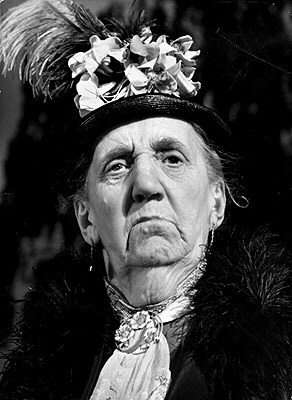
The legendary actress Julia Caesar was born in 1885 in Stockholm. And yes, that was her real name – Julia Maria Vilhelmina Caesar.
From a young age, she became typecast in the roles she was given, and frequently played the opinionated but loveable, old woman – often in comedies. They could be a mother in law, a cook, a nosy neighbour or a housekeeper – but they were always a battleax who were outspoken and candid. They weren’t always two dimensional characters, however. In many cases, she depicted strong feminist views and railed against the patriarchy.
You might not have heard of Julia Caesar, but she was a very popular and prolific actor with a career that spanned over 60 decades. In fact, she holds the record for the Swedish actress who has appeared in most films – 136 of them. In addition to this, she played many classic theatre roles and performed in reviews and cabaret.
Julia Caesar was enormously loved and had a huge following – she was an institution in Swedish theatre and film. In the Stockholm park area of Tanto, where she frequently performed in the outdoor theatre, there is a street named after her.
She died in Stockholm in 1971, aged 86. Privately, she lived a discrete life together with opera singer Frida Falk. Although Frida died 23 years prior to Julia Caesar, they are buried together in Caesar’s family grave in the cemetery of Bromma Church.



 Watching the Swedes