Warring neighbours: Sweden and Finland


finland-sweden-map,0

Many neighbouring countries around the world have had their fair share of conflict. Some countries are currently at war or teetering on the brink.

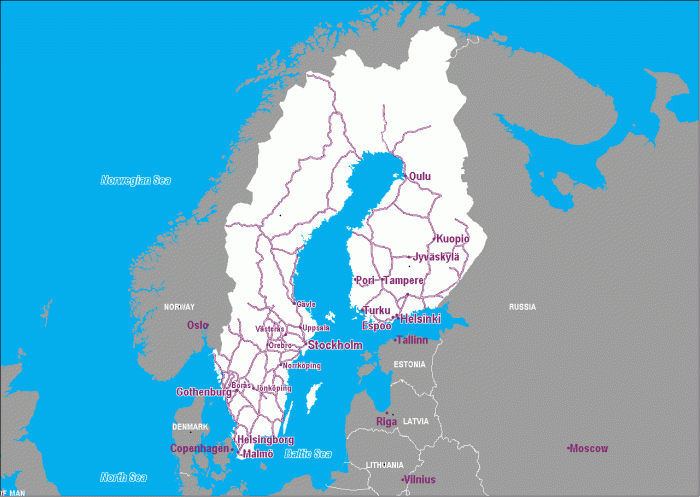
Thankfully, Sweden and the other Nordic countries have lived in peace with each other for centuries. However, Sweden and Finland still battle it out every year in an athletics competition between the two nations – the best type of neighbourly conflict. In Swedish, this is called ‘Finnkamp’ and in Finland it is called ‘Sverigekampen’. This year it is currently taking place in Stockholm.

The first Finnkamp took place in 1925 for men, and 1951 for women and it has taken olace every year, with a few exceptions for organisational disagreements and WWII. It is highly competitive, although friendly, and is a classic track and field event.

In total there have been78 annual competitions for the men and Finland leads 45-31 over Sweden. For the women, there have been 67 competitions and Sweden holds the lead at 41 to Finland’s 25. Let’s see how it ends up this year!

If you want to see the end of it, make your way down to Stadion in Stockholm today to catch the final events.


Dividing up Sweden 


Today I thought I was in one region of Sweden, but I was reminded by a Swedish friend that I was in fact somewhere else. This dividing up of Sweden is not easy to get a grip of. 
Sweden is divided into 3 regions: Norrland, in the North, Svealand in the middle and Götaland at the bottom. These regions have no official purpose, except making it easier for weather readers to present their forecasts. 

Within each region, there are many counties (landskap). Sweden has in fact 25 counties, with Lapland being the most northern and Skåne being the most southern. These counties have their own coats of arms, flowers, and often traditional clothing. 

In 1634, the administrative responsibilities for justice, roads, hospitals etc were removed from the counties and given to an organisation of ‘län’ – administrative counties. There are 20 of these in Sweden. There can be more than one county in the area covered by a ‘län’. For example Södermannsland ‘län’ includes the counties of Södermannland, Uppland and Närke. Each ‘län’ has a main city of residence, where the county government (länsstyrelsen) is based and the governer (landshövding) has his/her residence. For Södermannland, this is Nyköping. 

Within each administrative county there are local councils (Kommun) who are responsible for social services on a local level. There are 290 of these in Sweden today. 

So when traveling through Sweden, you will be in a region, a county, an administrative county and a council at the same time. No wonder it’s hard to know where you are sometimes! 

What the f***! Was moving to Sweden a mistake?


I clearly remember thinking this to myself on May 13th 1995.  

I was at the airport waiting for a flight to London – my first visit home after moving to Sweden the previous autumn. 
Over the loudspeaker I heard an announcement. My flight was delayed. Due to snow. Yes, snow! Outside the window, snow billowed down on the runway and visibility was limited. In May! ‘What the f***!?’ I recall thinking. ‘Is this what it’s like here? I think I might have made a massive mistake moving here’. Eventually the flight took off and I landed two hours later in the British capital. There, in London, the sun was shining and people were walking around in shorts, t-shirts and shades. This, of course, cemented my concern. 

Now it seems as if history might be repeating itself. Yesterday it snowed in Stockholm. And haled. In May. Ok, not May 13th. But May 9th! Today more snow is forecast. And I am wondering if we’re going to break my 1995 record for the latest snowfall in Stockholm!? (Although the actual record seems to be June 12th in 1982). 

But I have learned something after 20 years in Sweden. If there is one thing we can rely on, it is that the weather does change. Have faith! The claws of winter are soon released and spring will finally and definitively be upon us. 

10 reasons Europe is good for Sweden

Europe_polar_stereographic_Caucasus_Urals_boundary_svg

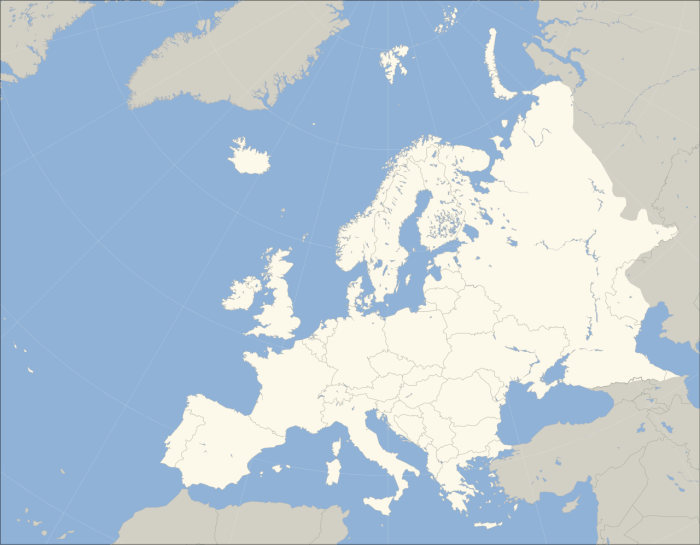
Today, May 9th, is Europe Day. This is an annual celebration of peace and unity in Europe. Sweden has been a part of the European continent since continents were first described and a member of the EU since 1995. As a continent, Europe has 50 sovereign states and speaks around 225 languages – diverse to say the least.

High up here in the North, it’s easy to forget the benefits of being on the European continent and what the access to all the diversity has provided Sweden with.

Here is a list of ten reasons why Sweden has benefited from its geographical location as part of Europe.

  1. Pizza. One of Sweden’s most popular cheesy weekend foods would probably not have been on the menu if Sweden and Italy were not part of the same continent.
  2. The Bernadottes. The Swedish Royal family would not have existed if Napoleon and his French army were not available to lend a king to a dying Nordic monarchy.
  3. ABBA. One of the members of ABBA, Anni-Frid, was Norwegian. Without the country of Norway, the megagroup would have been known as ABB.
  4. The Canary Islands. Had Spain not settled the Canaries, Swedes would have had no sunny paradise to travel to in the long, cold winters. Brrrr.
  5. Visby. The medieval town of Visby on the Swedish island of Gotland would just have been a windy hell hole if it wasn’t for the German Hansa traders who built houses and churches and pretty walls.
  6. The Economy. Sweden exports goods and services of over 50 billion SEK to Europe on a yearly basis. Just that.
  7. The Eurovision Song Contest. Just think how long and boring February, March and May would be if Sweden wasn’t in the Eurovision region. What else would SVT televise if it wasn’t for endless Melodifestival heats and Eurovision semis, and finals and summaries and retrospectives.
  8. Speaking Swedish. If it wasn’t for Germany, France and the UK, people in Sweden wouldn’t have a language. Everybody would walk around in silence. Oh…hang on a minute…
  9. City breaks. Without Europe on the doorstep, people wouldn’t be able to go to Berlin or Barcelona for long weekends or bank holiday breaks. They would have to satisfy themselves with a long weekend in Börås or Flen instead.
  10. Europe. Not the place, the Swedish hard rock band, founded in a suburb outside of Stockholm with vocalist Joey Tempest and hits such as ‘The Final Countdown’. If they hadn’t been inspired by Sweden’s position in Europe, what would they have called themselves? ‘Upplands Väsby’?!

Great Swedish Women -Part 5 – The Legend 

Since March 8th was International Women’s Day, I  am republishing my series on Great Swedish Women, past and present. I hope you want to join me in celebrating them.

Part 5 – the vengeful Viking Blenda.

In the county of Småland in Southern Sweden, there is a legend about a brave Viking woman named Blenda.

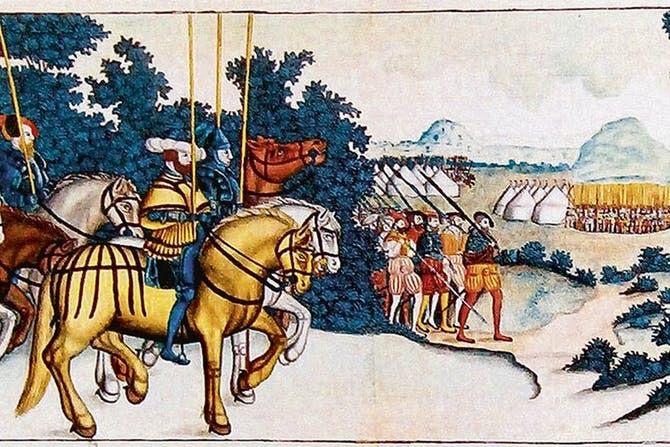
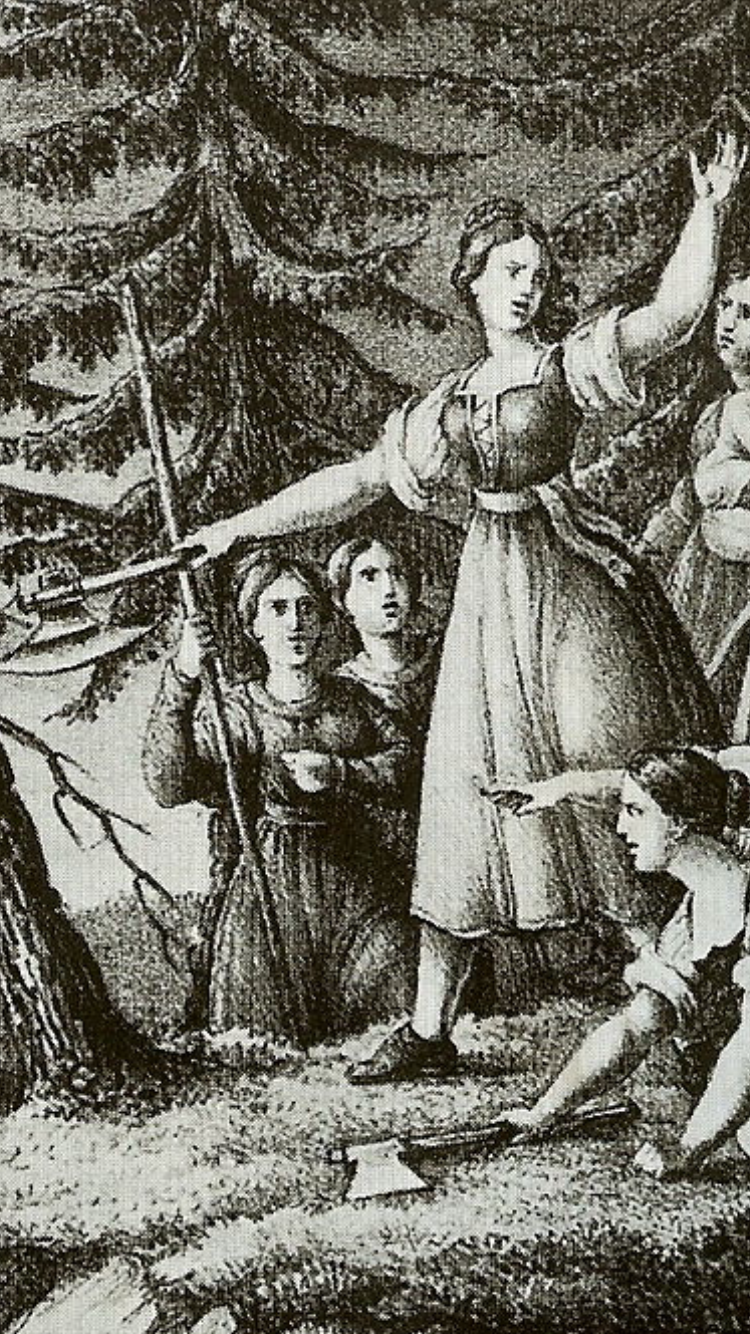
According to legend, the menfolk of Småland were at war in Norway, leaving the women and children alone and defenceless. The Danes learned of this and chose this moment to invade and attack the region.  Blenda was a woman of noble descent and she decided to rally the hundreds of women from Albo, Konga, Kinnevald, Norrvidinge and Uppvidinge. The women armies assembled on the Brávellir, which according to Smålandish tradition is located in Värend.

The women approached the Danes and told them how much they were impressed with Danish men. They invited the men to a banquet and provided them with food and drink. After a long evening, the Danish warriors fell asleep and the women killed every single one of them with axes and staffs.

When the king returned, he bestowed new rights on the women. They acquired equal inheritance with their brothers and husbands, the right always to wear a belt around their waists as a sign of eternal vigilance and the right to beat the drum at weddings and to wear armour.

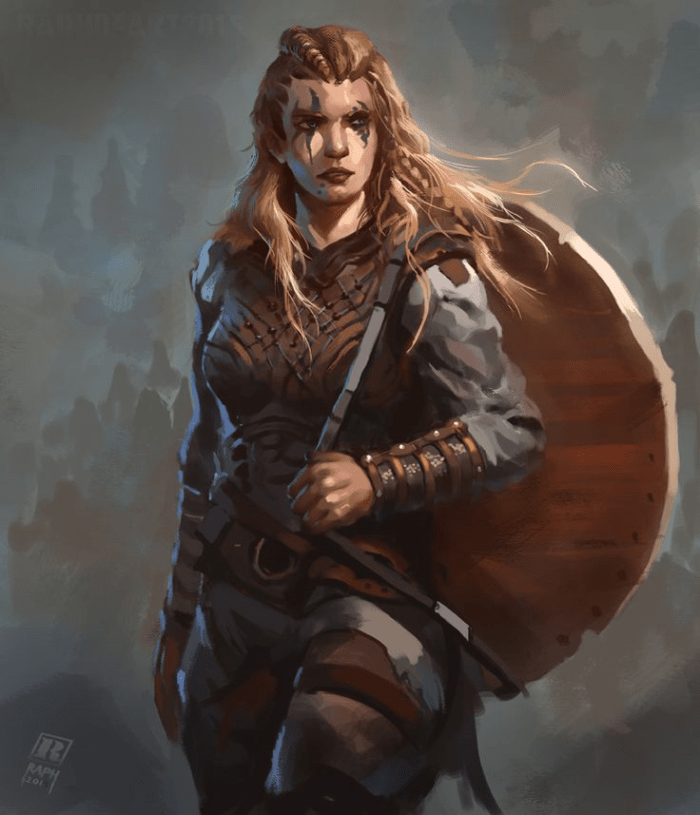
There have been various disputes about the validity of this legend, if and when it happened. One theory is that it happened around the year 500. At this time, female soldiers existed in Sweden. Called Shieldmaidens, three hundred are known to have fought during the great Battle of Bråvalla in 750. If you’ve seen the successful series ‘Vikings’, you will be familiar with these women.

Blenda is perhaps the first known woman in a long line of strong Swedish women who defend themselves from aggressors and contribute to better equal rights between the sexes.

Great Swedish Women Part 1 – The Catalyst

Today, March 8th, is International Women’s Day.

In support, I am writing series on Great Swedish Women, past and present: women with stength and passion, women with a voice, women who create change.

For seven days, I will write about these Great Swedish Women, one per day. I hope you want to join me in celebrating them.

Fredrikabremer

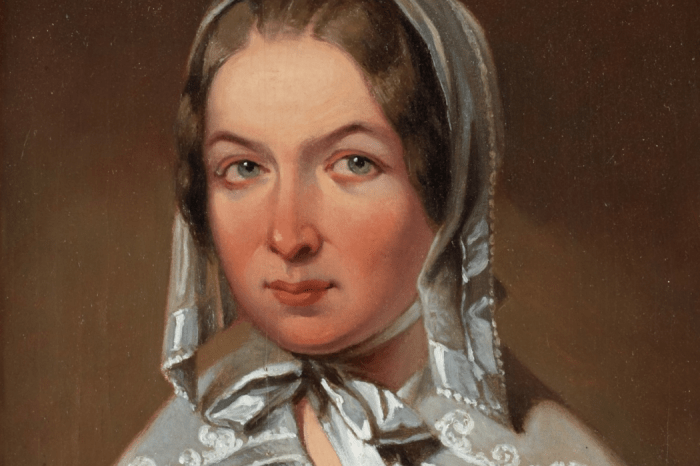
First out is the 1800’s writer and feminist reformer Fredrika Bremer, a kind of Swedish Jane Austen and one of the catalysts of the early feminist movement in Sweden.

Many of the women’s rights that we take for granted in Sweden today did not exist in the Fredrika Bremer’s time. For example, in 1800’s Sweden, women were not free to educate themselves as they liked, marry as they liked, live as they wanted, to have economic independence or to vote in elections. Married women were controlled in all manner by their husbands, unmarried women by their closest male relative. Fredrika Bremer was born into this kind of society in 1801 in Åbo, Sweden, which today is part of Finland. At the age of three, her family moved to Stockholm where Fredrika and her sisters were raised to marry well. Fredrika found the limited and passive family life of Swedish women of her time suffocating and she described her family as “under the oppression of a male iron hand’. Fredrika never was forced under the shackles of marriage, so had a certain level of independence inaccessible to married women at that time. Throughout her adult life, she became a world traveler, an accomplished author (at first anonymously) and a political activist. She was very interested in social reform regarding gender equality and social work and she participated actively in debates around women’s rights in Sweden.

Fredrika Bremer was a catalyst of the first real feminist movement in Sweden. There is much in modern day Sweden to thank her for. In 1853, she started by co-founding the ‘Stockholm Women’s Fund for Childcare’ and the following year, the ‘Women’s Society for the Improvement of Prisoners’. However, it was in her novel, Hertha (1856) that she issued in most change, making it probably her most influential literary work. In the book, she wrote about the lack of freedom for women, which subsequently raised a debate in the parliament called “The Hertha debate”. This directly contributed to a new favourable law for adult unmarried women in Sweden in 1858, and was a starting point for the campaign for women’s rights in Sweden. Hertha also raised the debate of higher formal education for women and, in 1861, the University for Women Teachers was founded by the Swedish state.

In 1860, Fredrika helped to fund Tysta Skolan, a school for the deaf and mute in Stockholm. Now an established and respected citizen and patron, she supported giving women the vote in the electoral reforms of 1862. In the same year, women of legal age were granted this in municipal elections in Sweden. The first real women’s rights movement in Sweden, the ‘Fredrika Bremer Association’, founded by Sophie Adlersparre in 1884, was named after her, 19 years after her death.

Fredrika Bremer’s leaves a legacy of equality and autonomy behind her. Her legacy extends far beyond Sweden’s borders. Not only is she recognised as an influencial writer and reformer, but the town of Frederika in Bremer County Iowa, USA is named after her.


.

Shedding my light on the Lucia debate


Today is Santa Lucia in Sweden – December 13th.  At the darkest time of the year, when we all are drained by the black mornings and afternoons, Lucia pays us a visit. With candles in hair and surrounded by a posse of singers, Lucia shines light into the dark depths of our spirits. The music plays. The choir harmonises. Lucia smiles at us. And slowly, slowly, the day awakens.

I love Lucia. Long live Lucia – this Sicilian martyr, who’s tradition is said to have come to Sweden via Italian merchants around the late 18th century.

Every year, towns around Sweden elect a Lucia and they visit shopping malls, old people’s homes and churches, singing and handing out gingerbread. And every year there is a debate about who owns the right to be Lucia. The answer to that question depends on your starting point – does one take a traditional view or a modernist view? The Swedish traditionalists will say that Lucia definitely has to be a girl, ideally blonde and blue-eyed. The modernists will say Lucia should reflect today’s society and therefore can be any colour or gender.

This year, as many before, the debate took a nasty turn. A large department store depicted Lucia as a gender-neutral, dark-skinned child. For some people, this was too much. Hateful, despicably racist, and, of course, anonymous comments flowed in via social media, revealing yet another crack in Sweden’s tolerant facade.  Consequently, the department store removed the advert to protect the child. This social media behaviour is unacceptable and should be in no way condoned. Having a view point is everybody’s right (be it traditionalist or modernist), but attacking a child is something totally different.

As I watched Lucia this morning I was reminded of the real message. The humanist message. Sure, Lucia is literally about bringing light to the dark day. But the metaphor is clear, if we care to remember it. It is about caring. It is about being open even when we feel closed. It is about community.

One of the songs the choir sang this morning is called ‘Sprid ditt ljus’ – and I think this sums it all up. Translated into English, the chorus goes: ‘Spread your light, in the darkest times, warm us now and let us all feel peace’

Maybe it’s just me, but I think who is elected Lucia isn’t that important. What’s more important is that we remember the point. We should open our eyes to the light that is shone on our society where we have growing social divides, enormous groups of displaced people, poverty, starvation, homelessness on our streets.

Once a year, Lucia shines the light. Can we find it within us to shine our lights on each other? I, for one, intend to try.

Happy Lucia! May the light keep you warm.


How Swedes reflect on their mortality

skogskyrkogarden

Thankfully, it isn’t every day that you are faced with death. It is isn’t every day we contemplate our own mortality. Probably a good thing. Imagine what life would be like if we thought about death all the time.

But this weekend is an opportunity to do just that. Tomorrow is All Saints’ Eve. Well, not technically. All Saints’ Eve is actually October 31st. But in Sweden, they are practical and, since 1953, they round it up to the nearest weekend and call it a public holiday.

Legislation aside, tomorrow is the day in Sweden when people reflect over life, death and those who have passed away. It is a peaceful time. It is a beautiful time.

Graveyards around the country twinkle with candle light. Relatives flock to the burial grounds and light candles and lanterns and place them by the graves of their loved ones. It is a miraculous sight to see the dark cemetries twinkling and glowing with bright white lights. It brings scerenity and majesty to an otherwise intensive and dark time of the year.

On Österlen in the rural south of Sweden, they have taken it a step further. A festival called ‘Österlen Lyser’ – Österlen shines – happens this weekend. The dark villages and fields are lit up with candles, flares, lanterns and torches. People play lantern-illuminated night time boule by the edge of the sea. Choirs sing, windows glow and open bonfires celebrate this dark time of the year.

It isn’t every day that you are faced with death. Full respect to Halloween, which is also taking hold in Sweden, but I don’t need to be reminded of witches, vampires and zombies. The less commercial traditional Swedish approach provides a more reflective vehicle for us to contemplate our own mortality and remember those we loved.

Time for Semlas! 

  
Today I’ve decided to indulge. I’m going to eat my first semla of the year. These creamy buns are filled with delicious almond paste and were eaten traditionally in Sweden to commemorate the start of Lent and the great Fast. In the south of Sweden, they still refer to them as ‘fastlagsbullar’ – Shrovetide buns. Nowadays however, semlas are usually sold anytime between Christmas and Easter. So I’ve done very well to resist them this far. 

I just love them. I could eat a barrel load. But I’d end up looking like a barrel if I did. I love the taste of them, and the feeling of luxurious indulgence. I also love the knowledge that as you take a bite into a creamy semla, you are biting into over 500 years’ history of Scandinavian baking. 

The word ‘semla’ comes from the Latin ‘simila’ which means fine flour and originally referred just to the bun without any filling. As long ago as the 1500’s, bakers started to hollow out the middle of the bun and fill it with cream and butter. As ingredients became more available, bakers started adding almond and cardemon and the type of semla that we know today developed towards the end of the 1800’s. After rationing of sugar and dairy products ceased at the end of WW2, the semla took off and became very popular. 

Nowadays the semla trend has reached new heights. Every year bakers around the country try to launch new types of semla, with their own spin on it -for example, the semla wrap, the semla burger, the semla layer cake.

All delicious I’m sure, but I’m a traditionalist in this matter. Give me a round fluffy cardemon-scented wheat bun stuffed with whipped cream and almond paste. And give it to me NOW!!! 

Sweden’s disgrace! 

  
In the latest poll today, over one fifth of the Swedish voting population would vote for the nationalistic right wing party, putting the party into position of the second largest political party in Sweden. 

Let’s be clear what this means. One fifth of Swedes support a party that has its roots in the nazi party, that has verbally and physically attacked minority groups and that believes in Swedish racial superiority. It’s a disgrace for all Swedes who believe in tolerance, openness and solidarity. 

It’s time to act. To speak out. This is not going away. As the established parties bitch at each other, the Swedish population grows tired of their rhetoric. Consequently, they feel more disengaged and resentful and turn to a party that seems to talk straight to their concerns and promises protection of the Swedish identity. It is scarily reminiscent of the past. 

Pastor Martin Niemoller, pictured above, wrote a famous poem after he survived the concentration camps of the Second World War. His poem criticised the cowardice of German intellectuals after the Nazi’s rise to power and their subsequent purging of one group after another. It’s worth reflecting over his words. They are very relevant today. Right now. In Sweden. About us. 

‘First they came for the Socialists, and I did not speak out— Because I was not a Socialist.

Then they came for the Trade Unionists, and I did not speak out— Because I was not a Trade Unionist.

Then they came for the Jews, and I did not speak out—Because I was not a Jew.

Then they came for me—and there was no one left to speak for me.’

Do these words resonate with you? Are we the cowards he’s referring to? Are we so comfortable and complacent that we just sit back and watch it happen? 

If, like me, you believe in a multicultural society, it’s time to take a stance. Write to your MP. Talk to your colleagues, neighbours and friends. Get involved. Share this blog. Root out those one in five and challenge them. Demonstrate. Communicate. Educate. 

Speak out. While you can. Before it’s too late.