Advent Calender Dec 2 – Pepparkaka

Every day leading up to Christmas, I will open a window containing a Swedish word that has something to do with the festive season.

Today’s word is ‘pepparkaka‘, which translates as gingerbread.

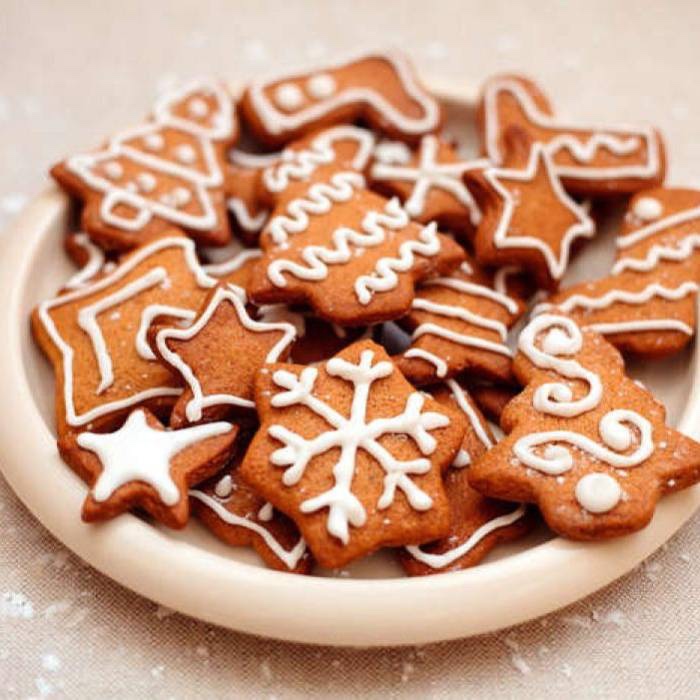
Other than glögg, nothing else is more synonymous with the Swedish festive season than pepparkaka (gingerbread).

The Swedish version of gingerbread comes in the form of thin crispy biscuits flavoured with cinnamon, cardamon, ginger and cloves. Formed in different shapes such as hearts, trees, and stars, gingerbread is eaten plain or decorated with icing. Many people buy squeezy blue cheese in a tube and squirt it onto the biscuit before consumption. Some people build gingerbread houses as part of their Christmas decorations.

Making your own pepparkaka is a cosy a Christmas tradition – here is a typical recipe. However, most people buy their gingerbread ready-made.

Pepparkaka has been associated with Christmas in Sweden since the 1800’s but was eaten much earlier than that. The first documented record of pepparkaka in Sweden is from 1335 for a royal wedding. In a recipe from the 1400’s, gingerbread included pepper, which could be why it has the name pepparkaka. But nobody is really sure.

Ever wondered why Swedish people are so nice? Well, the answer lies in an old myth – apparently the very eating of pepparkaka is what makes you nice.

Advent Calendar Dec 1 – Glögg

Welcome to the Watching the Swedes Advent Calendar 2024

Every day before Christmas, I will open a window containing a Swedish word that has something to do with the festive season. Today’s word is the fantastic-to-say ‘glögg‘. (Pronounced ‘glugg’)

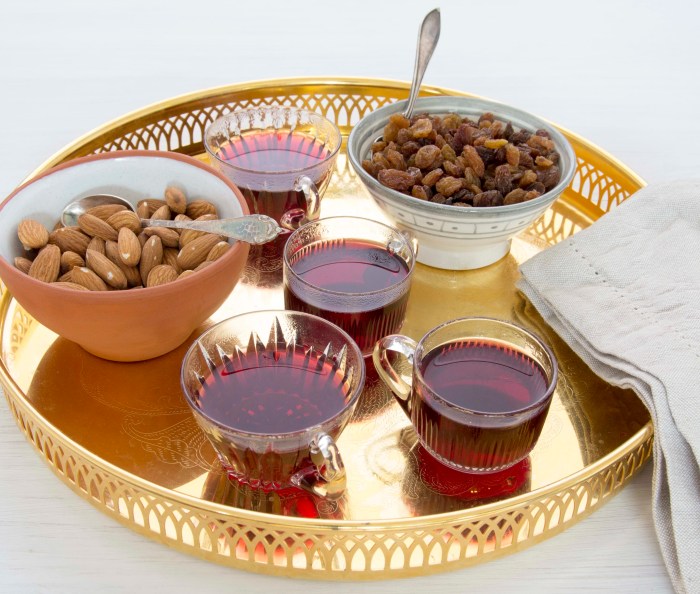
Glögg is festive Swedish mulled wine: heated wine, most commonly red, with spices. It is drunk together with almonds and raisins added in. And it is delicious!

Glögg is very popular, having been drunk in Sweden around Christmas since the 1890’s. However, the earliest record of drinking heated wine dates back to the 1500’s.

The word glögg comes from the Old Swedish word ‘glödg’, and the verb ‘glögda’ – to heat up. This, in turn, has its origins in the verb glöder (to glow).

Some make their own glögg, here is a typical recipe. Glögg can be with, or without, alcohol.

However, most Swedes buy their glögg ready-made in a bottle. In addition to the traditional flavours, each year a new flavour of the nectar is released and there’s always a debate regarding its success. This year’s glögg (2024) is called Edinburgh and is an infusion of dried fruit, cinnamon, orange, vanilla and whisky. raspberry and hops. Yummy!

Swedish Advent


It’s the first of Advent today, which is an atmospheric and almost romantic time in Sweden.

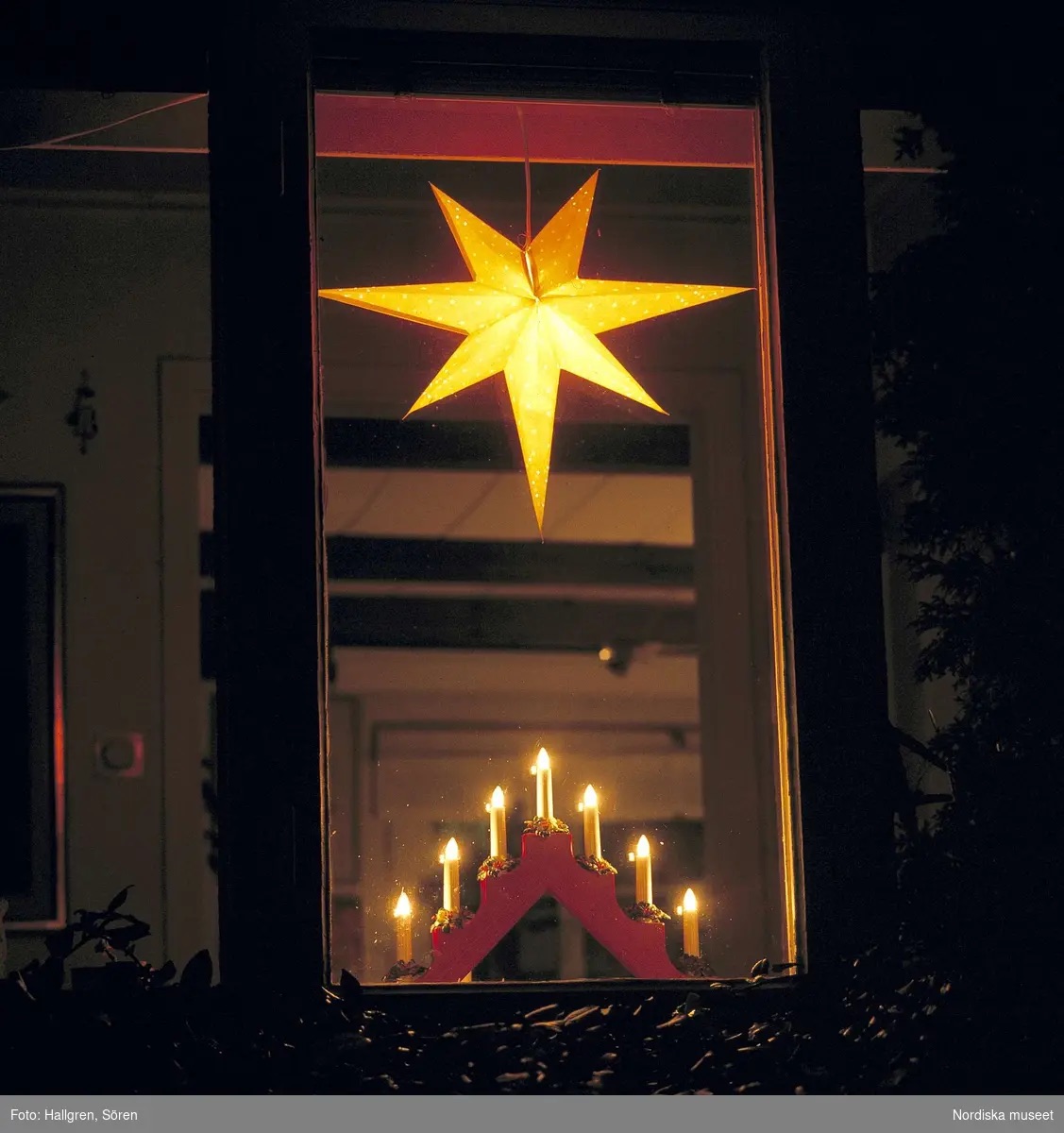
Swedes decorate their houses, apartments and windows with lights. From ceilings, illuminated stars are hung. On window ledges, electric advent candles are placed. On tables, four candles are positioned and one is lit every Sunday up until Christmas. Small candles, often red, are dotted about the home. People eat gingerbread and drink mulled wine.

Some years, there is already deepish snow at the first of Advent. But this year in Stockholm, it is unseasonably warm, so there isn’t any. Instead, it is very dark. The collective advent decoration is a definite reprieve from this darkness as light is spread into these murky places.

The word ‘advent’ comes from the Latin ‘adventus’ which means ‘arrival’ and is traditionally the start of the period where we wait for the arrival of nativity, or Christmas. Some religions also see it as waiting for the second coming of Christ. But in this secular society that is Sweden, the waiting is probably for the snow to come, the cold to hit, the water to freeze to ice and for winter to clasp its fingers firmly around us.

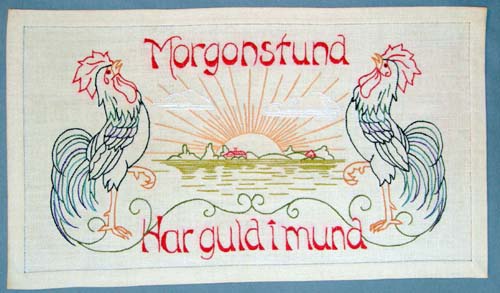
Swedish saying: ’morgonstund har guld i mund’

A saying you might hear early risers in Sweden use is ‘morgonstund har guld i mund’ which means the same as the English ‘the early bird catches the worm’. In other words, people who get up early, get a lot acheived.

It is borrowed from the German saying with the same meaning and exists in many other languages.

There is some disagreement on what the saying actually refers to. According to various sources, it translates as ’early morning has gold in its hand’ with ‘mund’ being an old word for ‘hand’. Others say that ‘mund’ refers to ‘mouth’ – making the saying ‘early morning has gold in its mouth’.

The Swedish word for ‘mouth’ is ‘mun’ and one theory is that it was changed to ‘mund’ to simply rhyme with ‘morgonstund’.

We will probably never know the actually origin. like many sayings, the real explanation is lost in the mists of time.

Swedish cinnamon bun day

Today, Oct 4, is the day that Swedes up and down the country celebrate that most Swedish of foods – the cinnamon bun.

The cinnamon bun – kanelbulle- was invented in Sweden in the 1920’s and sold in bakeries. In the 1950’s, as ingredients, such as sugar and cinnamon, became more affordable, people started to bake them at home.

In 1999, Oct 4 was crowned as National Cinnamon Bun Day. At least 9,000,000 buns are consumed during the day.

Swedish cinnamon bun day

Today, Oct 4, is the day that Swedes up and down the country celebrate that most Swedish of foods – the cinnamon bun.

The cinnamon bun – kanelbulle- was invented in Sweden in the 1920’s and sold in bakeries. In the 1950’s, as ingredients, such as sugar and cinnamon, became more affordable, people started to bake them at home.

In 1999, Oct 4 was crowned as National Cinnamon Bun Day. At least 9,000,000 buns are consumed during the day.

‘Pingis’ in Sweden

Yesterday, Sweden qualified for the final in team table tennis at the Paris Olympics. This is following the unexpected silver won by Truls Möregård in table tennis singles. And table tennis fans up and down Sweden are going crazy!

Table Tennis, or Ping Pong as it is also called – a name originating from the Mandarin Ping Pang Qiu – has the nickname ‘pingis’ in Swedish. It is a very popular sport in Sweden, with the first game played in the 1890’s, and the first Swedish championship organised in 1925.

Although elite table tennis is generally dominated by the Chinese, Sweden has had some success over the years. Probably the best Swedish player through history is Jan-Ove Waldner. Known as ‘The Evergreen Tree’ in China, Waldner had an extraordinary successful and long career. He won a total of 20 Gold, 17 Silver and 9 Bronze medals in the Olympics, World and European Championships. Jörgen Persson, Kjell Johansson, Marie Svensson and Stellan Bengtsson are other successful ping pong athletes.

On a non-elite level, the game of ‘rundpingis’ is popular in Sweden. This is knock-out ping pong played in large groups where people run around the table and hit one shot each. Another popular pastime is outdoors table tennis, with many parks building tables and nets out of weather-proof iron.

So, if you feel inspired by the current Olympic successes, grab a racket and go play a round of table tennis. Who knows, maybe you’ll be the next pingis star in pingis heaven!

Swedish Americans and American Swedes

When Armand ‘Mondo’ Duplantis won the Olympic Gold and broke the world record in the pole vault, he did it representing Sweden. Although he grew up in the USA, his mother is Swedish, and he has Swedish citizenship.

According to Statistics Sweden, Mondo is one of approximately 40,000 American citizens living in Sweden. Sweden and America have a long political relationship, with Sweden being the second country, after France, to officially acknowledge America’s independence in the 1700’s. Since then, the relationship has been smooth, with a couple of hiccups during the presidencies of Olof Palme and later Donald Trump. Today, the USA is Sweden’s third largest trade partner, and American-owned companies make up the largest number of foreign companies in Sweden.

Many Americans have family ties to Sweden due to the mass emigration of Swedes to the USA in 1885-1912. In fact, this is such a significant part of Sweden’s history that there is a tv program called ‘Allt för Sverige’ which helps Americans trace their Swedish Ancestry.

At the end of the 19th century 1.3 million Swedes fled famine and persecution in Sweden for a new life in the USA. This was a third of the population at the time. These Swedish Americans were mostly of Lutheran faith and settled primarily in the Mid West.

Prior to this, in 1638, the first Swedish settlers founded New Sweden, around Delaware. It only lasted 17 years before being absorbed into New Netherland and ceased to be a Swedish colony.

In 1639, Swedish settler Jonas Bronck settled a colony around the area of today’s New York. The settlement grew and flourished, and today is called The Bronx – after its original Swedish founder.

According the American Community survey, Swedish Americans and descendants make up around 2% of the US population today. Around 56,000 people still speak Swedish in their homes.

Some famous Americans of Swedish descent include: Taylor Swift, Emma Stone, Jake Gyllenhaal, Scarlet Johansson, Candice Bergen, Kirsten Dunst, Val Kilmer, Michelle Pfeiffer, Julia Roberts, Uma Thurman, Peggy Lee, Steven Soderbergh and George W Bush.

The ABC of Swedish town planning

ABC is a concept in Swedish town planning, said to have been minted by Stockholm city planner Sven Markelius around 1952. ABC refers to the approach of building a suburb where modern families have easy access to work, dwelling and services, such as shops. A stands for ‘arbete’ (work), B stands for ‘bostad’ (accommodation) and C stands for ‘centrum’ (center for services and shops).

ABC city planning was introduced mid 1950’s and it expanded suburban Stockholm to the north and south. This growth was spurred on by the influx of people to the capital after the Second World War, and the severe shortage of accommodation.

In the original development plan from 1952, Markelius suggests that blocks of flats should be constructed within 450m of the centre, small houses should be built within 900m of the centre and light industry 600m from the centre. Everything should be built compactly in order to facilitate daily life for its 16000 residents. An underground system would connect the ABC suburb to the rest of the city and Stockholm’s downtown.

If you’d like to visit an ABC suburb, the two that are mostly still in tact are Vällingby to the north of Stockholm, and Farsta to the south.

Why does Sweden still need Pride?

This week is Stockholm Pride. It culminates on Saturday with a huge parade. The event has gone on for over 25 years, and some people question if it is still needed or relevant.

The answer, unfortunately, is more than ever.

But we’ll come to that later.

Currently there are 73 Pride festivals in Sweden during the year. From Arctic Pride way up in the north to Malmö Pride in the south, it is possible to celebrate throughout the year.

This indicates that many Swedes seem to have embraced the concept of Pride with open arms. There is, of course, a commercial benefit but the main reason seems to be that LGBTQI+ Pride resonates well with the societal Swedish values of equality, tolerance and acceptance.

However, like everything, it has its opponents.

Sweden’s current conservative government is in power, solely with the support of a right-wing populistic party. This party has consistently attacked LGBTQI+ people and the Pride movement.

This leads to aggressive counter demonstrations, homophobic, anti-Pride propaganda and personal physical attacks. LGBTQI+ people are still regularly abused, discriminated against and attacked in Sweden. It happened to a person I know in Stockholm just last week.

And if we lift our eyes to the broader world, we see examples of LGBTQI+ rights being restricted or removed, and same sex relations being criminalized and punishable with the death penalty. Human rights are under attack all throughout Europe, USA and many other countries.

At Stockholm Pride’s opening ceremony yesterday, we heard from a lesbian who is being deported to Uganda, just because she cannot prove she is ‘lesbian enough’ to stay in Sweden with her Swedish wife. She is being returned to imprisonment and possible death. If you’d like to know more about this specific case, see the petition here: https://www.mittskifte.org/petitions/urgent-appeal-to-stop-the-deportation-of-davita-nassuna-facing-lifetime-or-death-row-in-uganda

This is one of the many reasons why Pride is still needed, not only as a celebration, but as a political manifestation of human rights.

If you’d like to know where a Pride is near you, go to http://www.svenskapride.se which collects all the Swedish events in one place.