Death of a Swedish superstar

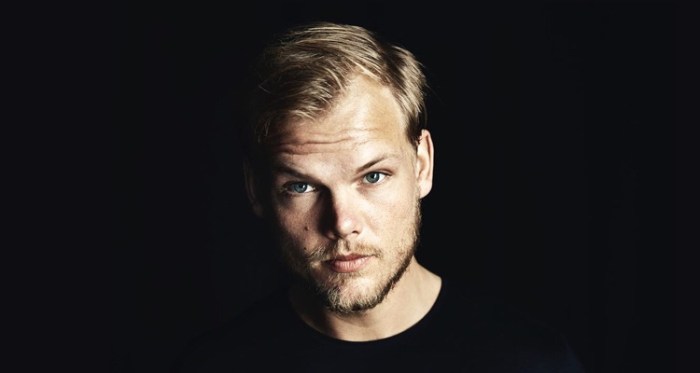
World-famous Swedish house DJ Avicii is dead, at 28 years old. I liked his music but other than that, I personally didn’t have much more of a connection to him, But of course his untimely death has been taken hard by his enormous amount of fans in Sweden, and in the rest of the world.

In Utrecht, the church bells in the Dom Tower, rang out the songs of Avicii over the town. On social media, condolences from celebrities and music stars flooded in. In a spontaneously-planned memorial ceremony yesterday, a huge mass of people gathered on a square in central Stockholm. After a minute’s silence, they danced together to Avicii’s greatest hits. Swedish tv is full of Avicii tributes and he topped iTunes and Spotify yet again.

One can’t deny the impact that this talented man had on electronic music and the inspiration he left behind for many new upcoming musicians. This young Swedish man, born in Stockholm, really did conquer the world.

A new album of tracks is set for release, and is said to be his best music ever.

This will be his epitaph and his legacy.

Sweden’s giant blue penis

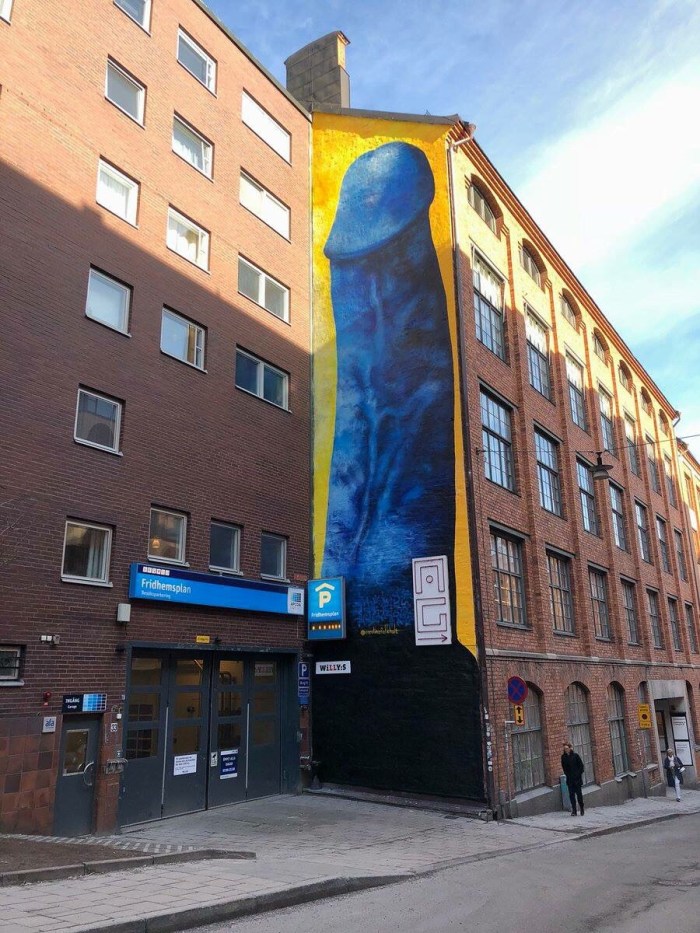
In recent days, a giant blue penis has been the cause of much discussion in Sweden. On the wall of a 5 story building, artist Carolina Falkholt has depicted an enormous blue male member – on a yellow background – Swedish national colours. The artist painted a similar pink penis on a wall in New York but it was painted over after just a couple of days because of public outcry. In a recent interview she says ‘I usually paint pussies, so I thought it was time for a dick..I think it will be allowed to remain here, that people let it take its place in the debate around the body, sexuality and freedom.’

If the purpose of art is to provoke and cause a reaction, she has certainly succeeded. The nature of the painting makes us reflect over why we might be shocked or offended by it – and that is a useful reflection to have.

The mural has been there a few days now. Let’s see how long it lasts!

The Death of a Swedish Icon

Lill-Babs-2015

Today, the news of a death reached the Swedish people. The death of an icon. At the age of 80, popular singer Barbro ‘Lill-Babs’ Svensson passed away. Lill-Babs is little known outside of Sweden, but in Sweden she was an icon, a part of the soundtrack of many Swedes’ lives – she was Sweden. To get a grip on her status in the country, think the UK’s Cilla Black, and France’s France Gall – with that combination of untrained vocals and girl next door sex appeal – and you come part of the way.

When I moved to Sweden over 20 years ago, Lill-Babs was possibly one of the first Swedish celebrities that I got to hear of. She was constantly on the tv, on chat shows, in theatres, in concert halls, in the tabloids, in reality programs, in magazine articles and firmly positioned in the national memory. Her modest origins from a small village in rural Sweden contrasted intriguingly with her show-biz lifestyle, her many love affairs and bankruptcies and her glamorous media-trained daughters. She seemed to balance the ability of staying true to your roots with the bravery of a sexually liberated woman surviving decades in a man’s world. In older days, blonde hair, tanned skin, moist lips, bling and leopard print were her signum, along with her distinctive raspy deep voice. She impacted everybody it seems. Even the King of Sweden announced his condolences today saying he will remember her warmth and exuberance.

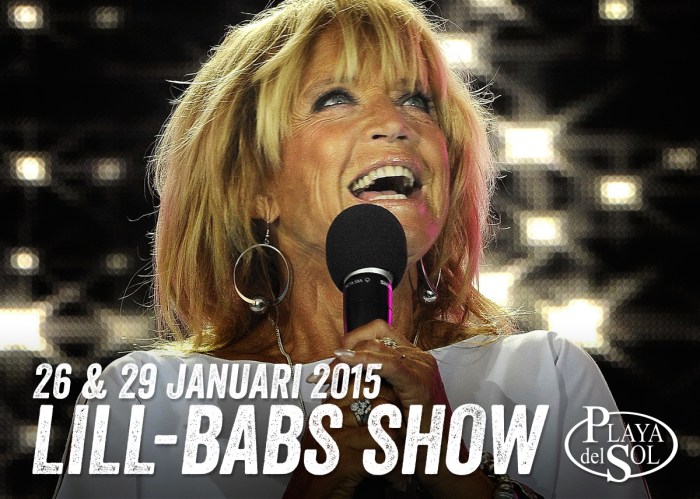
I had the pleasure of seeing the ‘Lill-Babs Show’ in 2015, when she was 76 years old. She gave annual dinner shows at the Swedish venue called Playa del Sol on Gran Canaria. As I happened to be there on holiday, I went with some friends to watch her perform. I admit I was a little sceptical going in, but I was blown away. There on the stage stood a woman, slightly ravaged by the years, but with a warmth and a humour that is rarely seen. Her energy and professionalism swept us all away and the crowd went wild – well as wild as they could given the average age was about 70. She sang her classics from the previous 6 decades and told cheeky, saucy jokes to the audience. I felt that I wasn’t just seeing a concert but I was having a thoroughly Swedish experience, somehow immersing myself into Swedish popular history and culture. There, on the stage, was not only a singer but a living legend.

April 3, 2018 Lill-Babs died after a short period of illness. She takes with her a piece of Swedish history, an echo of a Sweden long gone. Her legacy is the openness with which she invited the Swedish people into her life – warts and all. I am sure she will not be easily forgotten and that her voice will be echoing loudly through many a Swedish home this evening.
Why Swedes celebrate on the ‘afton’ (eve)

In the UK, we celebrate ‘Days’ such as Christmas Day & Easter Day. But in Sweden, it is always the Eve ( ‘afton’) that is the big celebration time. There’s påskafton, Valborgsmässoafton, Midsommarafton, pingstafton, nyårsafton, trettondagsafton. Why is this? Surely it can’t just be to get an extra day’s holiday?

Well, actually it originates from a time before the mechanical clock. In that period, a new day began at sunset rather than at midnight as it does now. In the Medieval times there was an expression – ‘vid kväll ska dag leva’ – which means something like ‘in the evening, shall the day live.’ Skandinavians held onto this tradition even after clocks were invented, and this is why they celebrated their important days the evening before. Now the evenings have, for practicalities sake, become day time activities. That’s why Swedes celebrate on the ‘Afton’. Oh yeah, and for the extra day’s holiday.

Sweden’s Easter tree – wiping, witching or whipping?

In Sweden, they don’t only have Christmas trees, they also have Easter trees.

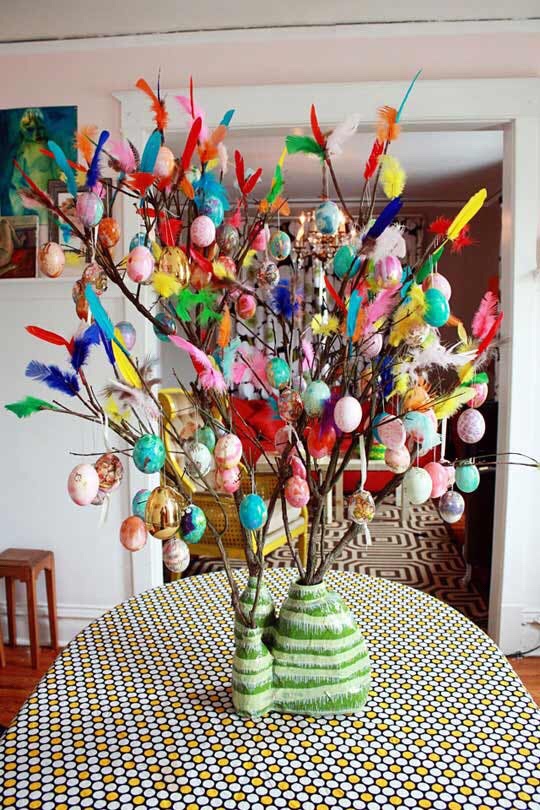
This Easter tree, known as ‘påskris’, is a handful of twigs and sticks (usually birch) installed in a vase with coloured feathers attached to the ends. People often hang painted eggs and other decorations such as chickens in their installation. The Easter tree can be seen all over the country at this time of year: outside shop entrances, in peoples’ living rooms, in gardens, in the middle of roundabouts.

The Easter tree is an interesting cultural phenomena – but where does it originate?

Wiping: Well, some Swedes say that it symbolises the wiping away of the winter. The twigs represent a broom and the feathers get caught in the broom as we sweep.

Witching: Others say that it represents witchcraft. The twigs represent a witch’s broomstick and the feathers indicate flight. This could also be why Swedish kids dress up as witches at Easter and do a kind of ‘trick or treating’ for Easter eggs.

Whipping: But, apparently the Easter tree has a completely different origin and symbolism. Swedish people, in the 1600’s, used to take twigs and sticks and beat each other with them on Good Friday to commemorate the suffering of Jesus. In the 1800’s and 1900’s, they started to be decorated and became a symbolic decoration for Easter.

So, wiping, witching or whipping. Who would have thought the colourful Easter tree would have such a colourful history?

Sweden’s pink Thursday

jesus-washing-apostles-feet-39588-gallery.jpg

Today, the Thursday before Easter is called ‘Skärtorsdag’ in Swedish. As the word ‘skär’ translates as a shocking pink colour, many people joke that today is ‘pink Thursday’. But the word ‘skär’ in this case relates to something else – something far more biblical.

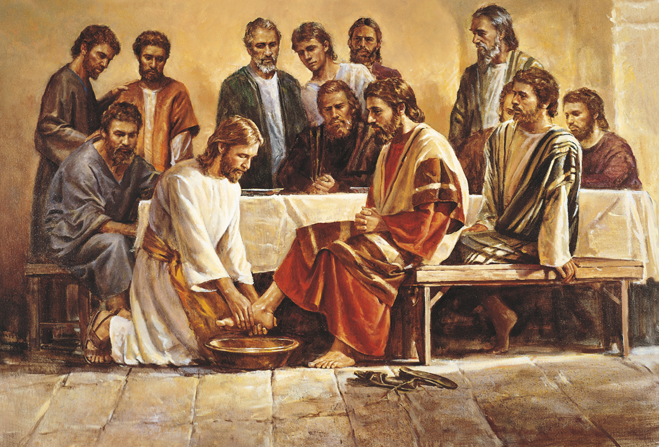
The word ‘skär’ is an early Nordic word meaning clean and pure. And here, we see a parallel to the English word for ‘Skärtorsdag’. In English, today is called ‘Maundy Thursday’ and it relates to the religious rite known as ‘the maundy’ which involved the ritualistic cleaning of feet. According to Christian belief, today was the day that Jesus performed this act until the recipients had clean and pure feet. It also is the day of the infamous Last Supper.

However, in Sweden today, ‘Skärtorsdag’ is not celebrated in any great religious fashion but in a pagan manner. A old pagan belief in Sweden was that on this day witches would mount their broomsticks to fly away to the legendary mountain known as Blåkulla. At Blåkulla it was believed that the devil held his earthly court. There the witches celebrated their sabbath and danced with the devil.

In modern day Sweden, we see this reflected in the many children who dress up as witches. These kids paint Easter cards and walk around the neighbourhood knocking on doors to wish everybody a happy Easter. In exchange, they hope to receive Easter sweets.

Why Swedes are easy to make fun of

sweden heaven and hell

In an article written about the New Zealander stand-up Al Pitcher, he says Swedes are easy to make fun of. I guess he would know as he has built a successful career on it, in which he masterfully manages to navigate the difficult path of ridicule and affection.

But it got me thinking. Is it true that Swedes are easy to make fun of? I would suggest that the answer is – yes!!

Here’s my theory….

1. Swedish Extremism

According to the World Value’s Survey, Swedes are the most extreme country in the world – in values that drive society forwards. Typically non-traditional, non-religious and modernistic, Sweden deviates radically from most other places around the world. And this is one reason why it is easy to poke fun at them, they are so different from the rest of us.

2. Self-actualisation

Research backs up the claim that Swedes are individualistic – probably one of the most individualistic societies in the world. In Sweden, individualism relates to the right to make own life choices, voice ones own opinion, take care of oneself, be independent of others. Built on this is a strong concept of self-actualisation – ‘the right to be me’. This is the right to develop my life exactly as I want, and not how others want and it is very strong in Sweden. I think this encompassing sense of individualism and self-actualisation produces a need to learn about oneself, to focus inwards and to belly gaze. This means that humour pointed at the direction of a Swede is seen an opportunity for Swedes to learn something about themselves, or other Swedes. It’s often not taken personally, but is often welcome, and is subconsciously perceived as one element of a greater journey to self-realisation.

3. Being unSwedish

I would venture that Sweden is the only country in the world where being unlike the national standard is seen as a compliment. In the UK, and the USA for example, being ‘unBritish’ or ‘unAmerican’ is seen as a negative, almost treasonous trait. But in Sweden, being ‘unSwedish’ is positive. This means that there is not a national sense of protectionism or patriotism to the identity of being Swedish – which suggests that jokes and ridicule at the expense of the nation are more acceptable.

4. Swedes are funny

Maybe it’s not the classic stereotype, but Swedes are in fact a funny bunch. And my that I mean both ‘funny haha’ and ‘funny peculiar’. Their dark sense of humour usually includes a sense of irony – which means that they can usually take ridicule as much as they can give it out.

5. Remoteness spawns peculiarities

Let’s face it, living in a relatively small country in a remote location and a frozen climate makes you do funny things:

  • consuming copious amounts of caffeine to stay awake
  • delighting in enormous amounts of sugary goods to stay awake
  • working hard in the winter to be free in the summer
  • consuming alcohol at weekends to forget the working week
  • marrying, divorcing, marrying, divorcing
  • going out into ‘the nature’ for fresh air, light and to commune
  • traveling to the sun to escape the winter – and seeing it as a right
  • eating salted or pickled or cold food on festive occasions
  • taking naked saunas in the winter, and bathing naked in the summer

and many many more…. Let’s face it, there is a lot to make fun of!


If you like this blog, please share it and spread the word!


A crucial night for Sweden

Tonight is the end of a gruelling six weeks. Tonight an important decision is made in Sweden – a crucial decision some might say. Tonight, millions of Swedes gather together to jointly arrive at their conclusion. From North to South, East to West, amongst mountains, by lakes, on islands and in cities, Swedes crowd around their TVs to watch the biggest show broadcasted in the country. This is bigger than royal weddings, political funerals or sporting events. This is huge. Tonight, Swedes decide who should represent them in this year’s Eurovision Contest.

Choosing a representative takes 6 weeks in Sweden. 5 weeks of semi finals, a second chance competition and then the final. It’s a combination of tradition and torture.

But tonight it is all over and Saturday evenings are finally released for other entertainment. In a puff of glitter, the winner is chosen by public vote and jury and then it is all over. Apart, that is, from the after party, the post analysis and the pre programs for the approaching Eurovision Contest in May.

Sweden might be a county of moderation, but Eurovision is a major exception. If anything’s worth doing, apparently it’s worth doing properly. By dragging it out. And out. And out.

Demolishing Swedish treats

Many Swedes love to ‘fika’ – the tradition of drinking coffee and eating a cake. So much so that somebody decided to create the graphic above about popular Swedish treats. While the drawing is nice, the picture rather shows the meagreness of a Swede’s cake options. What then are some of the terrible choices depicted?

In a previous blog I’ve talked about the creamy bun known as semla, which I happen to think is delicious. In my opinion the semla is the best of them all. It is the king of Swedish treats reigning large over the other, to be honest, rather underwhelming alternatives.

The apple and cinnamon scone – as a British person I would not call this a scone. I don’t know what it is. Some kind of triangular bit of plaster. So, no further comment.

Probably the most popular dry-as-a-bone pastry associated with Sweden is the ‘kanelbulle’ or the cinnamon bun. Sold predictably in every bakery and cafe in Sweden and in their millions at Ikea, the cinnamon bun is only redeemed when drenched in melted, oozing butter.

Then there’s the ‘lussekatt’ – a disgusting saffron bun baked and sold in December. If you like bland, yellow bakes that give you indigestion for hours then this is the one for you.

The ‘dammsugare’ – or vacuum cleaner – is a marzipan roll dipped in chocolate. They can contain a bit of Swedish liqueur ‘punsch’ to take the edge off their otherwise plasticky taste. Altogether pointless and unsatisfying.

‘Chokladboll’ or chocolate ball is a linguistically dubious treat. Traditionally given a racist title, they are basically cocoa balls rolled in coconut. An unpleasant eating experience, these balls tend to ‘grow in your mouth’ as they say in Swedish….

‘Hallongrotta’, literally means raspberry cave. These are vanilla biscuits filled with raspberry jam that melt in the mouth. Unless they’re rock hard. They are a traditional biscuit which seem to evoke memories of grandmas and hot kitchens for many Swedes.

‘Pepparkakor’ are crisp gingerbread biscuits eaten around Christmas time. A ubiquitous classic eaten with Swedish mulled wine – ‘glögg’. They are a must during the festive season in homes, offices and often served covered in bacteria in shops. They come in many sizes and shapes, such as love-hearts, stars, people and goats. Yes, you read that correctly – goats.

So none of the above have a patch on the creamy, gooey, airy, almondy delight that is the semla. I know what I’m ordering with my coffee!

Any other Swedish treats that you think rival the almighty semla?

How Aslan led to Sweden – a personal story of a Swedish odysse

A long-time friend of mine recently wrote a post on Facebook, instigated by the recent school shooting in her home country, USA. In her post, she writes her personal story about her 30 year experience of living in Sweden. With her permission, I am publishing it here. Please read it, I think it sums up the way a lot of people who move to Sweden feel. Here it is:

‘For anyone who might be interested, I would like to share a milestone in my life.

30 years ago this week, I took the adventure that Aslan gave me. (If you’ve read ‘The Narnia Chronicles’, you understand that reference.) I packed up my clothes and few belongings, waved a tearful goodbye to my parents at Dulles International Airport in Washington and moved to Sweden. I knew that the love of my life lived there, and that was most important, but I didn’t know much else. I had NO IDEA how the trajectory of my life would change.

Among the things I have experienced in Sweden are the following:

* An AMAZING Swedish family which took me in, accepted me with all of my weird American quirks and loved/loves me like my own family. They ARE my own family now. Along the way, my Mother-in-law and older sister-in-law were instrumental in helping me learn Swedish. Their patience was infinite. My younger sister-in-law, Marina, has become one of my closest friends, but, she talked so fast, I couldn’t understand a word she said. Sometimes, I still don’t. 😂❤️

* A society, while not being perfect, holds 2 particular values to be self-evident:

1. We have a responsibility to those who are less fortunate and that responsibility should be incorporated into government policy.

2. Women and men are equal.

* A year of paid maternity leave with each child.

* Unparalleled care through 5! major surgeries, NONE of which I had to pay for.

* A school system which treats me like a professional and gives me a great deal of freedom as to what and how I teach my students in order to reach curriculum goals.

* AMAZING colleagues from a plethora of nations, cultures and languages who are passionate about our students and who are a daily reminder to me of the common humanity of every person on the planet.

* I NEVER have to worry about a gunman in my school. 😔

Forrest Gump said, “Life is like a box of chocolates. You never know what you’re going to get.” So far, I’ve gotten a box of ALL of my favorite kinds. Who knew on that cold Sunday in February of 1988 when my parents hugged me goodbye.

Thanks for reading’. ❤️