The Swedish ‘recommendation’

In the wake of covid-19, the National Agency of Public Health has provided the Swedish population with recommendations and advice. However, it seems that these very words ‘recommendation’ (rekommendation) and ‘advice’ (råd) are causing problems for many people.

How do you understand the word ‘recommendation’? Maybe it’s a friend who is making a suggestion to you? Or a family member who is promoting a certain behaviour? Or a respected critic who is letting you know what restaurant you should eat at? For most of us, the words ‘recommendation’ and ‘advice’ imply a suggestion that we can decide to listen to or not, act on or not. This is how we understand it.

But it doesn’t always mean this and this is where linguistic confusion is arising. As I understand it in Swedish, when ‘recommendation’ or ‘advice’ is used by a government authority it is not something to be taken as a suggestion – it is a serious instruction that has to be followed. It is the strongest action an authority can take. The next step is a law change decided by the parliament.

So when the Swedish Agency for Public Health recommends that we stand 2 meters apart, it is not a recommendation as we might understand it, it is a strict instruction, and does not include a high level of individual choice. It is the step before criminalising something.

In his press briefing today, Swedish Prime Minister Stefan Löfven said ‘allmänna råd från myndigheter är ingen lösa tips. Det förväntas att (alla) som omfattas av råden följer dem. Inte ibland, utan varje dag och varje minut.’ This translates roughly as ’general advice from an authority is not just a tip. Everybody who is covered by this advice is expected to follow it. Not just sometimes, but every day and every minute.’

This confusion between colloquial terminology and governmental terminology can explain a lot of the behaviour and attitudes we see around us. People are not defying the authorities, they just think that recommendations are elective.

But the bottom line is this – we do not have a choice, even though we might interpret it so. We are obliged to all follow the instructions we are provided with. Zealously.

If we do this, we avoid criminalization and curfew and hopefully can together quickly crush corona.

But it doesn’t apply to me, right?

Out walking today, I passed through one of Stockholm’s biggest building sites – the Slussen renovation. As I approached, I saw a guard in a reflective vest and holding a red flag. He was stopping pedestrians from getting through, as the construction company was blasting into the rock to make a service tunnel. And he waved at me and told me to wait.

It was going to take 10 minutes to safely blast, so I stepped to the side and stood in the sun to warm my face. And waited.

From behind me, a middle-aged man approaches the guard and asks what was happening. The guard informs him of the on-going blasting. ‘But I need to get through’ the man says. ‘You’ll have to wait’ says the guard. ‘I can’t wait, this is very inconvenient’, the man replies. ‘You have to’ says the guard. The man folds his arms, and scowls in silence.

A few minutes later a young woman arrives. She walks right past the waiting crowd that has now formed. She approaches the guard. ‘I have to get through’. ‘You have to wait’ says the guard. ‘No I can’t do that, let me through’ replies the woman. ‘It is not safe’ answers the guard, ‘they are blasting and it is dangerous to walk past’. ‘I’ll be quick’ says the woman. ‘No,’ responds the guard, ‘you have to wait’.

Two minutes later, a voice on the guard’s walkie-talkie allows us to continue through. The middle-aged man stomps off, the young woman doesn’t move – swiping her mobile.

It often seems to me that some people have a hard time accepting instructions. Even if there are signs, or barriers or even a guard with a red flag, they seem to think they are not affected by it. Because they are in a hurry or it is inconvenient. It’s like saying ‘Yes, I understand, but it doesn’t apply to me, right?’

Might these be the same type of people who, despite strong recommendations from the government, nevertheless squeeze into public transport, hang close together in restaurants and still plan to travel away for Easter?

Just wondering….

When we DIE

A somewhat insensitive title in these times you might think and you might be right. Or not, once you understand what I mean.

You see I am not referring to death, but to a strategy that we all can apply to make our lives less stressful. It’s a strategy used commonly in intercultural situations, but has much more far-reaching applications.

I’ve spent my life trying to be an accepting and open person – to the best of my ability. I truly believe in live and let live. I try to see other people’s perspectives and have trained myself to look for an explanation behind behavior I might not understand. My choice of career in cultural competence and communication is a way to try and spread the word of tolerance and acceptance.

But recently I find myself becoming less tolerant. I find myself condemning the actions of people who do not follow the government regulations around corona protection. I find myself becoming irate at the ‘egoistic morons’ who are traveling to a ski resort over Easter. I don’t understand why they can’t be more self sacrificing and not prioritize their holiday over the greater good. I see an elderly person in the supermarket and think ‘wtf, why isn’t she at home, the old fool’. I think, in general, people are ‘stupid’ if they take the bus or sit too close to each other, or do anything that I judge to be wrong.

It isn’t untypical that we judge people and their behaviour. We hear it all the time – not least in social media. And I think in times of crisis or stress, we become even more judgmental and, even, moralistic. In these situations it would be good to DIE!

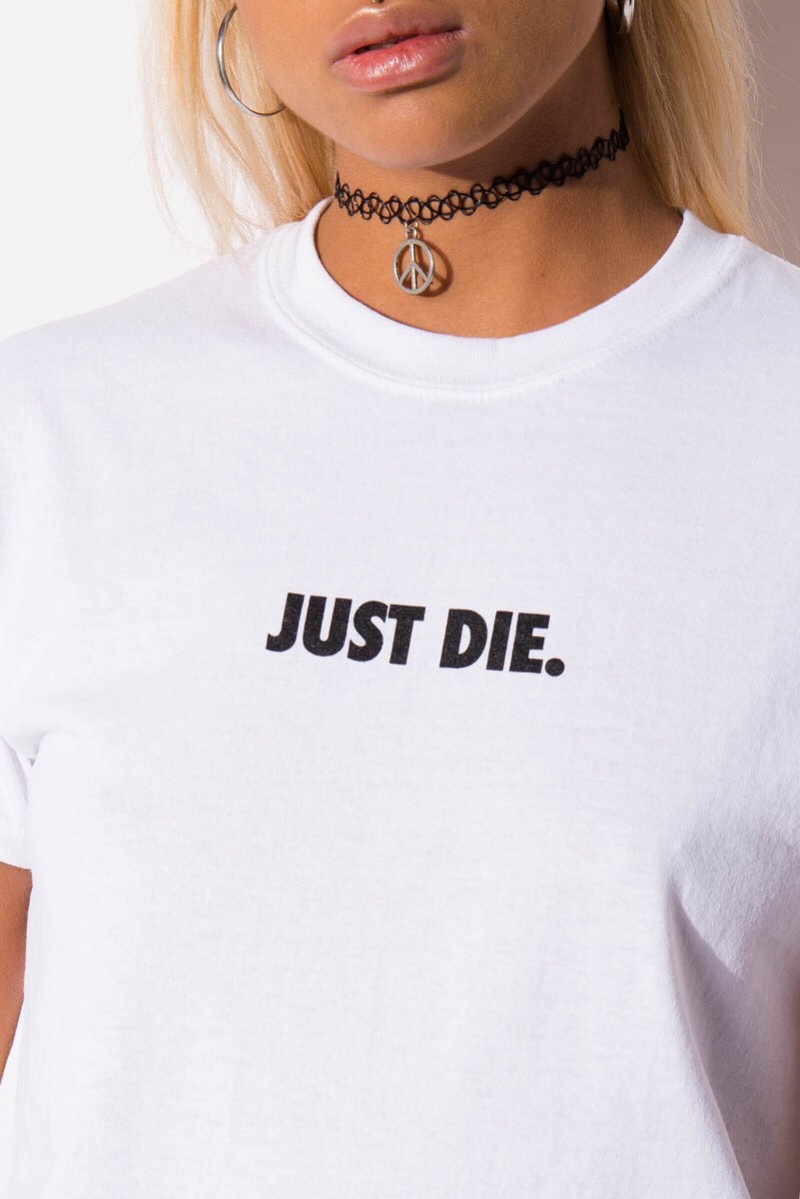
DIE is a strategy developed by cultural researcher Milton Bennett to help us mindfully withhold judgement. It stands for Describe, Interpret, Evaluate. Let’s apply it to one of the scenarios above.

D – describe the scenario as neutrally as you can. Ok, I saw an old lady in a supermarket buying food. She was carrying a small basket. She was not at home.

I – interpret – what are the various reasons why this might have happened and why she isn’t staying at home? Ok, she doesn’t have a tv and is unaware. She has short term memory loss. She is so sick she doesn’t care. She doesn’t trust anybody else. She is lonely. She has previously been tricked out of money. She has already had corona and recovered.

E – evaluate – what do you think of the situation now?

DIE is not a strategy that gives us any answers. However, it is a strategy that helps us to see the perspectives of others and remind us that we don’t understand everybody’s motives. It encourages us to stop negatively judging others, and instead to be more reflective.

Using DIE encourages us to foster self awareness of our assumptions and be more tolerant and accepting. And heaven knows the world needs more of that!

So the next time you find yourself judging or jumping to a conclusion – try to DIE the situation instead.

Sweden under attack

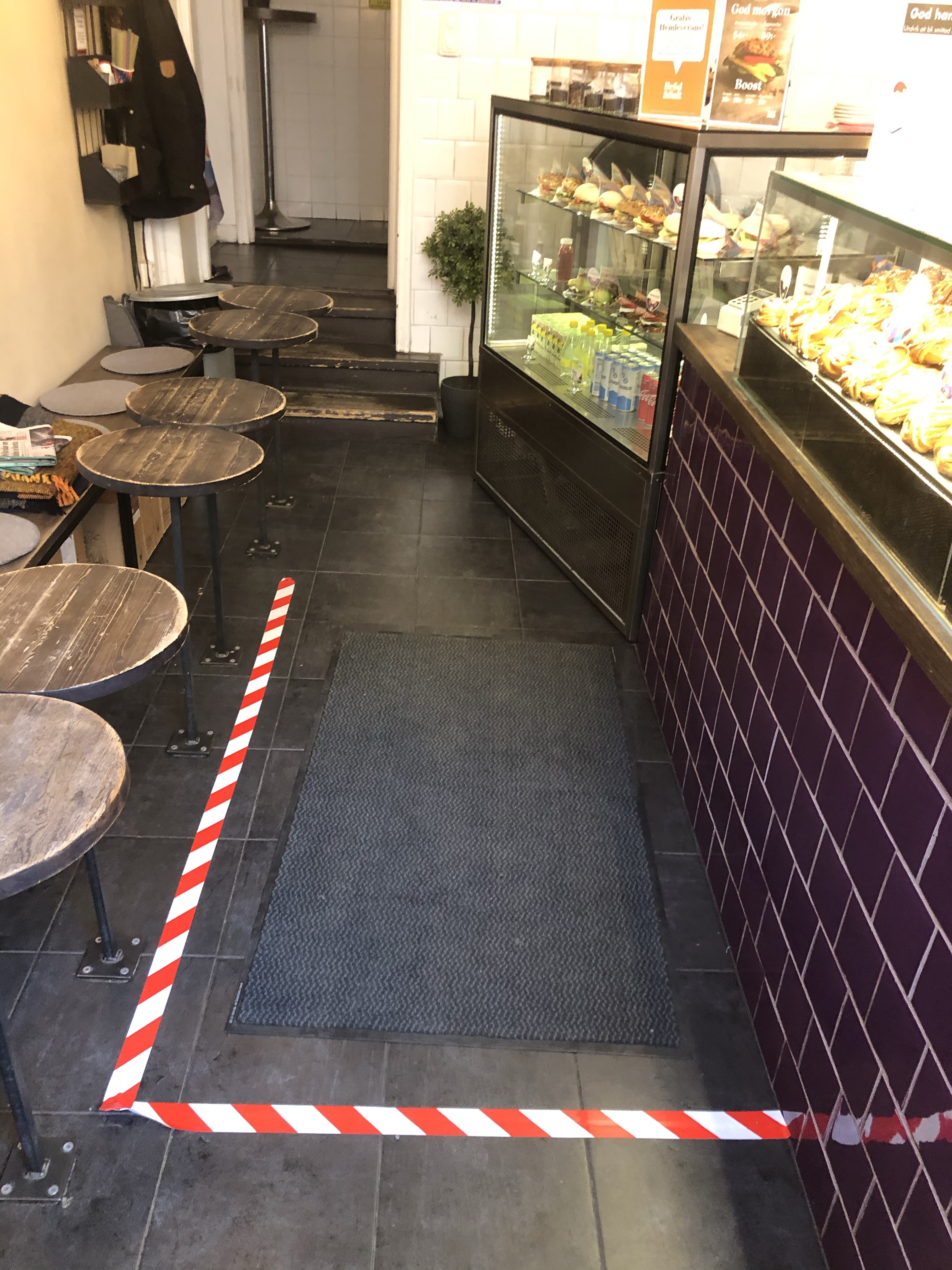
I put out a picture of my local cafe yesterday and got the reaction from a friend in Germany ‘what!? Are cafes still open?! Everything’s closed here!’ It seems like most places in the world are on lock down. But not in Sweden yet. The Swedish authorities have chosen another route, and are being attacked for it from the international community.

Media in the UK and USA are calling Sweden’s approach ‘Russian roulette’ with the lives of the population. One neighbouring country said Sweden is making its worst decision throughout history. Italian press have said it’s beyond comprehension why Sweden doesn’t follow the way that Italy has gone.

In Sweden there is no lock down, or curfew. It seems like the government want to protect the nation – without totally destroying the economy. Restaurants and cafes are open. Shops are open. Schools are open. However, sport and cultural events have been cancelled, theatres and cinemas are closed, as are sports centres, swimming pools, many work places, some museums, universities and colleges. Sweden’s largest gym chain was closed, and has now reopened. Meeting in groups of more 50 people is illegal.

I’m not here to defend or criticize Sweden’s approach. I am not a doctor or a virus expert, and I am certainly not an epidemiologist. However, as a citizen, I am obliged to follow the recommendations put forward by the authorities:

Work from home if you can, avoid large groups, stand two meters away from other people, socially distance yourself, limit your movement, wash your hands and crucially – stay home if you show the slightest symptom: cough, sniffle, temperature, sneezing.

It seems like many people are following these recommendations, but some are not. For me, it’s about individual responsibility for yourself and the collective. If we all follow the recommendations now, the quicker it will be over. Makes sense, right?

But some people still crowd into public transport, or sit on busy restaurant terraces. Some old folks, the most at-risk in our community, still mingle amongst people and still go shopping. The ski resorts are still open, but not the after ski. With Easter approaching, swarms of people will descend upon these resorts. God forbid that they should miss out on their holiday.

Experts believe this is of little consequence as the virus already exists in society and cannot be eradicated. They are focusing instead on flattening the curve and not on preventing the spread of the virus. They are ramping up health care services and trying to delay the inflow of patients needing care. It seems like it is a question of when, rather than if, we all get infected. The vast majority of people will not be affected with more than mild flu-like symptoms. The main concern at the moment is our elderly. They need to stay home, and many aren’t. How the Government will approach this is the next big question.

When all this is over, we can look back and judge. Whose approach was the best?

With the benefit of hindsight, we might see that Sweden did the right thing, lives were saved and the economy survived.

Or we might see that not enforcing a lock down was the most devastating decision Sweden ever made.

Swedish solidarity in times of crisis

My sister wrote in our family chat that this crisis brings the best and the worst out in people. It made me think. Truthfully, most of the news today is bad. But there are some moments of positivity shining through. We seem to be closing in on a potential vaccine. In Sweden, the situation is manageable – that enormous volume of people needing health care hasn’t happened yet. Most people seem to be taking their personal responsibility and staying tf home.

But most of the positive news is connected to the way in which people are behaving towards each other. When I thought solidarity was dead in Sweden, it seems like the crisis has proved me wrong. It warms the cockles of the heart. Here are a few examples:

Residents are putting notes on walls and through doors offering help to people who can’t go out because they are sick, quarantined or in a risk group. ‘If you need help walking the dog, buying food or going to the chemist, just call me on..’

In the town of Ystad, an elderly woman had her 96th birthday. A local school class didn’t want her to be alone, so they stood outside her balcony and serenaded her.

A movement has started up to support and show appreciation for health care staff. When in a cafe, you can buy a coffee, or sandwich etc. in advance. This is then given for free to a customer who comes in after you and is a healthcare worker. This is one I actually copied and did today at my local cafe.

A student took the initiative and enlisted hundreds of other students who want to volunteer to help in the health care system.

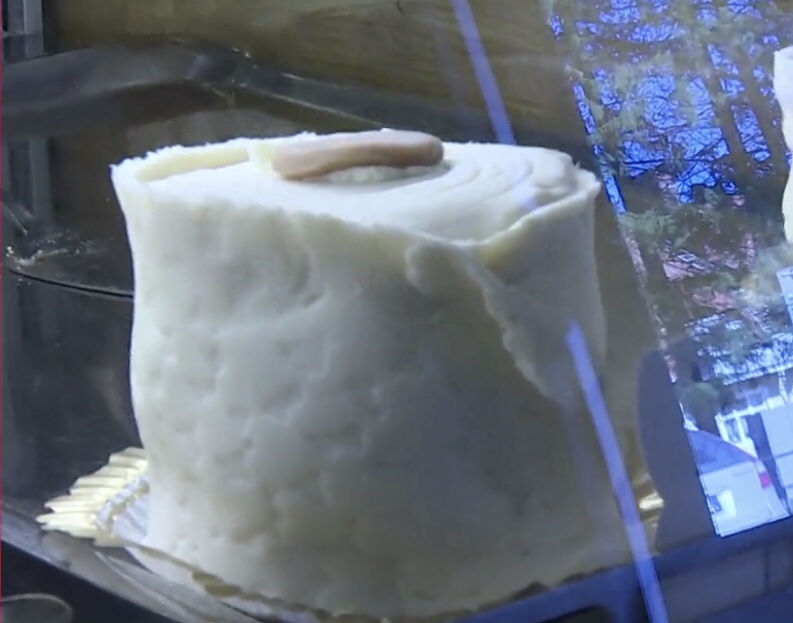
A bakery in the Swedish town of Karlstad decided they wanted to give everybody a laugh. So they designed a new cake. In the shape of a roll of toilet paper.

A loo roll cake at a cafe in Karlstad, Sweden

Do you know of any other acts of kindness in Sweden or wherever you are? Please share!

Surviving our VUCA world

A quote from Charles M Schultz in the comic strip Peanuts goes like this ‘Worrying won’t stop the bad stuff from happening, it just stops you from enjoying the good’. Here, he is referring to our personal ability to manage a VUCA world.

Have you heard of the acronym VUCA? It’s a very useful term right now.

Defined on Wiki, VUCA was first used in the leadership theories of Bennis and Nanus to describe or to reflect on the volatility, uncertainty, complexity and ambiguity of general conditions and situations.

  • V = Volatility: the nature and dynamics of change, and the nature and speed of change forces and change catalysts.
  • U = Uncertainty: the lack of predictability, the prospects for surprise, and the sense of awareness and understanding of issues and events.
  • C = Complexity: the multiplex of forces, the confounding of issues, no cause-and-effect chain and confusion that surrounds organization.
  • A = Ambiguity: the haziness of reality, the potential for misreads, and the mixed meanings of conditions; cause-and-effect confusion.

VUCA often impacts how individuals and organisations make decisions, plan forward, manage risks, foster change and solve problems. Our ability to operate in a VUCA world is defined by our fear, comfort levels, optimism and by how much we try to control or avoid uncertainty.

More than ever, we are living in a VUCA world. None of us know how this corona virus epidemic will end. Here in Sweden, society seems to be shutting down and the economy is in the middle of a major crisis. A global recession seems inevitable.

So how do we get through it?

Our ability to get through this without emotional breakdown does not come from panic, rumour and phobia.

According to Bill George, a senior fellow at Harvard Business School, it calls for a response which he calls VUCA 2.0: Vision, Understanding, Courage and Adaptability. From the government, from employers and from each individual. Thinking and acting in this way provides us with the stability and psychological safety we will need to get through to the other side.

So, how do you personally handle the concept of VUCA?

Watching the Swedes react to corona virus

As the corona virus sweeps across the world, it’s interesting to watch how people react. While the measures the Swedish government are making do not seem as extreme as many other countries, the behaviour of some people is. Panic buying seems to be the name of the game. Panic buying and hoarding. And it doesn’t seem unique to Sweden.

Social media is awash with images of empty supermarket shelves. People are hoarding certain obvious items – such as hand gel, pasta, eggs, rice, beans and flour. But also weird items. For example, in my local supermarket, cucumbers are totally gone! And the Italian red wine shelf was pumped dry at my local wine store!

But the item causing the most debate seems to be toilet paper. Apparently the loo roll shelves have been totally cleaned out. It seems Swedes, and many others around the world, are seriously worried about wiping their bums if they get the virus.

Currently in Sweden, there is no general quarantine or curfew, as in many other countries. However, many companies have temporarily closed and employees are being asked to work from home. Public gatherings of over 500 people are forbidden. At the time of writing this the borders are still open and so are the schools.

We do have to be vigilant and we do have to act responsibly. Washing hands regularly, avoiding people who show symptoms, coughing/sneezing into the fold of our arms and not participating in large gatherings of people are a few of the ways. ‘Social distancing’ is the term this has been given – a new word for the 2020 dictionary.

But wiping out the supermarket shelves? In general, it’s good to have enough food at home to last a couple of weeks I guess. But do we really need enough toilet paper and red wine to last 6 months?

Hoarding is a logical panic reaction to a crisis situation, and it’s interesting to see how quickly people succumb to herd mentality. But it’s also a selfish action. Draining the supermarket shelves means that there is nothing left to buy for lower income people (elderly, unemployed, studying, sick) who live day to day and do not have the economic means to bulk buy. So let’s remember the concept of solidarity next time we go shopping.

One thing I’ve observed so far from this crisis; how quickly self-interest and self-preservation takes over.

Am I Swedish? A reply to my haters.

After my latest blog, I was hate trolled and told to ‘go home’ because I am ‘not Swedish’. This has happened numerous times before. Normally I don’t respond to haters. I don’t think it benefits to feed the troll. But this got me thinking about what makes somebody Swedish. And I realised the answer isn’t just about me, but about anybody who moves to this country.

Here’s my reply to my haters:

Dear hater,

You are right, I wasn’t born here. I was raised in the UK. That makes me British.

I have lived in Sweden for 25 years. 9 years ago I became a Swedish citizen. That granted me the right to be Swedish.

I have a Swedish passport. That makes me a Swedish national.

Dear hater, how do you define who is Swedish? Is it citizenship, or is it birthright? Often when people discuss this subject, they mix up nationality and ethnicity. Nationality is the relationship between an individual and the nation(s) that he or she is affiliated with. Ethnicity is the identification between an individual and a particular racial, cultural or religious group.

So when you tell me to ‘go home’ because I am not ‘Swedish’, you are not referring to my nationality – because I am a Swedish citizen. You are referring to my ethnicity. And there is a word for wanting to remove people from a population based on their ethnicity – it’s called ethnic cleansing.

I can accept that I wasn’t born here. But I can’t accept being told to ‘go home’ based on the fact that I am ‘not Swedish’ and have a different opinion. I am a Swedish citizen and have as much right as you or any other Swede to voice my opinion in whatever channel I want.

In fact, not only am I a Swedish citizen, I am a model citizen. Let’s just take a look at my track record, shall we?

I am educated to Master’s degree level and all of my education was taken outside of Sweden. I haven’t cost the state a single krona for my schooling.

I have no children – so I have not taken any parental benefits in money or paid time off work. I haven’t cost the state a single krona.

In a quarter of a century, I have only received state sick benefit for two weeks.

I have never been unemployed but have always worked and paid my own way. I have never received any social benefits from the Swedish state.

I have worked for 25 years in Sweden and paid all the relevant income taxes.

I own a company and pay corporate tax. I provide a livelihood for others by employing them and paying employee tax on their salaries. And they, in turn, also pay income tax.

Should we compare my track record to yours?

So, you see dear hater, the state has earned a lot more on me than I have cost. I have contributed a great deal in financial terms to this country – just like so many new Swedes have.

I am not complaining; I am happy to contribute via my taxes. I believe in socialized healthcare, welfare and education. I strongly appreciate that the benefit system is a strong one, and that it exists to help people who need it when they need it. And maybe one day I will need it. Solidarity is one of the reasons I admire Sweden so much.

My moving here was a choice. Probably yours wasn’t. My contribution to society is positive. Probably yours isn’t. I haven’t cost Sweden a single krona. I’m guessing you are very expensive for society.

So as long as I am here, I will continue to voice my opinion. I have earned it. And if you want to keep trolling, then go ahead. But realise that your comments put fire in my belly – you are not my hater, you are my motivator.

Oh, and by the way, I will not be ‘going home’ – because I already am home.

Dear Swede – does this shameful act represent you??!

Currently at the border between Greece and Turkey, there are thousands of desperate refugees. Greece cannot cope with such a new massive influx of people and so, with support of the EU, the country is strengthening and protecting the border. Fortress Europe is a reality.

As a member of the EU, Sweden supports this approach and hopes to arrive at a new agreement with Turkey to cope with this humanitarian catastrophe. The aim is to find a solution that is manageable for both Turkey and the EU, and that is a responsible way to handle mass migration and immigration.

But one Swedish political party has taken matters into their own shameful hands. Literally. The leader of the right wing party Swedish Democrats has mustered up the energy to travel to the border. Here, he is facing the refugees eye to eye. He is looking into the fearful faces of men, women, elderly people and children. And he is handing them a flyer. The flyer has the following words on it:

Sweden is full. Don’t come to us! We can’t give you more money or provide any housing. Sorry about this message.’ The flyer is then signed ‘The Swedish people, Swedish Democrats’

I cannot imagine the lack of empathy that is required to be able to this. I cannot imagine how cold and hard this man’s heart must be. To stand at the border and hand out these fliers as part of a political caper is both callous and cruel.

He claims to represent Sweden in this matter. His party has only 17.5% of the vote. A massive majority of 82.5% of the electorate do not support him or his political ideals. He does not therefore represent Sweden or the ‘Swedish people’. And he certainly does not represent me. I absolutely and unequivocally reject him and condemn his beliefs and actions.

The Swedish Democrats claim to be patriots – true lovers of Sweden. What they have actually done with this action is drag Sweden’s good name down into the gutter with them. Shame on them.

And you, dear Swede, does this action represent you? If not, I ask you to react strongly and without hesitation.

The month the world shrank

The existence and the spreading of the Corona virus in the last few weeks cannot have passed anybody by. In the earlier stages of the virus, flights were cancelled in and out of China, then we were advised to avoid other countries in South East Asia. Then Iran? And Italy? Should we also soon avoid Gothenburg?

The world went from a wide open planet of international travel to a closed place where we are advised to stay put. In under a month, the world shrank.

How might this impact Sweden and the Swedes? Well, business is certainly affected. Imports are stuck in China. Events are cancelled. Employees returning from affected areas are told to stay home for two weeks, in a corporately-imposed quarantine. And this might just be the beginning.

What about the Swedes themselves? Swedes are well-known for being travelers. The people of this small, cold nation set out all over the world in search of sun, warmth, light, and adventure. Will it be so easy to tell them to stop traveling? Some would say it is impossible. You can take away many things from a Swede, but don’t touch their overseas holiday. For some, it is almost perceived as a human right to travel to warmer climates. I would say how easy it is to get Swedes to stop traveling depends on how any possible travel ban is imposed.

In general, Swedes value rules. And, in general, they follow them: traffic rules, laws, deadlines and agreements. In comparative cultural research one of the frameworks that is often used is the contrast between rules/task and relationships. Simply put, some societies value rules over relationships, thinking that rules should be followed irrespective of the relationship between people. Others value relationships over rules, often seeing the rule more as a recommendation.

Consistently in research, Sweden comes out as oriented towards the rules-side of the spectrum. While this is of course a generalization, it suggests that Swedes tend to take to rules and regulations very easily, tend to prioritize them, and tend to value them. When Sweden legislated against smoking in restaurants, people’s behavior fell into line over night. It wasn’t the case in many other countries. In the EU, Sweden is one of the countries that has applied most of the EU legislation on a local level. When participating in tenant association meetings, Swedes rely heavily on the house charter to understand what is right and wrong behaviour. A customer of mine refused a friendly lunch (in my mind to build relationship) because the company had issued a decree against corruption. None of this might be the case in other countries where a higher premium is put on individual relationships and circumstances, rather than what it says in the rule book.

So will Swedes stop traveling? If it is legislated, yes. If it becomes an official ban, then most Swedes will probably follow it. The practical nature of the Swede will understand its importance. The logic of the solution will prevail. However, if it just comes as a suggestion, left to the whims of the individual, then most Swedes will probably keep traveling. They will avoid the worst areas, and reroute to somewhere they perceive as safer.

You can take a lot of things away from a Swede, but don’t touch their overseas holiday.