Swedes ban rice

  
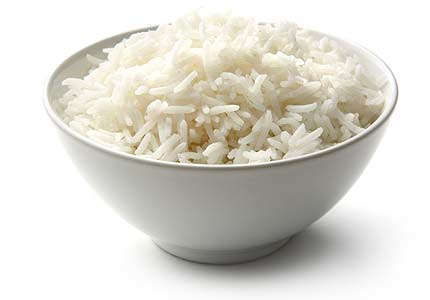
Just when you thought it safe to go back into the kitchen, the Swedish Food Health and Safety Board announced today that rice is killing us. This white staple apparently has the deadly chemical arsenic in it. 

People who eat rice more than four times a week are strongly advised to cut back and parents who reach for the convenient rice cake to appease their children should stop it immediately. 

While I’m sure this is thoroughly well-founded, it’s a bit hard to take seriously as over the years we’ve been warned about eating most foodstuffs in one way or another. 

From a global perspective, to the east of us, there are entire nations who build their cuisine on rice. And to my, granted limited, knowledge, I don’t believe arsenic poisoning is the biggest cause of death there. 

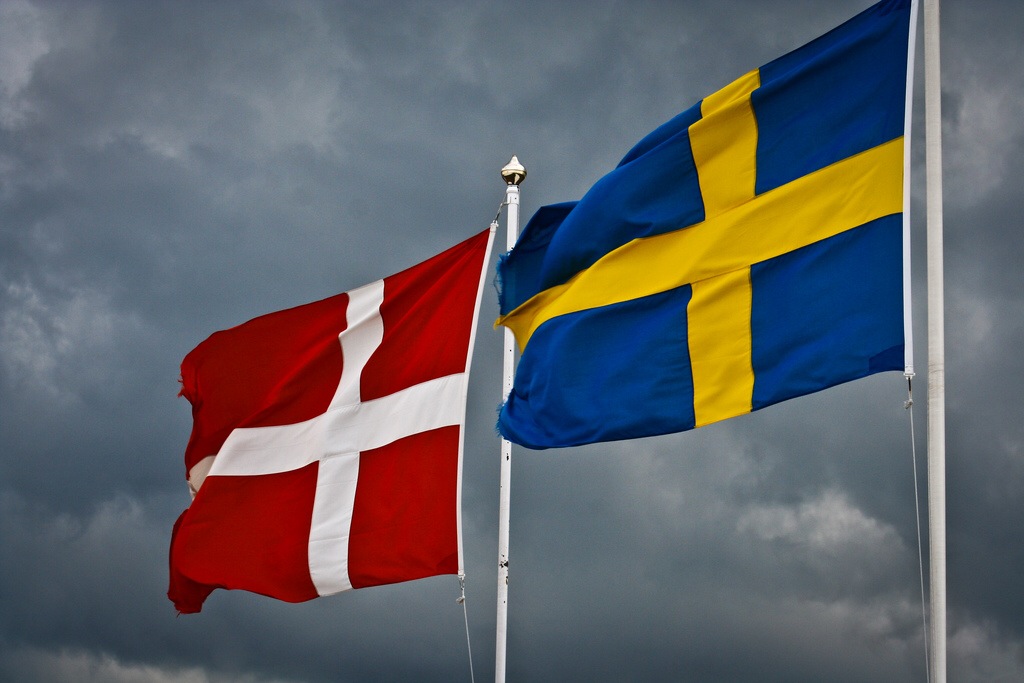
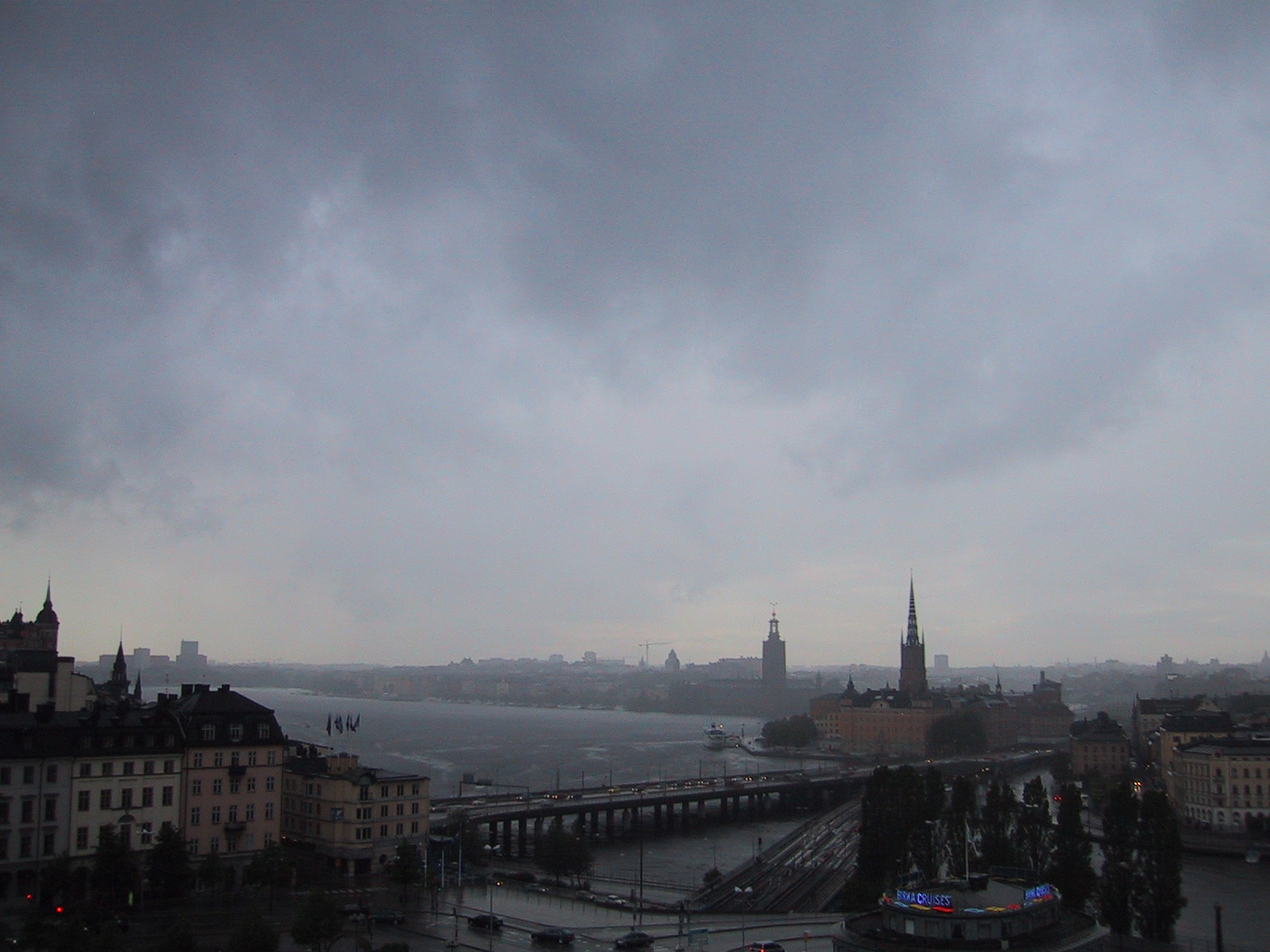
Dark clouds over Öresund 


With the refugee crisis raging on, the news is full of articles and commentary. People are taking to the streets and the railway stations in support of the refugees,donating money and other needed items. This issue is in full focus, deservedly so. 

If this blog was called ‘Watching the Danes’ I would be outraged by my adopted country today. If media is to be believed, it seems like our neighbors to the south are doing everything they can to deny sanctuary to these desperate people. 

For example, they want to shuffle refugees through Denmark to Sweden without processing their refugee applications, which is against EU law. They resist any form of pan-EU deal on refugee quotas and are happy to watch other countries bear the ‘burden’ of those seeking asylum. They cancelled the trains between Denmark and Germany. Elements in the government want Denmark to leave Schengen, thus making border control more strict and difficult.  They have even gone as far as putting adverts in Lebanese newspapers urging immigrants not to come to Denmark. The Danish door is firmly closed thanks to its racist and protectionist agenda. 

Their political leaders should be ashamed. 

But this not a blog about Denmark, it’s about Sweden. 

And I’m happy to witness that solidarity, compassion and empathy are still going strong in this Scandinavian nation. 

Sweden – get some perspective!!

60 million is a massive number. So big that it’s impossible to imagine. Difficult to relate to. 60 million is roughly 6 times the population of the whole of Sweden. And it’s the estimated number of people who are currently on the run in the world today. These people are running from war, from oppression, violence and starvation. They are running to escape persecution, to save their lives, and the lives of their children.

As we sit here in our comfortable homes, drinking coffee and eating our cinnamon buns, we watch these people on our flat screen televisions and switch them off when it gets too repetitive. 60 million people is an impossible number to digest, so it’s better just to put those images somewhere to the back of our minds and complain about the weather instead.

But just because it’s not happening here, doesn’t mean it’s not happening. 

A comparative handful of these 60 million people, against all odds, make it to Sweden. Housed in camps or living homeless on the streets, they break our illusion of our rich society. These people see Sweden as a temporary sanctuary. Here they are safe from war, famine and disease. They are safe from persecution and attack. But some Swedes see them as vermin, as parasites who are here to suck freely at the teet of the tax payer. 

We are told in political rhetoric that Sweden is being ‘swarmed’ by refugees, that our comfortable society is at risk. And people are scared that the self righteous baracades that have been built are creaking under the pressure of a world outside. 

Get some perspective Sweden! 

According to statistics released by the UN, the actual number of refugees and immigrants seeking asylum in Europe last year was round 600 000 – a mere 1%. 

Other statistics from Forbes show the following: 

  
Per thousand people, Sweden took in 15 refugees during 2014 which means around 135000 people. Out of 60 million people who are currently on the move. 

We need to have a reality check in Sweden and not believe the political arguments that some parties would have us believe. 

In the big picture, the number of people who make it to Sweden is tiny. These people have endured more than we can imagine just to get here. They have suffered mentally and emotionally and probably experienced indignities beyond our comprehension. 

The question becomes how do we treat these people who break through our flat screen complacency when they become living examples of what we fear? 

I suggest we welcome them with pride and with humanity. And treat them with the dignity they deserve. These are people, not parasites.  

And they are desperate to receive our protection. 


If you like this blog, please share it and spread it. 

Swedish revolution 

Whoever thought of Swedes as a pacifistic,  neutral people needs to think again. After a racist advertising campaign was put up in the underground system by Sweden’s right wing nationalistic party, people decided they’d had enough. Crowds appeared at the station in question and demonstratively tore down the offending advertising. 

Swedes are taking a stand against the rising racism and xenophobia in society. Recent polls show that the party representing these attitudes has become the largest opposition party to the government. 

I feel at times that the open and tolerant Sweden I love is something of the past. But these reactions and these pictures show that the majority of Swedes will not take this sitting down. They will take to the streets and they will act to defend the rights of all people living in this particular spot on the planet. 


The Short Swedish Summer

  
In Sweden there’s a series of classic songs that are strongly related to the summer. One of these songs, I have always hated. It’s by an aging pop star called Thomas Ledin. I fear his summer song may be coming true this year. 

This year, we’ve had the rainiest May and June in human memory. We had a heat wave of 5 days at the beginning of July. And today? It’s 14 degrees and raining again. So much for summer. Maybe that was it last week, flashing by in the blink of an eye. 

So what is Thomas Ledin’s song? In Swedish it goes ‘sommaren är kort, det mesta regnar bort’ which translates as ‘summer is short, most of it just rains away.’

Art meets life in an annoying, but this year truthful, summer melody. 

Swedish weather gods

rainstockholm

At the moment, I’m hearing a lot of moaning about the weather. It is raining a lot and unusually cold for the time of year.

Or is it?

I remember the first year I moved to Sweden and I was returning to the UK on May 13th to visit family. At Arlanda Stockholm Airport our flight was delayed – because it was snowing!! Snowing on May 13th! When I arrived in London, it was over 20 degrees and people were walking around in shorts.

I also remember another year – on Midsummer’s Eve – in June that we sat outside and it was so cold our breaths were steaming. It was the same temperature on Midsummer’s Eve as it had been on New Year’s Eve.

And I remember another May morning a few years ago when I was late for a meeting beacuse I had to unexpectedly scrape the ice of my car.

So is it so unusual that it’s this cold at this time of the year? Unfortunately not. Up here in the Nordic region, this is what we can expect from our weather gods.

The only thing that can make it change is global warming – not selective memory, collective denial or wishful thinking.

Cleaning up the Swedish language


Every year, SAOL, the Swedish Academy Ordlista (word list), is published. This list includes new additions to the Swedish language and removes or updates old words that are no longer in use. 2015’s list is due to be released next month, and this time, the Academy have made suggestions that clean up the Swedish language by suggesting that we do not use offensive and controversial words. 

Instead of ‘neger’ (nigger), they are suggesting Swedes say ‘black’

Instead of ‘Lapp’, they are recommeding ‘Same’

Instead of ‘zigenare’ (gypsy), they are suggesting ‘Roma’

For me, this is a no-brainer. It is extraordinarily old-fashioned and offensive to continue to use the three listed words above.  I would hope in 2015 that we had come further than this. There are people who will defend the use of these words by saying that they have the right to use what vocabulary they want. Of course, they are correct. That’s called freedom of speech. But having the right to do something doesn’t mean doing it. If by exercising my right I am violating or oppressing others, then I would suggest we make other choices. 

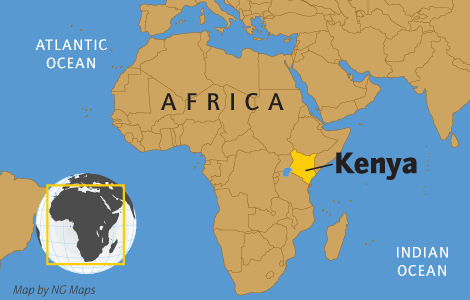
Associations of Sweden in Kenya

Sitting on the plane to Nairobi today, the Kenyan woman next to me asked where I had come from. ‘Stockholm’ I answered. ‘Oh, Germany’ she said. ”No. Sweden’ I said. ‘Yowww’ (or something similar) she said ‘it’s snowy there. I’ve never seen snow. The closest I got was the time my freezer needed defrosting”. 

Later in the taxi, ‘where you from?’ ‘Sweden’.  ‘Oh a little country of people who think they’re big’. 

Even later in the hotel bar. ‘Where you from?’ ‘Sweden’. ‘Aahh, Zlatan!!!!’ 

Associations of Sweden in Kenya. 


Segregation in Sweden – us and them

residential segregation

When I was in the UK a few weeks ago, somebody told me that he follows Swedish news and politics with interest. He talked about how he always held Sweden up to be a good example of a humane society and how it seemed like the Swedes had succeeded – especially when compared to the UK. But the rapid rise of the right, and the increasing racism in Swedish society concerned him, and the increasing segregation between people was a disappointment. He saw Sweden as a society based on equality, but it was proving to be otherwise.

A disappointment. That was the word he used. Sweden is a disappointment.

According to DN’s recent study presented today, segregation has been increasing in Sweden during the last 20 years. Rich areas get richer and more ‘Swedish’. And the less fortunate areas, often where ethnic minorities lives, get poorer.

On average, 46  percent of all immigrants in Stockholm have immigrants as their nearest 400 neighbours. This can be compared to 24 percent of Stockholmers with Swedish background who have immigrants as their nearest 400 neighbours. In other words, the so-called ‘segregration differential’ is 22 percent (46-22). In 1991, this differential was 14 percent in Stockholm, so the segregration in the capital city has almost doubled over this period.

In Sweden’s other two largest cities, Gothenburg and Malmö, the segregation differential has gone, in the same period of time, from 14 to 25 percent and 16 to 22 percent respectively.

The Southern town of Kristianstad can ‘boast’ the fastest change in segregation – since 1991, segregation has increased from 6 percent to 27 percent. ould it be a coincidence that Sweden’s right wing political party have a stronghold in this area of the country? I think not.

But is this necessarily a bad thing? Well, like everything, it depends on the perspective that you take. Looking at it negatively, with increased immigration, there is a real risk that society cannot keep up – accomodation isn’t built quickly enough, schools are not able to take in children, health systems do not have the capicity to process larger numbers. And with this lack of ability to handle increased pressure, society develops even more into a ‘haves’ and have nots’ and segregation increases.

But from a positive perspective, there are clear benefits for minority groups to live together with others who already have a  foot in Swedish society. Immigrants who are already integrated can help minimise a feeling of total isolation, can help with with work contacts, social issues, language and knowledge about Swedish culture.

This is obviously a complicated issue. And it’s an issue that’s not going away. Immigration is inevitable for a country like Sweden. Apart from the humanitarian perspective, Sweden needs new citizens to pay tax and support the social welfare systems.

It seems like the continuing challenge for Sweden isn’t immigration – it’s integration. And if we also are disappointed with the way politicians handle it, it’s up to us to act.

Swedish umbrella etiquette 


In three words, it’s easy to describe Swedish umbrella etiquette. 

There. Is. None. 

If it’s not bad enough to get bashed into when walking down the street on a normal day, it’s worse when it’s raining. Armadas of umbrella-wielding Swedes emerge. And you walk along the street at your peril. 

Just a word of advice. If your umbrella is eye height for other people, then please tilt your brolly as you walk past them. The likelihood that you will poke out somebody’s eye is seriously reduced with this simple action. 

It’s sensible. It’s respectful. It’s safe. 

And it’s etiquette.