The sound of the city


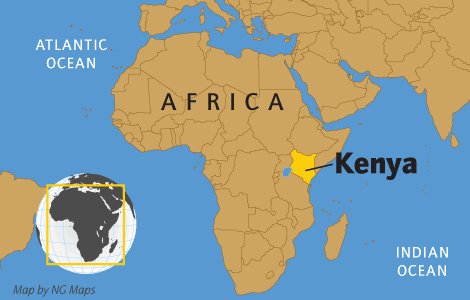
Often when we travel, we return with stories of food, climate, people. But one of the things that strikes me when I’m abroad is sound. Each city, each place, seems to have its own sound identity. I love sitting in the evenings looking out over cityscapes and drinking in the melodies of the night. In Stockholm, there is the hum of boats or of water lapping gently against shores, wind blowing through trees. In Bangkok it’s the sound of the tuk-tuks and the tinkle of chimes. In Delhi it’s the distant voices from temples and markets and all night traffic. In New York, it’s the hum of traffic and people, the buzzing of neon lights and the scream of emergency vehicles. Here in Nairobi, where I am today, it’s the sound of traffic interspersed with drum beats and wailing music.  Distant voices carrying through the night full of woeful stories. 

As I sit and listen, I experience another layer of the city, another layer of the culture. With full respect to food and climate, it’s the sound of the city that rules the night. 

Associations of Sweden in Kenya

Sitting on the plane to Nairobi today, the Kenyan woman next to me asked where I had come from. ‘Stockholm’ I answered. ‘Oh, Germany’ she said. ”No. Sweden’ I said. ‘Yowww’ (or something similar) she said ‘it’s snowy there. I’ve never seen snow. The closest I got was the time my freezer needed defrosting”. 

Later in the taxi, ‘where you from?’ ‘Sweden’.  ‘Oh a little country of people who think they’re big’. 

Even later in the hotel bar. ‘Where you from?’ ‘Sweden’. ‘Aahh, Zlatan!!!!’ 

Associations of Sweden in Kenya. 


Segregation in Sweden – us and them

residential segregation

When I was in the UK a few weeks ago, somebody told me that he follows Swedish news and politics with interest. He talked about how he always held Sweden up to be a good example of a humane society and how it seemed like the Swedes had succeeded – especially when compared to the UK. But the rapid rise of the right, and the increasing racism in Swedish society concerned him, and the increasing segregation between people was a disappointment. He saw Sweden as a society based on equality, but it was proving to be otherwise.

A disappointment. That was the word he used. Sweden is a disappointment.

According to DN’s recent study presented today, segregation has been increasing in Sweden during the last 20 years. Rich areas get richer and more ‘Swedish’. And the less fortunate areas, often where ethnic minorities lives, get poorer.

On average, 46  percent of all immigrants in Stockholm have immigrants as their nearest 400 neighbours. This can be compared to 24 percent of Stockholmers with Swedish background who have immigrants as their nearest 400 neighbours. In other words, the so-called ‘segregration differential’ is 22 percent (46-22). In 1991, this differential was 14 percent in Stockholm, so the segregration in the capital city has almost doubled over this period.

In Sweden’s other two largest cities, Gothenburg and Malmö, the segregation differential has gone, in the same period of time, from 14 to 25 percent and 16 to 22 percent respectively.

The Southern town of Kristianstad can ‘boast’ the fastest change in segregation – since 1991, segregation has increased from 6 percent to 27 percent. ould it be a coincidence that Sweden’s right wing political party have a stronghold in this area of the country? I think not.

But is this necessarily a bad thing? Well, like everything, it depends on the perspective that you take. Looking at it negatively, with increased immigration, there is a real risk that society cannot keep up – accomodation isn’t built quickly enough, schools are not able to take in children, health systems do not have the capicity to process larger numbers. And with this lack of ability to handle increased pressure, society develops even more into a ‘haves’ and have nots’ and segregation increases.

But from a positive perspective, there are clear benefits for minority groups to live together with others who already have a  foot in Swedish society. Immigrants who are already integrated can help minimise a feeling of total isolation, can help with with work contacts, social issues, language and knowledge about Swedish culture.

This is obviously a complicated issue. And it’s an issue that’s not going away. Immigration is inevitable for a country like Sweden. Apart from the humanitarian perspective, Sweden needs new citizens to pay tax and support the social welfare systems.

It seems like the continuing challenge for Sweden isn’t immigration – it’s integration. And if we also are disappointed with the way politicians handle it, it’s up to us to act.

Swedish sunflowers

sunflowers

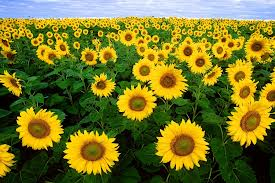
Sunflowers might not be the first thing you think of when you think of Sweden. But at this time of year, the place is full of them. Well, not really sunflowers per se, but a type of sunflower.

The fantastic thing about sunflowers, apart from their brash yellow colour and the flocks of butterflies that they attract, is the way in which they move. Their big, open faces look up at the sky, reaching for the light, and when the sun is out the sunflower moves its face to follow the its path across the sky. They really enjoy soaking up the rays of light and the warmth that the sun provides. It’s a fantastic sight to behold as you drive through the countryside in France or Italy.

But we’re not in France or Italy, we’re in Sweden. So what has this got to do with Sweden then?

Well, Swedes are like sunflowers.

Confused? Let me explain.

After a long, dark, cold winter, Spring eventually arrives.  This year, it seemed to arrive early. This week, temperatures soared to 14 degrees celcius, the sky was blue and people hit the streets and the parks. Everybody emerged from their winter hybernation.

They sat on park benches, on blankets, on window ledges, outside restaurants, on balconies. They leaned up against sunny walls. And as they sat there, they lifted their faces, just like sunflowers, to face the sun and to feel the warming rays of light on their pale wintery skin. Sometimes people just stopped randomly on street corners and lifted their faces up to the sun, eyes closed, to soak up the light.

So you see, Swedish sunflowers are the Swedes themselves. And you’d be hard pushed to find a more sun-worshipping, thankful population at this time of the year.

90 km on skis – a yearly Swedish challenge


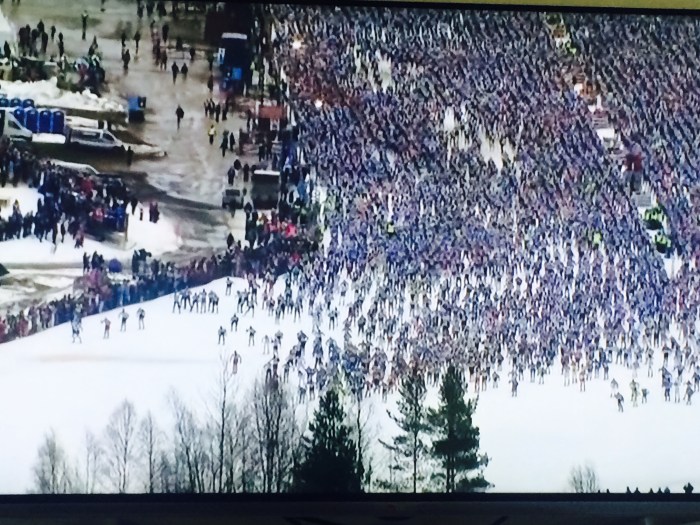
Today, the world’s longest cross country ski race takes place in the county of Darlana in Sweden.  Called Vasaloppet, it entails participants skiing 90 kilometers from start to finish. It’s an extremely popular race, which can take up to 12 hours to complete, and which is broadcast live on tv. When tickets to participate are released, they sell out in 15 minutes – it’s that popular. 

The first Vasalopp was in 1922 and takes place annually, the first Sunday in March. It’s an amazing sight to watch, as more than 15000 mad skiers glide along, the swishing sound of ski on snow filling the air. The person who has completed the race fastest is Jörgen Brink, who in 2012 won the race in just over 3 hours 40 minutes. 

So why is this race called the Vasalopp? Well, it is to commemorate the escape to Norway through Darlana of King Gustav Vasa in 1521. Legend has it that he skied, but experts believe he more likely completed this escape on snow shoes. 

Modern day skiers don’t see the experience as an escape, they see it as a challenge and a rite of passage. 

And as you sit watching the TV comfortably from the sofa, with tea and toast, you take vicarious pride in their crazy achievement. 


Swedish umbrella etiquette 


In three words, it’s easy to describe Swedish umbrella etiquette. 

There. Is. None. 

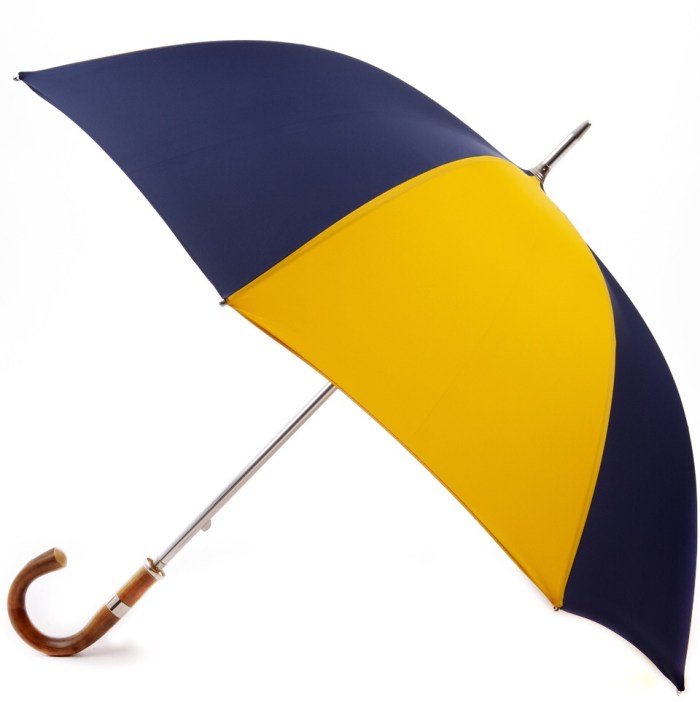
If it’s not bad enough to get bashed into when walking down the street on a normal day, it’s worse when it’s raining. Armadas of umbrella-wielding Swedes emerge. And you walk along the street at your peril. 

Just a word of advice. If your umbrella is eye height for other people, then please tilt your brolly as you walk past them. The likelihood that you will poke out somebody’s eye is seriously reduced with this simple action. 

It’s sensible. It’s respectful. It’s safe. 

And it’s etiquette. 

How a Swedish hand bag can cause a storm

Lady Bracknell’s horror when she exclaims ..‘a handbag!!?’ in Oscar Wilde’s ‘The Importance of Being Ernest’, has never been so relevant as it is today. 

Indeed, a handbag is causing quite a stir in Sweden. 

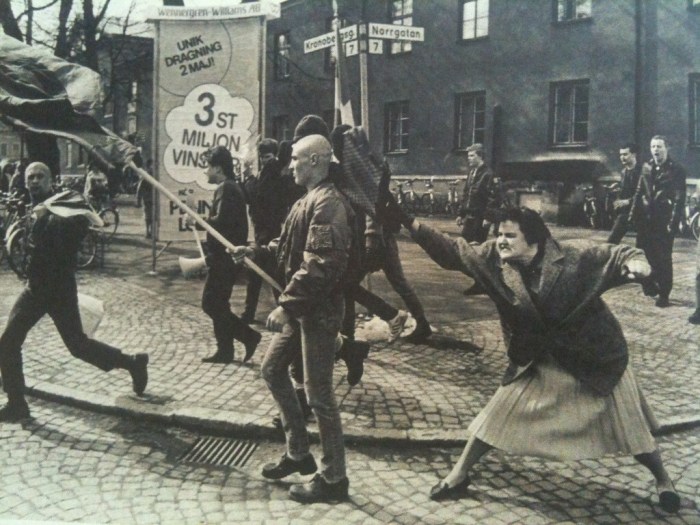
A famous photograph from 1985 is the catalyst. This photograph depicts Danuta Danielsson stepping out from a crowd to hit a neo Nazi across the head with her handbag. Now, a statue has been made depicting this snapshot of time but the local council in the Swedish town of Växsjö is refusing to allow it to be erected. The reason? They claim that the statue commemorates violence and say that it is not ok to hit somebody just because you disagree with them. 

And I agree with that. But there is another perspective. The statue can reflect an act of individual courage or symbolise the very real relationship between nationalism and anti-fascism that we see in Sweden today. 

It seems like this handbag is dividing the country. As a response to this situation, handbags have been mysteriously appearing on statues all over the country. 

Yes….‘a handbag!!?’


Reflections from a Swedish supermarket queue


Standing in a queue, waiting to pay. In front of me, there’s a woman in her late thirties. She has a baby in a pushchair, she’s dressed in exercise gear and she has loads of food. Manically, she unpacks her trolley and unceremoniously dumps her items onto the belt. She sees me standing behind her and, as I only have three items, she generously offers for me to go before her. 

I admit I am surprised by this uncommon offer. But I graciously thank her and say no worries – I can wait. The supermarket is playing a favourite tune and I’m actually enjoying it, I tell her. 

‘It’s nice to hear somebody isn’t Saturday-stressed’ (lördagsstressad) she mutters bitterly back at me. 

‘Saturday-stressed’ is a term I’ve never heard, I never am and I certainly never intend to be. 

Why do Swedes have a winter sport break? 

Around this time of the year, schools have a week’s holiday. Called Sportlov it’s a traditional time for a winter sport break. 

This tradition was introduced in 1940 and was initially a way to save energy. Heating up schools cost money and, due to rationing, councils were instructed to drastically reduce their heating expenses. To give the pupils something meaningful to do while the school was shut, the authorities organised various activities, many focused on being outdoors and exercising. During the 50’s, experts realised that infection spread less widely at this time of the year if schools were closed for a week. So the winter sport break became cemented and an official disease control method. 

Nowadays, many families head off to the mountains to go skiing, some head off to the Alps for the same purpose.

For those of us left in town, it’s sheer bliss. 

There is hardly anybody on the buses and tube, traffic is significantly thinner and less noisy and it’s easy to get a seat at lunch time. 

And the fact that there are hardly any children in town means the rest of us don’t get infected with kid flu bacteria on our way to work. 

Swedish snow champion!

kalla

Many Swedes are great sport-lovers. And surprisingly for a country with a small population, they’re relatively successful. Right now, winter sports are in focus as Sweden hosts the World Championship in Cross-Country Skiing.

It’s hard to believe when you’re sitting in sunny, un-icy Stockholm that there is any snow elsewhere in the country. But there is and today, Sweden won gold! Popular skier Charlotte Kalla demolished the competition and won a gruelling 10km race in pouring snow. She won with a 41 second margin, which is significant in this sport and she slammed the Norwegians who normally rule the roost in cross-country ski sports.

A glimpse at the current media gives an indication of how important this is to Swedes and what an acheivement it is:

‘GOLD EXTRA! Kalla – a Dream come true!’

‘Kalla’s Gold crush – now she’s the best’

‘Charlotte Kalla’s magnificent gold achievement’

‘Gold! She crushed the opposition!’

‘Kalla crushed the competition at her favourite distance race’

With all this crushing, it’s easy to see that this is huge in Sweden – a victory on home turf – and in that moment Charlotte Kalla just became the nation’s powerhouse sweetheart.