Neil Shipley on Swedish culture – the strange, the special and the sublime
Author: Neil Shipley's watching the Swedes
Since 1994, I've been watching the Swedes. Not in a creepy, obsessive way, but like an adventurer in unknown territory who carefully observes his surroundings.
I run a training company with my American business partner in Stockholm. We hold seminars and workshops in Cultural Awareness and Communication.
For more info about this check out www.keytraining.se
There’s a change blowing in Swedish politics and I’m really interested to hear your point of view.
In recent years, the far right, nationalistic party Sweden Democrats (SD) have gained traction. However, although they have a 17% representation in the parliament, they have never sat in the government. This is mostly because the other established parties have refused to negotiate or cooperate with them.
Today, Sweden has a minority government supported by smaller parties. One of the raison d’etre of this solution is to keep SD away from any form of governmental influence.
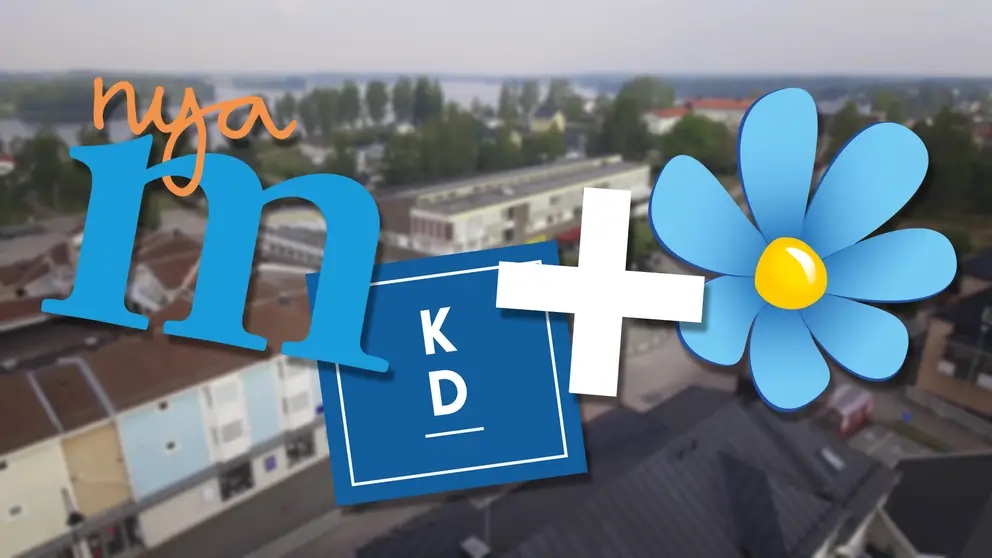
However, there is a shift. The two other right-oriented conservative parties, the Moderates (M) and the Christian Democrats (KD), are now opening the door to SD. In a bid to gain power, M and KD have understood they cannot reign without SD. Together, this block could get the largest number of votes, if not an outright majority.
Many people are concerned about this. History tells us how radical right-wing parties have previously gained political domination via the established conservative parties. The conservative parties opened the door, and then lost control. People are worried that this will happen in Sweden and that a right-wing union would devastate the country.
What do you think? Is this a valid concern or are people simply being alarmist?
Like many places around the world, Swedes celebrate Valentine’s Day on February 14th. Called ‘Alla Hjärtans Dag’ – All Hearts’ Day – it is a newish tradition that started around 50 years ago, but didn’t really gain traction until the 1990’s. American influence and commercialization are often cited as the reasons for this. I also think that it’s a timing issue – the month of February is an otherwise boring time of year in Sweden. A little celebration is a small distraction from the tedium.
In Sweden, Valentine’s wishes are not only limited to love interests, but also extended to children, friends and even school teachers.
Romantically, the most common Valentine’s gifts are flowers, and treating your loved one to a nice dinner, in a restaurant or at home. Approximately 10 million red roses are sold around this day, which is huge considering the population is also 10 million.
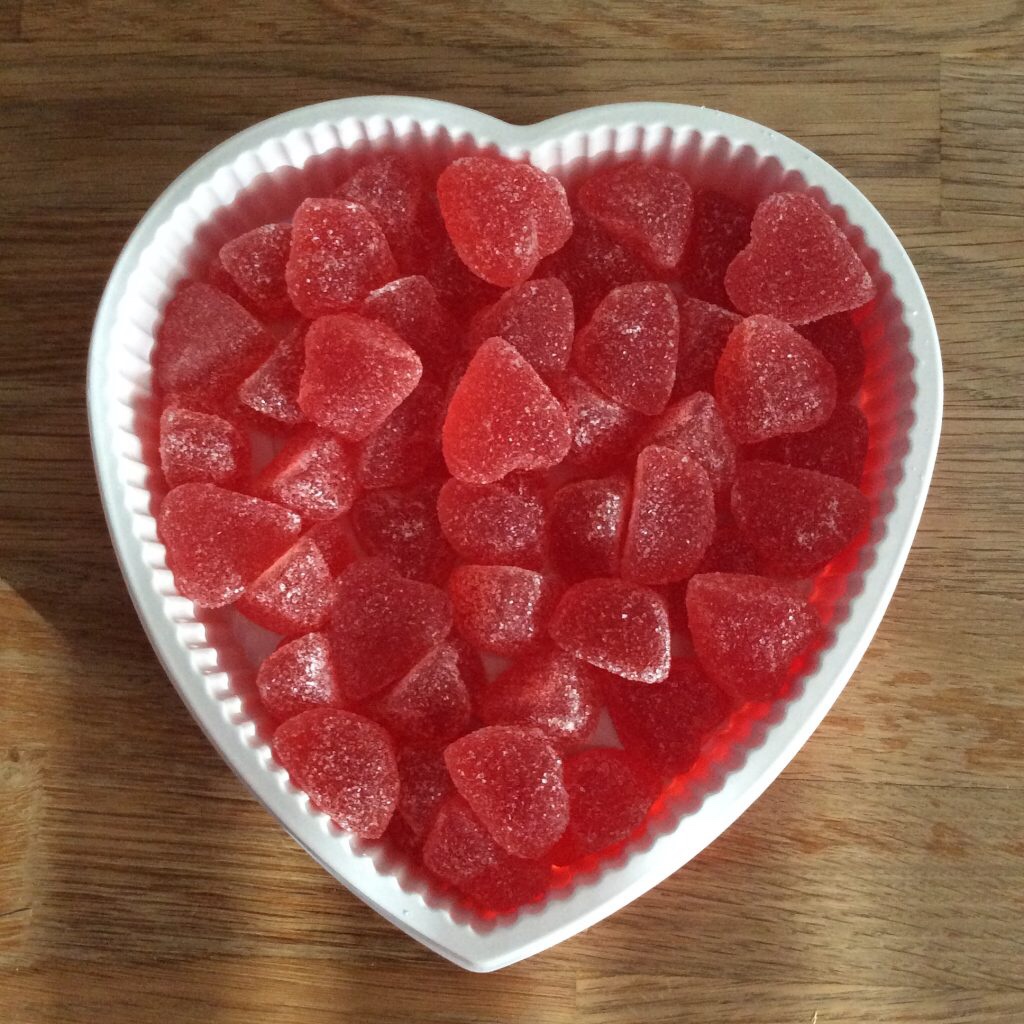
Heart-shaped candy is also popular, and in Sweden the most common is ‘jelly hearts’. Sales of chocolate and candy apparently increase by 90% every year around Valentine’s Day.
So, I might not have flowers or chocolates to give you, but I’d like to wish each of you a Happy Valentine’s Day. I appreciate that you want to read my writing, and in return I send you some loving energy. I hope you have love and affection in your life and that, when the day comes, you can celebrate with a long, warm hug!
I’ve written previously about the cream bun called a semla that is eaten around this time of year in Sweden. Traditionally consumed on Shrove Tuesday, this is a sweet, wheat bun filled with whipped cream and almond paste. And it is de-lish-us.
However, there is a way to eat it that I have never got on board with. A traditional method called the ‘hetvägg’, which translates literally a ‘hot wall.’ This is when the semla is placed into a bowl of warm milk, and eaten with a spoon. The result is a sugary, creamy slop.
The ‘hetvägg’ has a long history, going way back to the 1700’s when a warm, wedge-shaped spiced bun was served in a bowl of warm milk. This was eaten around Europe. In fact, the name ‘hetvägg’ has nothing to do with ‘hot wall’, but comes from the German for ‘hot wedge’ – “heisse wecke”. The top of today’s semla is often wedge-shaped as a historical nod to the original bun.
It is said that King Adolf Fredrik died from eating too many ‘hetvägg’ in 1771, but in fact it was a heart attack. Granted, he was a gluttonous man, and eating ‘hetvägg’ was indeed part of his questionable diet. After his death, there was a call to ban the sugary treat, as it was rumoured to have murdered the king.
The ‘hetvägg’ wasn’t banned and today it is still a popular way to consume the semla. I personally prefer mine dry and fluffy. But, hey, as they say in Swedish – ‘taste is like the backside – divided!’
Today is my birthday, but it’s not the first time I’m celebrating in Sweden. I must have had at least 20 birthdays here. This year is a bit special since big parties are not allowed, so it got me thinking what is typical about celebrating birthdays in Sweden?
1) Wake up call – Swedes who do not live in a single household are usually woken up early in the morning by friends or family coming into the bedroom with bubbly, breakfast, and gifts. The breakfast tray is often adorned with a candle. This is a lovely way to wake up, unless you’re not a morning person that is.
2) Singing – Swedes love to sing, in general, and they usually sing when they carry out the morning wake up call. The Swedish birthday song is a cheerful melody entitled ‘ja, må han/hon leva’. This translates as ‘yes, may he/she live (for a hundred years)..’ Curiously, there’s no mention of birthday in the Swedish song, unlike the English ‘Happy Birthday to You.’ After the singing, there is traditionally a ‘hurra’ at the end of the song. In most of Sweden, there are four ‘hurras’ but in the county of Skåne only three – hurra, hurra, hurra!
3) Green cake. A popular birthday cake is a green, marzipan clad cake called a ’Princesstårta’. Full of whipped cream, it’s a sickly treat. It seems ungracious but in Sweden, the celebrant themselves is responsible for bringing their own cake with them if they want to be celebrated in the work place.
4) Gift giving is usual in Sweden when somebody has their birthday. Usually, gifts are unostentatious such as flowers, chocolates, wine or something small and meaningful. Gifts for children tend to be more plentiful. A common group gift is to take the celebrant out to a restaurant. At some point during the dinner, a slightly self-conscious ‘Ja, må hon/han leva’ is sung.
5) The round number. Birthdays that end with a ‘0’ tend to be celebrated larger than others in Sweden as they are seen as a milestone. Swedes will often have a big party or will travel away with friends and family to warmer climes. Since neither are currently permitted in the shadow of the pandemic, birthdays with round numbers are celebrated in a smaller fashion or postponed to a later year.
Celebrating birthdays in Sweden became popular during the 1600’s in the Royal Court. Towards the end of the 1800’s it made its way into the general population. Important birthdays that are celebrated a little extra are 18, when a person comes of age, 20 when a person can legally buy alcohol and 65, when they retire. At the age of 100, Swedes receive a telegram from the monarch. According to Sweden’s Statistic Agency, the most common birthday in Sweden is 15 April. The least common, other than 29 February, is the 21 November.
Today is my birthday, but it’s not the first time I’m celebrating in Sweden. I must have had at least 20 birthdays here. This year is a bit special since big parties are not allowed, so it got me thinking what is typical about celebrating birthdays in Sweden?
1) Wake up call – Swedes who do not live in a single household are usually woken up early in the morning by friends or family coming into the bedroom with bubbly, breakfast, and gifts. The breakfast tray is often adorned with a candle. This is a lovely way to wake up, unless you’re not a morning person that is.
2) Singing – Swedes love to sing, in general, and they usually sing when they carry out the morning wake up call. The Swedish birthday song is a cheerful melody entitled ‘ja, må han/hon leva’. This translates as ‘yes, may he/she live (for a hundred years)..’ Curiously, there’s no mention of birthday in the Swedish song, unlike the English ‘Happy Birthday to You.’ After the singing, there is traditionally a ‘hurra’ at the end of the song. In most of Sweden, there are four ‘hurras’ but in the county of Skåne only three – hurra, hurra, hurra!
3) Green cake. A popular birthday cake is a green, marzipan clad cake called a ’Princesstårta’. Full of whipped cream, it’s a sickly treat. It seems ungracious but in Sweden, the celebrant themselves is responsible for bringing their own cake with them if they want to be celebrated in the work place.
4) Gift giving is usual in Sweden when somebody has their birthday. Usually, gifts are unostentatious such as flowers, chocolates, wine or something small and meaningful. Gifts for children tend to be more plentiful. A common group gift is to take the celebrant out to a restaurant. At some point during the dinner, a slightly self-conscious ‘Ja, må hon/han leva’ is sung.
5) The round number. Birthdays that end with a ‘0’ tend to be celebrated larger than others in Sweden as they are seen as a milestone. Swedes will often have a big party or will travel away with friends and family to warmer climes. Since neither are currently permitted in the shadow of the pandemic, birthdays with round numbers are celebrated in a smaller fashion or postponed to a later year.
Celebrating birthdays in Sweden became popular during the 1600’s in the Royal Court. Towards the end of the 1800’s it made its way into the general population. Important birthdays that are celebrated a little extra are 18, when a person comes of age, 20 when a person can legally buy alcohol and 65, when they retire. At the age of 100, Swedes receive a telegram from the monarch. According to Sweden’s Statistic Agency, the most common birthday in Sweden is 15 April. The least common, other than 29 February, is the 21 November.
I’ve been watching the interesting Martin Scorsese documentary series on Netflix called ‘Pretend it’s a City.’ The programme is based on a series of interviews with sardonic writer Fran Lebowitz. In one episode, she talks about MeToo, and how when a woman accuses a man of rape the focus has shifted from ‘prove to me that she’s telling the truth’ to ‘prove to me that she’s lying.’
This is merely a change of perspective in most places and not enshrined in law. Except in a few countries, including Sweden. In 2018, a new law was introduced in Sweden – called the samtyckeslag – the Law of Sexual Consent. The basic principle of the law is that sex should be voluntary and that sex without explicit consent is considered rape. This applies whatever the gender.
The Swedish verb for ‘to rape’ is ‘våldta’ which literally translates as ‘to take by violence’. This reflects the previous definition of rape which involved some form of violence, force or threat or that the victim had been in a vulnerable position. An important part of the previous legislation was that the victim decisively said ‘no’. Since 2018, this is not the case.
A crime called ‘negligent rape’ was introduced which is a sexual act that occurs when there has not been an explicit statement of consent, but in which the perpetrator had not intended to commit rape or assault. In other words, before sex there has to be a clear ‘yes’ or active demonstration of consent. If there isn’t, it is rape.
Today, if a woman accuses a man of rape, she does not have to provide evidence that he was violent or coercive, that she had to fight him off or prove that she said ‘no’. The victim does not have to prove she is telling the truth, the accused has to prove she is lying.
The new law has been significant in many convictions in recent years. In one case, the Supreme Court wrote: ‘A person who is subjected to sexual acts against their will does not have any responsibility to say no or express their reluctance in any other way.’
So a ‘yes’ is a ‘yes’. And a lack of a ‘yes’ is a ‘no’
On the first weekend in February since 1606, Jokkmokk market and festival has taken place in Swedish Lapland. But not this year. Corona has, as with many other events, caused this year’s event to be cancelled.
Jokkmokk is the cultural center of the Sami population. At the market, you can buy local produce, arts and crafts and also learn about Sami culture and history. Live music and performances are also a feature of the market.
Warm clothes are a must, as temperatures can drop below a terrifying minus 30 degrees! However, this year the festival can be enjoyed from the warmth of your living room. Go to http://www.jokkmokksmarknad.se to participate via the live stream.
On the first weekend in February since 1606, Jokkmokk market and festival has taken place in Swedish Lapland. But not this year. Corona has, as with many other events, caused this year’s event to be cancelled.
Jokkmokk is the cultural center of the Sami population. At the market, you can buy local produce, arts and crafts and also learn about Sami culture and history. Live music and performances are also a feature of the market.
Warm clothes are a must, as temperatures can drop below a terrifying minus 30 degrees! However, this year the festival can be enjoyed from the warmth of your living room. Go to http://www.jokkmokksmarknad.se to participate via the live stream.
In a historical move, Sweden is closing its borders to foreigners from Saturday 6 February. The only way in to the country is if travellers can show evidence of a negative COVID 19 test taken within the previous 48 hours.
The government says that this is to prevent the spread of the British strain into Sweden. Although, the strain is already here the hope is that this entry ban will significantly reduce its progress.
The ban will last until 31 March 2021.
So if you are planning a trip to Sweden, make sure you take a test before you depart. And make sure you bring evidence of your negative result with you. Tests will not be offered at the Swedish border, and you will be sent back home.
Join the other 89 people and follow me on Insta! See if we can make it over 100! On the Insta account I share interesting, beautiful, wonderful and weird pics of Sweden!



 Watching the Swedes