Swedish hits 4: Cotton Eye Joe

Sweden is the third largest exporter of pop music after the USA and the UK. In this series, I will include hits that you may not even know are Swedish and ones that are so Swedish, they almost smell of meatballs and aquavit. Today we look at legendary euro dance country song Cotton Eye Joe. Did you know it was Swedish?

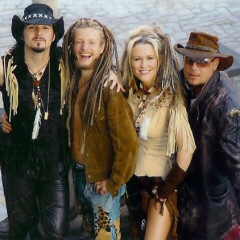
Cotton Eye Joe was released by Swedish euro dance band Rednex, and based on the traditional American song Cotton Eyed Joe. The year was 1996, and the song reached number 1 in 15 countries, scoring gold in the USA, platinum in Sweden and the UK, and double platinum in Norway and Germany.

Although the Rednex released other singles, Cotton Eye Joe was by far their biggest success. Band members Mary Joe, Bobby Sue, Ken Tacky, Billy Ray and Mup were really called the very Swedish Annika Ljungberg, Kent Olander, Arne Arstrand, Jonas Nilsson and Patrik Ardenberg. They dressed as cowboys, chewed on straw, danced on hay bales and took the world by storm.
Swedish hits 3: The Final Countdown

Sweden is the third largest exporter of pop music after the USA and the UK. In this series, I will include hits that you may not even know are Swedish and ones that are so Swedish, they almost smell of meatballs and aquavit. The third hit is the classic rock anthem The Final Countdown. Did you know it was Swedish?

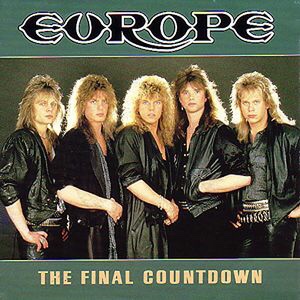
The Final Countdown was written by Joey Tempest and released by Swedish rock band Europe in 1986. The song is as synonymous with the band as their 80’s poodle haircuts. It achieved number 1 position on the charts in 25 countries and top 10 in many others. The album, The Final Countdown, sold over 15 million copies and is still today frequently streamed.

Joey Tempest, who’s real name is Joakim Larsson, wrote many other successful songs such as Rock the Night, Cherokee and Open your Heart for Europe, but The Final Countdown was their biggest hit. In an interview Tempest said that the song was inspired by David Bowie’s Space Oddity, although the similarities evade me I have to say.

The band Europe were, and remain, enormously popular and no after ski drinking session, anywhere in the world, would be complete without the iconic tunes of The Final Countdown belting out into the night.

Swedish hits 2: Lovefool

This series is about hits that you may not even know are Swedish and ones that are so Swedish, they almost smell of meatballs and aquavit. In the first post, we talked about Waterloo by Abba. This time we focus on Lovefool by The Cardigans.

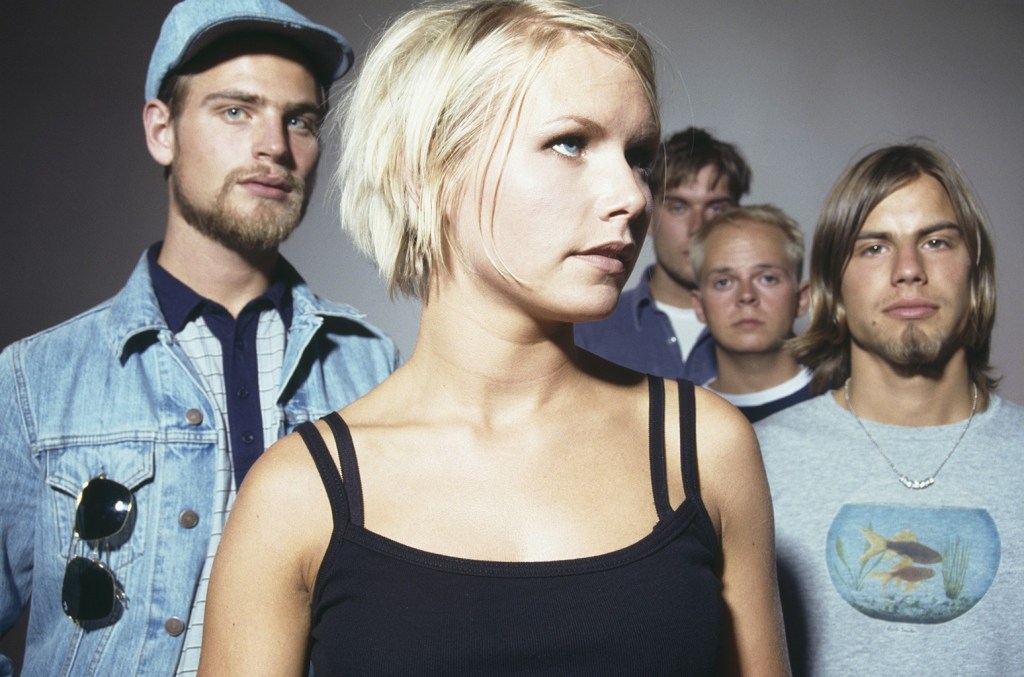
This song, written by Peter Svensson and Nina Persson, was released in 1996 and marked the international breakthrough for this Swedish rock band. It was a massive hit in the UK and USA and was featured in the film Romeo and Juliet starring Leonardo DiCaprio. Tne Cardigans also appeared in an episode of Beverly Hills 90210 where they performed Lovefool at a graduation party.

The album which contained Lovefool sold platinum within three weeks in Japan, and gold in the US. The Cardigans were a very successful band selling over 18 million albums. They still tour occasionally today. They had several other hits such as Erase/Rewind and My Favourite Game but nothing achieved the huge global success of Lovefool.

Swedish hits 1: Waterloo

With the Eurovision contest over, it is safe to say that Sweden’s song won’t be an international hit. Sweden does generally well in the competition, partly because they take it very seriously and partly because they have many talented song writers, singers and musicians. In fact, Sweden is the third largest exporter of pop music after the USA and the UK.

So this has inspired my next series – Swedish hits. I will include hits that you may not even know are Swedish and ones that are so Swedish, they almost smell of meatballs and aquavit. The first hit – an obvious choice – is ABBA’s Waterloo.

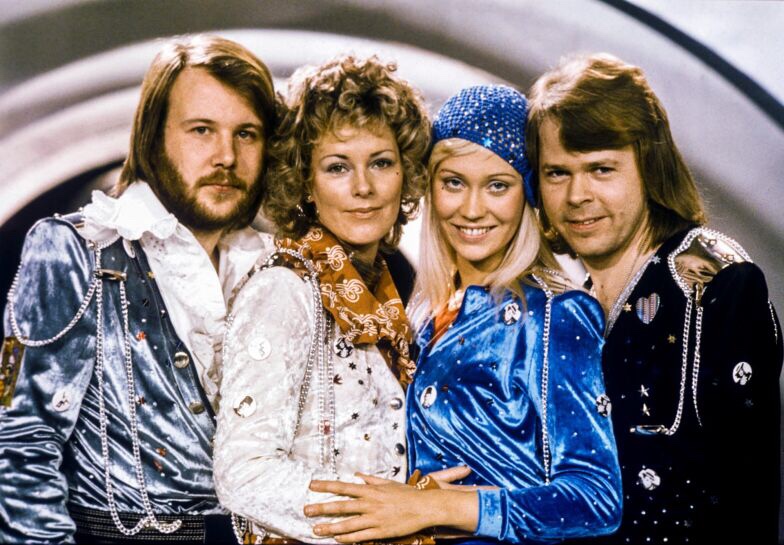
ABBA represented Sweden in 1974 in Brighton and won the competition. It was Sweden’s first win of six, and it catapulted ABBA into a legendary career. The song itself was a huge international success, achieving number 1 chart positions in 8 countries and the top 10 in countless others.

The song, written by Andersson, Ulvaeus and Anderson was originally given the much worse title of ‘Honey Pie’. The song was voted the best Eurovision song from the competition’s first 50 years and has somehow come to symbolise the contest because of its catchy tune, memorable lyrics and ABBA’s camp outfits.

Waterloo wasn’t ABBA’s most successful song however. Dancing Queen is their undeniable biggest hit, followed by Super Trouper and Knowing Me Knowing You.

After a decades-long hiatus, ABBA has announced that they will be releasing new music this year. This has been met by ecstasy from fans all over the world. Let’s hope that the songs are not a disappointment and that Abba finally faces its waterloo.

Swedish ‘Pingst’

This weekend is ‘Pingst’ in Swedish – known as Pentacost or Whitsun in English. Today is Pingst Eve, and tomorrow Pingst Day. Monday used to be a public holiday in Sweden, as it still is in many other countries. However, in 2004, the Swedish Government removed it, and replaced it with the secular National Day on June 6.

So although it is still an official ‘holiday’ in the calendar, it is no longer a day off. Consequently it has been forgotten by many and is just an ordinary weekend for most people, other than those with religious convictions.

The name Pingst, as the name Pentecost, comes from the Greek word for 50, and refers to the feast of 50 days in Jewish tradition. This is also known as Shavuot and celebrates God giving the Ten Commandments to Moses on Mount Sinai. In the Christian faith, Pentecost commemorates the descent and appearance of the Holy Spirit upon the apostles of Jesus as they celebrated this tradition. By many historians, this moment is considered to be the birth of the Christian religion.

In Sweden, this is popular weekend to christen babies and to get married, sometimes both at the same time.

Swedish museums

Today, 18 May, is Museum Day. While most are still closed down due to the pandemic, some are open with restricted hours and pre-booking. In total there are around 170 museums in Sweden, many with free entrance. Stockholm has over 100 museums, making it one of the most museum-dense cities in the world. According to statistics from Sweden’s Museums, here were the top 5 most-visited in Sweden in 2019.

1. Vasa Museum – the restoration project of a large galleon that sunk in Stockholm’s harbour in 1628. Amazing place, and my personal favourite.

2. Skansen – Stockholm’s open air museum depicting Sweden’s historical architecture and culture. Has also a zoo and a large stage for outdoor concerts.

3. National Museum – Sweden’s art and design museum, situated opposite the Royal Palace.

4. Nordic Museum – museum about how people in the nordics have lived, eaten, dressed throughout the centuries

5. Natural History Museum – biology and geology museum with a popular 760 meter dome shaped cinema screen.

All of the above are in Stockholm. Outside the capital, the most visited museums were Frilufts Museum in Linköping, Malmö Museum in Malmö, Wadköping in Örebro, Dunkers in Helsingborg and Gotland Museum on the island of Gotland.

There seems to be a museum for most things in Sweden. Some unusual examples are the Matchstick Museum, the Abba Museum, the Spirit Museum, the Lenin Spa Museum, the Newsagent Museum, the Thermos Flask Museum, the Amber Museum, the Leather Museum, the Cannibal Museum and the Video Game Museum.

Whatever your preference there is a museum to suit everybody in Sweden. Once the doors are open again, I strongly recommend a visit to at least one of them!

Swedish expression: Between the bird cherry and the lilac.

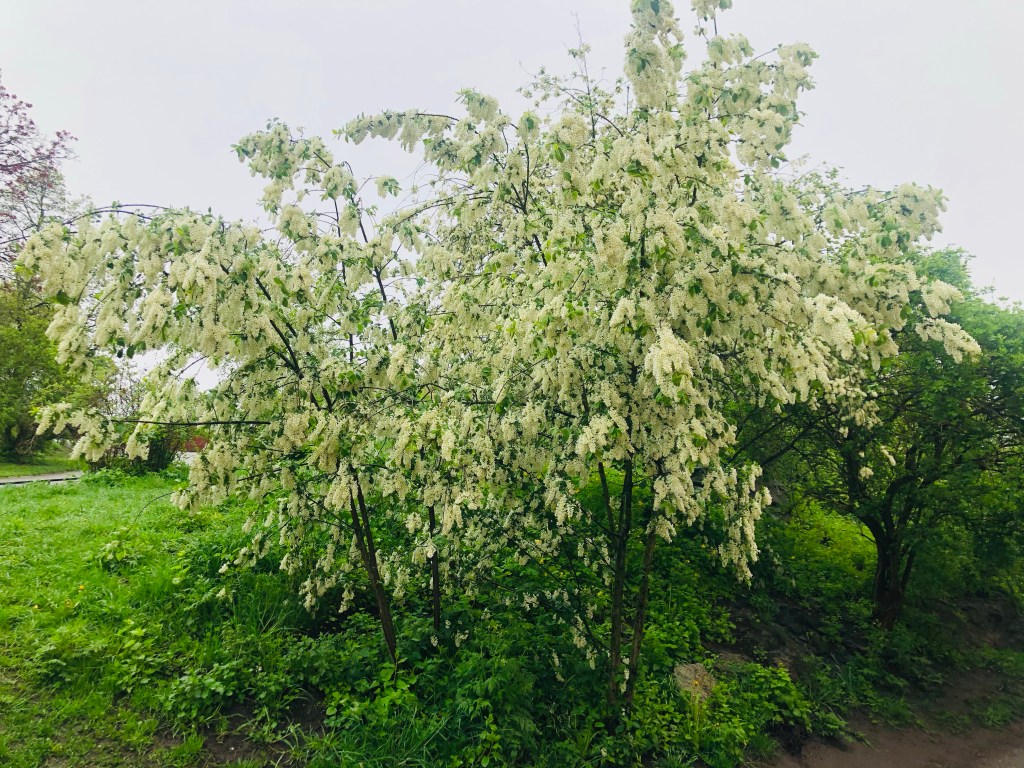
Right now in Stockholm we are between the bird cherry and the lilac. This Swedish expression ‘Mellan hägg och syren’ is used to describe this short period between when these two bushes blossom. At the moment the bird cherry is blossoming, but not yet the lilac. The period reflects the early days of summer and for many Swedes it is the most delightful time of the year. A friend of mine nostalgically said yesterday that ‘it smells like end of school’.

So where does this expression come from? Well, the common theory is that it was first used by a cobbler who put a sign up in the window of his shop. He had decided to take a brief holiday, and the sign read ‘closed between the bird cherry and the lilac’.

Christ Flying Day – a Swedish holiday

Today is Ascension Day, and it is a public holiday in Sweden. The Swedish word for today is Kristi himmelsfärdsdagen or Kristiflygare, which translates loosely as Christ Flying Day. Yet another example of the literalness of the Swedish language, this day signifies the bible story of Jesus Christ ascending (or flying) to heaven.

Unlike some countries that moved the celebration to the following Sunday, Sweden celebrates Ascension Day on the actual Thursday. This gives rise to another Swedish concept – the ‘squeeze day’. Since Thursday is a holiday, and Saturday is a work-free day for most, Friday gets squeezed between them and is also taken as a day off by most people. That makes this weekend a lovely long weekend, often signifying the beginning of summer. In previous times, today was also called ‘barärmdagen’ – or ‘bare arm day’ – as women started to wear clothes that exposed their arms.

This weekend is not religiously observed by most Swedes. Being a secular country, time is usually spent outdoors if the weather permits. Some Swedes go to their summer houses, or sail the waterways on their boats. Others meet friends, sit in outdoor cafes, or carry out sporting activities. In years when travel is permitted, this is also a popular weekend to fly off for a four-day break in, for example, Barcelona, Nice or Palma.

Stupid Swedes

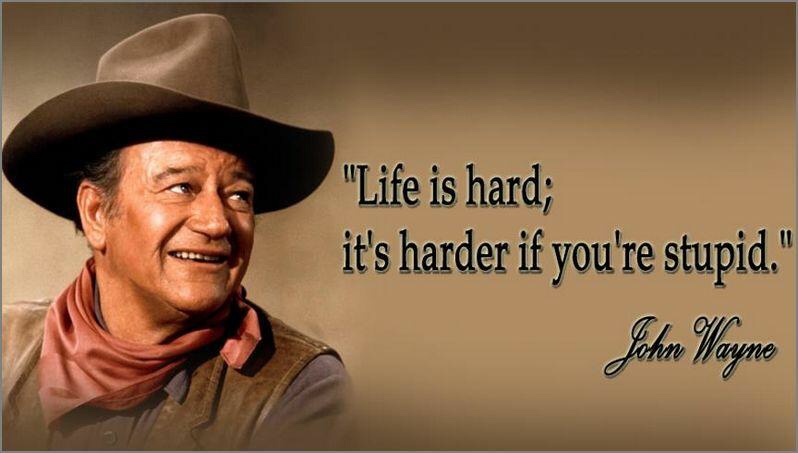
Sitting with some friends yesterday, we discussed why the Swedish word ’korkad’ (corked) means stupid. After much research, we couldn’t find an answer but we guessed it had something to do with the fact that cork is empty, light and flighty. Another thought was once you have uncorked a bottle and drunk it, it is an empty vessel.

We might not have found the origin of the word ‘korkad’ but we did find lots of expressions in Swedish to call somebody stupid. Here are 15 of them!

1) Bakom flötet – behind the float (fishing)

2) Tjockskallig – thick skulled

3) Tappad bakom en vagn – dropped behind a carriage

4) Tappad i backen – dropped on the ground

5) Ut och cyklar – out cycling

6) Dum i huvudet – stupid in the head

7) Fårskalle – sheep skull

8) Obegåvad – ungifted

9) Har inte alla hästar i stallet/hemma – doesn’t have all his/her horses in the stable / at home

10) Inte den vassaste kniven i lådan – not the sharpest knife in the drawer

11) Hjulet snurrar men hamstern är död – the wheel is turning but the hamster is dead

12) Född i farstun – born in the porch

13) Har inte alla kottar i granen – doesn’t have all the cones on his/her fir tree

14) Jubelidiot – celebrated idiot

15) Hissen går inte hela vägen upp – the lift doesn’t go all the way to the top floor

Then there are lots of words like ‘korkad’ that are fun to say and all mean stupid. For example, ’trög, bombad, knasig, knäpp, puckad, pantad, pundig, beng, bläng, boll, ding, fläng, prillig, stollig, svagsint, rubbad, koko, blåst’.

Who knew there were so many ways to call somebody stupid in Swedish? I tend to just say ‘dum’ but I’m now going to practice a few more of these words and expressions.

Swedish expression: Cake on cake

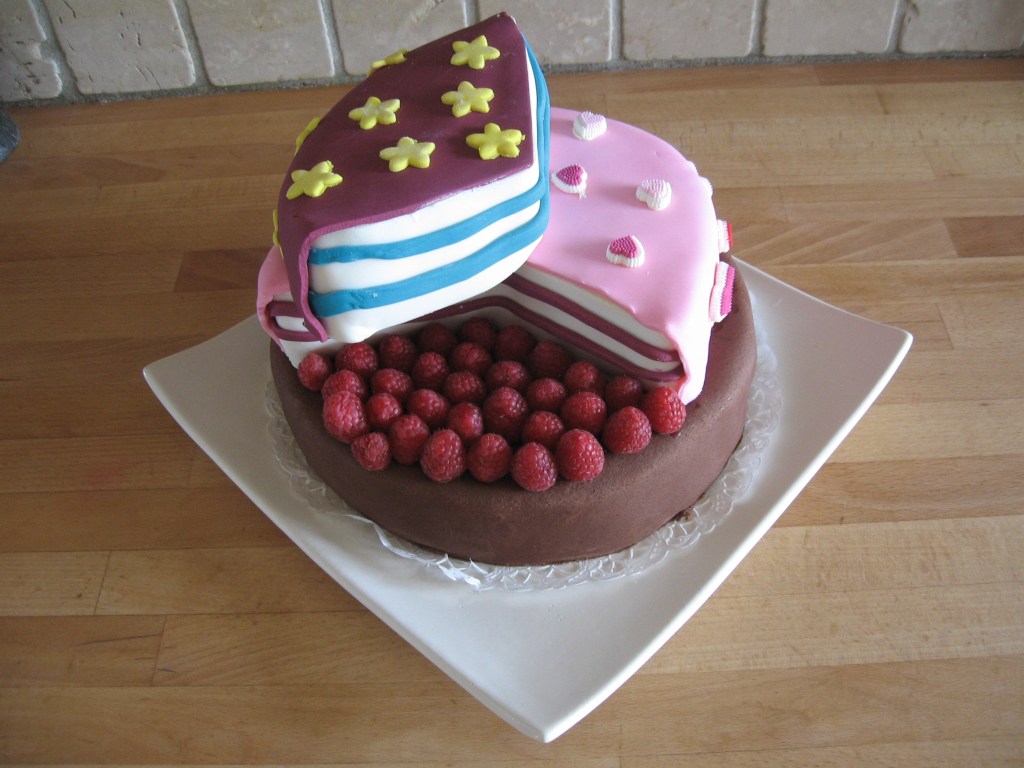
The Swedish expression ‘kaka på kaka’ or ’tårta på tårta’ is translated as ‘cake on cake’. It is quite a commonly-used expression – but what does it mean?

Swedes use ‘kaka på kaka’ to describe something that is an unnecessary addition that becomes a bit too much, or even over the top. For example, ‘buying another television when we already have two is a bit cake on cake.

It can also mean an unnecessary repetition. In English – superfluous – ‘when you gave that example in your presentation, it was a cake on cake’.

The saying itself is an example of tautology – a concept in language where we unnecessarily repeat a word and it adds no meaning, eg chai tea (chai means tea), or salsa sauce (salsa means sauce) or naan bread (naan is bread). So the expression ‘cake on cake’ feeds into this concept by emphasising that one of the cakes is unnecessary.

The original meaning of the saying was related to overindulgence. So cake on cake meant basically you can’t get too much of a good thing – bring on the cake!! Over the years, and with the influence of Swedish moderation, it changed to mean too much that is not necessary.