Neil Shipley on Swedish culture – the strange, the special and the sublime
Author: Neil Shipley's watching the Swedes
Since 1994, I've been watching the Swedes. Not in a creepy, obsessive way, but like an adventurer in unknown territory who carefully observes his surroundings.
I run a training company with my American business partner in Stockholm. We hold seminars and workshops in Cultural Awareness and Communication.
For more info about this check out www.keytraining.se
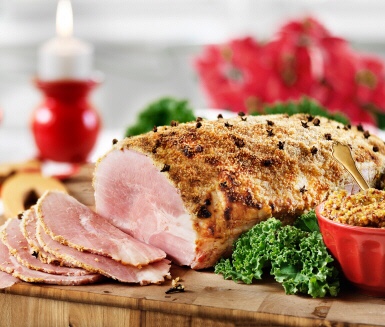
Window 7: Today’s word is ‘Julskinka‘ which translates as ‘Christmas ham’ and is pronounced yule-hwinka (ish).
In the UK, I grew up eating roast turkey at Christmas. But in Sweden, it’s the ham that counts!
Swedes have been eating Christmas ham during the festive season since the 1600’s and many people consider it an obligatory part of the Christmas meal.
Originally it was a dish eaten only by the upper classes and rich farmers, but somewhere in the 1800’s in made it onto the tables of the general public.
The tradition of eating ham is thought to have evolved from theGerman pagan ritual of sacrificing awild boar known as asonargöltr to Frey, the Norse god of fertility, during the harvest festival. This was later adapted by the Christians and aligned with St Stephen’s Day which falls on December 26th.
Traditionally the cured ham is oven baked or boiled before it is coated in mustard and breadcrumbs and grill roasted. Here is a recipe.
The ham is mostly eaten with mustard and apple sauce. And the cold leftovers are eaten for days afterwards, often on crisp bread.
The Christmas ham is traditional in many other Northern European countries such as Finland, Estonia and Poland and even some parts of the USA and Australia.
Many people these days don’t eat meat, and therefore reject ham. However, to mimic the Christmas tradition, there are plenty of veggie centerpieces available including roasts made of soya, Quorn and other plant-based ingredients.
Window 6: Today’s word is ‘Julmarknad‘ which translates as ‘Christmas Market’
A popular recurring event during the weeks leading up to Christmas in Sweden is the Julmarknad – the Christmas Market.
Christmas markets are a very cosy affair. Here you can walk around and enjoy the smell of glögg and roasted chestnuts. You can listen to the sound of Christmas carols echoing through the air. You can bathe in the lights and decorations strewn around the marketplace. And you can see traditional handicrafts and locally produced goods on sale, such as scarves, hats, festive food and decorations. If you’re lucky, snow is tumbling down and crunching under foot. The whole thing feels like being momentarily caught in a giant snow globe.
Christmas markets have been around in Sweden since the 1800’s and take place up and down the country on town squares, in gardens, in museums, farms, barns, greenhouses, castles, garden centers and stately homes.
In Stockholm, the most popular markets are in Skansen and on the main square in the Old Town. The Royal Palace of Drottningholm and Taxinge Castle outside Stockholm are also popular, as is the small picture-postcard town of Sigtuna about an hour north of the capital.
In Gothenburg, the market at Liseberg is a popular experience and in Malmö head to the market on Gustav Adolf Square.
Every day, I will open a window containing a Swedish word that has something to do with Christmas and the festive season.
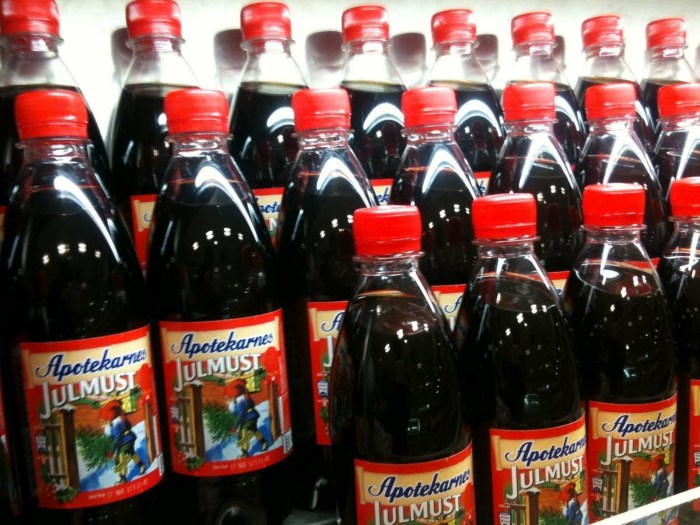
Today’s word is ‘Julmust‘ which is a fizzy Christmas beverage.
I would venture to say every Swede likes to drink at least one glass of julmust at Christmas. However, according to statistics it is even more!
Apparently, Swedes drink an average of 5 litres per person of the fizzy drink during December. The alcohol-free bottled soft drink comes in different sizes, fully sugared and also in diet form.
Said to include over 30 ingredients, its actual recipe is top secret, only known to three people. Despite all the cloak and dagger stuff, the connoisseur can detect the flavour of hops and malt. The taste is reminiscent of the old-fashioned ‘Dandelion and Burdock’ drink for those of you that understand that British reference.
Julmust was invented by a teetotaler and sales began in 1910 as an alternative to ale and port. Although intended to be alcohol-free, the drink can be mixed with gin, vodka, rum or Jägermeister to make Christmassy cocktails. When blended with porter or stout and other ingredients, it creates a classic Christmas drink called Mumma.
I have even drunk julmust mixed with red wine – a so called Kalimusto. I recommend trying the experience – although it actually is a fairly unpleasant one!
If you live outside of Sweden and want to try julmust, head to your nearest Ikea! Called Vintersaga, they sell the beverage in 500ml bottles.
Every day, I will open a window containing a Swedish word that has something to do with Christmas and the festive season.
Today’s word is ‘Julkalendern‘ which translates as ‘Christmas Calendar’
Julkalendern is a television series broadcast on Swedish TV every day in December leading up to Christmas Eve. It is a popular and heavily-anticipated program that children and adults traditionally watch at 7.15 in the morning (or on line). Typically each episode is 15 minutes long, and every year there is a new story.
The first Julkalendern was broadcast in 1960 and was called ‘Titteliture’. In 2016, a competition was held to vote for the all-time favourite Julkalendern. It was won by a series called ‘Sune’s Christmas’ (1991) followed by ‘The Mystery at Greveholm’ (1996), ‘Time of the Trolls’ (1979) and ‘The old woman who shrunk to the size of a teaspoon’ (1967).
This year, the series is a continuation of 1979’s ‘Time of the Trolls’ – ‘ Legend of the Mountain Troll. ‘
Today, the first of Advent, the light shines strong in the darkness.
Since the 1930’s Swedes have decorated their homes with lights from the first of Advent. The tradition was inspired from Germany, where the Advent star had been a popular decoration since the 1880’s. The star symbolizes the star of Bethlehem that guided the three wise men to the stable, where the baby Jesus lay in a manger.
Today, the star has lost most of its religious symbolism. In Sweden, illuminated advent stars are hung in windows. On window ledges, electric advent candles are placed. Gardens and balconies are decorated with fairy lights. On tables, four candles are positioned and one is lit every Sunday up until Christmas. Small candles, often red, are dotted about the home. Some people change curtains and populate their homes with small gnomes and fragrant flowers.
Since November is often a grim month, the collective advent decoration is a welcome arrival as light is spread into the murky places. From the dark street, it is lovely to see windows lit up in every apartment.
This weekend is also the starting signal for the Swedish ‘glöggfest’. People go to each other’s homes and drink ‘glögg’ (mulled wine), eat gingerbread and saffron buns. It is a very cosy time of year.
Every day, I will open a window containing a Swedish word that has something to do with the festive season.
Today’s word is ‘Gävlebocken‘ which translates as ‘The Gävle Goat’.
This strange tradition takes place in the Swedish town of Gävle. Every year, since 1966, a giant handcrafted straw goat is built up. And almost every year, it gets burned to the ground by a pyromaniac.
One year, it was even burned down before its inauguration. Consequently, the local authority have increased security and have managed to prevent the burning for the last three years.
The symbol of the goat is a traditional Christmas decoration in Sweden, called a ‘julbock’ – a Christmas goat. Usually made of straw, a goat is placed under the Christmas tree or small goats are hung from the branches. The symbol of the goat has ancestry in Scandinavia far back in Nordic mythology and, up to the 1800’s, it was the goat who brought presents during the festive season. A kind of precursor to Santa Claus.
So although the Christmas goat has endured for centuries, it remains to be seen if the Gävle goat survives until the New Year.
Every day leading up to Christmas, I will open a window containing a Swedish word that has something to do with the festive season.
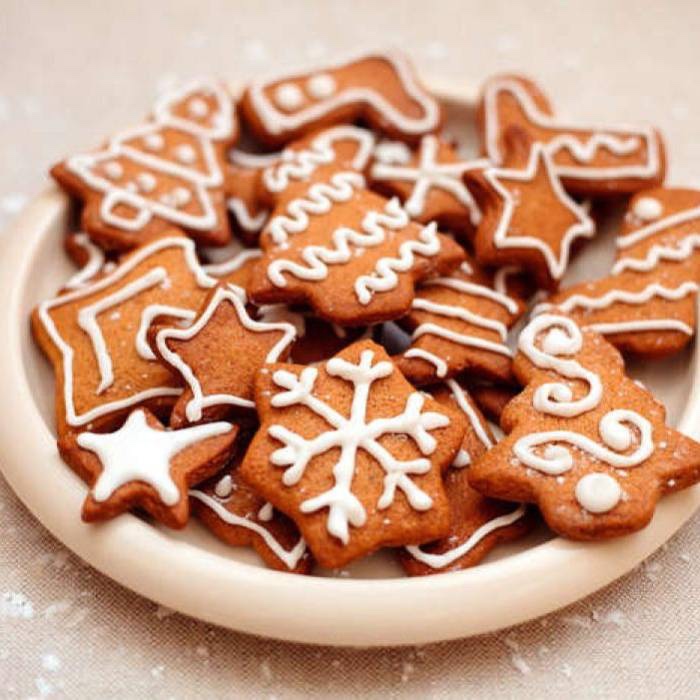
Today’s word is ‘pepparkaka‘, which translates as gingerbread.
Other than glögg, nothing else is more synonymous with the Swedish festive season than pepparkaka (gingerbread).
The Swedish version of gingerbread comes in the form of thin crispy biscuits flavoured with cinnamon, cardamon, ginger and cloves. Formed in different shapes such as hearts, trees, and stars, gingerbread is eaten plain or decorated with icing. Many people buy squeezy blue cheese in a tube and squirt it onto the biscuit before consumption. Some people build gingerbread houses as part of their Christmas decorations.
Making your own pepparkaka is a cosy a Christmas tradition – here is a typical recipe. However, most people buy their gingerbread ready-made.
Pepparkaka has been associated with Christmas in Sweden since the 1800’s but was eaten much earlier than that. The first documented record of pepparkaka in Sweden is from 1335 for a royal wedding. In a recipe from the 1400’s, gingerbread included pepper, which could be why it has the name pepparkaka. But nobody is really sure.
Ever wondered why Swedish people are so nice? Well, the answer lies in an old myth – apparently the very eating of pepparkaka is what makes you nice.
Welcome to the Watching the Swedes Advent Calendar 2023
Every day before Christmas, I will open a window containing a Swedish word that has something to do with the festive season. Today’s word is the fantastic-to-say ‘glögg‘. (Pronounced ‘glugg’)
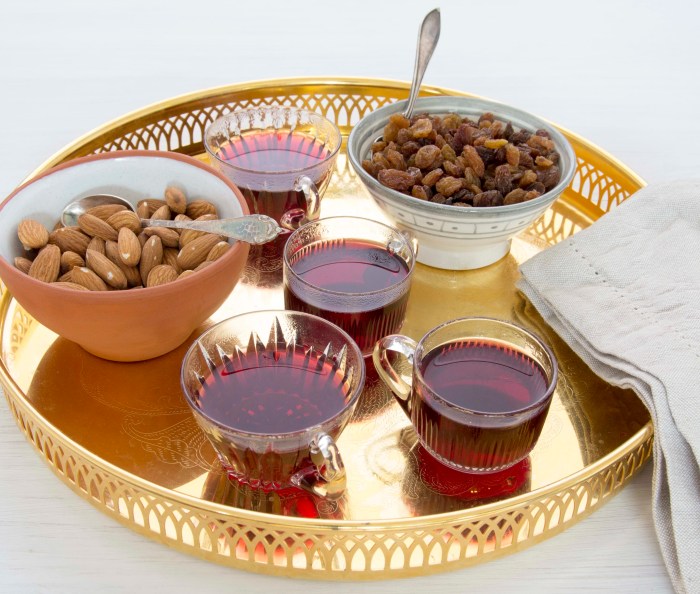
Glögg is festive Swedish mulled wine: heated wine, most commonly red, with spices. It is drunk together with almonds and raisins added in. And it is delicious!
Glögg is very popular, having been drunk in Sweden around Christmas since the 1890’s. However, the earliest record of drinking heated wine dates back to the 1500’s.
The word glögg comes from the Old Swedish word ‘glödg’, and the verb ‘glögda’ – to heat up. This, in turn, has its origins in the verb glöder (to glow).
Some make their own glögg, here is a typical recipe. Glögg can be with, or without, alcohol.
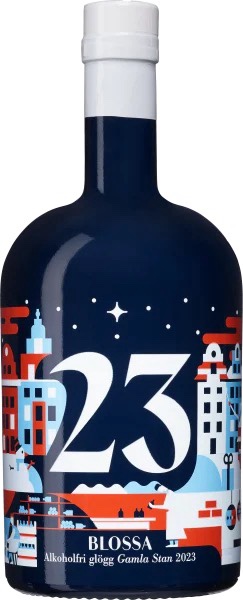
However, most Swedes buy their glögg ready-made in a bottle. In addition to the traditional flavours, each year a new flavour of the nectar is released and there’s always a debate regarding its success. This year’s glögg (2023) is called Gamla Stan (Old Town) and is an infusion of raspberry and hops. Yummy!
More than 90,000 articles have been written about the Koran burnings that are occurring in Sweden. The burnings have led to an escalated terrorist threat, international public protests, storming of embassies, burning of the Swedish flag, and condemnation from everyone from Turkey’s Erdogan to the Pope.
For many people outside Sweden it is hard to understand why the burnings are being permitted. The bottom line is that it is not against the law. The question is why is it not against the law.
It all boils down to understanding Sweden’s version of freedom of speech, expression and demonstration. In Sweden, you are allowed to publicly comment on, demonstrate against and criticize anything. Sweden’s centuries-old democracy is built on this.
Powers such as the royal family, industry giants or organized religions cannot legally stop or influence this. In secular Sweden, religion has no influence over politics. However, you are free to follow any religion you want, and this right is protected by law. Likewise you are free to criticize any religion you want.
With this understanding, you can see how the burning of books, including any religious scripture is allowed and not, per se, limited only to the Koran.
So you have to separate the law from ethics. Is it ethical? Maybe not. Is it illegal? No. This is why the Swedish government condemns the action but at the same time defends the right to self expression.
That said, there are other laws in Sweden that restrict public speech. For example, if it is considered hate speech, or incitement to violence, or against the interests of national security.
In the case of recent Koran burnings, outside a mosque on the first day of Eid, or outside the embassies of Muslim countries, and with today’s political instability, one can seriously question the police’s choice to allow such demonstrations to occur. Many Swedes say that it shows a poor sense of judgement and disregard for public safety and national security. But it isn’t illegal, and is fully in line with freedom of speech and demonstration.
Swedish law often looks at intent. At this could be the case with the Koran burnings moving forward. What is the intent of the demonstrators? Personally, I see it as a obvious provocation, an attempt to destabilize Swedish society and a direct insult to all the Swedish Muslims residing in the country.
Denmark has recently suggested a law change, based on the fact that the intent behind the action is malicious. The legislation will prohibit the inappropriate handling of objects with essential religious significance for a religious community. The Minister of Justice says ‘I fundamentally believe there are more civilised ways to express one’s views than burning things.’ I’m sure he is right. Changing the law isn’t about bowing down to the extremist demands of other nations, but showing respect for the diverse citizens of one’s own country.
The FIFA Women’s World Cup in Football (soccer) is currently taking place in Australia and New Zealand, and Sweden is doing really well. Next week, the Swedish team plays in the semifinal, and will hopefully qualify for the final, where a gold medal looks possible. Understandably, football fever is taking over in Sweden and Swedes are very proud of what the team has achieved.
Sweden is a strong football nation. Together with ice hockey, football is probably the favourite spectator sport in the country. The biggest arena in Sweden – Friends Arena – in Solna, Stockholm, can hold over 52,000 spectators at a match.
The sport was brought to Sweden from England in the 1800’s and the first match between two Swedish teams took place in Gothenburg in 1892 between Örgryte and Lyckans Soldater. The Swedish Football Association was founded in 1904.
In Sweden, there are roughly 240,000 licensed players (approximately 56,000 women and 184,000 men) with another 240,000 youth players. There are around 3,200 active clubs fielding over 8,500 teams, which are playing on the 7,900 pitches available in the country.
The world’s largest and most international youth football tournament – the Gothia Cup – takes place in Gothenburg, Sweden. Each year, around 1700 teams from 80 nations take part and they play 4500 games on 110 pitches. One year, my nephew actually came over from London with his team and participated.
Sweden has its own domestic league and has achieved some international success of the years, despite being a relatively small country. These include, for the men’s team, one World Cup silver and two bronzes, as well as an Olympic gold medal in 1948.
The women’s team have also succeeded in taking, amongst others, World Cup silver in 2003, European gold in 1984, and Olympic silver in 2016 and 2020. They are eagerly trying to top this with a gold in 2023!
So, fingers crossed that Sweden can make it the whole way next week! ‘Heja Sverige!’