Why Swedes celebrate on the ‘afton’ (eve)

In the UK, we celebrate ‘Days’ such as Christmas Day & Easter Day. In Sweden, these days are the bank holidays but there is also a tradition of celebrating on the Eve. In fact, it is the Eve ( ‘afton’) that is the big celebration time. Yesterday, for example, was Easter Eve and it is typically yesterday that families meet for the big meal with the traditional food.

There’s påskafton, Valborgsmässoafton, Midsommarafton, julafton, nyårsafton, trettondagsafton. Why is this? Surely it can’t just be to get extra holiday?

Well, actually it originates from a time before the mechanical clock. In that period, a new day began at sunset rather than at midnight as it does now. In the Medieval times there was an expression – ‘vid kväll ska dag leva’ – which means something like ‘in the evening, shall the day live.’

Scandinavians held onto this tradition even after clocks were invented, and this is why they celebrated their important days the evening before. Now the evenings have, for practicalities sake, become day time activities.

That’s why Swedes celebrate on the ‘Afton’. Oh yeah, and for the extra day off work.

‘Long’ Friday in Sweden

Today, Good Friday, is called ‘Long Friday’ in Swedish – ‘Långfredag’. It commemorates the long day and the long suffering that Jesus endured on the cross, according to Christian teachings. It is a public holiday, and for many years, everything was closed in Sweden making the day deliberately long and boring for many people. Now, most things are open.

‘Long Friday’ is a day of cooking, shopping and going for walks. Some people attend church services. For traditionalists, salted fish is the food of the day – such as salted herring or salted salmon. This symbolises the thirst that Jesus felt on Golgotha. Fish was also the only food that historically was available for people to eat in Sweden at this time of the year.

In English, this day used to also be called Long Friday, but at some point in history it changed to Good Friday. Good in this context means Holy.

A witchy pink Thursday in Sweden

easterwitchmooon

Today is ‘Maundy Thursday’ in English and in Swedish it has the unusual name of ‘Skärtorsdag’. The word ‘skär’ means ‘pink’. But does that make today Pink Thursday? Actually not. The word ‘skär’ has another meaning that might be more relevant – ‘clean’ – and it is a biblical reference.

If you know your bible stories, today being the day before Good Friday is the day when Jesus gathered his disciples together for the Last Supper, introduced communion, and was later betrayed by Judas, and condemned to death on the cross.

Prior to the Last Supper, Jesus washed the feet of the disciples. And he washed them clean – a symbolic metaphor for purification and the washing away of sin.

So, today isn’t Pink Thursday – it’s Clean Thursday. In fact, in English ‘Maundy Thursday’ also relates to the same act in the bible – the act of ritual cleaning is known an The Maundy.

However, in Sweden, today isn’t that much about washing feet – it’s more about witchcraft!

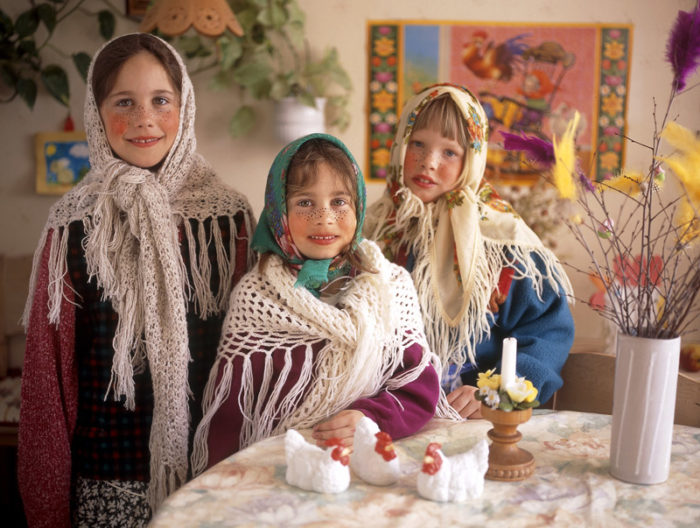
Today is celebrated by children dressing up as witches, rather like we do in the UK and USA on Halloween. Children go door to door in their outfits begging for sweets. This tradition originates from the belief centuries ago that the Skärtorsdag was the night of the witches, where these wicked hags would climb onto their broomsticks and fly to a mountain called Blåkulla. It was a night of danger and evil, and Swedish people would bar their doors to their houses and barns and leave outside gifts that would make the witches’ journey easier – food, milk, clothes, broomsticks. Today, that translates into the Swedish version of trick or treating.

paskkarringar-2-700x528

So if you celebrate by cleaning, or by dressing up as a witch or by eating candy – you’ll be kicking off your Easter the Swedish way!

NATO – an extraordinary day in Sweden’s history

So Sweden is now an official member of NATO, the military defense alliance.

As the 32nd country to join the alliance, Sweden will be protected under Article 5 – the ultimate guarantee of allie’s freedom and security.

To the outside world, this might not be that significant. But for Sweden, March 7th 2024 is a day that will be recorded as one of the most momentous in history.

By becoming a member of NATO, Sweden ends over 200 years of official non alignment. This neutrality stretched back to the Napoleonic wars.

Sweden joining NATO was inconceivable just over two years ago, and the Swedish population had little appetite to join a military alliance.

The country remained neutral in both World Wars but when Russian troops began marching toward Kyiv in February 2022, Sweden – and neighbour Finland – became alert to the threat Moscow could pose to nearby countries outside the alliance.

And everything changed.

Finland joined NATO in April 2023, and Sweden, after lots of head-butting with Turkey and Hungary, formally joined yesterday.

It is currently unknown how the membership will affect the lives of Swedes. Hopefully, not noticeably.

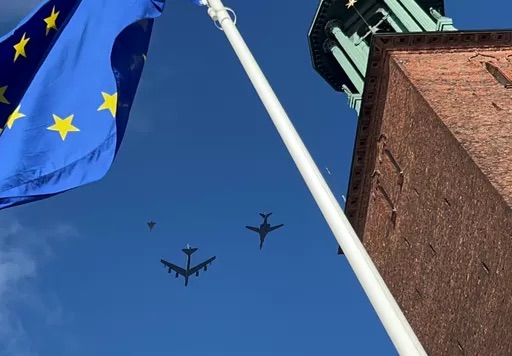
But it was very apparent on Tuesday when two American bomb planes, B52 and B1B, flew at a low altitude over central Stockholm – that things have changed in this formally-neutral country in the north.

The world’s longest cross country ski race – Sweden’s ‘Vasalopp’.


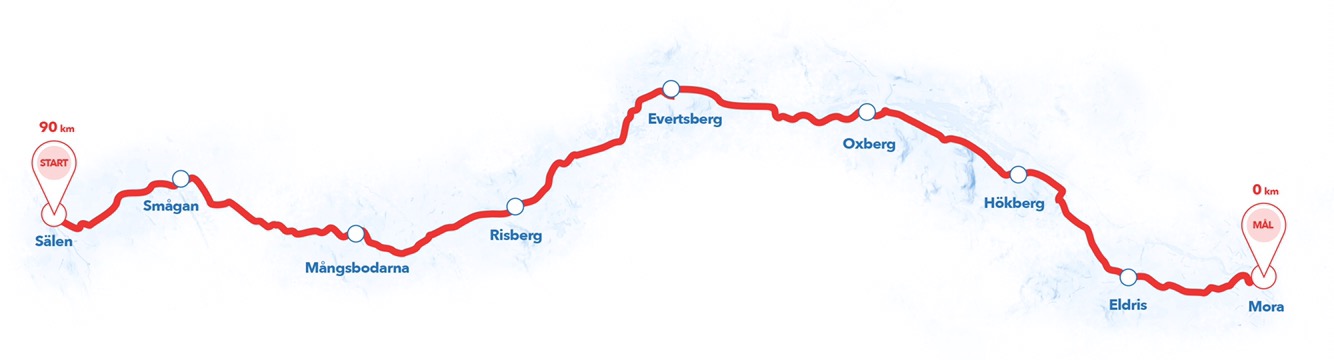
Tomorrow, the world’s longest cross country ski race takes place in Sweden. Called Vasaloppet, it entails participants skiing 90 kilometers from start to finish. It’s an extremely popular international race, which can take up to 12 hours to complete, and which is broadcast live on tv. When tickets to participate are released, they sell out in 15 minutes – it’s that popular.

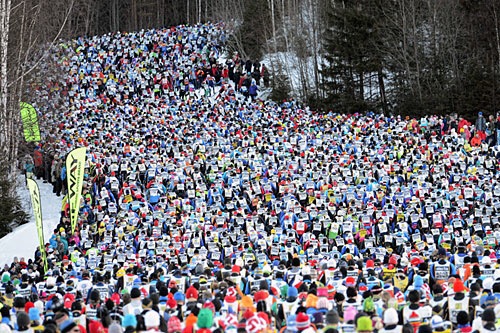
The first Vasalopp was in 1922 and it takes place annually, the first Sunday in March and it is an early sign of spring.  It’s an amazing sight to watch, as more than 15,000 mad, happy skiers glide along – the swishing sound of ski on snow filling the air.

For the elite athletes, 12 hours to complete the race is of course unthinkable. They go considerably faster, in around 3 hours 40 minutes, roughly 25 km per hour.

So why is this race called the Vasalopp? Well, it takes its name from a Swedish king called Gustav Vasa. The race is said to commemorate his escape to Norway, through the forests, in 1521. Legend has it that he carried out the gruelling journey on skis,  but experts believe he more likely completed this escape on snow shoes.

Nevertheless, out of this legend sprung the race which is so popular today.

Modern day skiers don’t see the experience as an escape, they see it as a challenge and for many of them it’s a rite of passage.

And as you sit watching the TV comfortably from the sofa, with tea and toast, you take vicarious pleasure in this long, amazing Swedish race. If you’d like to check it out, you can watch it on http://www.svtplay.se from 7.00 CET. I’d advise you to not miss the very beginning, as it is then you understand the number of participants.