The cultural diversity of the tea cake

Ever seen those cakes that are whipped meringue domes, or peaks, coated with a thin, crisp layer of chocolate? Sometimes with a biscuit base, sometimes not? In Swedish, if they have a biscuit bottom, they are called ‘mums-mums’. Without the biscuit bottoms they can be called ‘chokladbollar’.

If you’re Swedish, I am about to blow your mind! Those little chocolate domes are, in Scotland, called tea cakes!

In Sweden, a tea cake is something quite different. It is a kind of sweetened bread bun made with wheat and milk. It is often used to make ham or cheese sandwiches.

But the disagreement on what a tea cake doesn’t end there. In England, a tea cake is also something else. Although there are regional differences, it is generally a soft yeast-based bun, filled with dried fruits, such as sultanas, and eaten toasted with melted butter.

In USA, a tea cake is, yet again, something else. It is a large, hard cookie made from wheat and sugar. In Russia, it is also a cookie – but containing nuts.

In Ireland, a tea cake is a fluffy butter cake, as it in Australia – although there it is often flavoured with, eg, cinnamon, and apple.

Who knew that the humble tea cake could present so much diversity? One thing they have in common though, is that they are traditionally enjoyed as a sweet accompaniment to a cup of tea. Apart from the Swedish one that is- which is sandwich bread to probably enjoy with a cup of coffee.

Top 10 English words borrowed from Swedish

Yesterday I wrote about the word quisling, meaning traitor, which is used in English but is actually borrowed from Norwegian. This made me curious about what English words are borrowed from the Swedish language.

After a little research, here are the top 10 (in alphabetical order):

  1. Angstrom, the measurement, after the Swedish scientist Anders Jonas Ångström
  1. Celcius – the international measure of temperatures – is named after Swedish scientist Anders Celcius.
  2. Gauntlet (as in ‘run the gauntlet’) – from the Swedish word gatlopp
  1. Gravlax, marinated salmon, from the Swedish gravad lax
  2. Moped – Swedish shortening of trampcykel med motor och pedaler (“engined bike with motor and pedals”)
  1. Ombudsman – a person who acts as a trusted intermediary between an organization and some internal or external constituency.
  2. Orienteering – from orientering
  1. Rutabaga – the root vegetable, (from Swedish dialectal word rotabagge)
  2. Smorgasbord – from the Swedish smörgåsbord, (literally “sandwich table”), which in Swedish either refers to a buffet with very specific types of food, or is used as a metaphor
  3. Tungsten, literally “heavy stone”.

The top 10 most satisfying Swedish words to pronounce

mumsfillibababba

I’ve spent over 20 years struggling with the Swedish language. Grammar is always a challenge for me – but it is pronunciation that still continues to drag me down.

That said, there are a few Swedish words that I just love to say. They have to be the most fun words in the Swedish language. Here, in no particular order, are my top 10.

  1. Mumsfilibaba – a hysterically satisfying way to say that something is really delicious
  2. Sjuksköterska – the Swedish word for nurse – try saying it after a couple of beers – it’s really fun
  3. Kackerlacka – the Swedish word for cockroach is somewhat onomatopoeic – the perfect way to describe these disgusting little bugs
  4. Sura uppstötningar – horrible to experience acid reflux but really fun to say the word
  5. Smidig – a useful word that’s fun to say and that means everything from easy and adaptable to flexible and pliable and even loose-limbed.
  6. Yxskaft – the handle of an axe – ok not a word that you say very often, but enromously satisfying when you get the chance
  7. Grönsaksbuljongtärning – a long word for a vegetable stock cube. Sometimes I go inte a supermarket and ask a shop assistant where to find them just so I get a chance to say it.
  8. Toppen – an uplifting way to say that all is good
  9. Hjärnsläpp – the Swedish word for drawing a blank. But it doesn’t matter if you can’t remember what you were going to say – because then you get to say ‘hjärnsläpp’ instead.
  10. Bajskorv – childish I know, but the Swedish word for ‘poo sausage’ is just hysterical.


Other Swedish words I love are ‘ångestframkallande‘, ‘slickepott’, ‘snöslask’, ‘oroväckande‘, ‘knäckebröd‘, ‘mångata’ and ‘underrättelsetjänsten‘.

What are some of your most satisfying Swedish Words to pronounce?

Let me know in the comments below….


25 words for snow!

2015/01/img_4847.jpg

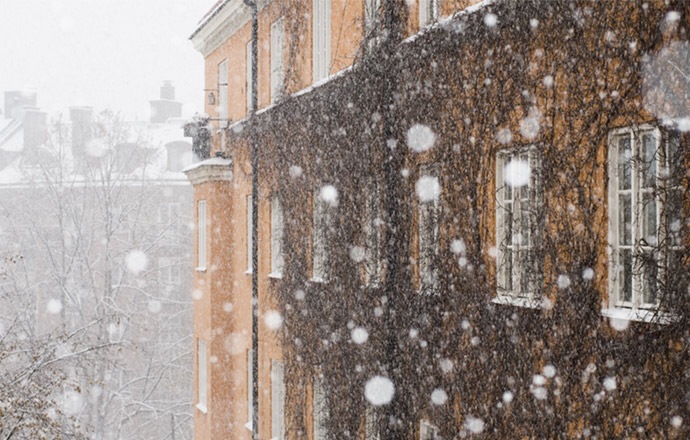
As the snow tumbles down over the city, I am reminded of the many different words for snow that Swedes have. Not surprisingly when living in a country where it snows a lot, people start to see differences and nuances in the type of snow, whereas in English the word might just be an unsatisfactory ‘snow’.

1) Blötsnö – wet, slushy snow
2) Drivsnö – snow that is blown into troublesome snow drifts
3) Aprilsnö – snow in April, according to suspicion signifies plenty of food for the coming season
4) Hårdsnö – compacted hard snow
5) Konstsnö – artificial snow
6) Kramsnö – squeezy snow, perfect for making snowballs
7) Julesnö – snow at Christmas
8) Klabbsnö – wet, warm snow for building snowmen
9) Kolsyresnö – frozen carbondioxide
10) Kornsnö – small white snow breadcrumbs
11) Lappvante – thick, falling snow
12) Lössnö – snow that can loosen and be dangerous
13) Majsnö – surprising and unwelcome snow in May
14) Modd – snow that has partly melted due to salt
15) Natursnö – real snow (as opposed to artificial)
16) Nysnö – fresh snow, crisp and white
17) Pudersnö – powder snow
18) Rekordsnö – an unusual amount of snow, breaking previous snow records
19) Slask – slushy snow mixed with rain and dirt on the ground
20) Snö – snow
21) Snöblandat regn – snow mixed with rain
22) Snömos – sloppy snow that resembles mashed potato
23) Snörök – faint particles of snow that look like smoke
24) Yrsnö – snow being whipped around by the wind in all directions
25) Åsksnö – snow that pours down during a thunder storm