Swedish Monsters: 9) Skogsrå

When I was at the open-air museum Skansen, I heard a story about trolls. This got me thinking about other mythological creatures and monsters that inhabit Sweden. And a new series was born!

Today – Skogsrå

Another Swedish creature is the Skogsrå. A forest spirit, she is often depicted as a fair-haired beautiful woman, with the skill of seduction as her most prominent weapon. Using her skills, she lures men deep into the woods, to their peril.

The Skogsrå have hollowed-out backs, concealed from view. They also have a long cow’s tail. Of course, they have to also hide this from sight if their seduction is to work. The only way for a Skogsrå to lose her tail is if she gets married inside a church, when her tail will drop off, and she’ll transform into a human.

Similar to the legend of the sea-based Sirens, these forest nymphs lure men into the woods with their beautiful singing or harp-playing. They are also hypnotic dancers. It is said that if a human male has sex with a Skogsrå, he becomes sick and dies.

There are several ways to break the spell if you become bewitched by a Skogsrå. These include burning her with an ignited log and throwing tar in her face. To protect yourself, wear your clothes inside out and, under no circumstances give her your real name. If you do you will never break the enchantment.
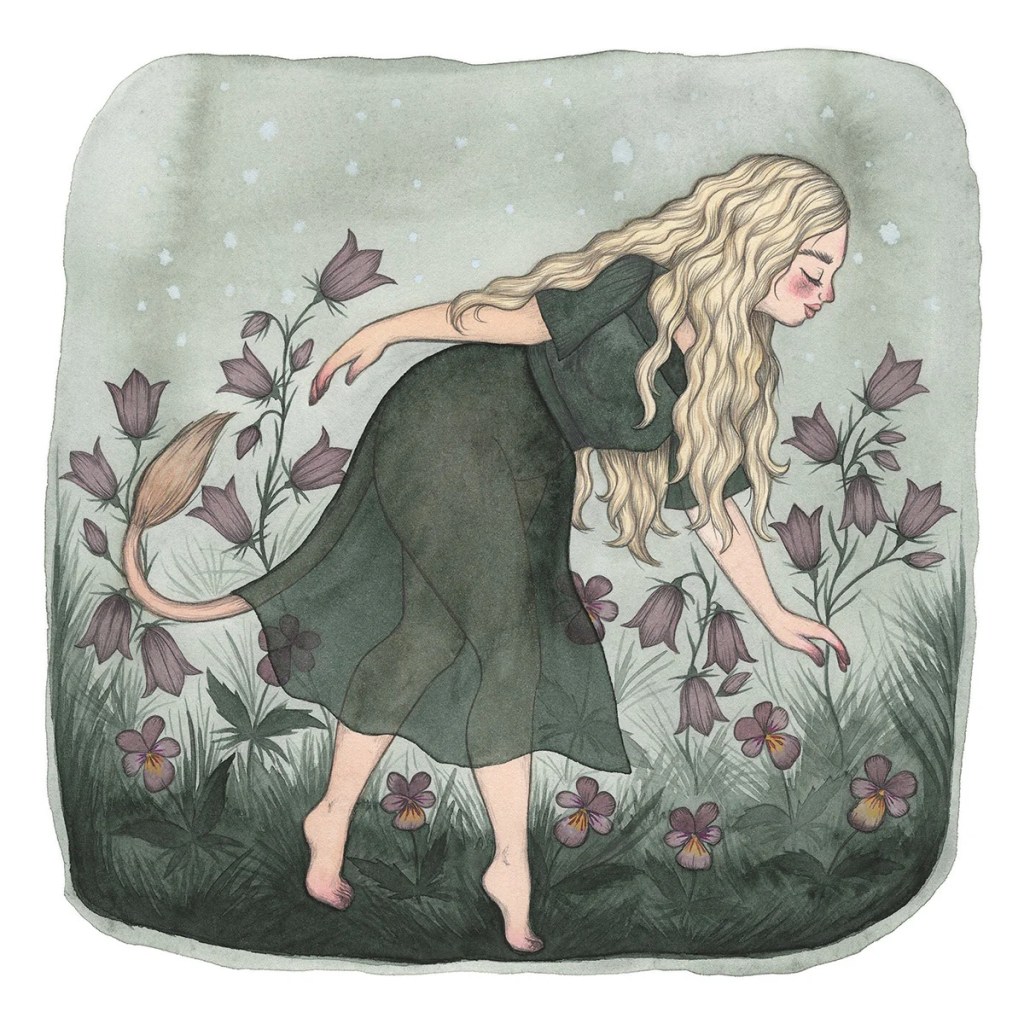
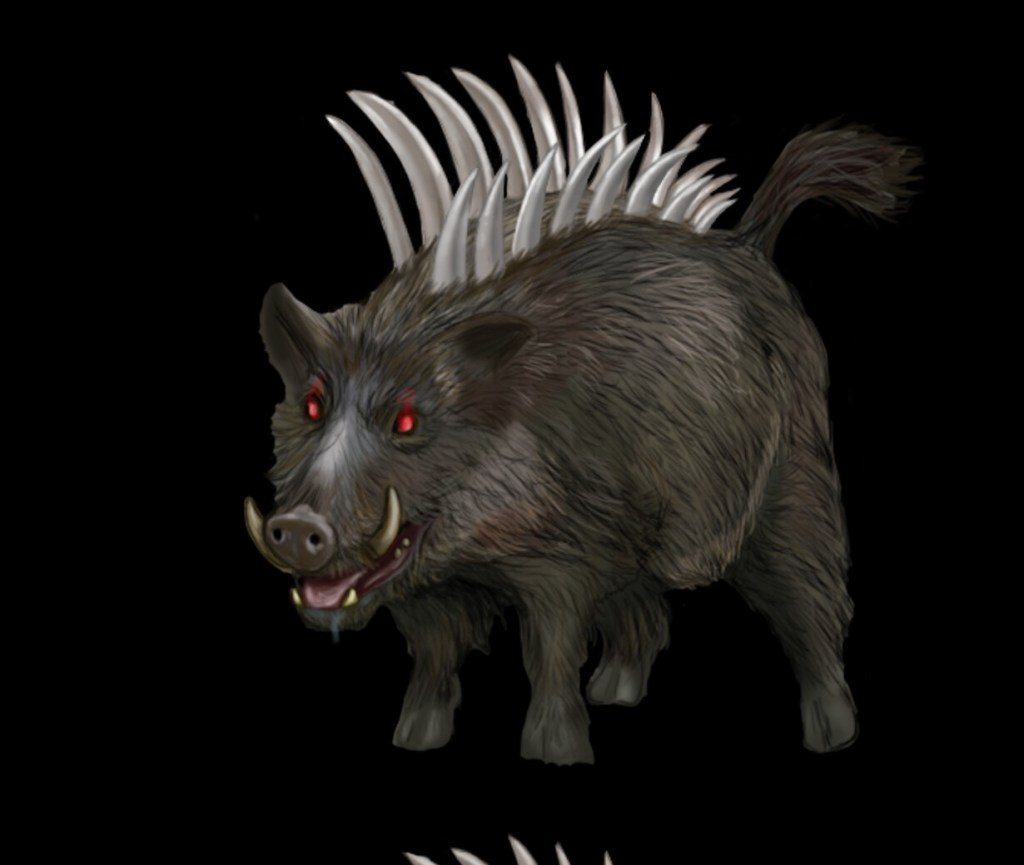
Illustration: Kajsa Wallin

Swedish Monsters: 5) Gloson

When I was at the open-air museum Skansen, I heard a story about trolls. This got me thinking about other mythological creatures and monsters that inhabit Sweden. And a new series was born!

Today – Gloson.

If you think pigs are cute, you might not after you hear about Gloson.

A monster from the southern part of Sweden, this creature is a ghost-like creature that takes the shape of a giant wild boar or pig. It has piercing flaming eyes, sharp tusks and fangs and a strange snout.

Along its back, there is a spiky razored ridge which it uses to run between people’s legs and split them open at their crotch. Scary!

Picture: Freja Hammar

Swedish Monsters: 2) The Mara

When I was at the open-air museum Skansen, I sat and listened to an old woman telling fairy tales about mythical creatures. The story I heard was about trolls. This got me thinking about other mythological creatures and monsters that inhabit Sweden. And a new series was born!

Today – The Mara.

In Swedish folklore, a mara is a supernatural creature that tortures people in their sleep by straddling them, pressurizing their chests and evoking a sense of suffocation and anxiety. It can take many forms. However it is most often in the shape of a witch-like woman, who slips in through the keyhole or any crack in the door. However, a mara can also be a cat, a monkey, or even a ball of twine.

If a Mara visits you in the night, and ‘rides’ your chest, you become paralyzed and immovable.

It is believed that the Mara can only climb into the bed by first stepping in the sleeping person’s shoes on the floor. One way to avoid this is therefore to remove your shoes to another part of the room, or put them under the bed with the toes pointing outwards.

If you ever witness somebody possessed by a Mara, go immediately to the forest and find a hollowed-out trunk. Put that in the bed next to the person and the Mara will transfer itself from them and to the piece of wood. Then you can take out the wood, and force the creature back to the forest.

An interesting point about the Mara, is that the Swedish word ‘mardröm’ and the English ‘nightmare’ originate from it.

Swedish politics week – a summer tradition

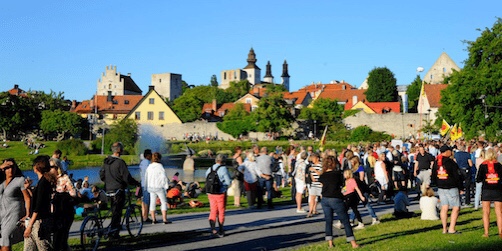
Once a year, with exception of the two pandemic years, there is a summer politics week in Sweden. The week is happening now. It takes place in a park called Almedalen on the Baltic island of Gotland, and attracts heavy media coverage.

During the week, the leaders of the eight parliamentary parties deliver speeches – their view of Sweden’s challenges and future.

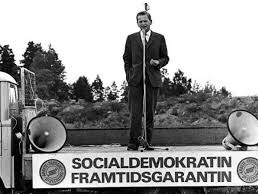
The Almedalen politics week started when legendary Swedish Prime Minister Olof Palme spoke publicly, from the back of a truck, during a summer visit to Gotland. It was at the end of the 60s and there was an audience of a few hundred people. It very quickly became a tradition.

Now Almedalen politics week attracts thousands of participants and is intended to involve the person on the street in politics and to protect the strong Swedish value of democracy and free speech. The idea is that at Almedalen politics week, we meet each other in debate. And in debate and discussion, we influence each other and our environment. This is an amazing, and very Swedish, approach to politics.

However, Almedalen Politics Week has also been heavily criticized for being elitist. Accommodation is, for example, very difficult to find, and expensive to book. The event has also become a popular opportunity for businesses to promote themselves by meeting, networking and partying with each other and engaging in media stunts. And writing it off as a marketing initiative.

Some people go to Almedalen only for this purpose and not to participate in any political activities. Social media is every year awash with images of participants mingling, drinking rose wine, partying, dancing and taking drunken groupies.

This is of course a provocation for many Swedes who perceive Politics Week as a week to enact change, and not to party and mingle. With this expanded version of Almedalen Politics Week, the question becomes is it still a platform for democracy or has it been watered-down by all of the ballyhoo?

The cultural diversity of the tea cake

Ever seen those cakes that are whipped meringue domes, or peaks, coated with a thin, crisp layer of chocolate? Sometimes with a biscuit base, sometimes not? In Swedish, if they have a biscuit bottom, they are called ‘mums-mums’. Without the biscuit bottoms they can be called ‘chokladbollar’.

If you’re Swedish, I am about to blow your mind! Those little chocolate domes are, in Scotland, called tea cakes!

In Sweden, a tea cake is something quite different. It is a kind of sweetened bread bun made with wheat and milk. It is often used to make ham or cheese sandwiches.

But the disagreement on what a tea cake doesn’t end there. In England, a tea cake is also something else. Although there are regional differences, it is generally a soft yeast-based bun, filled with dried fruits, such as sultanas, and eaten toasted with melted butter.

In USA, a tea cake is, yet again, something else. It is a large, hard cookie made from wheat and sugar. In Russia, it is also a cookie – but containing nuts.

In Ireland, a tea cake is a fluffy butter cake, as it in Australia – although there it is often flavoured with, eg, cinnamon, and apple.

Who knew that the humble tea cake could present so much diversity? One thing they have in common though, is that they are traditionally enjoyed as a sweet accompaniment to a cup of tea. Apart from the Swedish one that is- which is sandwich bread to probably enjoy with a cup of coffee.

Happy Midsummer!

It’s finally arrived – Midsummer’s Eve – this most Swedish of all traditions. Today, friends and families gather to eat, drink and be merry. As you may have read in previous posts this week, this festivity is strongly connected to history, fertility, light and tradition.

Music is an important part of the day. All around the area, a lot of classic summer songs drift out from various loud speakers. The day often starts with gentle, folk-oriented music, and ends up with Swedish dance band and Eurovision pop.

To celebrate the day, I have made a Spotify playlist of the songs that I associate with Midsummer. For me, they are Sweden. Have a listen if you are interested.

Oh, and Glad Midsommar! 🌸🌸🌸

Swedish Midsummer – food and drink

Swedish Midsummer celebrates abundance and as such, a great deal of food and drink is consumed. After guests arrive and have their first drink(s), the wreaths start to get made, the potatoes peeled, strawberries topped and the maypole gets decorated with flowers and leaves. Once erected, and danced around, it’s time for lunch.

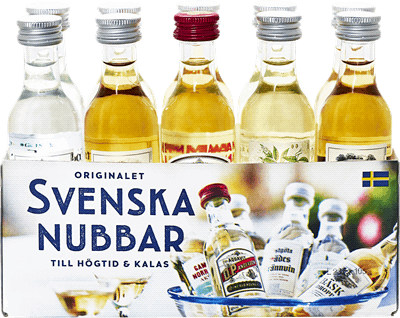
As far as drinking goes, ‘nubbe’, or snaps, is a common tipple accompanied by traditional drinking songs and washed down with beer. A popular brand of snaps is OP Anderson which is flavored with aniseed and fennel and is 40% proof. The drink has been around for 130 years on the market – the first snaps being sold in 1891! Another popular nubbe , the Danish Jubileums, is 40% proof and tastes of dill, coriander and bitter orange. There are also small-sized bottles than can be bought in fun packages that have a mixture of flavorings.

When it comes to the food, in the evening it has become popular in recent years to have a barbecue. But it is at lunch time when the traditional food is consumed, with a Midsummer smorgasbord (buffet).

On this buffet, it is common to find various types of pickled herring, soused herring, boiled new potatoes, gravlax with ‘hovmästare’ sauce, smoked salmon, Västerbotten cheese pie, crisp bread and mature cheese, chopped herbs, red onion, egg halves, ‘silltårta’ (herring cake), various sauces and mixes, fresh and smoked shrimps, fish roe.

As you can imagine, this food is very rich and fatty, which is why it is usually eaten together with the alcoholic snaps.

For dessert, the only thing to eat are Swedish strawberries and cream or a home-made strawberry cake. Anything else would be sacrilege. Some families also eat rhubarb pie.

After lunch, bolstered by the snaps, it’s usually time for garden games, a walk in the woods or a quick dip in the not-quite-yet-warm-enough lake or sea.

If the party lasts really late into the night, then there can also be a ‘vickning’. This is a ‘midnight meal’ designed to sober up drunk guests. It often includes some leftovers from the day, or can also be a very welcome hot dog. 🌭

Why is May 1st celebrated in Sweden?

In Sweden, and 160 other countries, May 1st is International Workers’ Day. Sweden has been celebrating it since 1939.

But why specifically May 1st?

The answer is found in a massacre in the USA. On 1 May 1886, laborers in Chicago went out on strike for an 8 hour working day. On 4 May 1886, the Chicago police force and the demonstrators clashed in a physical conflict. Eleven people died.

The event is called the Haymarket Massacre. Seven of the demonstrators were sentenced to death, despite lack of evidence. To commemorate the massacre, the socialist organization suggested that 1 May should become day of demonstrations every year around the world. Ironically, USA does not follow this tradition, but celebrates their Labour Day in September instead.

In Sweden, traffic is shut off, huge flag-waving demonstrations are held and people gather to hear political speeches.

The demonstrations represent people from various parties. However, since most of them are from the political left, the streets are awash with bright red flags and banners.

Not all Swedes demonstrate of course. For many, today is just a day off work – an opportunity to perhaps nurse a hangover from the festivities of the previous evening or to relax, go for a walk and enjoy the day.

Walpurgis Eve – when spring arrives in Sweden

Today, 30 April, is Walpurgis Eve, called Valborgsmässoafton in Swedish, or ‘Valborg’ for short. The name Walpurgis is taken from the eighth-century Saint Walburga, and in Sweden this day marks the arrival of spring.

In a cold, dark country like Sweden, residents have suffered through a long, miserable winter. So it is no surprise that the arrival of spring is an occasion to mark. On the evening of Valborg, Swedes usually gather to celebrate together.

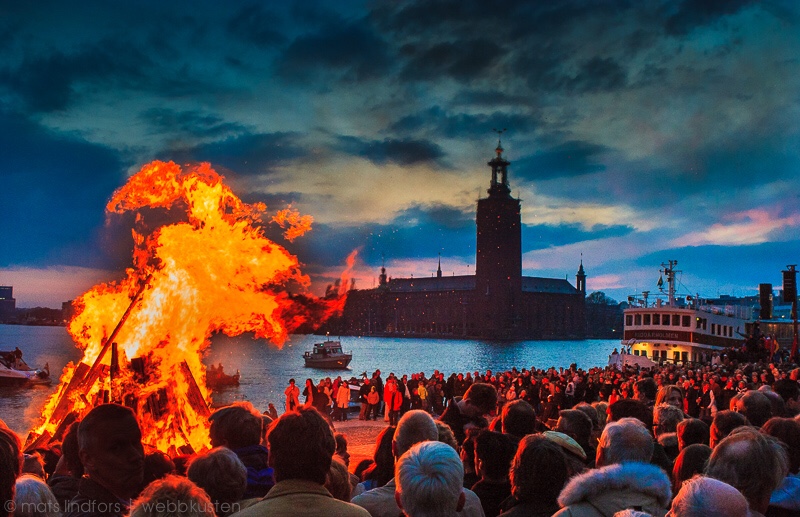
The forms of celebration vary in different parts of the country and between different cities. However, essential celebrations include lighting a large bonfire, listing to choirs singing traditional spring songs and a speech to honour the arrival of the spring season. Some of the traditional spring songs are titled ‘Beautiful May – Welcome!’ and ‘Longing for the countryside – winter rushes out’. You can see a clip below.

Walpurgis bonfires are an impressive thing to see and are part of a Swedish tradition dating back to the early 18th century. At Walpurgis, cattle was put out to graze and bonfires lit to scare away predators.

The weather is often unpredictable on Walpurgis Eve. It can be sunny and warmish, or it can still snow on 30 April!

Despite bad weather, Swedes still shiver around the bonfires and ironically celebrate the arrival of Spring.

Why Swedes celebrate on the ‘afton’ (eve)

In the UK, we celebrate ‘Days’ such as Christmas Day & Easter Day. In Sweden, these days are the bank holidays but there is also a tradition of celebrating on the Eve. In fact, it is the Eve ( ‘afton’) that is the big celebration time. Yesterday, for example, was Easter Eve and it is typically yesterday that families meet for the big meal with the traditional food.

There’s påskafton, Valborgsmässoafton, Midsommarafton, julafton, nyårsafton, trettondagsafton. Why is this? Surely it can’t just be to get extra holiday?

Well, actually it originates from a time before the mechanical clock. In that period, a new day began at sunset rather than at midnight as it does now. In the Medieval times there was an expression – ‘vid kväll ska dag leva’ – which means something like ‘in the evening, shall the day live.’

Scandinavians held onto this tradition even after clocks were invented, and this is why they celebrated their important days the evening before. Now the evenings have, for practicalities sake, become day time activities.

That’s why Swedes celebrate on the ‘Afton’. Oh yeah, and for the extra day off work.