Reading the city

2015/01/img_4867.jpg

2015/01/img_4866.jpg

2015/01/img_4868.jpg

One of the best things about walking around a city is that you can read the layers of architecture which gives you an insight into the lives and times of current and earlier city residents.

And Stockholm is no exception.

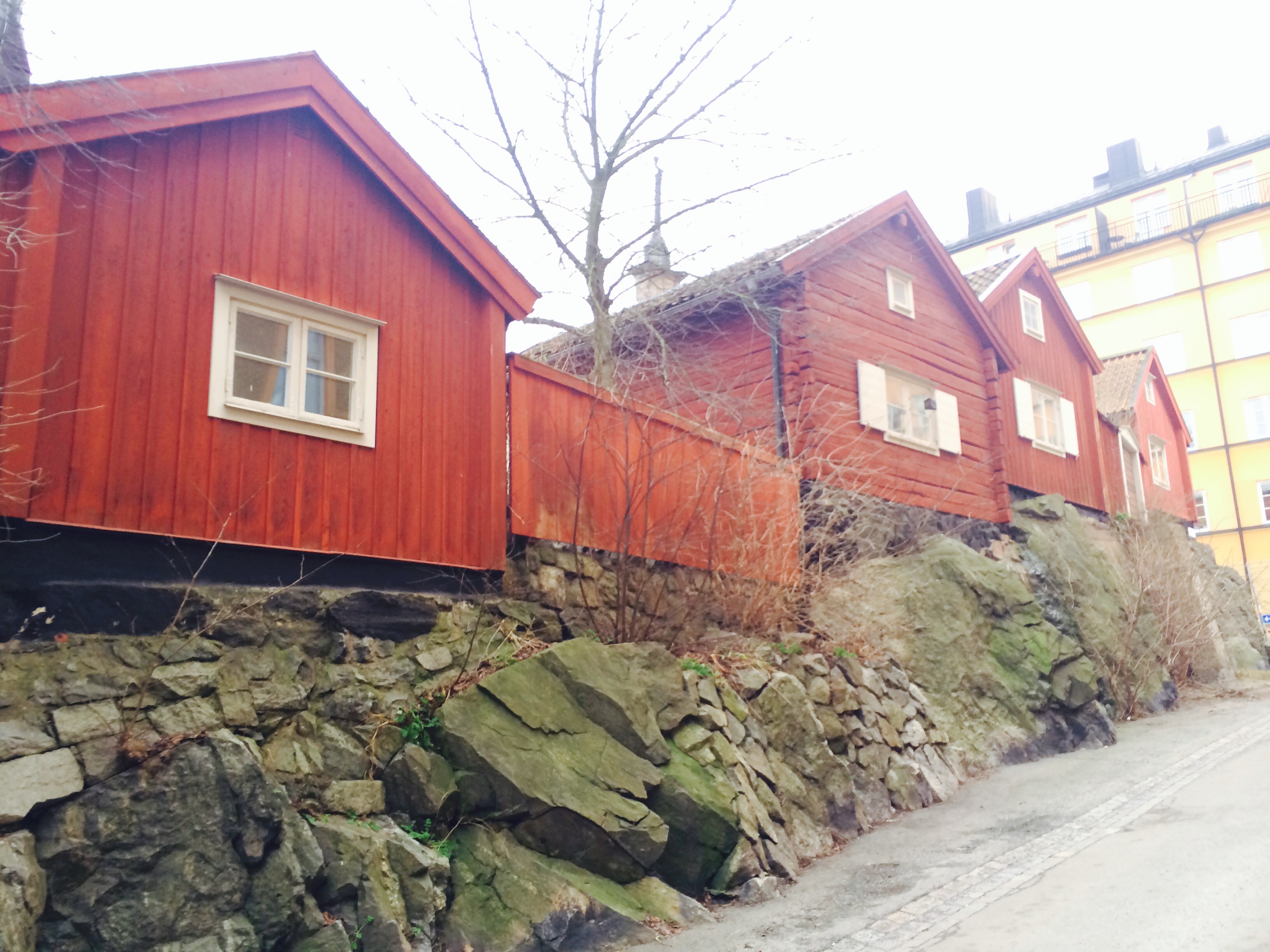
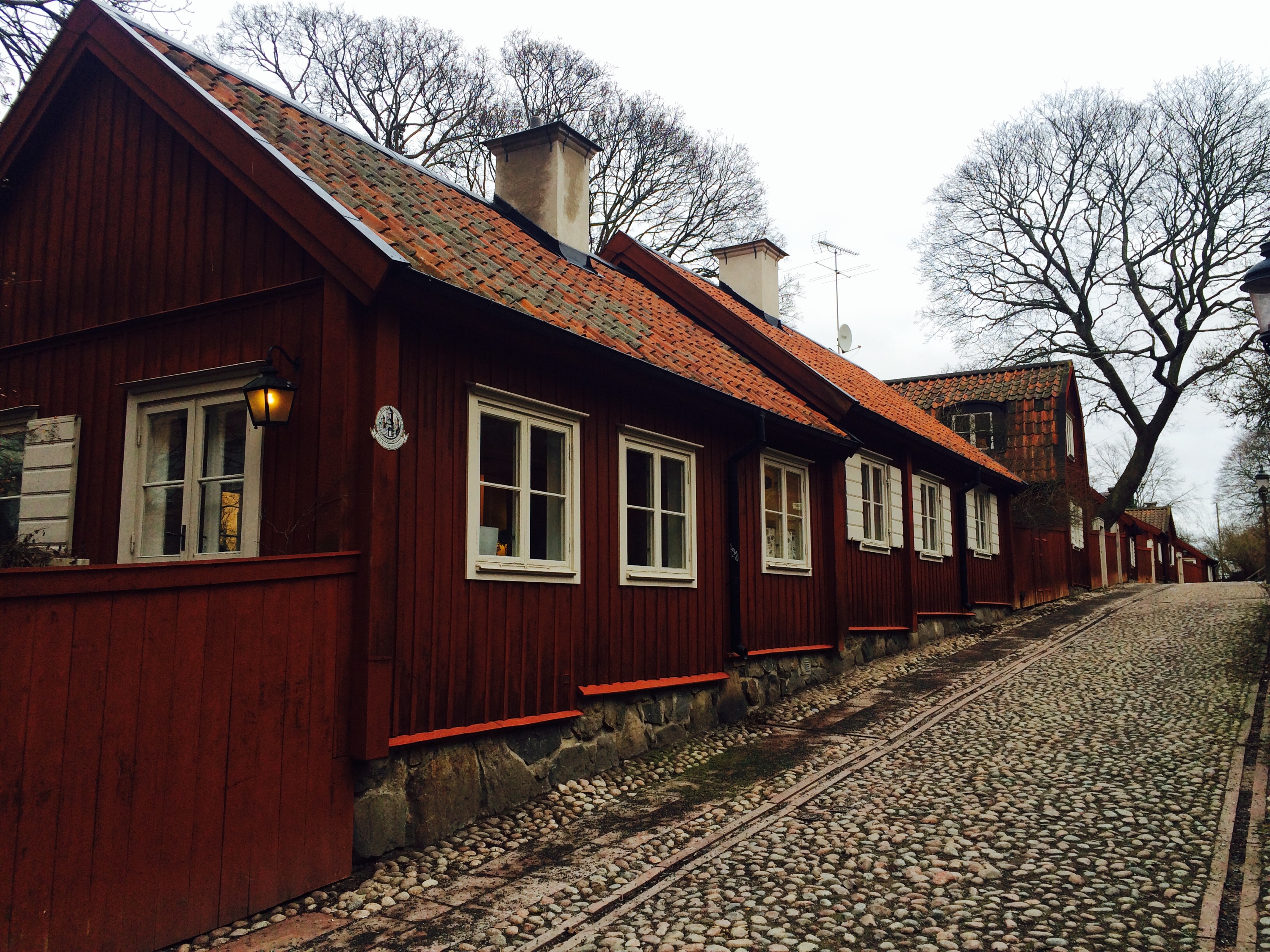
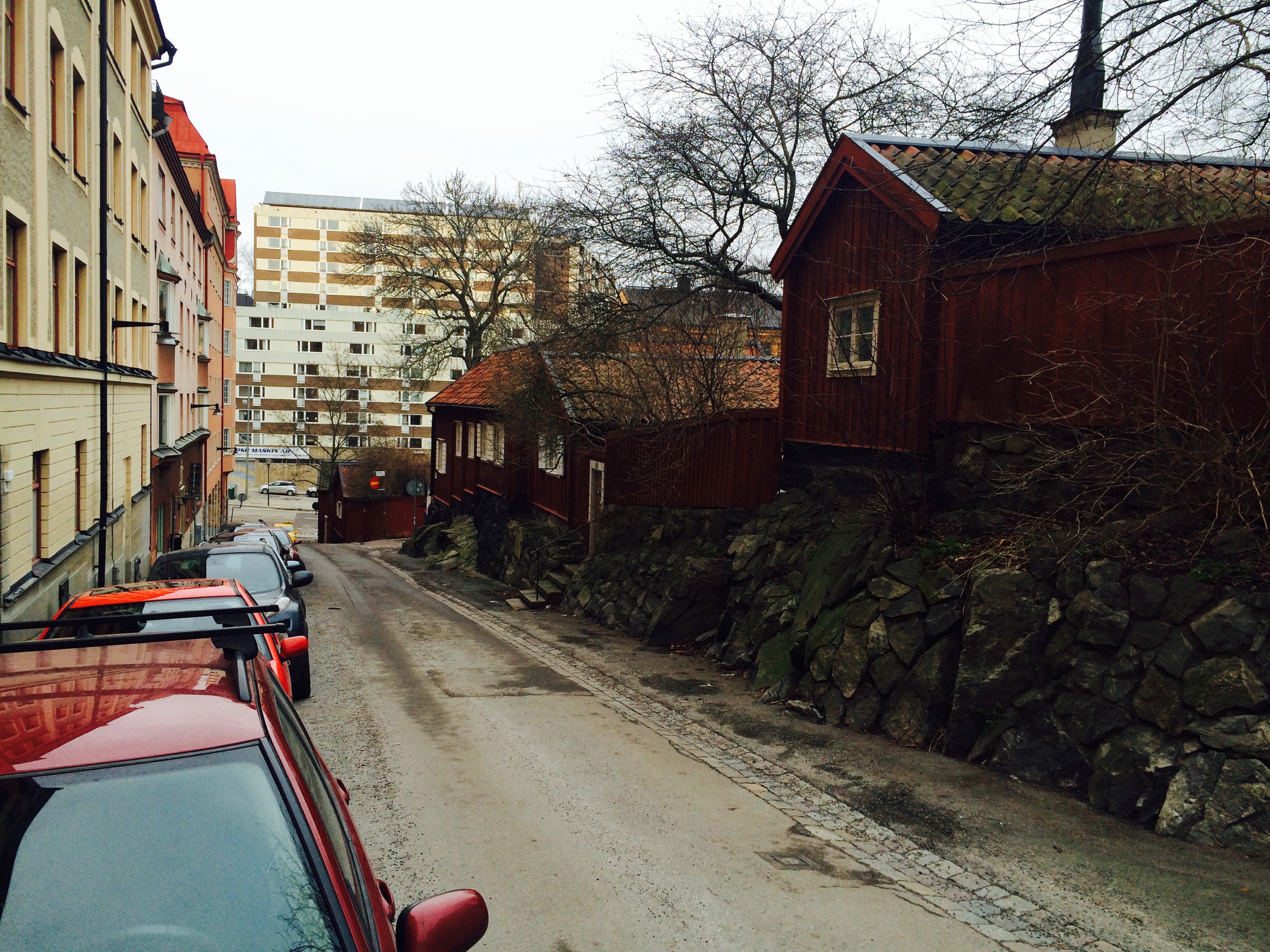
On the island of Södermalm, there is a cluster of old red, wooden houses perched amongst blocks of flats from the twentieth century. Most of these houses originate from the 1700’s and were homes to workers in the nearby tar yard and the docks. These were stinky, tough and perilous jobs. And, just like today, Stockholm was rapidly growing and people migrated into the city in droves. And just like today, there was a housing crisis even then. In the 1800’s and 1900’s these small, red houses were so overcrowded and filthy that they became dilapidated and dangerous.

Eventually in 1956, the government decided to renovate and improve the living standards for the poverty-stricken residents.

Today, the area is protected due to its cultural relevance and is still a residential area for a lucky few.

So next time you’re out walking, lift your eyes up. Look at the buildings around you – what does it tell you about your city’s earlier dwellers?

Please walk on the right

right traffic

On the way to work this morning I tested something out. I have to admit I was a bit scared. I took my life in my hands and my heart was beating rapidly. I saw, coming towards me, a group of people. Freshly off the train, they hit the pavement and were stomping with determination to their places of work. As they approached me, I decided to test cultural expectations and see what would happen.

I shifted position and walked on the left side of the pavement.

In Sweden, cars drive on the right side of the road. On escalators, people stand on the right side and let people climbing the escalator pass on the left. It’s an unwritten cultural rule that this also translates to the pavement. When masses of people move along the street, they automatically migrate to right-side walking.

But not me. Not this morning anyway. I wanted to test this cultural assumption.

As the masses approached me, and I walked on the left, I paid attention to the expression on people’s faces. Many ignored me. Others saw me and looked surprised. But the majority, gave me the evil eye. This came in a variety of forms, from staring at me and grimacing, to rolling the eyes upwards to audibly tutting as they walked past or were forced to navigate around me. Nobody reproached me or scolded me. Nobody told me I was doing it wrong. But many of them looked annoyed at my existence and the fact that I was inconveniencing them.

This little experiment highlighted a classic concept in intercultural competence. We are so preoccupied with our own view of the world that we fail to see other people’s perspectives. There are often situations where others don’t know the ‘rules’, but we judge them as though they do know the rules – but are just idiotic or rude. Consequently, we become angry or frustrated and this affects our interaction and our communication.

The solution? Instead of thinking ‘that person’s an idiot’, we can think ‘that’s interesting, why might they be doing that differently?’  

Think about that next time you get irritated because somebody isn’t following the norms that you believe in.

A theory about Stockholmers

Stockholm

It happened again today. And, actually, it has happened once too often.

When I approached my office building this morning, there was a small group of people speaking Swedish standing outside in the cold. They couldn’t get into the building. As I have a pass card, I knew I could let them in. So, I smiled, and I said ‘I can let you in to the warmth’. There was no reaction, apart from a little wry smile. Swiping my card, I let them into the building and turned to look at them. Not one of them acknowledged what I’d done and said ‘Thank you.

This might seem like a small thing, but it happens all the time to me. I hold a door open for somebody. I get no ‘thank you’. I let somebody go on the bus before me. Nothing. Soembody bumps into me. And I apologise!

Why is this the case? Why do many Stockholmers not acknowledge or thank each other. It isn’t that they don’t see each other. Is it that they don’t care?

An interesting fact is that the vast majority of people in Stockholm come from somewhere else in Sweden. They have migrated from smaller towns and villages to seek work, love and excitement in the capital. My experience of being in towns outside Stockholm is that people are friendly, polite and acknowledging of each other. So what happens to these people when they move to the city?

I have a theory. I think that many Stockholmers who have migrated into the city have a perception of what a city should be. They seem to think a city should be fast-paced, tough, individualistic and unfriendly. That people should push themselves forward, and through, other people. That connecting with a stranger in a public place with eye contact, a small remark or a thank you does not belong in a capital city. I think that they are playing pseudo cosmopolitans.

In my opinion, this attitude is shamefully misguided. Citizens of much larger cities, such as New York or London, still find time to small talk, for politeness and to say sorry or thank you to each other. Try bumping into somebody in New York and not apologise. The price of impoliteness is sometimes harsh.

And the solution is easy. Say ‘thank you’ to the next person who does something for you today.

Really, it’s not that difficult.

Do you see the horse?

See the horse

Much intercultural understanding arises from misinterpretation and misconception. We tend to think our perceptions of something are correct, when often they can be very wrong. What we see usually isn’t the whole picture.

In a cultural situation, simple situations such as how much eye contact we give people when we talk, how close we stand to somebody when we communicate and what kind of gestures we use are all examples of things that can easily lead to misinterpretation. I remember when I moved to Sweden and some of the misperceptions I had because I didn’t understand the whole picture. I remember, for instance, thinking Swedes were unfeeling, purely based on the lask of emotional response and the more reserved body language than I was used to. I was wrong. Just because a person doesn’t gesticulate or emphasize when they speak does not mean they feel any less.

The road to cultural sensitivity is paved with misunderstanding, misinterpretation and false perception. One key is to suspend judgement about another person or a specific situation and instead try to see the larger context. To ask ourselves why might this have happened? What are all the possible interpretations?

Look at it from another angle, who knows what might emerge. Just like in the visual above…so, do you see the horse?

The relief of Swedish advent

Image  A practical Swedish electric advent calender to light up the darkness 

So it’s the first of Advent this weekend and this year it comes as a major relief for those of us in Stockholm.

You see at Advent, Swedes decorate their houses, apartments and windows with lights. From ceilings, illuminated stars are hung. On window ledges, electric advent candles are placed. On tables, four candles are positioned and one is lit every Sunday up until Christmas. Small candles, often red, are dotted about the home.

Some years, there is already snow at the first of Advent, but this year in Stockholm, there isn’t. So it is very, very, very dark. The collective advent decoration is a definite reprieve from this darkness as light is spread into these murky places.

The word ‘advent’ comes from the Latin ‘adventus’ which means ‘arrival’ and is traditionally the start of the period where we wait for the nativity, or Christmas. Some religions also see it as waiting for the second coming of Christ. But in this secular society that is Sweden, the waiting is probably for the snow to come, the cold to hit, the water to freeze to ice and for winter to clasp its fingers firmly around us.

Do we have to respect other cultures?

colour and culture fooditerranean

Somebody wrote the following question on Facebook today – ‘to what degree do I have to respect other cultures?’ and it got me thinking.

Since I work with diversity and intercultural competence, you would think my answer would be clear for me – a resounding ‘YES!’ but it’s actually not that straightforward. I think, in fact, the answer depends on what we mean by ‘respect’. If by respect, we mean to accept and acknowledge that other cultures exist within the boundaries of what seems good and right to them, then the answer is ‘yes!’ If disrespect comes from an ethocentric perspective, a sentiment of right/wrong, good/bad, then I don’t think that’s ok. The ethnocentric always thinks their way is best and that other perspectives, or world views, are in some way faulty. This borders on the racist. So how can we balance the acceptance of other cultures with the discomfort we experience when reading or witnessing actions that are unacceptable to us?

It’s not easy but I think that we should accept other cultures, and that we should genuinely repect there are many different ways to view and to be in this world. But, that in no way means that I have to like everything that others do, especially if it compromises what I value or what I perceive as ethical. Intercultural competence is about accepting differences but also about being authentic in your own cultural beliefs without being xenophobic.

So let’s not mix up respect and liking. In my mind, they’re two different things.

Please like and share this post!

The Dream of America – in Sweden

drömmen om amerika

We went to see stand-up comedian Kristoffer Appelqvist at Rival Theatre yesterday evening in his show called ‘Drömmen om Amerika’ – ‘The Dream of America.’ and it was hilarious. The show had, in fact, surprisingly very little to do with America, but focused mostly on Swedish culture and society which was right up my alley!

In each section of his show, Kristoffer Appelqvist started with a childhood dream about the USA, such as how he wanted to be a cop, or how he wanted to be ‘free’, or how he wanted to eat potato chips any time of the day, but then he quickly related this dream to Swedish society and joked mostly about that.

One section of his show was when he described himself as a true liberal, believing in free markets, deregulation, privatisation and freedom of choice just like in America. He was a liberal until an experience changed his opinion. A while ago, he was out ‘easy-riding’ wide-legged on a motorcycle in a remote part of Sweden when he was hit by another vehicle and slammed to the ground.  As he lay on the road, he thought to himself ‘well, this is it, I’ve pissed away my life and now I’m going to die. No ambulance is going to come here because I voted against them in the last election and my private sickness Insurance isn’t going to send someone out to help me. So, this is it. This is where I’ll die.’  To his amazement, 11 minutes later, an ambulance arrived in the middle of nowhere, picked him up and drove him to the nearest hospital where he got care, his own television, nice food and the toothbrush of his colour choice. All at the cost of the tax payer. And it was at this point he understood what his parents had been trying to teach him all along – that although we are often strong and independant, one day we might be down and out and we might need help to pick ourselves up again. Today it could be someone else who needs this support, but tomorrow it might be us. And Kristoffer Appelqvist had a kind of epiphany that it is actually that kind of society he wants to live in.

An interesting, and highly contemporary show when you think about the current debate in the USA regarding Obamacare.

Go see it if you get the chance. He’s touring the country: http://drommenomamerika.se/