Gloria and the giant egg


Long, long ago in the southern lakes of Stockholm, there lived a duck called Gloria and Gloria was a special duck indeed. Sure, she had white feathers, a yellow beek and big webbed feet. But it was something else that made her special.

Gloria was a giant duck. She was, to put it simply, huge. She was so huge that she towered above the tree-tops.

The townspeople at that time didn’t know about Gloria. She kept herself to herself far away from civilisation and deep in the forests to the south of the town. She fed off fish, but they were so small that she had to eat tons and tons of them to feel full. She was eating all of the time. And the more she ate, the more she grew.

Now it just so happened that one day a group of townspeople were riding through the forest along a wide river. As they approached the lake known as Flaten, they saw something curious on the ground – a giant webbed footprint. They looked quickly around and noticed that the footprints led deeper into the forest. Slowly, they followed the trail until they arrived at a big pile of sticks in a circular form – some kind of nest. They climbed up the outside of the nest and peeked over the top. And there in the centre of the nest they saw a big, white egg.

‘Oh my’ they thought, ‘that egg would feed the people of Stockholm for many months’
‘We have to take it back to town’ said one of the men in the group.
‘But how does one carry such a big egg to town?’ asked another

The giant egg was certainly too massive to carry. Rolling it might break it. They looked around the forest for inspiration.

‘I have an idea’ said one of the men, ‘if we can break the side of the nest, we can roll the egg down to the lake and float it on the river all the way back to Stockholm’.

What a brilliant idea! And this is exactly what they did. Soon the giant egg was bobbing along the wide river on its way to the town.

A short while later, Gloria returned from a day eating fish from another lake. When she saw her empty nest and the missing egg, she quacked inconsolably. Seeing the broken sticks on the ground she understood what had happened. Thieves! They were taking her egg to the town to eat. Angrily, she dove into the lake and swam towards Stockholm as fast as her webbed feet could paddle.

Soon in the distance she saw her egg, floating on the river. And she saw the townspeople with ropes and sticks urging it along. ‘I’ll teach them not to steal’ she quacked, and she swam towards them.

The egg might have been in water but it was still heavy. The group of men were struggling to make it move and making slow progress. Suddenly, from behind them, they heard an angry quacking. They turned around but before they knew what had hit them, Gloria had lifted the giant egg on her beak and rolled it to the bank of the river. Then, with a horrifying screech, she ate up every single man.

Gloria climbed up to the bank to her egg. The bottom of it had flattened out with the speed that it had hit the ground. It wasn’t round any more, so she couldn’t roll it. She tried to push it back into the water but it was stuck fast to the earth. Realising moving the egg was an impossible task, Gloria sat down on the grass beside the egg and hung her head in sorrow. And there she stayed for many many years, protecting her giant egg from any townspeople that might want to steal it again.

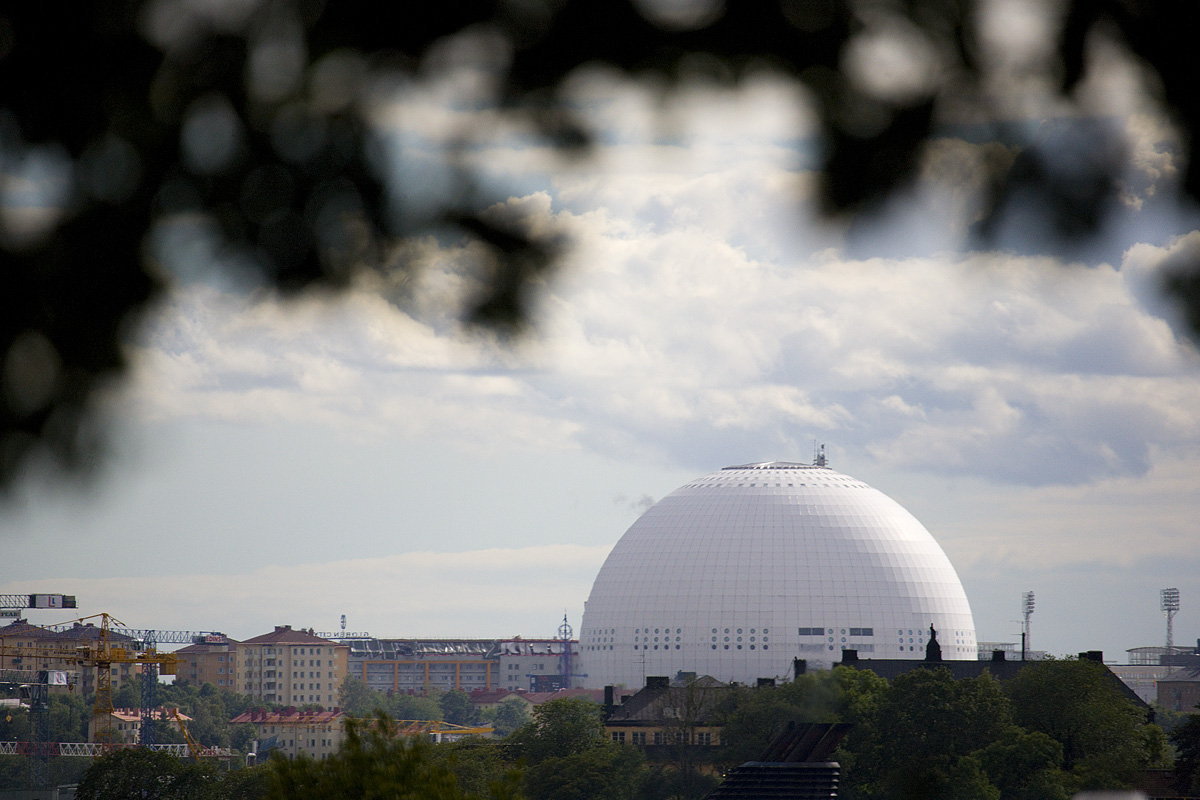
Nobody knows what happened to Gloria. She probably got very old and disappeared into the forest to die. But her egg is still there. Just to the south of Stockholm, you can see it towering above the treetops. A long time ago, the townspeople hollowed it out and used it as a shelter. Now, we use it as a place of entertainment.

We call it Globen, but we should really call it Gloria.
All we need is love


Today is Valentine’s Day in many countries around the world, including Sweden. Many Swedes embrace the celebration with flowers, chocolates, dinner dates. Other Swedes react negatively to it as it is an ‘imported tradition’ – an Americanisation. But what Swedish tradition isn’t imported? They all are, we’ve just forgotten where from.

I understand the anti-commercialism arguments, the same resistence that arises around Halloween. But the way I see it is this. We live in a globalised world, with global influences. This means that there are flows of people, products, beliefs and traditions. Of course, globalisation brings with it negative aspects, and also positive things.

A celebration such as Valentine’s day is about celebrating love.

And love is something that, in a seemingly harsher world, we could all do with a little more of.

Body beautiful?


I was at a health assessment today, where I was factually informed I am overweight. Not much, but I am nearing a risk zone for a gentleman in his 40’s. A machine measured my height, fat percentage, muscle mass and age and came up with this unwelcome conclusion. So it’s time to start eating healthier and start exercising again.

This got me thinking – why are we so interested in losing weight and achieving ‘the body beautiful’? One thing’s for sure – this interest is certainly a conditioned attitude.

One of the biggest ‘conditioners’ of our time is the media – the tabloids. You can’t walk around the central areas of most towns in Sweden without being bombarded with messages about weight-loss, new diets or shocking stories about fat people.

Today’s Aftonbladet: ‘She lost 15 kilos – in 3 months!’
Today’s Expressen: ‘Lose weight guarantee’

It’s no surprise that people feel anxious about their body image and that young people suffer from bodily identity issues. The pressure for body beautful is very strong in Sweden.

However, as we know, Sweden’s not the only country with these issues. I’d venture to say it’s the same in most western countries. And anything Sweden can do, Britain can do better?

Today’s Sun newspaper: ’58 stone man eats 8 hotdogs for breakfast’
Today’s Mirror. ‘How a talking plate can help you lose weight’
Today’s Daily Mail: ‘Meet the world’s fattest man who lives in London’

It’s depressing how manipulated we are, isn’t it?

Think I’ll go get a bar of chocolate.

Eldvind and the iron steeple

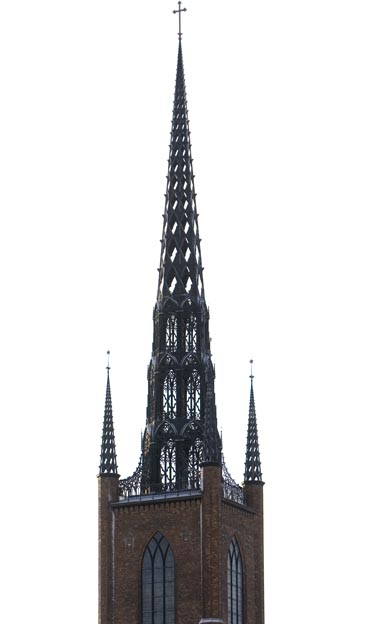
Long, long ago the city of Stockholm wasn’t as big as it is today. In fact, it was comprised only of two small islands surrounded by sea on one side and a lake on the other. One of the islands, known today as Gamla Stan, where the city people lived and worked. On the other island, known as Riddarholmen, there was a monestry and a church, with a large iron steeple.

Now, the people of Gamla Stan had a problem. Every day, from the southern forests, a large dragon called Eldvind would come flying and swooping over them. He would screech and breathe fire and, if you were unlucky, he would grasp you in his mouth and swallow you up. Eldvind the dragon always circulated over Gamla Stan a few times before he landed on the steeple of the church on Riddarholmen. Then, perched up high, he would breath fire on the steeple until the iron melted. Opening his jaws, he would take a huge bite and swallow a bit of iron in a loud gulp. And then, with a screech, he would take off and fly away over the water to the southern forests.

This went on day after day, week after week.

But after a while, the people of Gamla Stan started to notice something odd. Eldvind seemed to be flying lower in the sky like he was heavier. He seemed to be slower and more tired. Could the iron he was eating be making him heavier? Yet still Eldvind would continue perch on the church, melt some iron, eat a big piece and then disappear across the water.

Time went on and soon the church steeple had hardly any iron left on it.

One day, it was in early spring, Eldvind appeared again. He flew so low that he skirted the top of the water, he couldn’t lift any higher. He landed at the bottom of the church, too heavy to climb to the roof. Blowing fire upwards, he melted the remaining iron and opened his mouth to catch the last drops as they fell to the ground.

Heavy stomached, Eldvind turned to fly back over the water. With great effort, he lifted and flew in the direction of Gamla Stan. Huffing and puffing, he tried and hard as he could to reach the forests but the iron he had eaten had made him too heavy and he sunk lower and lower until he crash- landed on his stomach in the middle of the town. The townspeople watched with amazement as the dragon tried to get to his feet and fly away, but he couldn’t.

Suddenly, a knight on horseback came riding through the town to slaughter the injured dragon. He raised his sword. But then he stopped. He watched as Eldvind’s feet turned to iron. Then his legs, his body, his tail, his wings and finally his head and jaws stiffened and became iron.


If you look over the water at Riddarholmen you can still see the church with the curious steeple there today. It looks like a skeleton, but once upon a time, it was covered in iron. Until the dragon devoured it.

And if you walk through Gamla Stan you can still see Eldvind.

Most people think that it’s a statue of St George fighting a dragon – but it’s not. It is really Elvind – the frozen dragon that terrorized the people of Stockholm long, long ago.

Hello world!

Welcome to WordPress.com. After you read this, you should delete and write your own post, with a new title above. Or hit Add New on the left (of the admin dashboard) to start a fresh post.

Here are some suggestions for your first post.

  1. You can find new ideas for what to blog about by reading the Daily Post.
  2. Add PressThis to your browser. It creates a new blog post for you about any interesting  page you read on the web.
  3. Make some changes to this page, and then hit preview on the right. You can always preview any post or edit it before you share it to the world.

The legend of Huskahinni the ogre


Long, long ago in Stockholm there was an ogre called Huskahinni. Huskahinni was a friendly but rather arrogant ogre with one eye in the middle of his forehead. But Huskahinni thought, quite simply, that he was the best ogre in the whole of the land of Norden.

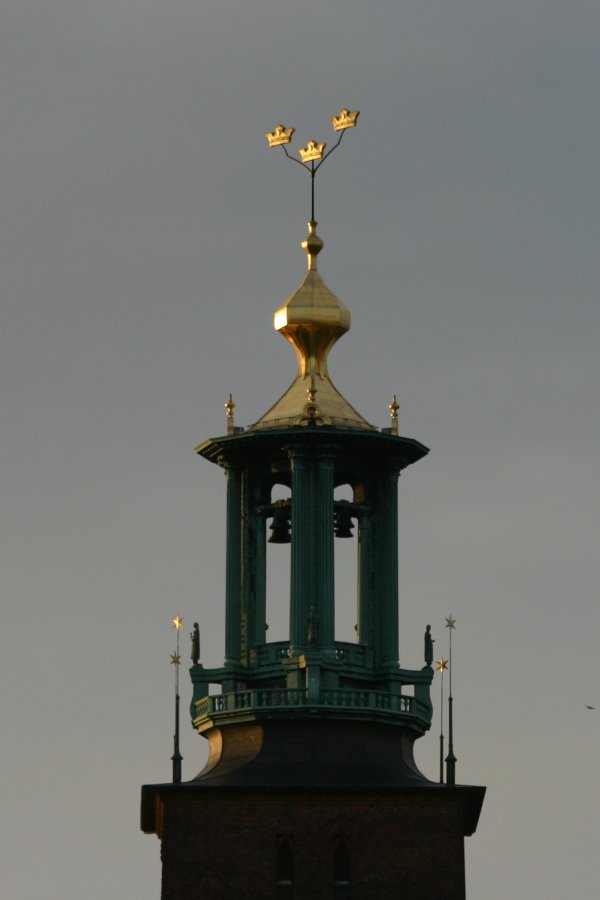
Huskahinni lived in the tower that stretched above the city hall. From his viewpoint, he could look out over the whole city, the waterways and the islands. Every morning, he would lean out of the tower and shout out over the city, ‘I am Huskahinni, King of the Mountain!’

Now, at that time, the land of Norden had a real King and he didn’t take at all kindly to the ogre’s claim. He called his advisors to him and aksed how to stop Huskahinni’s jeering from the top of the city hall.

‘We could shoot him’, said one advisor. The King said no.
‘We could send soldiers up and bring him down’. The King said no,no.
‘We could burn down the tower’, said another. No, said the King, no, no, no.

Finally, a fourth advisor stepped forward. Clearing his throat, he announced that the best way to silence the offensive ogre was to ridicule him into silence. To make fun of him. The King seemed interested in this idea. Yes, the best way to shut someone up is to make them feel silly.

‘Quite right,’ he said. ‘If he claims to be the king, let’s make him the king’.

The next day, the King called to him the city’s goldsmith. He ordered him to forge three large crowns out of gold.

The weeks went by, the goldsmith forged, the King waited and Huskahinni kept peering out from his tower and claiming he was the king of the mountain.

Finally, the day arrived when the three golden crowns were ready. The King arranged for the goldsmith, and the rest of the townspeople, to meet him by the city hall. When everyone was gathered the King looked up at the enormous tower, and shouted, ‘Huskahinni, Huskahinni, who are you?’. The ogre popped his head over the edge of the tower and shouted ‘I am the king of the mountain!’. ‘Well’. said the King, ‘you deserve a crown’. At this moment, the King signalled to his soldiers to catapult one of the crowns up to the top of the tower. Hitting Huskahinni in the head, the ogre yelped and fell backwards. And the townspeople laughed and laughed and laughed.

The next day, the crowd gathered again at the base of the city hall tower. And once again, the King called, ‘Huskahinni, Huskahinni, who are you?’. The ogre popped his head over the edge of the tower again and shouted ‘I am the king of the mountain!’. ‘Well’. said the King, ‘then you deserve another crown’. Once again the soldiers catapulted the second of the crowns up to the top of the tower. Hitting Huskahinni in the eye, the ogre screamed in pain and fell backwards. And the townspeople laughed and laughed and laughed.

The third day came and the King shouted for the ogre again.’Huskahinni, Huskahinni, who are you?’. ‘I am the king of the mountain!’. ‘Well’. said the King, ‘a king should have a crown’. And yet again, a golden crown was catapulted one to the top of the tower. Hitting Huskahinni in the neck, the ogre fell backwards, bleeding. And the townspeople laughed and laughed and laughed and laughed.

‘That should do it,’ thought the King, ‘that stupid ogre’.

The townspeople danced back to their homes laughing at the hilarious way in which the King had tricked the ogre. High up in the tower, Huskahinni looked down. His head and his eye were hurting and his neck was bleeding. And all alone, at the top of the city hall, he started to cry.

The next day, the townspeople went about their work as usual, laughing at the memory of what had happened to the stupid ogre the days before. Suddenly a little girl pointed to the top of the tower – ‘Look!’ she shouted. The townspeople looked up and couldn’t believe their eyes. High up at the top of the tower, there was a golden pole. And stuck to the top of the pole were the three shiny golden crowns, glistening in the sun for all to see.

Today, Huskahinni is long gone. But his crowns are still there, perched on the top of the city hall.

A reminder to us all that, once up on a time, Huskahinni was king of the mountain.

The Karlberg Serpent

Long, long ago when Stockholm was a town under development, there lived a little boy called Ossian. And Ossian was a scared little boy.

Ossian’s father worked in central Vasastaden as a labourer, helping to build new houses and buildings.

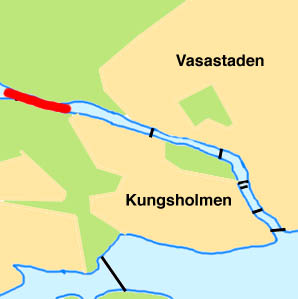
Ossian and his family lived on the rural outpost island of Kungsholmen. Between Vasastaden and the island of Kungsholmen ran a canal, which had been dug out by hand not many years previously. Over the canal stretched a rickety old bridge.

The people of Kungsholmen lived in fear of what was in the murky canal water. It was said that as soon as the canal was built a huge serpent had slipped in from the lake Mälaren. The serpent was as long and as wide as the canal itself and it would eat children trying to cross the bridge.

One dark November day, Ossian’s father had gone to work and mistakenly left his napsack containing lunch on the kitchen table. Ossian ran quickly after him through the streets with the food. Eventually he got to the edge of the canal. His father was nowhere in sight. He put a foot on the bridge as if to cross.

‘If you walk over the bridge’, bellowed a voice, ‘I will eat you alive!’

Ossian looked into the canal and saw the giant snake rising up. Terrified, he threw the napsack at the serpent and ran as fast as the wind back through the streets and home.

A few weeks later, his father forgot his napsack again. This time Ossian tiptoed quietly through the streets until he reached the bridge. Fearfully, he slowly placed a timid foot on the first wooden tread.

No sound.

He took a few extra steps. The serpent reared up infront of him. ‘You again! I will eat you if you go any further’

‘But I have to give my father his food’ stuttered Ossian

‘You will be my food’ hissed the snake as he opened his mouth wide.

Ossian dropped the bag and sprinted for his life back home.

The weeks went by and Ossian’s father didn’t forget his bag again. Until one day in January. The snow had come and the trees were laden with heavy frost. Once again, Ossian fearfully waded through the snow to the canal’s edge.

He looked into the water. But instead of a serpent, he saw ice. The water was frozen solid. On the surface of the water, he could see the distinct scales of the serpent. A patchwork of frozen scales like a honey comb filled the length and the width of the canal. The serpent was stuck. Confident that the serpent couldn’t move, Ossian ran across the bridge to the other side.

Centuries later, there are many of us who cross the canal. What we don’t realise is that the Karlberg serpent is still there. Oh, he doesn’t eat children anymore but satiates himself on rodents, birdlife, city waste and unfortunate kajakers. But in the winter, just like every year when the canal freezes, he can be seen.

You might think the scaly surface of the water is just ice patched together like a jigsaw puzzle. But no, it is the scaly skin of the Karlberg serpent.

It’s been rumoured that where the ice is thin, the occasional ice skater might just disappear, devoured by the hungry snake.

Dare you go ice skating on Karlberg canal this winter?

Congratulations to Swedish Påls

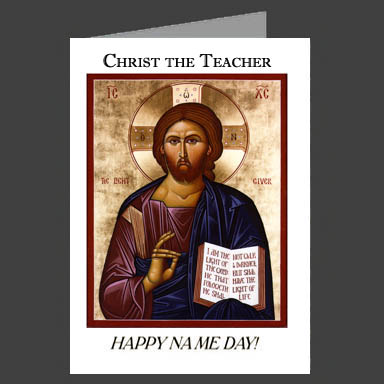
If you’re name’s Paul, or Pål, then today you may well be a very happy man. In Sweden, as in many other countries, each day is associated with a name and the person who has that name is celebrated. It’s called a Name’s Day and today is Paul.

To some Swedes, the Name’s Day tradition is irrelevant but to others it’s still celebrated with cake and even presents.

What I wondered is where the Name’s Day tradition came from. And after some research, I found the answer. It seems like the custom originated with the Greek Orthodox and Roman Catholic calendars of saints, where believers, who were named after a particular saint, would celebrate that saint’s feast day.

During the 18th century in Sweden, names used by the royal family were introduced to the Swedish list of name days, followed by other common names. Then, in 1901 a comprehensive modernization was made to make the list up to date with the names that were current at the time. The Royal Swedish Academy of Sciences had a monopoly on calender production, strangely. And since the Name’s Days were published on calenders, they had a monopoly on them too. However, this monopoly expired in 1972 and various competing Name’s Day lists were released into society.

In 1986 a consensus of a new single list with three names on each day was reached, and then reduced to two names on each day. However, people weren’t happy. This prompted the Swedish Academy to create the list that is used today.

So, what about us foreigners whose names don’t appear on this list? Well, the Centre for Multiculturalism produces their own calender every year with other names on. This is to provide a counter balance to the very Swedish official name list. According to their Multicultural calender, today is Ester’s day. Ester is Persian and means star. So, congratulations to Ester. Yesterday was Estelle’s day and tomorrow is Evren (Turkish for ‘universe’).

And my name then? Neil?

Well, Neil doesn’t appear on the Swedish list or on the Multicultural list. After further scrutiny, I think I’ll have to opt for October 8th. This is when Nils has his day. Neil/Nils, Neil/Nils, Neil/Nils. Yeah, that should work.

That’d be ok wouldn’t it?

Swedish Social Democracy in Crisis


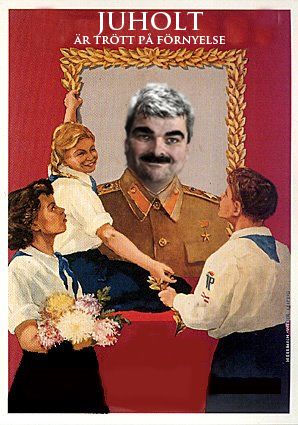
At 15.00 today, Håkan Juholt resigned.

He was the leader of Sweden’s largest and oldest political party – SAP – Swedish Social Democratic Workers’ Party, currently in opposition. After a series of scandals, he decided today that it was too much. With his resigning, he has become historic as the Social Democratic party leader that has sat the shortest period. He sat only for 10 months, but in the end his own behaviour, the general public’s lack of support and the media’s witch hunt became too much for him.

Not only is his resignation historic but also symptomatic of the biggest crisis that the party has ever gone through. The SAP is losing voters faster than the Costa Concordia cruise liner lost its captain. And this reduction in popularity begs a question – is the SAP a party that can understand and represent the needs of modern-day Swedes, or are they stuck in the past? Are they resting on past glories? Are they, in other words, irrelevant?

But first back to origins – how did the SAP party begin? Well, founded in 1889, the party sprang out of the well-organized working class and peasant movements which promoted working class emancipation, temperance, religious observance and modesty. These movements believed in human equality and protested against the unequal spread of wealth and privelege. All of this in a backdrop of a Sweden divided by class and with wide-spread poverty, starvation and disease. These movements were so strong that they successfully penetrated the parliament early on and paved the way for Swedish electoral politics. The Social Democratic Party’s position has a theoretical base within Marxistic socialism: “from each according to his ability, to each according to his need.”

And their ideology has been very successful in Sweden through the last 125 years. The party has held power of office for a majority of terms after its founding. This means that the ideology and policies of SAP have had strong influence on Swedish politics – even on those of the opposing parties. The current ruling government, the rightwing Moderate party, believe in socialised healthcare, free education for all and supportive benefits for parents, for the unemployed and the sick. Compared to other right-wing parties around the world, the Swedish right-wing appear like humanistic pussy cats.

But what about today then? Has the SAP run its course? Are their core questions relevant for a modern Sweden? Is there no longer inequality to challenge? Is there no social injustice worth fighting against? Is there no class divide between the privileged and the poor?

Of course there is.

Like most developed countries in Europe, Sweden is a very segregated society – segregated by education, money and ethnicity.

It might very well be, however, that the majority of Swedish voters simply don’t care about this anymore. Not enough to finance bridging this divide with increased taxes anyway. Very many Swedes have a good standard of living – comfortable. Nice home, good job, foreign holidays twice a year, modern clothes, gym card, summer house, flat screen tv. Sweden today is not that country of 1889 riddled with poverty, starvation and disease.

Whether or not Swedes see the party as irrelevant remains to be seen. First the party must elect a new leader. To succeed, this leader must repair the damage experienced by the party and convince the electorate that the party is modern, forward-thinking and progressive. He or she must convince the people that the social questions they believe in are still important today. The people must be convinced enough to move out of their comfort zones and believe that voting for the SAP can make a difference.

In 2014, during the next general election, we’ll see if he or she has succeeded.