The cultural diversity of the tea cake

Ever seen those cakes that are whipped meringue domes, or peaks, coated with a thin, crisp layer of chocolate? Sometimes with a biscuit base, sometimes not? In Swedish, if they have a biscuit bottom, they are called ‘mums-mums’. Without the biscuit bottoms they can be called ‘chokladbollar’.

If you’re Swedish, I am about to blow your mind! Those little chocolate domes are, in Scotland, called tea cakes!

In Sweden, a tea cake is something quite different. It is a kind of sweetened bread bun made with wheat and milk. It is often used to make ham or cheese sandwiches.

But the disagreement on what a tea cake doesn’t end there. In England, a tea cake is also something else. Although there are regional differences, it is generally a soft yeast-based bun, filled with dried fruits, such as sultanas, and eaten toasted with melted butter.

In USA, a tea cake is, yet again, something else. It is a large, hard cookie made from wheat and sugar. In Russia, it is also a cookie – but containing nuts.

In Ireland, a tea cake is a fluffy butter cake, as it in Australia – although there it is often flavoured with, eg, cinnamon, and apple.

Who knew that the humble tea cake could present so much diversity? One thing they have in common though, is that they are traditionally enjoyed as a sweet accompaniment to a cup of tea. Apart from the Swedish one that is- which is sandwich bread to probably enjoy with a cup of coffee.
Happy Midsummer!

It’s finally arrived – Midsummer’s Eve – this most Swedish of all traditions. Today, friends and families gather to eat, drink and be merry. As you may have read in previous posts this week, this festivity is strongly connected to history, fertility, light and tradition.

Music is an important part of the day. All around the area, a lot of classic summer songs drift out from various loud speakers. The day often starts with gentle, folk-oriented music, and ends up with Swedish dance band and Eurovision pop.

To celebrate the day, I have made a Spotify playlist of the songs that I associate with Midsummer. For me, they are Sweden. Have a listen if you are interested.

Oh, and Glad Midsommar! 🌸🌸🌸

Swedish Midsummer – food and drink

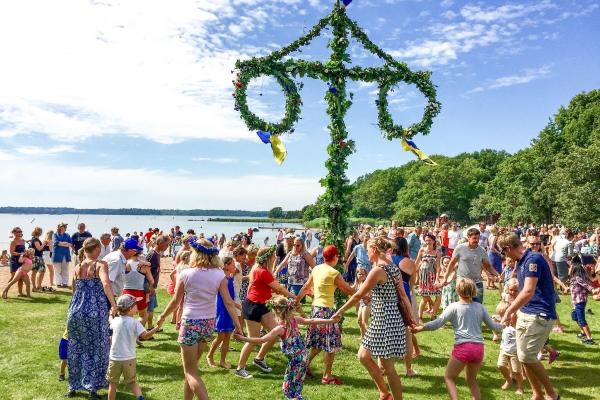
Swedish Midsummer celebrates abundance and as such, a great deal of food and drink is consumed. After guests arrive and have their first drink(s), the wreaths start to get made, the potatoes peeled, strawberries topped and the maypole gets decorated with flowers and leaves. Once erected, and danced around, it’s time for lunch.

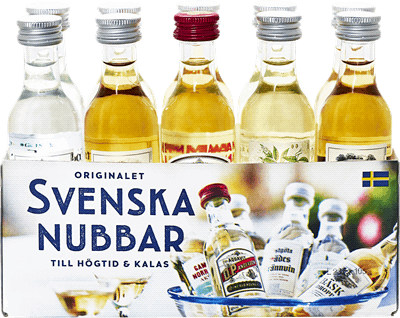
As far as drinking goes, ‘nubbe’, or snaps, is a common tipple accompanied by traditional drinking songs and washed down with beer. A popular brand of snaps is OP Anderson which is flavored with aniseed and fennel and is 40% proof. The drink has been around for 130 years on the market – the first snaps being sold in 1891! Another popular nubbe , the Danish Jubileums, is 40% proof and tastes of dill, coriander and bitter orange. There are also small-sized bottles than can be bought in fun packages that have a mixture of flavorings.

When it comes to the food, in the evening it has become popular in recent years to have a barbecue. But it is at lunch time when the traditional food is consumed, with a Midsummer smorgasbord (buffet).

On this buffet, it is common to find various types of pickled herring, soused herring, boiled new potatoes, gravlax with ‘hovmästare’ sauce, smoked salmon, Västerbotten cheese pie, crisp bread and mature cheese, chopped herbs, red onion, egg halves, ‘silltårta’ (herring cake), various sauces and mixes, fresh and smoked shrimps, fish roe.

As you can imagine, this food is very rich and fatty, which is why it is usually eaten together with the alcoholic snaps.

For dessert, the only thing to eat are Swedish strawberries and cream or a home-made strawberry cake. Anything else would be sacrilege. Some families also eat rhubarb pie.

After lunch, bolstered by the snaps, it’s usually time for garden games, a walk in the woods or a quick dip in the not-quite-yet-warm-enough lake or sea.

If the party lasts really late into the night, then there can also be a ‘vickning’. This is a ‘midnight meal’ designed to sober up drunk guests. It often includes some leftovers from the day, or can also be a very welcome hot dog. 🌭

Swedish Midsummer – fertility

Swedish Midsummer has many connections to fertility. Historically, it celebrated the growing season when crops, fruits and berries start to ripen, and Mother Earth graces us with her plenty.

Human fertility is also in focus, quite literally. The decoration and erection of a large phallic maypole, complete with testicles, is central to the Midsummer festivities. Once erected, people dance around said pole. This is an ancient fertility rite. One of the dances includes people imitating frogs – a tradition dating back to the French Revolution. It is thought that this particular dance was created to mock the French. Another old symbol of fertility and rebirth is the wearing of a wreath of flowers in your hair – a common practice at Midsummer.

Related to fertility, is the association of love to the festivities of Midsummer. In fact many Swedish babies are made around this weekend.

A more romantic example is the gathering of 7 types of summer flower to place under your pillow at night. It is said if you do this, in silence, then your future husband will appear to you in your dreams.

Swedish Midsummer – the light and the magic

Midsummer Night is the lightest of the year, when it doesn’t really get fully dark.

Naturally, this depends on where you are in Sweden. The sky presents as a dim glow on the southern plains of Skåne. In the Arctic north, the land of the Midnight Sun, it is a bright searing daylight all night long. In Stockholm, where I live, we experience a magical dusky twilight that conjures up associations of witchcraft, druids and paganism.

At dusk, at this time of year, the light creates a strange reflection in the water. Lakes turn a petrol blue and the waves seem thick and heady with the magic of the night.

Historically, the light Midsummer night was considered a mystical night, as it was the best time for telling people’s futures. Girls ate salted porridge so that their future husbands might bring water to them in their dreams, to quench their thirst. You could also discover treasures, for example by studying how moonbeams fell.

Also that bright night, it was said, water was turned into wine and ferns into flowers. Many plants acquired healing powers on that one night of the year.

It is no wonder that Shakespeare wrote of the intoxication of a Midsummer Night’s Dream. In Sweden, the light is very intoxicating indeed.

Swedish Midsummer: the origin

Midsummer’s Eve is possibly the biggest public celebration in Sweden, and it’s happening this week on Friday. Swedes gather to eat, drink and be merry together.

So, what are the origins of Midsummer and why is it celebrated?

Sweden has its origins in an agrarian society, and it was on the farms that people started the celebration. Even today, some Swedes don’t consider it Midsummer unless they are ‘på landet’ – in the countryside.

The main purpose for the farmers was to welcome the summertime and the season of fertility, after a long, cold winter. These celebrations began as early as the 500’s. People lit bonfires and visited holy springs where they engaged in games and dancing. This tradition developed to dancing around a decorated maypole sometime in the 1500’s.

In the 1700-1800’s, the celebration of Midsummer spread to the industrial communities where, for example, workers were given pickled herring, beer and snaps. A food tradition that exists today.

Eventually in the 1900’s, Midsummer became a celebration for all Swedes and developed into Sweden’s most Swedish festivity!

Swedish National Day – a new king, an old king, a new constitution and 500 years of independence.

On 6 June 1523, Gustav Vasa was crowned King of Sweden. He was one of the few survivors of the Stockholm Bloodbath, in which his father and 80 other nobles were murdered, Game of Thrones style.

He ruled the country until 1560. During his reign, he released Sweden from the Kalmar Union consisting of Sweden, Denmark and Norway. He also turned Sweden from a catholic country into a Protestant one, with the monarch and not the pope as head of the church.

6 June is another significant day in Swedish history – on 6 June 1809 the country signed a new constitution. This lay the foundation for Sweden’s current status as an independent democracy and was in place until 1974.

The constitution returned political power to the parliament after King Gustav IV Adolph was deposed in a military coup in 1809. He was the last Swedish monarch to rule over Finland. After him, the crown passed not to his children but to his uncle, Charles XIII. Charles had no legitimate heir, which set into motion the quest for a successor. This was found the following year in the person of Jean-Baptiste Bernadotte, the first monarch of the present royal house.

For these two reasons, Sweden celebrates its National Day today – June 6th. It was declared in 1983, and was first celebrated as a public holiday in 2005.

The day is celebrated with various events up and down the country.

Why is May 1st celebrated in Sweden?

In Sweden, and 160 other countries, May 1st is International Workers’ Day. Sweden has been celebrating it since 1939.

But why specifically May 1st?

The answer is found in a massacre in the USA. On 1 May 1886, laborers in Chicago went out on strike for an 8 hour working day. On 4 May 1886, the Chicago police force and the demonstrators clashed in a physical conflict. Eleven people died.

The event is called the Haymarket Massacre. Seven of the demonstrators were sentenced to death, despite lack of evidence. To commemorate the massacre, the socialist organization suggested that 1 May should become day of demonstrations every year around the world. Ironically, USA does not follow this tradition, but celebrates their Labour Day in September instead.

In Sweden, traffic is shut off, huge flag-waving demonstrations are held and people gather to hear political speeches.

The demonstrations represent people from various parties. However, since most of them are from the political left, the streets are awash with bright red flags and banners.

Not all Swedes demonstrate of course. For many, today is just a day off work – an opportunity to perhaps nurse a hangover from the festivities of the previous evening or to relax, go for a walk and enjoy the day.

Walpurgis Eve – when spring arrives in Sweden

Today, 30 April, is Walpurgis Eve, called Valborgsmässoafton in Swedish, or ‘Valborg’ for short. The name Walpurgis is taken from the eighth-century Saint Walburga, and in Sweden this day marks the arrival of spring.

In a cold, dark country like Sweden, residents have suffered through a long, miserable winter. So it is no surprise that the arrival of spring is an occasion to mark. On the evening of Valborg, Swedes usually gather to celebrate together.

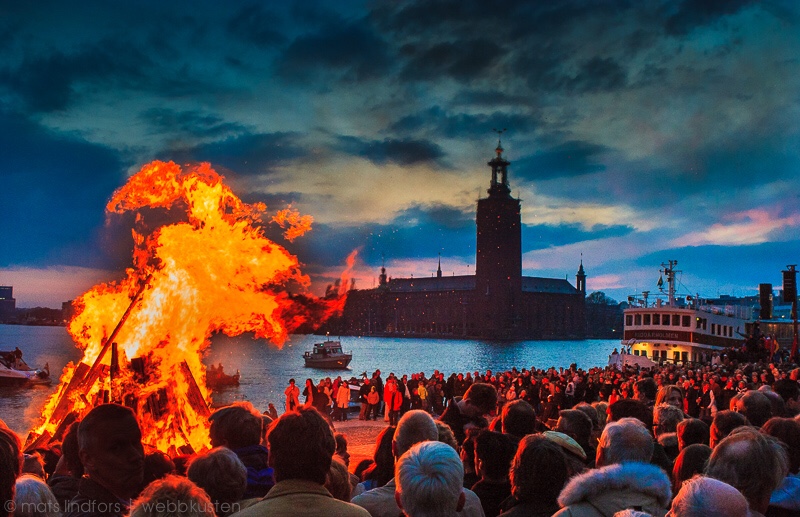
The forms of celebration vary in different parts of the country and between different cities. However, essential celebrations include lighting a large bonfire, listing to choirs singing traditional spring songs and a speech to honour the arrival of the spring season. Some of the traditional spring songs are titled ‘Beautiful May – Welcome!’ and ‘Longing for the countryside – winter rushes out’. You can see a clip below.

Walpurgis bonfires are an impressive thing to see and are part of a Swedish tradition dating back to the early 18th century. At Walpurgis, cattle was put out to graze and bonfires lit to scare away predators.

The weather is often unpredictable on Walpurgis Eve. It can be sunny and warmish, or it can still snow on 30 April!

Despite bad weather, Swedes still shiver around the bonfires and ironically celebrate the arrival of Spring.

Pea Soup and Pancakes

In all cultures, there is an element of predicatability. Some things that you can feel will always happen. Things that give you a sense of security because you can depend on them.

In Sweden, it’s pea soup and pancakes.

Today is Thursday. In most lunch restaurants and every staff canteen that sells Swedish food, pancakes are on the menu. You can rely on it. It feels dependable. The pancakes are served in a particular way – with whipped cream and jam – and always, always served together with a bowl of steaming pea soup and bread.

Pea soup and pancakes have been consumed in Sweden since the 1200’s. It’s believed that because Friday was a day of fasting, people ate as much filling food as possible on the Thursday before. And that’s how the tradition was born.

It’s fun to watch Swedes on Thursdays. In the staff canteen, grown men queue up to ladle their soup into their bowls and pile pancake after pancake onto a plate like a Scooby snack. Then they gleefully paste on the jam and smother it with whipped cream. It’s like watching a jelly and ice cream party for 10-year olds.

Pancakes on Thursdays is especially interesting for us Brits. Traditionally, we only get to eat pancakes once a year – on ‘Pancake Day’ – Shrove Tuesday. On this day, when Swedes traditionally tuck into the Lent bun called ‘semla’, we Brits make pancakes and cover them with sugar, lemon juice and chocolate sauce.