Amazing immigrants in Sweden: Part 3 Negra Efendic

negra efendic

Negativity. Fear. Concern. These are some of the reactions many Swedes are experiencing about the influx of immigrants to Sweden in the last couple of years. So, I became curious to learn about some of those individuals who came here as refugees or immigrants to make a better life for themselves. People with roots somewhere else who built a home here and who contributed to Swedish society in a positive way.

For the next seven days, I will celebrate these people. My hope is that we can lift our eyes from the challenges of immigration and understand what useful contributions these people can make to society if given the chance. To our society. Our Sweden

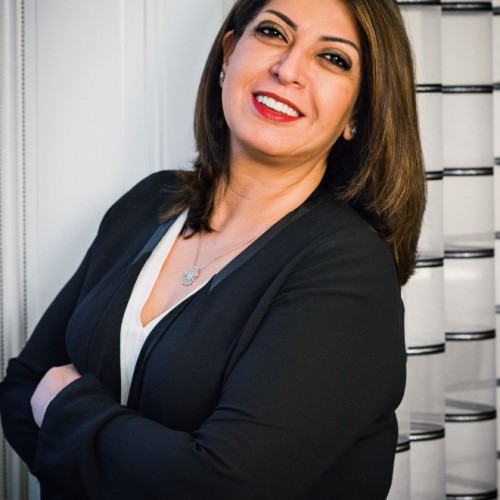
Part 3: Negra Efendić

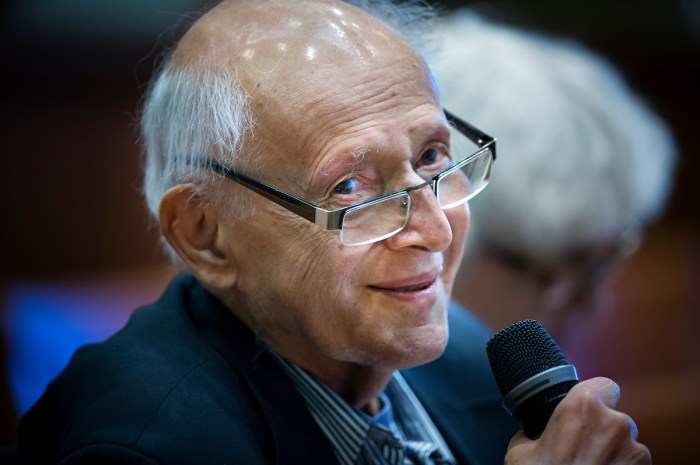
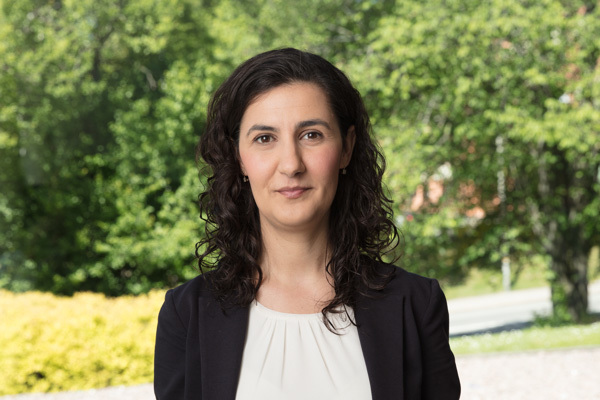
Sometimes when we imagine groups of immigrants and refugees, it is easy to forget the children. At the age of 13, with her parents, Negra Efendic fled the war in Bosnia. She was born in a town called Srebenica where, in 1995, 8000 men and boys were executed.  Her father managed to escape and flee to Sweden.

After a difficult period, her family settled and Negra went to school and ultimately studied journalism in the small Swedish town of Motala. After working at the newspaper in Borås, she started working at national paper ‘Svenska Dagbladet’ where she covers migration and immigration issues. In 2016, she published the book ‘Jag var precis som du’ – ‘I was just like you’ – where she recounts the experience of fleeing to Sweden and living as a refugee here.

She is living proof that refugees in Sweden have valid stories, often stories of horror. Are we prepared to listen?
Amazing immigrants in Sweden: Part 2 Shori Zand

Shori-Zand-500x500

Negativity. Fear. Concern. These are some of the reactions many Swedes are experiencing about the influx of immigrants to Sweden in the last couple of years. So, I became curious to learn about some of those individuals who came here as refugees or immigrants to make a better life for themselves. People with roots somewhere else who built a home here and who contributed to Swedish society in a positive way.

For the next seven days, I will celebrate these people. My hope is that we can lift our eyes from the challenges of immigration and understand what useful contributions these people can make to society if given the chance. To our society. Our Sweden

Part 2: Shori Zand, midwife and entrepreneur from Iran

Giving her sons a safer and more prosperous life was Shori Zand’s motvation when she arrived in Sweden in 1987. At the age of 25, she arrived with her husband, two small sons and three suitcases. And nothing else – except ambition.

In Iran, Shori had worked as a nurse so, once she had a command of the Swedish language, she re-trained to be a nurse in Sweden and then ultimately, a midwife.

In 2000, thanks to the relaxation of healthcare laws in Sweden, Shori saw an opportunity to open a midwife clinic in Linköping. By 2010 she had a healthcare organisation that turned over 400 million Swedish kronor. Providing care in maternity, elderly care, mammography, neurology, gynocology and hearing rehabilitation, Shori’s company ‘Avesina’ employed a staff of  1200 people.

Shori Zand is often referred to as a role model for female entrepreneurs. Apart from her successes with Avesina, she has won an array of prizes, been on the boards of ‘Svensk Näringsliv’, TLV and Nutek as well as advising the Swedish government in IT and being Vice President of the Swedish Organisation for Healthcare Entrepreneurs.

Shori Zand arrived in Sweden with almost nothing. She is now an integrated, respected and accomplished businesswoman who has enabled care for thousands of Swedes. She has also created jobs – for over a thousand people – and undeniably contributed to Sweden’s economy and society.

Amazing immigrants in Sweden: Part 1 Georg Klein

georgklein

Negativity. Fear. Concern. These are some of the reactions many Swedes are experiencing about the influx of immigrants to Sweden in the last couple of years. So, I became curious to learn about some of those individuals who came here as refugees or immigrants to make a better life for themselves. People with roots somewhere else who built a home here and who contributed to Swedish society in a positive way.

For the next seven days, I will celebrate these people. My hope is that we can lift our eyes from the challenges of immigration and understand what useful contributions these people can make to society if given the chance. To our society. Our Sweden.

First out is Georg Klein – Hungarian refugee and cancer researcher

Georg Klein was born 28 July 1925 in Budapest, Hungary. He died in Stockholm in December 2016. Born into a Jewish family, he survived the Haulocaust by escaping from a deportation train. In 1947, this time to escape the Soviet occupation, he arrived in Stockholm where he studied medicine at Karolinska Institute. Georg Klein arrived as a young refugee and became one of Sweden’s most important cancer researchers.

Together with his wife, Eva Klein, who also emigrated from Hungary, he built up an institute for tumor biology at Karolinska which became a world-leading research institute for over 4 decades. Georg and Eva Klein are responsible for a long row of discoveries within cancer research and lay the foundation for modern tumor immunotherapy. In addition to this, Georg Klein authored 10 books on a broad variety of subjects.

Arriving in Sweden with nothing, Georg and Eva had drive and ambition. They integrated into Swedish society, had three children and several grandchildren.

Their important contribution to cancer research has saved the lives of countless Swedes and other people all over the world.


Swedish pizza – with cabbage! 


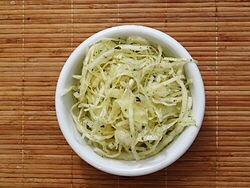
If you want a cultural food experience in Sweden – order a pizza. When you do, you will also experience a very strange bedfellow. In Sweden, pizza is served with complimentary salad, in both restaurants and take aways. This salad is called creatively –  ‘pizza salad’ and is made of cabbage. It is a kind of coleslaw with white wine vinegar, salt, pepper and oil. It’s fresh, crispy and a bit weird. 

This odd combination is as far as I know only offered in the Nordic countries and its origin is a bit unclear. One theory is that when the first pizzerias opened in Sweden, the traditional tomato salad wasn’t an option due to the climate in the winter. So, subsequently they decided to use a more available, local vegetable – the cabbage – inspired by the Croatian salad ‘kupus salata’. 

Whatever it’s origin, the pizza salad is so ingrained in the Swedish mentality, it’s become a cultural ‘classic’.  In fact, it’s hard to imagine a pizza without cabbage salad in Sweden. 

Starving children in a Stockholm museum 

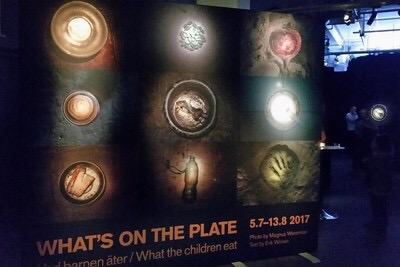
Stockholm’s Photography Museum is, in my opinion, one of the world’s best museums for seeing photographic art. If you haven’t been, I recommend one of the current exhibitions called ‘What’s on the Plate’ by Magnus Wennman and Erik Wiman. I saw it today and it is no easy exhibition to see. In fact it is very difficult to stomach. 

In picture and text, you see very recent depictions of starving children around the world and what they are forced to eat in order to survive. The exhibition asks for donations towards Save the Children. It is well worth a visit and runs until 13 August 2017. 

It is a sobering and humbling experience and a reminder of the overindulgence of our daily lives and the vast gap between the ‘haves’ and the ‘have-nots’. 
For more information: http://www.fotografiska.eu

When Stockholm becomes a ghost town 

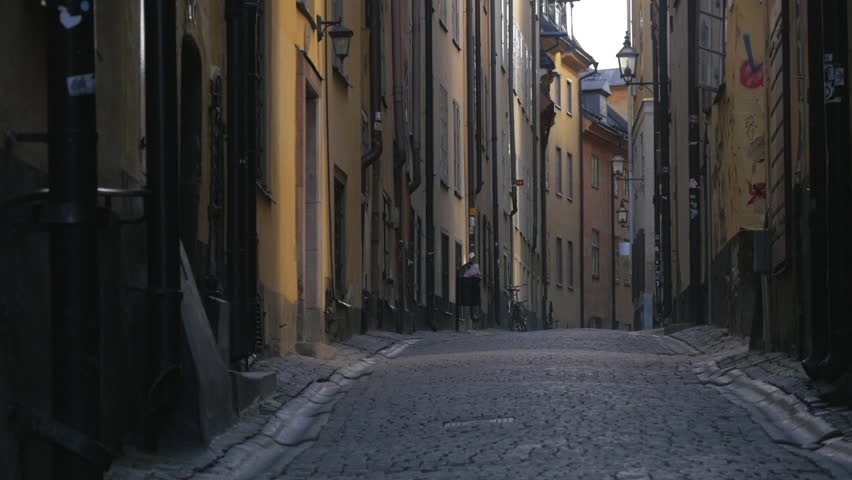
With the summer holidays in full swing in Sweden, many urbanites leave their cities and head for their country houses, their boats and further abroad. As a result, Stockholm empties out and turns into a ghost town. Fewer cars and fewer people contribute to a calm environment. Many establishments are closed for business and back in August. Most of the people you see are tourists or unfortunates who have to still go to work. 
Although it has changed over the years, Sweden is still affected by the so-called ‘industrisemester‘ when companies used to completely shut down production for the whole month of July. Even though this has changed now thanks to globalism, July and August are the times when most employees take their holidays and it is noticeable how vast numbers of people disappear from the cities and towns. According to Swedish law, employees are entitled to 5 weeks holiday and can take 4 of these in July-August and there is a right for these to be conjoined.  

How I have been Swedified 


After my last blog about Swedish geography, somebody commented that it is hysterical that there is a place in Sweden called Norrbotten. 
This got me thinking. 

When first moving to Sweden and learning the language, I saw all sorts of funny words which made me giggle. Now, some two decades later, I don’t even see those funny words any more – I have been Swedified. 

  • ‘Plopp’ to me is a chocolate bar, and nothing else
  • ‘Puss’ is a kiss and not a little kitty or a body part
  • ‘Kiss’ isn’t a romantic exchange between consenting people. Kiss is urine
  • ‘Slut’ is simply the end of something
  • ‘Avfart’ on a motorway is just the exit 
  • ‘Rea’ is a sale and not an old British singer 
  • ‘Kök’ and ‘kock’ are the kitchen and the chef, not a body part
  • I don’t even see the squidginess of the ‘slutspurt’ any more. All I see is that it’s the end of the sale. 
  • I don’t titter any more when someone says ‘shit’ to describe the putty around the window or the number six is the same as ‘sex’. 
  • ‘Prick’ is a dot and not an insult 

It is with a smidgen of regret that I guess I have been integrated – at least linguistically! 

Dividing up Sweden 


Today I thought I was in one region of Sweden, but I was reminded by a Swedish friend that I was in fact somewhere else. This dividing up of Sweden is not easy to get a grip of. 
Sweden is divided into 3 regions: Norrland, in the North, Svealand in the middle and Götaland at the bottom. These regions have no official purpose, except making it easier for weather readers to present their forecasts. 

Within each region, there are many counties (landskap). Sweden has in fact 25 counties, with Lapland being the most northern and Skåne being the most southern. These counties have their own coats of arms, flowers, and often traditional clothing. 

In 1634, the administrative responsibilities for justice, roads, hospitals etc were removed from the counties and given to an organisation of ‘län’ – administrative counties. There are 20 of these in Sweden. There can be more than one county in the area covered by a ‘län’. For example Södermannsland ‘län’ includes the counties of Södermannland, Uppland and Närke. Each ‘län’ has a main city of residence, where the county government (länsstyrelsen) is based and the governer (landshövding) has his/her residence. For Södermannland, this is Nyköping. 

Within each administrative county there are local councils (Kommun) who are responsible for social services on a local level. There are 290 of these in Sweden today. 

So when traveling through Sweden, you will be in a region, a county, an administrative county and a council at the same time. No wonder it’s hard to know where you are sometimes! 

Why Nazis are welcome to Gotland 


When I went to university in the U.K., there was a policy called ‘no platform’. This meant that students were allowed to demonstrate, hold rallies and meetings about any subject they liked except with one agenda – racist. The university claimed it was democratic but also allowed ‘no platform for racists’. I personally do not hold right-wing views, but this policy never sat easily with me as I saw the clear paradox that it created and it raised the question of what a democracy is. This is a question that raises its head very frequently in today’s culturally and politically polarized society. 

One very recent example in Sweden is the annual politics week that finishes today on the Baltic island of Gotland. This is a week where political parties gather and debate the current political landscape of the country. It’s a tradition that started in 1968 under the initiative of legendary leader Olof Palme. This year, for the first time, a Nazi group were allowed to participate  with a tent and speeches. They, course, were condemned by all parties and many voices to ban them were heard – ‘no platform for Nazis’. 

This is the dilemma for any modern democracy. If democracy means that everybody has the right to exercise their own ideas and beliefs, then society can not ban or intervene when people have the ‘wrong’ beliefs. We can’t just stop somebody from participating because we don’t like their point of view. It is different of course if they are breaking the law. But being a nazi is not breaking the law in Sweden, just as it is not illegal to be a civil rights activist, a communist or a feminist campaigner. 

We shouldn’t forget the very foundation of a democratic society means the right to hold whatever belief we want and go wherever we want with whoever we want. That is our liberty. If we start to infringe on it with bans, or ‘no platform’ policies, we are heading down a slippery slope of state control, elitism and autocracy. 

For me, Nazis should not be forbidden to go to Gotland. To ban them is to undermine our democracy. Threatening behavior, nazi symbolism, Hitler salutes, encitement of violence are however illegal and should not be accepted or allowed. 

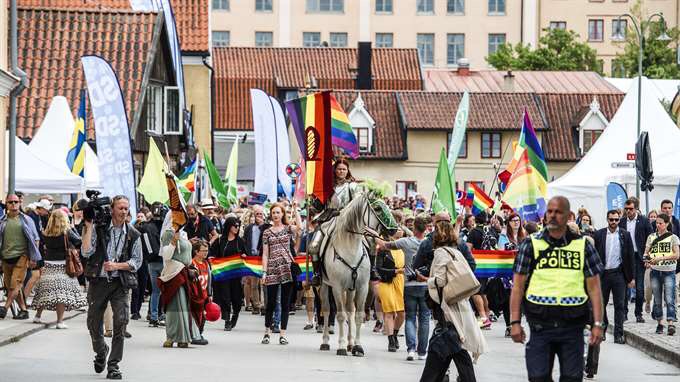
It is in the shadow that their presence casts that a counter balance can be demonstrated. And exactly that happened on Gotland in the form of a well-visited Diversity Parade. Thousands of people marched for a plurastic society and in protest of the views propagated by right wing parties. This was a fantastic manifestation representing the majority of Swedes. And this could only happen in a democratic society. 

Don’t get me wrong, I am not undermining anybody’s discomfort or fear. I am sure that the presence of the Nazis was horrible to experience. But if history has shown us anything it is that we cannot put our heads in the sand and ignore these destructive forces. We must face them head on in debate, in demonstration, in democracy and in massive, massive resistence. 

Battle of the Swedish generations

angry-old-lady

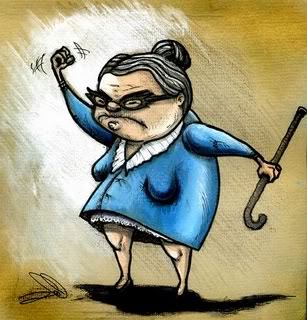
Strolling into work this morning, I was behind an elderly lady who was walking along and taking in the beautiful views.

Behind me I heard a stressed voice. Suddenly, a pushchair rushed past me steered by a stressed young mother wearing designer sneakers. She was talking loudly on her iPhone, via her ‘hands-free’, her aim set on accomplishing this conversation and arriving at her destination rapidly and without delay. She forced on past me and I watched as she approached the elderly lady from behind.

At the exact moment she swished past, the old lady took a small step to the left and was almost mowed down. The young mother didn’t react, she just kept walking forward, talking loudly on her phone with full egocentric focus. I don’t even think she noticed she had almost ploughed into the pensioner –  it seemed that to her the elderly lady was invisible.

The old lady stopped in her tracks and then raised her head in the direction of the woman, now scurrying into the distance. She opened her mouth and shouted loudly:

‘Men kära lilla! Förlåt att jag existerar!’ (Well, my dear. Sorry that I exist)

As I walked within earshot, the old lady muttered under her breath – ‘jävla kärring!’ (fucking bitch)