Swedish Americans and American Swedes

When Armand ‘Mondo’ Duplantis won the Olympic Gold and broke the world record in the pole vault, he did it representing Sweden. Although he grew up in the USA, his mother is Swedish, and he has Swedish citizenship.

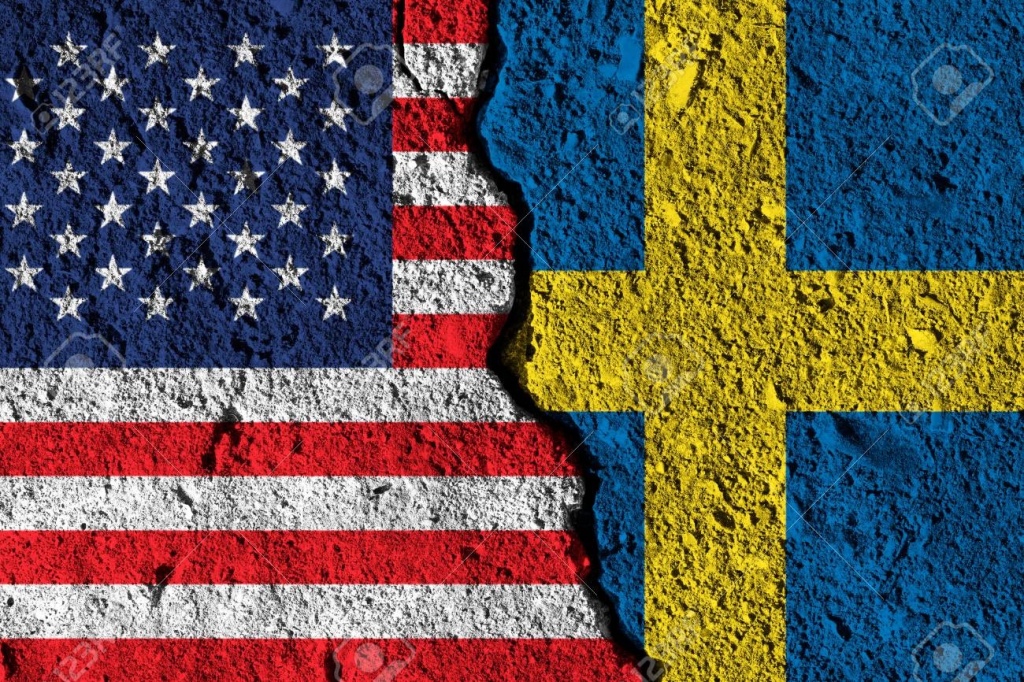
According to Statistics Sweden, Mondo is one of approximately 40,000 American citizens living in Sweden. Sweden and America have a long political relationship, with Sweden being the second country, after France, to officially acknowledge America’s independence in the 1700’s. Since then, the relationship has been smooth, with a couple of hiccups during the presidencies of Olof Palme and later Donald Trump. Today, the USA is Sweden’s third largest trade partner, and American-owned companies make up the largest number of foreign companies in Sweden.

Many Americans have family ties to Sweden due to the mass emigration of Swedes to the USA in 1885-1912. In fact, this is such a significant part of Sweden’s history that there is a tv program called ‘Allt för Sverige’ which helps Americans trace their Swedish Ancestry.

At the end of the 19th century 1.3 million Swedes fled famine and persecution in Sweden for a new life in the USA. This was a third of the population at the time. These Swedish Americans were mostly of Lutheran faith and settled primarily in the Mid West.

Prior to this, in 1638, the first Swedish settlers founded New Sweden, around Delaware. It only lasted 17 years before being absorbed into New Netherland and ceased to be a Swedish colony.

In 1639, Swedish settler Jonas Bronck settled a colony around the area of today’s New York. The settlement grew and flourished, and today is called The Bronx – after its original Swedish founder.

According the American Community survey, Swedish Americans and descendants make up around 2% of the US population today. Around 56,000 people still speak Swedish in their homes.

Some famous Americans of Swedish descent include: Taylor Swift, Emma Stone, Jake Gyllenhaal, Scarlet Johansson, Candice Bergen, Kirsten Dunst, Val Kilmer, Michelle Pfeiffer, Julia Roberts, Uma Thurman, Peggy Lee, Steven Soderbergh and George W Bush.

The ABC of Swedish town planning

ABC is a concept in Swedish town planning, said to have been minted by Stockholm city planner Sven Markelius around 1952. ABC refers to the approach of building a suburb where modern families have easy access to work, dwelling and services, such as shops. A stands for ‘arbete’ (work), B stands for ‘bostad’ (accommodation) and C stands for ‘centrum’ (center for services and shops).

ABC city planning was introduced mid 1950’s and it expanded suburban Stockholm to the north and south. This growth was spurred on by the influx of people to the capital after the Second World War, and the severe shortage of accommodation.

In the original development plan from 1952, Markelius suggests that blocks of flats should be constructed within 450m of the centre, small houses should be built within 900m of the centre and light industry 600m from the centre. Everything should be built compactly in order to facilitate daily life for its 16000 residents. An underground system would connect the ABC suburb to the rest of the city and Stockholm’s downtown.

If you’d like to visit an ABC suburb, the two that are mostly still in tact are Vällingby to the north of Stockholm, and Farsta to the south.

Where do the names of Swedish weekdays come from?

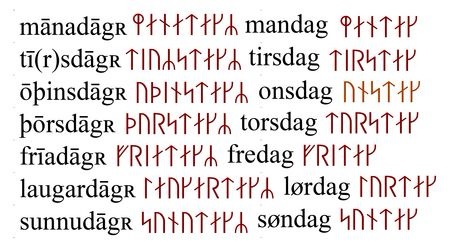
All of the Swedish weekdays, and several of them in English, stem from Norse mythology. Additionally all, but one, are named after the Gods and Goddesses of that period.

  • Måndag – Monday – named after the Norse God ‘Måne’, which means moon.
  • Tisdag – Tuesday- named after the Norse God ‘Tyr’, a God of War. This relates to the Roman God of War – Mars – in Germanic ‘Tui’.
  • Onsdag – Wednesday – named after the Norse God ‘Oden’, the King God of Wisdom, War and Death. In Germanic, the God was called Woden.
  • Torsdag – Thursday – named after the Norse God ‘Thor’, the God of Thunder
  • Fredag – Friday – named after the Norse Goddess ‘Freya’ or ‘Frigg’, the Goddess of Love and Fertility (also by the way Oden’s wife)
  • Lördag – Saturday – named not after a god, but after the Norse tradition of bathing – called ‘att löga sig’. The English Saturday stems from the Roman God Saturn.
  • Söndag – Sunday – named after the Nordic Goddess of the Sun – ‘Sol’ or ‘Sunna’.

If you’re interested in knowing how to pronounce the Swedish days of the week, check out this little film, and put your dancing shoes on!

https://www.youtube.com/watch?v=Q6cDiYruUK4

Why does Sweden still need Pride?

This week is Stockholm Pride. It culminates on Saturday with a huge parade. The event has gone on for over 25 years, and some people question if it is still needed or relevant.

The answer, unfortunately, is more than ever.

But we’ll come to that later.

Currently there are 73 Pride festivals in Sweden during the year. From Arctic Pride way up in the north to Malmö Pride in the south, it is possible to celebrate throughout the year.

This indicates that many Swedes seem to have embraced the concept of Pride with open arms. There is, of course, a commercial benefit but the main reason seems to be that LGBTQI+ Pride resonates well with the societal Swedish values of equality, tolerance and acceptance.

However, like everything, it has its opponents.

Sweden’s current conservative government is in power, solely with the support of a right-wing populistic party. This party has consistently attacked LGBTQI+ people and the Pride movement.

This leads to aggressive counter demonstrations, homophobic, anti-Pride propaganda and personal physical attacks. LGBTQI+ people are still regularly abused, discriminated against and attacked in Sweden. It happened to a person I know in Stockholm just last week.

And if we lift our eyes to the broader world, we see examples of LGBTQI+ rights being restricted or removed, and same sex relations being criminalized and punishable with the death penalty. Human rights are under attack all throughout Europe, USA and many other countries.

At Stockholm Pride’s opening ceremony yesterday, we heard from a lesbian who is being deported to Uganda, just because she cannot prove she is ‘lesbian enough’ to stay in Sweden with her Swedish wife. She is being returned to imprisonment and possible death. If you’d like to know more about this specific case, see the petition here: https://www.mittskifte.org/petitions/urgent-appeal-to-stop-the-deportation-of-davita-nassuna-facing-lifetime-or-death-row-in-uganda

This is one of the many reasons why Pride is still needed, not only as a celebration, but as a political manifestation of human rights.

If you’d like to know where a Pride is near you, go to http://www.svenskapride.se which collects all the Swedish events in one place.

The Swedish sandwich cake

You’ve probably heard of the word smorgasbord. It is a Swedish word that we borrow in English for a plentiful buffet of food. It stems from the Swedish word for sandwich – ‘smörgås’.

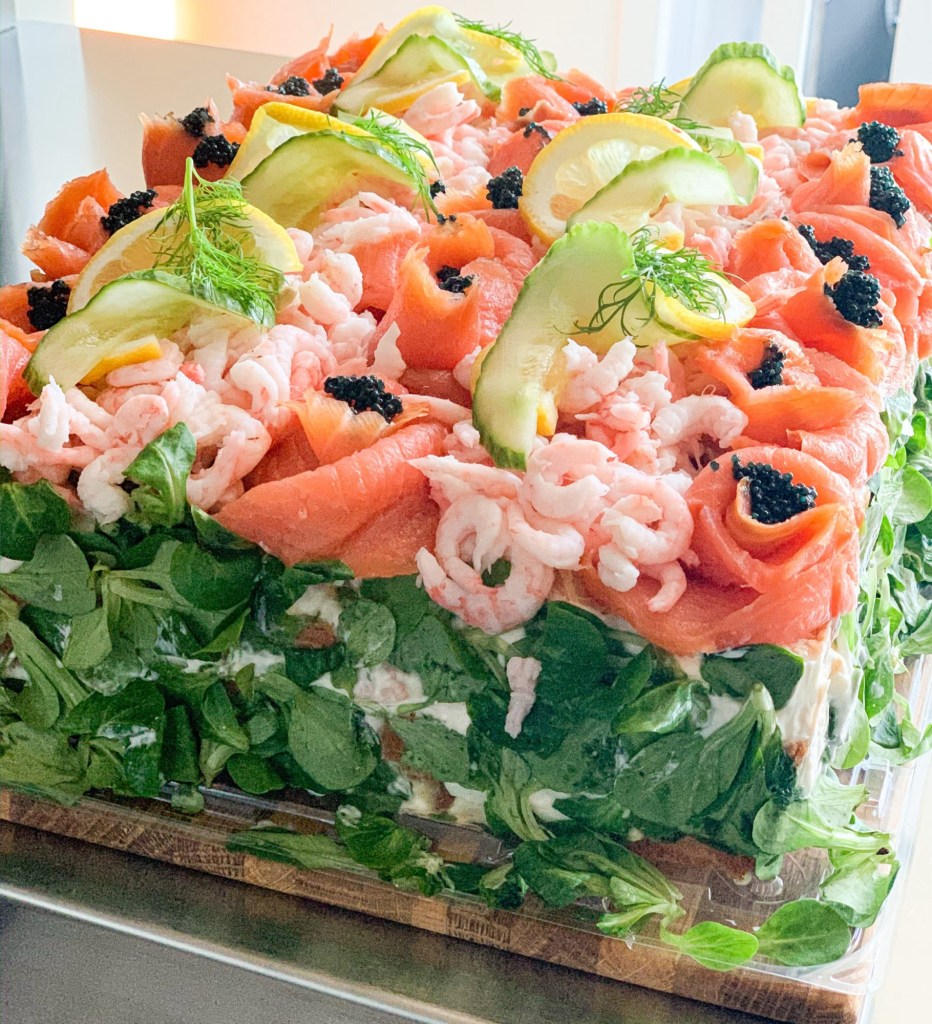
So while smorgasbord might be known to you, I am doubting that ’smörgåstårta’ is as familiar. The ’smörgåstårta’ translates as ‘sandwich cake’, and it is a dish served at celebratory events such as birthdays, anniversaries, weddings and even funerals. It has an almost iconic status in Sweden.

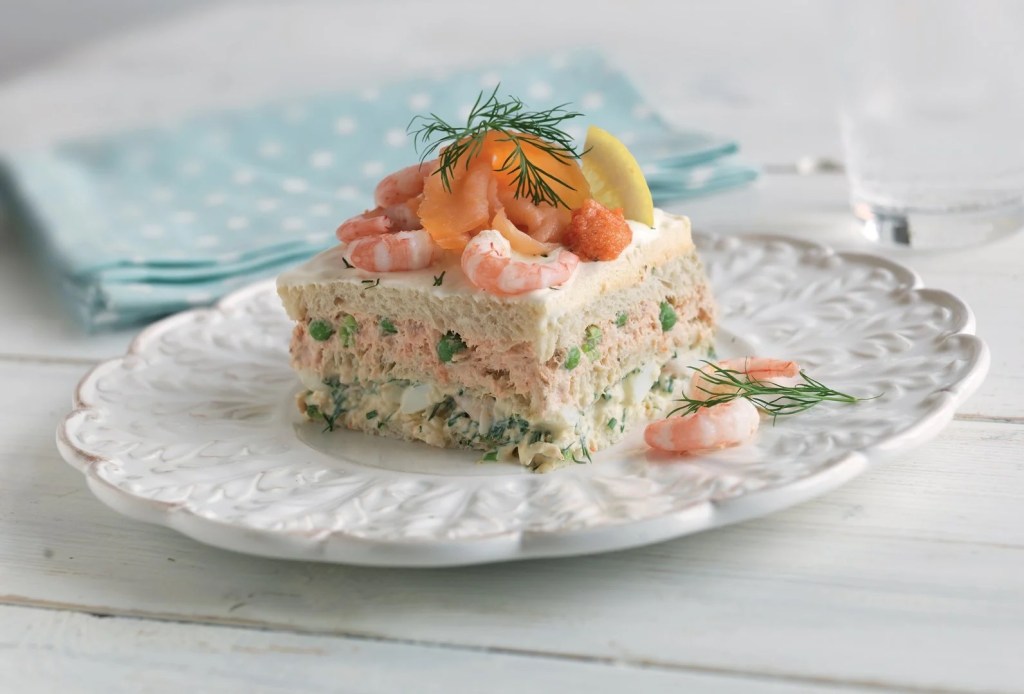
The Swedish sandwich cake is not a sweet dish. It is a cake-shaped dish built in layers of bread. Between each layer of bread is a variety of fillings, for example ham, beef, shrimps, salmon, vegetables. It is full of egg and mayonnaise and is garnished with various vegetables or herbs such as dill, caviar, cucumber and radishes. It looks like a layered cream cake and is sliced and served cold like a cake.

The smörgåstårta first was mentioned in a newspaper in 1934, and quickly grew in popularity through the decades. It easily took hold as Sweden had a tradition of eating open sandwiches, and of considering a sandwich a meal in itself. The sandwich cake became an elevated version of this and was considered to be luxurious – and it still is today. It even has its own day of celebration – 13 November is smörgåstårta’s day!

The sandwich cake has been imported from Sweden and become popular in other countries in the north – being a festive sight in Finland, Estonia and Iceland.

As you can imagine, a slice of sandwich cake is very filling. Its creamy consistency and rich ingredients make it difficult to stomach more than two servings for most people. This usually results in smörgåstårta being eaten for lunch for several days afterwards.

If you’re interested in making one, here’s a recipe in English: Swedish sandwich cake

Sweden at the Olympics

Yesterday, Sweden won its first medal at the Paris Olympics – a bronze in Judo.

For a relatively small country, Sweden often does quite well at the Olympics. In the 2020 Tokyo games, 9 medals were won. The most medals Sweden has ever won was in 1912 in Stockholm and 1920 in Antwerp where the athletes won a staggering 64 medals, each time. In London in 1944, a neat 44 medals were won.

Sweden is one of the 14 original countries to participate in the modern Olympics since its beginning in 1896, and has participated every time since then. The one exception is 1904 in St Louis.

The most successful Swedish summer Olympian of all time is Gert Fredriksson, a canoeist who has won 6 gold medals. In the world, the most gold medals have gone to swimmer Michael Phelps who has won a staggering 23 golds! The next best are Russian gymnast Larisa Latynina, Finnish runner Paavo Nurmi and Americans Carl Lewis and Mark Spitz, each with 9 gold medals.

From a historical country perspective, the USA has the most gold medals: a total of 1,179, according to the Olympic Foundation. Following is the now-disbanded Soviet Union, with 473 gold medals.  Germany takes third, with 342 gold medals. 

Great Britain, France, Italy, China, Sweden and Norway have all won more than 200 gold medals apiece, according to the Olympic Foundation.

This year in Paris, Sweden is realistically hoping to bring home 12 medals, in disciplines such as pole vault, discus, swimming, dressage, volleyball, handball, and sailing.

The judo bronze was unexpected – so let’s see what other surprises Paris might bring.

The top 5 most disgusting Swedish foods

Like everything, food is a very personal preference. Swedish food in general is great, I think. That said, here is my list of the 5 most revolting foods that Sweden has produced.
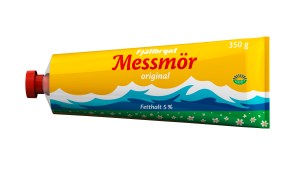
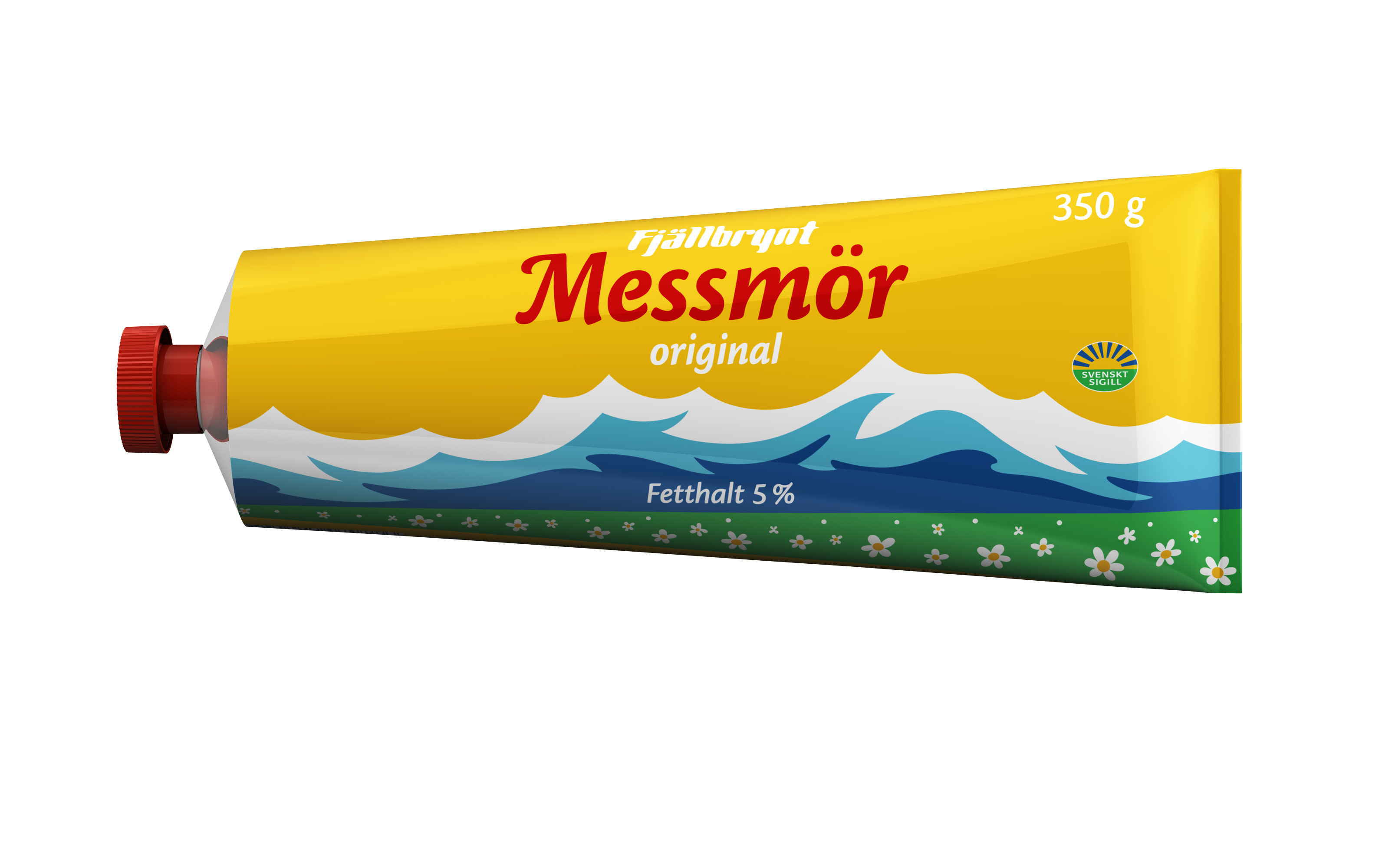
messmor_350g_original_front Messmör – Soft whey butter

Translated as soft whey butter, this disgusting sandwich topping and comes in two delightful choices: goat milk-based and cow milk-based. Whey is pressed out from cheese and then boiled until it caramlises and gets an unappetising brown colour. It looks nasty and tastes revolting.
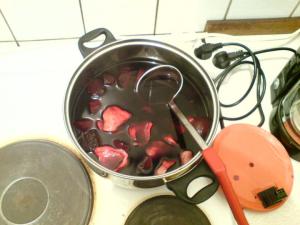
blodspoppa

Svartsoppa – Black soup

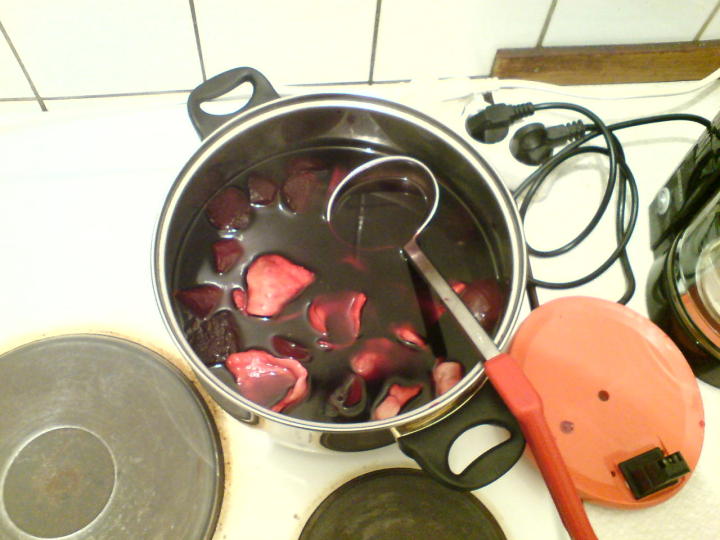
Black soup is a soup made of goose blood which is thickened and flavoured with stock, syrup, wine, cognac, vinegar, cloves, ginger and pepper. It is traditionally eaten with a roast goose dinner and it dates back to the Renaissance period. Historically, it was a useful source of iron.
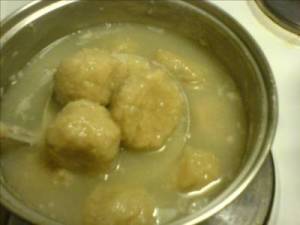
palt

Palt

Palt is a kind of potato dumpling stuffed with boiled pork. The dumpling is boiled in very salty water. It is normally eaten with butter and lingonberry jam and some Swedes drink milk when they eat it to help it slink down the throat.
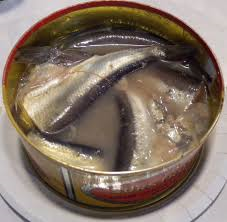
surströmming

Surströmming – fermented Baltic herring

This offensive dish consists of herring that is caught just prior to spawning and packed into a tin of brine to ferment. The fermentation starts from an enzyme in the spine of the fish, together with bacteria. Hydrogen sulphide is produced in the tin. Sounds appetizing? The salt in the brine allows the bacteria responsible for rotting to thrive. This bacteria prospers and decomposes the fish, making it sour. When the tin is opened, the contents release a strong and sometimes overwhelming odour which smells like human excrement. The dish is ordinarily eaten outdoors as the reek will fill out an entire building if eaten indoors. The fish is usually eaten on crispbread, or rolled in thin bread, with potatoes and sour cream. This way of preparing food was historically a process of preserving food in order to survive through the winter. But in modern-day Sweden, it is so unnecessary – now we have fridges!!!
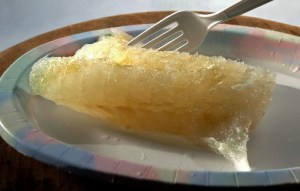
lutefisk-akta

Lutfisk – Sodium Hydroxide fish

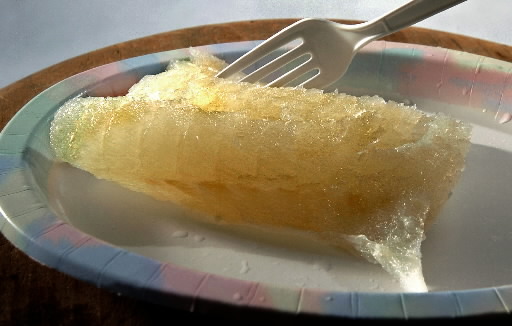
Imagine your mouth full of jelly. Wobbly, quivering jelly. Now add a creamy sauce to that consistency. Slush it round in the mouth. Now add the flavour of fish! And there you have it! Lutfisk! This revolting food is a dish consisting of dried whitefish prepared with lye (deadly sodium hydroxide) and a sequence of particular treatments. The first treatment is to soak the dried stockfish in cold water for five to six days. The saturated stockfish is then soaked in cold water and lye for an additional two days. The fish swells during this soaking, and produces a jelly-like consistency. When this treatment is finished, the fish (saturated with lye) is caustic and therefore poisonous. To make the fish edible, a final treatment of yet another four to six days of soaking in cold water is needed. Eventually, the lutfisk is ready to be boiled and then served with a creamy spiced white sauce and potatoes. This has to be the most vile thing I have ever eaten, it is truly repugnant. The good news is however that Lutfisk is a Christmas dish, so it only ever gets dumped infront of you once a year! Thank Santa for small mercies!

Other food in Sweden that is definitely an acquired taste: Kalles kaviar (fish roe paste), inlagd sill (pickled herring), grisfötter i gelé (pig trotters in jelly), fiskbullar (fish quenelles in sauce), hamburger kött (horse meat), falukorv (a processed-meat sausage), långfil (fermented, coagulated milk).

Any others you can think of?

Swedish Monsters: 10) the Troll

When I was at the open-air museum Skansen, I heard a story about mythical creatures. This started me on a series of Swedish monsters. Today, I wrap the series up with one remaining creature – the Troll!

Today – the Troll

The trolls in Scandinavian legend are not the same as the cute shock-haired characters in the animated movies that came out in the late 2010’s. Oh no, they are something altogether more sinister.

According to legend, trolls are described as being extremely old, hairy, very strong, with bulging eyes and large noses. Some are giants and some are dwarves. They are depicted as slow and dim-witted. They are voracious – feared for eating livestock, and children.

However, noticing a troll isn’t always easy. Trolls can actually take the shape of anything, including human beings. Sometimes they have a tail that they hide under their clothes. They reside far away from human habitation but frequently kidnap people and overrun farmsteads and human dwellings.

Living in forests, mountains and caves, trolls are said to fear iron and steel. Placing items made of those materials on your threshold prevents them from entering.

Trolls are also said to turn to stone in the sunlight. Luring them out of their hideaways and into the light is a way to get rid of them. Petrified trolls are associated with stony Scandinavian landmarks such as Trolltungen (troll tongue) Trollstigen (troll path), Trollveggen (troll wall) and Trollberget (troll mountain).

Trolls have been sighted everywhere in Sweden – from Värmland to Småland, Norrland to Skåne. So be careful this summer when you are strolling through the forests of Sweden and Scandinavia!

Illustration: John Bauer

Swedish Monsters: 9) Skogsrå

When I was at the open-air museum Skansen, I heard a story about trolls. This got me thinking about other mythological creatures and monsters that inhabit Sweden. And a new series was born!

Today – Skogsrå

Another Swedish creature is the Skogsrå. A forest spirit, she is often depicted as a fair-haired beautiful woman, with the skill of seduction as her most prominent weapon. Using her skills, she lures men deep into the woods, to their peril.

The Skogsrå have hollowed-out backs, concealed from view. They also have a long cow’s tail. Of course, they have to also hide this from sight if their seduction is to work. The only way for a Skogsrå to lose her tail is if she gets married inside a church, when her tail will drop off, and she’ll transform into a human.

Similar to the legend of the sea-based Sirens, these forest nymphs lure men into the woods with their beautiful singing or harp-playing. They are also hypnotic dancers. It is said that if a human male has sex with a Skogsrå, he becomes sick and dies.

There are several ways to break the spell if you become bewitched by a Skogsrå. These include burning her with an ignited log and throwing tar in her face. To protect yourself, wear your clothes inside out and, under no circumstances give her your real name. If you do you will never break the enchantment.

Illustration: Kajsa Wallin

Swedish Monsters: 8) The Stalo

When I was at the open-air museum Skansen, I heard a story about trolls. This got me thinking about other mythological creatures and monsters that inhabit Sweden. And a new series was born!

Today – The Stalo.

The far north of Sweden, in the area known as Lapland, is home territory for the Stalo. According to Sami legend, this demon is a one-eyed giant troll that wears impenetrable black iron clothing. Stalo is rich, evil, and very strong. He hunts and devours people and reindeer. Locals who live nearby are expected to leave offerings on an altar to the giant. If they don’t, Stalo sends packs of wolves into the village to wound and kill its inhabitants.

However frightening he is, he is also not very intelligent and is easy to trick.

Legends exist that involve luring him onto a frozen lake, where he falls into a hole in the ice and can’t get up again. Yet another, depicted below, shows a boy called Kauras who tricks Stalo into a competition where he butts his head into a tree trunk, rendering himself unconscious. Other, more complex tales, describe children, who have been trapped by the Stalo, escaping by crushing his hands with boulders and pouring molten lead onto his face.


Image: John Bauer, Stalo and Kauras