Top ten list of Swedish values


In the world of cultural theory, there are many surveys carried out to try to charter the cultural tendencies of the different nationalities. One such survey tries to document what personal qualities Swedes believe they have, what they prioritise and how they want to see the future at work and in Sweden. It is a survey in which Swedes themselves reveal their own perceptions on what it is to be Swedish.

Foreigners living in Sweden – please check this top-ten list of values and see whether it matches your own experience of Sweden and the Swedes. Is it an accurate perception or is it a case of wishful thinking?

Top Ten Swedish Values

1) Honesty
2) Responsibility
3) Justice
4) Humour
5) Happiness
6) Togetherness
7) Meaningfulness
8) Involvement
9) Teamwork
10) Adaptability

Going with the flow


As a dog-owner, you are forced to go outside 4-5 times a day. Even in the deepest winter, you have to don hiking boots, fleecy jumper, thermal gloves, thick coat, woolly scarf and warm hat and venture out for a bracing walk in the battering wind.

Sometimes being outside is a very lonely experience. On the coldest, most-miserable days, there is hardly anybody else around. Just a few other sad dog-owners,an occasional lonesome jogger and a handful of hardy smokers huddled outside the local pub.

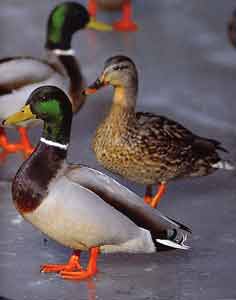
So, today, with the sun fixed brightly in the sky and the thermometer hovering around zero degrees, I head out with a smile on my face. It is a joy to be outside. I walk down my street, through the local square and down towards the lake. By the lake there’s a footpath. It’s always so lovely to stroll along there and admire the ice reflecting the sun and see the ducks bathing in the cracks and open areas. Stockholm really is a beautiful city. When the sun shines, the buildings radiate in orange and red.

Approaching the footpath, I notice what seems to be a queue. The kind of queue you see in a department store around Christmas time when kids line up to see Santa.

Strange, I think, has something happened?

I arrive at the end of the queue and realise that nothing has happened, it’s just the sheer volume of people that are lining up to go for a walk along the pathway. The queue is moving, but very slowly. Pensioners, young couples with push-chairs, dog-walkers, joggers, speed-walkers, cyclists,toddlers, groups of lads, it seems like everybody is out for a Sunday afternoon walk in the sunshine. Like a mass migration of lemmings, Stockholmers have left their homes and gone for a walk along the same stretch of footpath.

Me included. I go with the flow.

The walk is slow-going but eventually I make it to the other end. I feel pleased with myself that I have been so vigorous and out-doorsy. Then I scuttle across the street and plough home a different route to avoid having to press back through the crowd.

I’ve experienced this before in Stockholm, when I lived in a different part of town. At the first sign of sun, everybody goes out for a walk. Fully understandable, given the length and darkness of the winter.

In cultural theory, we talk a lot about how all cultures spring from a set of basic needs that we humans share. For instance, we all share the need for water, for food, for shelter. It’s just that we have solved how we meet these needs in different ways, depending on geography and circumstance. And it’s these differences that form the basis of culture.

In Stockholm, on a sunny Sunday in February, I guess we all share the same need. To breathe fresh air, to see light and to feel that maybe, just maybe, the winter is soon over.

Stockholm scoffs at the Bronx


Wandering from the beaten path in the Bronx, down back alleys amongst trash cans and restaurant containers is known to be dangerous. It’s just not something you’d do.

Entering the council estate off Coldharbour Lane in Brixton in London, past the brick buildings with narrow walkways and tiny windows is also known to be dangerous. You just wouldn’t do it.

And in Johannesburg, you wouldn’t venture out into the shanty towns at night, away from the bright lighted protection of the tourist area. Sad, but true. Unless you had a death wish, you just wouldn’t do it.

But Stockholm is comparatively safe. Most of us feel secure travelling on public transport, making eye contact with a stranger on the street and walking home late and night.

True? No!

Stockholm is a dangerous city! A city where you walk on the wild side. Where you take your life in your hands every time you walk out of the house. A town where you live on the knife edge.

In today’s newspaper, the cover story was about a woman recuperating in a local hospital. She’d been walking down the street, minding her own business when a block of ice plummeted from a snowy rooftop and smacked her in the head. She survived with stitches but it could’ve been much worse. A few years ago, a teenage boy was killed by a lump of ice that slid off a rooptop and crushed his skull as he walked along the road.

So, I scoff at the Bronx, at Brixton and at Johannesburg. It’s us in Stockholm who look death in the eye every time we leave the building.

Somewhere over Skåne


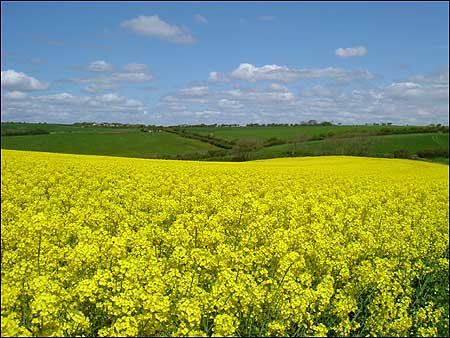
On a sunny May day a few years ago, a conversation was overheard between a pilot (nationality unknown) and a Swedish air steward approaching Malmö airport.

Pilot: “What are those yellow fields below us?”
Steward: “They’re probably rape fields.”
Pilot: “Oh, you have special fields for that in Sweden?”

(Note to all Swedes: It’s often better to say ‘rape-seed’)

What Estonians, Finns and Swedes have in common


I am currently in Helsinki running a training course. During the morning today, one of the participants mentioned something that he called ‘Estonia complex’. Probing closer, I understood this to mean the big brother complex that Estonia has towards Finland, the feeling of being the country cousin, the smaller player, an inferior.

Interesting concept, this. I have also heard that the Finns have a similar feeling of inferiority towards the Swedes. This possibly comes from the shared history of the two countries and that Finland once belonged to Sweden. This is something you still see evidence of here in Helsinki. All the signs are written both in Finnish and Swedish, for example. ‘The Swedish Theatre’ has a very dominant postion on the main street next to the main department store. Many citizens are fluent in Swedish as well as in their own language.

But this ‘big brother complex’ also exists in Sweden, in my experience. Sweden often compares itself to the rest of the world, with a kind of inferiority complex. Stockholm is referred to as ‘The Venice of the North’, Gothenburg as ‘Little London’, Vänersborg as ‘Little Paris’, Österlen in Skåne as ‘Sweden’s Provence’. It’s not unusual, in the winter, to hear Stockholmers telling visitors, somewhat apologetically, ‘in the summer, this is full of outdoor cafés, just like in southern Europe’.

So this inferiority complex is something that Estonia, Finland and Sweden have in common. I think it’s time to shake off these out-dated comparatives and be proud of their own unique cultural beauty.

If there’s something I’ve learned as I’ve gone through life, it’s this. We should define ourselves by what we are, instead of by what we are not.

I think these three Baltic countries would serve themselves well if they adopted this attitude.

Ten commandments of envy


‘Jantelagen’ is the ten commandments of envy. It was created by Aksel Sandemose, a Danish author, in the 1930’s.

1. You shall not think you are anything
2. You shall not think you are as good as us
3. You shall not think you are cleverer than us
4. You shall not think you are better than us
5. You shall not think you know more than us
6. You shall not think you are superior to us
7. You shall not think you are good enough for anything
8. You shall not laugh at us
9. You shall not think that anyone cares about you
10. You shall not think you can teach us anything

Sounds exactly like my methodist upbringing in the North-East of England. Spooky!

The Jante Warrior

In the paper today, it was reported that Nordmaling local authority in the north of Sweden is starting a project to deal with ‘Jantelagen’.

‘Jantelag’ is something similar to tall poppy syndrome in the UK. It’s a behaviour where members of a society oppress each other with negative attitudes such as ‘don’t think you’re important – because you’re not’, and ‘he’s too big for his boots’.

This kind of behaviour isn’t specific to the north of Sweden, or Sweden in particular, but is quite common in small, closely-knit societies where the values of the collective outweigh the freedoms of the individual.

It seems like Nordmaling has received 600 000 sek from the EU to investigate this problem. They’re going to hire a project leader and call them a ‘Jante warrior’. This warrior will work for 1 year with children, business people and students with a variety of activities such as stand-up comedy, theatre, discussion fora. The aim is to raise awareness for the harmful effect that Jantelagen has on the development of the region and the individual residents.

Seriously, who the hell does Nordmaling council they think they are?

The Svenssons go the the gym


I work out at my local gym in a nearby hotel. The gym is used by local residents and hotel guests alike. It’s a small gym, long and narrow, with enough room for one treadmill, a couple of step machines, a few weight machines and a free weights area. Being small it gets easily cramped, so it’s necessary to show respect for each other and cooperate so everyone gets the most out of the space available.

This weekend I was there on my own. It was a paradise. I could move freely about the gym without considering the needs of anyone else. It was a rare pleasure.

Until, hotel guest Mr Svensson walks in. The hotel also has a small plunge pool and Mr Svensson is ready for that. However, he’s decided that a little exercise on the step-machine would be good first. Dressed only in a pair of swimming trunks, bear-breasted and bare-footed, the sweaty 70-year old Mr Svensson climbs onto the machine and starts excersing. Gym etikett? Forgetikett. Half-naked and out of breath, Mr Svensson seems to have no sense of dignity or consideration.

I manage to ignore Mr Svensson, half successfully, when daughter and son-in-law Svensson come in and climb onto the machines beside him. They begin to converse. Loudly. The musical they went to last night was sooo good. Stockholm is sooo stressful. People even run on the escalators. I focus on my arm curls and try to banish them.

I consider myself a person who is able to focus. In most situations. Even Swedish country folk criticising the big city doesn’t penetrate my focus. But then it happens. Grandma Svensson arrives. Dressed in an outdoor coat and comfortable boots. In her arms, she carries grandaughter Svensson, a year-old baby, who she proceeds to put down and allow to crawl all over the gym floor. This rugrat, the loud conversation, the naked stepmachine grandad all proves too much for me, so I leave.

My work-out is finished.

On the way home, I try to analyse the situation. Why did they think it was ok to behave that way in a gym? They clearly had a sense of entitlement.

I don’t know the answer but I am glad of one thing. I am glad I wasn’t in the plunge pool.

To do a poodle


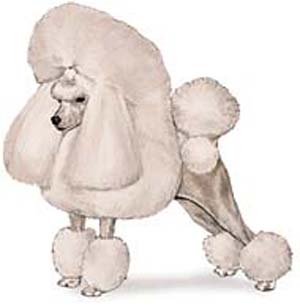
One thing I love about the Swedish language is picking up all the idioms and expressions. Things that don’t make sense when you translate them but have cultural meaning in their context. Things like ‘clear as sausage juice’ and ‘she’s on the thump'(hon är på smällen) are fabulous. But my favourite has to be the one for when somebody apologises after they have made a fool of themselves in public. ‘To do a poodle’. Makes sense, right?

Sweden is a nation of dog-lovers. You see lots of dogs everywhere. But not many poodles. But in this year of national elections and royal weddings I guess we’re going to see quite a few poodles being done, at least.

I can tell by your arse


No matter how natural Swedes sound when speaking English, their pronunciation often gives them away. One common example is the ‘z’ sound, which doesn’t exist in Swedish. It’s a dead giveaway when Swedes pronounce ‘muzic’ as ‘musssic’, say ‘pleasse’ instead of ‘pleaze’, ‘wass’ instead of ‘waz’. Their ‘s’ is pronounced as in the word sit.

It’s a classic mistake made by many international recording artists (Nina Persson, Marit Bergman, Abba, Moneybrother to name but a few) and it gives them away immediately.

This mispronunciation can lead to mísunderstandings too. One story I heard is about a Swede and an Irishman who met for the first time. The conversation went something like:

Swede: “You’re not English are you?”
Irish: “No, I´m from Ireland.”
Swede: “Yes, I thought I could tell from your R:s.”

The Irishman was confused and wondered how his nationality was obvious by looking at his arse.