Swedish icons 16: Olof Palme, Sweden’s most reviled politician

I had the weirdest of nightmares the other day involving the former British Prime Minister, Margaret Thatcher. When I checked her out, I discovered oddly that the very day was the 8th anniversary of her death.

No British Prime Minister in history has been so reviled, and also loved, as Margaret Thatcher. My dad absolutely hated her. With a vengeance. He blamed her for single-handedly causing the economic and social depression that utterly destroyed the north of England, where I’m from.

It made me think about what Swedish politician has been so despised through history. Who in Sweden is the most reviled?

While Swedish Prime Ministers such as Carl Bildt, and Göran Persson were not always popular, probably topping the list is Social Democratic Olof Palme. He was a legendary Prime Minister who was loved by many. On the other hand, there were a lot of people who absolutely loathed him, his ‘arrogance’ and his ‘radical’ politics. He was Prime Minister for 17 years, in two different periods, up until his assassination in 1986. One person said about him – ‘He had a very special personality, he was so intense, so brilliant but his brilliancy was a problem for him as well because many people got hurt by his harsh words.

Palme was most controversial in his overseas politics than his domestic ones. This gave him many enemies. He was often alone among political leaders in the western world in expressing his stand against colonialism. He railed against the Soviet crackdown in Czechoslovakia, criticized Spanish dictator Franco, befriended Cuba’s Fidel Castro and crusaded against apartheid in South Africa. He was anti Vietnam war, and therefore perceived by many as anti-US, who love to use the classic rhetoric ‘you’re either with us, or against us’.

Just like Thatcher, what people thought of Palme depended on their political leanings. For many, Palme was a beacon of hope – a living manifestation of the social-democratic ideology. For others, he was a socialist, a meddler and a rabble-rouser. Thatcher and Palme, I’m sure, detested each other. They were politically very far apart – she hated both socialism and feminism – two things that he firmly believed in.
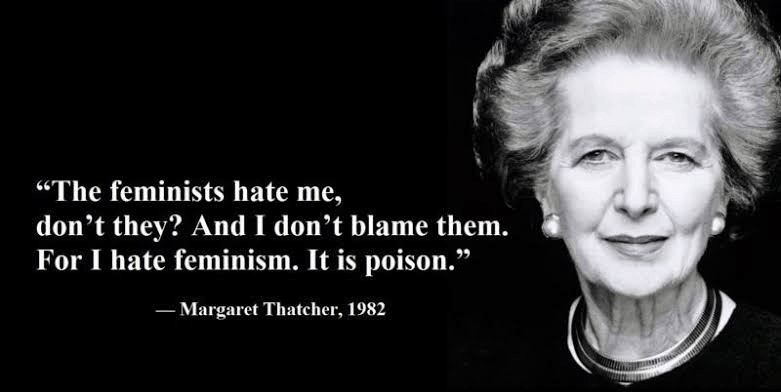
Palme’s murder is considered by many to be the end of Swedish innocence. Margaret Thatcher wrote ‘ He will be grievously missed, not only in Sweden but really the world over.″ She herself had escaped an IRA assassination attempt in 1984, and said that other world leaders ‘have to carry on taking risks for democracy and not be deflected.’

A lot of mystery surrounded Olof Palme’s assassination. 16 years later in 2020, the perpetrator was identified as graphic designer Stig Engström. However, many people do not believe this conclusion.

Olof Palme, loved or hated, meddler or mediator, peace-keeper or political activist, is buried in the churchyard at Adolf Fredrik Church in Stockholm.


Tricking Sweden – April Fool

april-fools-day-2015

Playing April Fool’s jokes on each other on the first of April is a tradition in many countries – Sweden included. In fact it is an old tradition – the oldest written reference being in 1392 in Chaucer’s ‘The Cantebury Tales’.

In Sweden, when someone is tricked, the tradition is to say ‘April, April din dumma sill!‘. This translates as ‘April, April you stupid herring!’. This is however not as weird as it might sound. In many countries, such as Italy, France and Holland, April 1st is known as “April fish”. On this day, people try to attach paper fish onto the backs of their victims.

April Fool’s pranks are common in newspapers, with classics such as:

  • IKEA is getting into the airline business. Furnishing all the flights with Ikea furniture, the name of the airline is FLYKEA.
  • Swedish supermarket chain ICA introduced toothpaste with the taste of chocolate. It might be brown, but it makes your teeth white.
  • Burger King introduced a new burger for left-handed people where ingredients were rotated 180 degrees.

I had a look this morning to see if I could identify any April Fools tricks but I failed. The papers were just full of misery – War, Death, Politics, Covid, Murders, and Shootings. Maybe the seriousness of our current times renders silly jokes redundant. If you manage to find one, please share here!


In the middle of Sweden’s ‘Tranquil Week’

Did you know that today is ‘Dymmelonsdag’ – Clapper Wednesday? It is part of Sweden’s ‘Stilla Veckan’, which literally translates as ‘tranquil week’ or ’quiet week’. It is historically intended to be a week of reflection and melancholy leading up to Easter. In English this week is known as Holy Week and every day has a special name.

Last Sunday, the Sunday before Easter, is called ’Palmsöndag’ – Palm Sunday. According to scripture, it commemorates Jesus’ triumphant arrival into Jerusalem. The crowds threw palm branches in front of him as he approached.

The Monday before Easter is commonly called Blå Måndag – Blue Monday – although it can have other names. The Tuesday before Easter is called ‘Vittisdagen’ (White Tuesday). Both Blue Monday and White Tuesday were originally four weeks before Easter. At some point in history, they were moved to describe the Monday and Tuesday before Easter instead. Blue Monday refers to the colour that church rooms were painted on this day. Since White Tuesday is an old name for Shrove Tuesday, Fettisdag in Swedish, it probably refers to the flour that was used to make the Lent buns.

That takes us to today – the Wednesday before Easter – ‘Dymmelonsdag’. This literally translates as ‘Clapper Wednesday’. The clapper that this is referring to is a wooden clapper that was traditionally put inside the church bells on this day so that the chimes would have a more subdued, mournful sound during Easter weekend.

The Thursday before Easter is called ‘Skärtorsdag’ in Swedish. This translates as ‘Clean Thursday’ and refers to the ritual of Jesus washing the feet of the disciples before the Last Supper. In English, this day is called Maundy Thursday.

The Friday is called Good Friday in English – from an obsolete meaning of the word good as being holy. In Old English, this day was called Long Friday, which is the name that was adopted in Swedish – ‘Långfredag’.

And finally, the weekend arrives consisting of Holy Saturday which is called ’Påskafton’ in Swedish – Easter Eve. Then comes ‘Påskdagen’ – Easter Sunday, and ‘Annandag påsk’ (literally second day Easter) – Easter Monday in English.

So Clapper Wednesday is not about fervent clapping, or going like the clappers, or getting the clap. Instead, take a moment of quiet reflection on this, the most holy of Wednesdays.

A Swedish walk in the park

Today, 30 March, is International ‘Take a walk in the park’ Day. While some residents in some locked down countries might not appreciate the irony of it, here in Sweden it is fully possible to celebrate today by stepping out into one of the many green areas.

Take a Walk in the Park Day was founded to celebrate small excursions and the difference they can make to our mental, physical and emotional health.

In Sweden, there are thousands of parks and 30 official National Parks. What kind of park you prefer is of course a matter of taste. However, according to our friends on the internet, the three most beautiful parks in the country are Sofiero slottsträdgårdar in Helsingborg, Hagaparken in Stockholm and Boulognerskogen in Gävle. I’m sure there are a lot of people with other opinions.

Sweden also has a tradition of the ‘Folkpark’ which is a place for entertainment, cabaret, theatre, relaxation and enjoying the great outdoors. Folkpark’s had their heydey in the 1940’s-1960’s where artists would play on the stages and there would be party party and dance. The first Folkpark was built in Hällefors in 1796. Today they still exist, but have faced a lot of competition from festivals, arenas and other outdoor entertainment spaces.

For most urban dwellers around the world, the parks are the lungs of the city. And it’s the same in Sweden’s built up regions. Living in Stockholm, I am so lucky to have many parks and green areas within easy walking distance.

So, depending on where you live, and your time zone, it might not be too late. Put on your shoes and step out into your street, and go take a walk in the park. After all, today is ‘Take a Walk in the Park Day’.

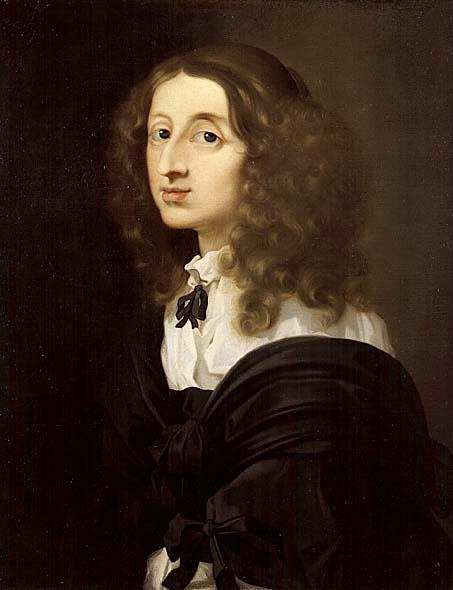
Swedish icons 12: Queen Christina

Great Britain has its strident Queen Elisabeth I, France has its flamboyant Marie Antoinette and Russia has its legendary Catherine the Great. For Sweden, there is one Queen to measure up against them in icon status – the notorious Queen Christina.

Born 1626, Christina was the Queen of Sweden from 1632 to 1654, although the country was governed by a regency council until she reached the age of 18.

She is known to have been an independent, outspoken and untraditional woman, and as such has ignited the imagination of novelists, play-writes and film makers throughout history.

Christina’s father was Gustav II Adolph, one of Sweden’s warrior kings, a military commander credited with the rise of Sweden as a great European power. He wanted Christina to be raised in the same way a boy would be – so Christina was an unorthodox and controversial person already at an early age. She studied 10 hours per day, could hunt and fight, was knowledgeable in politics and could speak seven languages other than Swedish.

This learned young woman who was ‘masculine’ and ‘rough around the edges’, was a great sponsor of the arts. Wanting to turn Stockholm into a centre of learning and culture, she attracted many great minds to her court. This was, however, very expensive and eventually the dream died – gaining her a reputation for being wasteful and extravagant in the process.

She was also a peace maker, negotiating peace that ended the 30 Year War. Under her reign, Sweden settled New Sweden in the USA, which is today in the area of Joe Biden’s hometown Delaware.

However, she is mostly remembered for three main things. Firstly, her refusal to marry. Secondly, her unprecedented abdication in 1654. And thirdly, her scandalous conversion to Catholicism.

Christina expressed a distaste for marriage and felt pressure to provide an heir. She realised that if she married she would effectively hand power to her husband. She is quoted as saying ‘I am unsuited for marriage.’ In today’s terms, she would have been defined as lesbian, and she had several mistresses – the most important one being Ebba Sparre, who she called ‘La Belle Comtesse.’

She gave up the throne partly because of her refusal to marry, but mostly due to her increasing unpopularity and pending religious conversion. After her abdication, she shook off the shackles of court protocol and dressed more frequently in male clothes. Historians often describe Christina as unattractive and androgynous in her physical appearance. Whether this is true, or whether her ‘ugly’ appearance was exaggerated in order to undermine her position is unknown. After her cousin took over the throne, Christina quickly left Sweden and ultimately settled in Italy. Although she made several attempts to regain power in Europe, she never succeeded and eventually died in Rome aged 62.

Queen Christina’s funeral was held at St Peters Basilica, reflecting her provenance, prominence and influence. She is one of only three women to buried in the Vatican. That alone is enough to earn her icon status.

Pakistan in Sweden

Today is Pakistan Day – a national holiday in Pakistan commemorating the Lahore Resolution passed on 24 March 1940 and the adoption of the first constitution of Pakistan. In Islamabad, the day is celebrated with much pomp and circumstance.

In Sweden, there are approximately 28,000 Pakistanis, making them one of the smallest immigrant groups in the country. In fact, according to Sweden’s statistical office, they are the thirtieth largest immigrant group. The majority of Pakistani immigrants came to the Nordic region in the 1970’s and 1980’s, seeking employment and a better standard of living. Most of them were also very highly educated.

Sweden has solid relations with Pakistan, and has an embassy in Islamabad, as well as honorary consulates in Karachi and Lahore. Several networks exist to build relations between Swedes and Pakistanis such as the Swedish Pakistani Friendship Society and the Pakistani Sweden Business Council.

Pakistani cuisine is well worth a taste. Influenced by the Arabic and Indian kitchens, Pakistani food is fragrant and spicy, with the all important roti bread as a staple. According to Trip Advisor, the best Pakistani restaurants in Stockholm are Punjabi Masala Grill, Chili Masala Grill and the geographically accurate-sounding Lilla Karachi.

In the northern town of Umeå, restaurant Malala is named after the Pakistani schoolgirl who was shot in the head by the Taliban on her way to school. Some years later, she won the Nobel prize for her education activism. 1% of the restaurant’s turnover and tips is donated to supporting education for poor girls in rural areas in Pakistan.

Swedish water – in rich supply

Yesterday, 22 March was World Water Day. It was inaugurated in 1993 to focus on the importance of fresh water.

According to the UN, World Water Day ‘’celebrates water and raises awareness of the 2.2 billion people living without access to safe water. It is about taking action to tackle the global water crisis and support the achievement of Sustainable Development Goal 6: water and sanitation for all by 2030.’’

Sweden contributes to this work via its Stockholm International Water Institute and, under normal circumstances, the annual World Water Week is held in the Swedish capital city. During the week, the organisation awards water prizes to researchers and institutes who work to improve water quality, accessibility and sanitation around the world.

Sweden itself is blessed with water. About 9% of the country is covered with water. Sweden is the EU country that has the most lakes – in fact, 40% of the EU’s lakes are located in Sweden. Lake Vänern, at 5655 square km, is the EU’s largest. Interestingly, Sweden’s total coastline including archipelago, is 48000 km, which is slightly more than a lap around the globe.

Much of Sweden’s freshwater is potable. Most Swedes have the privilege of uninterrupted access to drinking water, with occasional problems in rural areas during summer months. Even the water in the toilet is drinking water, not that anyone drinks from that particular vessel!

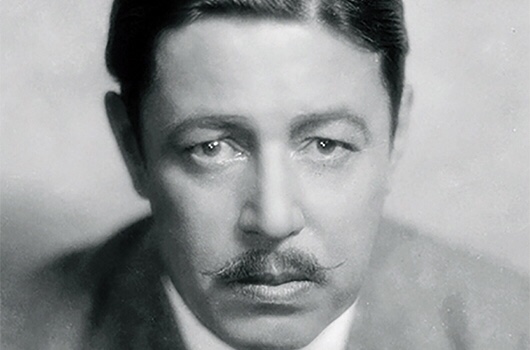
Swedish icons 11: Warner Oland

The name Warner Oland might not be familiar to many people. However, he was actually one of Hollywood’s most recognizable and biggest stars during the 1930’s. In his career he appeared in over 100 films. Today, his roles would be considered politically incorrect, but at the time they were made, they reflected the way white film makers saw minority groups.

Warner Oland was born in the northern Swedish county of Västerbotten in 1879. In 1892, he emigrated with his family to the USA where he anglified his Swedish name – Johan Verner Öhlund.

After leaving school, he quickly got into acting and the theater. He was the first person to translate Strindberg and Ibsen and present it to the American audience. He started his career in silent movies, and had a small part in the very first talkie ever made – The Jazz Singer, and later played opposite Marlene Dietrich and Greta Garbo.

However, he is most famous for his depiction of a certain character – the iconic Chinese detective Charlie Chan. In over 16 films, Werner played this legendary character and, because of it, he became a huge star and box office success.

During the 1930’s Hollywood did not cast Asian actors in leading roles. This is why Warner Oland was given the job – his appearance reflecting the idea at the time of what Chinese people looked like. A bit of make-up, a false mustache and the stereotypical image was complete. He played other Asian characters such as super villain Fu Manchu.

Later on, the character of Charlie Chan became very controversial. When author Earl Derr Biggers created the character, he wanted to show an alternative to the evil Chinamen, which was the prevailing representation at the time. Charlie Chan was intended to be accommodating and unthreatening to combat xenophobia.

Werner Oland died in Stockholm in 1938 of pneumonia. He also had long-standing problems with alcoholism and ill health. He was married to a wealthy Bostonian, the artist Edith Gardener Shearn. Among their many houses was a historic farmhouse in Southborough Massachusetts. Here, Werner Oland is buried in the town cemetery.

He is probably the most famous, and anonymous, Swedish film star of all time.

Swedish Press Freedom – the first in the world

In several countries, I would not be allowed to freely write what I want in this blog. Many nations are fighting for press freedom and against censorship – some of them not very far away. Thankfully, Sweden has solved this issue of media independence. Everyone is free to express themselves in writing, provided they do not publicly defame another person or commit an illegal act.

Obviously, Sweden didn’t always have freedom of the press. In the early days of print, Swedes fought many battles against censorship and limitations on the printed word. However, things changed when, on 2 December 1766, Sweden became the first country in the world to write freedom of the press into the constitution. The Swedish Freedom of the Press Act also allowed public access to information, which made it legal to publish and read public documents.

The Act that applies today actually came into effect in 1949. Today, laws cover press ethics, disputes, freedom of expression over digital media and protection of the individual and of whistleblowers.

Compared with other countries in the EU, Sweden is the 3rd best country in terms of media independence, preceded by Finland and Denmark. Sweden holds the 4th position on a global scale, the number one country being Norway.

According to Reporters without Borders, one reason that Sweden isn’t ranked higher is that over 50% of local media is owned only by five major companies. These control the editorial line and job security.

Additionally, one third of Swedish journalists claim they self censor due to threats and harassment from trolls, violent groups, heads of overseas states and security forces. Very few perpetrators are sentenced.

Swedish icons 9: Zarah Leander

Zarah Leander was a legendary Swedish singer and actor born in 1907 in the town of Karlstad. She was enormously famous in her day, a huge star and a scandalous provocateur. With her robust, characteristic deep voice, Zarah Leander was one of highest selling international recording artists prior to 1945.

Although a famous and popular film and cabaret artist in Sweden, she made her fortune in wartime Germany. Between 1936 and 1943, she was contracted by the German Universum Film corporation and starred in ten highly successful films. For the Germans of that time, she was a mega star – a box office sensation. She has been strongly criticized for participating in Nazi propaganda, although she vehemently denied that she supported the party.

It seems like she walked a hazardous line between entertainment and politics; she didn’t socialize with German officers, nor take part in Nazi party functions. Propaganda Minister Joseph Goebbels called her an ‘enemy of the state’, and once upon meeting her said ‘Zarah? Isn’t that a Jewish name?’ Her iconic response was ‘What about Joseph?!’

In 1943, she retreated to Sweden and died in 1981 of a stroke. Throughout her time in Sweden, she was considered highly controversial, partly because of her association with Nazi Germany and partly because of accusations against her for being a Soviet Agent operating under the name ‘Stina-Rose’. Naturally, she went to her grave denying all allegations.

After her return to Sweden, she eventually made a come back. She released hit songs, and performed in successful films and cabarets and, once again, reclaimed her mantle of prima donna supreme.

Zarah Leander was a fascinating woman, a legendary artist and a true diva. She is buried just outside the town of Norrköping, opposite the Zarah Leander Museum.

The signature song she is most associated with in Sweden is called ‘Vill ni se en stjärna, se på mig’ – ’If you want to see a star, look at me’. Many impersonators and drag queens have mimicked her melodramatic performance in this song. You can listen to it below.