Stockholm Syndrome – what is it?

The names Birgitta Lundblad, Elisabeth Oldgren, Sven Säfström and Kristin Ehnmark are not known to many people. However, they played an important role in the concept called Stockholm Syndrome.

On 23 August 1973, the four were taken hostage in Kreditbanken in Stockholm, by Jan-Erik Olsson – who was later joined by a former prison mate. Six days later when the siege ended, it became evident that the hostages had developed a positive relationship with their captors. They defended them, saying they were, for example, kind, generous and thoughtful. One of them even appealed on their behalf to Prime Minister Olof Palme. They refused to testify, and started a campaign to raise money for their kidnappers’ defense.

The syndrome was identified by criminologist Nils Bejerot. Psychiatrist Dr Frank Ochberg went on to define the syndrome as a situation where victims form positive attachment to their oppressors. He developed the process that people suffering from Stockholm Syndrome go through.

Firstly, there is an initial experience that is surprising and terrifying. The victims are certain they are going to die. Then they experience a type of infantilisation – where, like a child, they are unable to eat, speak or go to the toilet without permission. Small acts of kindness – such as being given food – prompts a primitive gratitude for the gift of life. The hostages experience a powerful, primitive positive feeling towards their captor. They are in denial that this is the person who put them in that situation. In their mind, they think this is the person who is going to let them live.

One of the Swedish hostages, Elisabeth Oldgren was allowed to leave the vault that had become their prison but only with a rope fixed around her neck. She said that at the time she thought it was “very kind” of Olsson to allow her to move around the floor of the bank.

One famous case of Stockholm Syndrome is Patty Hearst who was kidnapped by revolutionary militants in 1974. She appeared to develop sympathy with her captors and even became their partner in crime.

Natascha Kampusch was another case. Kidnapped and molested as a 10-year-old by Wolfgang Priklopil, she was incarcerated in a basement for eight years, but yet she mourned his death and lit a candle for him. Years after her escape in 2006 she still carried a photo of him in her wallet.

Today, psychologists see Stockholm Syndrome arising in other situations than kidnapping: abusive marriages, trafficking and sports coaching, for example. In popular culture, the excellent Netflix series ‘Le Casa De Papa’ depicts a robbery in the National Treasury and the ‘Síndrome de Estocolmo’ that several hostages experience.

In 2019, a film called Stockholm was released. Starring Ethan Hawke and Noomi Rapace it loosely tells the story of those fateful 6 days in 1973.


Stockholm Syndrome – what is it?

The names Birgitta Lundblad, Elisabeth Oldgren, Sven Säfström and Kristin Ehnmark are not known to many people. However, they played an important role in the concept called Stockholm Syndrome.

On 23 August 1973, the four were taken hostage in Kreditbanken in Stockholm, by Jan-Erik Olsson – who was later joined by a former prison mate. Six days later when the siege ended, it became evident that the hostages had developed a positive relationship with their captors. They defended them, saying they were, for example, kind, generous and thoughtful. One of them even appealed on their behalf to Prime Minister Olof Palme. They refused to testify, and started a campaign to raise money for their kidnappers’ defense.

The syndrome was identified by criminologist Nils Bejerot. Psychiatrist Dr Frank Ochberg went on to define the syndrome as a situation where victims form positive attachment to their oppressors. He developed the process that people suffering from Stockholm Syndrome go through.

Firstly, there is an initial experience that is surprising and terrifying. The victims are certain they are going to die. Then they experience a type of infantilisation – where, like a child, they are unable to eat, speak or go to the toilet without permission. Small acts of kindness – such as being given food – prompts a primitive gratitude for the gift of life. The hostages experience a powerful, primitive positive feeling towards their captor. They are in denial that this is the person who put them in that situation. In their mind, they think this is the person who is going to let them live.

One of the Swedish hostages, Elisabeth Oldgren was allowed to leave the vault that had become their prison but only with a rope fixed around her neck. She said that at the time she thought it was “very kind” of Olsson to allow her to move around the floor of the bank.

One famous case of Stockholm Syndrome is Patty Hearst who was kidnapped by revolutionary militants in 1974. She appeared to develop sympathy with her captors and even became their partner in crime.

Natascha Kampusch was another case. Kidnapped and molested as a 10-year-old by Wolfgang Priklopil, she was incarcerated in a basement for eight years, but yet she mourned his death and lit a candle for him. Years after her escape in 2006 she still carried a photo of him in her wallet.

Today, psychologists see Stockholm Syndrome arising in other situations than kidnapping: abusive marriages, trafficking and sports coaching, for example. In popular culture, the excellent Netflix series ‘Le Casa De Papa’ depicts a robbery in the National Treasury and the ‘Síndrome de Estocolmo’ that several hostages experience.

In 2019, a film called Stockholm was released. Starring Ethan Hawke and Noomi Rapace it loosely tells the story of those fateful 6 days in 1973.

Chinese in Sweden

Today, 20 April is Chinese Language Day. The day was inaugurated by the UN to celebrate the linguistic diversity of the organisation. The date was chosen to pay tribute to Cangjie, a mythical figure who is presumed to have invented the Chinese alphabet 5,000 years ago. According to legend, he had four eyes and the gods and ghosts cried and the sky rained millet after his invention.

The first documented Chinese person in Sweden arrived on a Swedish East Indian Company boat in 1786. His name was ‘Afock’ and he was considered so ‘exotic’ that he was given an audience with the King. According to Sweden’s Statistical Bureau, there are 45,868 Chinese-born people registered as living in Sweden today.

It wasn’t until the 1970’s/80’s that immigration from China to Europe became common, and many of those who initially arrived supported themselves by opening restaurants. The first Chinese restaurant in Sweden, called ‘The Chinese Wall’, opened however in 1959 in Gothenburg.

Today, there are many Chinese restaurants and several Chinese shops and supermarkets. Unlike many other cities, such as London, San Francisco, Singapore, New York, Stockholm does not have a ‘Chinatown’. Many Chinese people who move to Sweden now come to study, and continue to work, often in the IT and Tech sectors.

A few Chinese-inspired pieces of architecture exist in Sweden. Three in Stockholm are The China Theatre, built 1928, the Chinese Pavilion in Haga Park and the UNESCO listed Chinese Palace built in 1753 in the grounds of Drottningholm Palace.

Perhaps the most bizarre piece of architecture is Dragon Gate, a monstrous compound built by the motorway outside the small town of Älvkarleby. This is intended to be a cultural meeting place for Swedes and Chinese and includes a temple, a museum, a copy of the Terra-cotta Army, monuments, restaurant, hotel, kungfu school and a huge square. It has been an economic failure since its opening and today is closed.

A recent survey carried out by the Swedish Institute looked at Chinese attitudes to Swedes and Sweden. The survey focused on Chinese people living in China, and not those who emigrated. Various perceptions were that Swedes are obedient, relaxed, lazy and introvert. Sweden was perceived as rich, beautiful and clean but expensive, with high taxes and a depressing climate.

Interestingly, many Chinese confuse Sweden with Athens! The probable explanation is that Sweden in Madarin is Ruidian and Athens is Yadian.

21 ways to die in Swedish

Yesterday was the sombre funeral of Prince Philip in St George’s Chapel in Windsor, UK. In the House of Nobility in Stockholm, his coat of arms was also hung as he was a member of the noble Swedish Serafimer order.

All this got me thinking about the different ways you can describe somebody dying. In English, we have expressions like ‘bite the dust’, ‘pop your clogs’, ‘join the choir’, ‘go to meet your maker’, ‘kick the bucket’ and ‘shuffle off your mortal coil’. I wondered how many words or expressions there are in Swedish – and I found 21!

Att dö – to die

Att avlida – to die

Att gå ur tiden – literally to ’go out of time’

Att gå bort – to ’go away’

Att somna in – to ’sleep in’

Att trilla av pinn – to fall off the stick

Att stupa – to fall (often in battle)

Att gå i graven – to go to the grave

Att gå hädan – to go away

Att samlas till sina förfäder – to be gathered by your ancestors

Att ta ned skylten – to ‘take down the sign’

Att kola vippen – untranslatable, meaning to die

Att bita i gräset – to bite the grass

Att duka under – to go under

Att dra sitt sista andetag – to take your final breath

Att vinkla upp tofflorna – to point up your slippers

Att dra på sig träfracken – to put on your wooden suit

Att ge upp andan – to give up breathing

Att krepera – to die

Att lämna jordelivet – to leave this earthly life

Att kila vidare – to die, to ‘run onwards’

Can you think of any more expressions or words to add to this list?

Sweden’s Patrik Day

Today, 16 April, is Patrikdag – Patrik Day in Sweden. Not to be confused with the Irish St Patrick’s Day and nothing to do with partying, drinking and dancing.

No, this day is to with agriculture, and crops. In Sweden’s old agrarian society, spring was an intensive time. It was important to sow at the right moment in order to have a successful harvest. In the southern-most county of Skåne farming calendar, Patrik Day was marked as being the last day to sow. If it was too cold, and the ground too hard, then the tradition was to sow inside the barn. In other more northern parts, this was the absolute last day to begin ploughing the fields.

The name Patrik comes from the Swedish tradition of giving each day a name. Yesterday was Olivia, tomorrow is Elias. And today is Patrik Day.

Swedish icons 22: Carina Ari

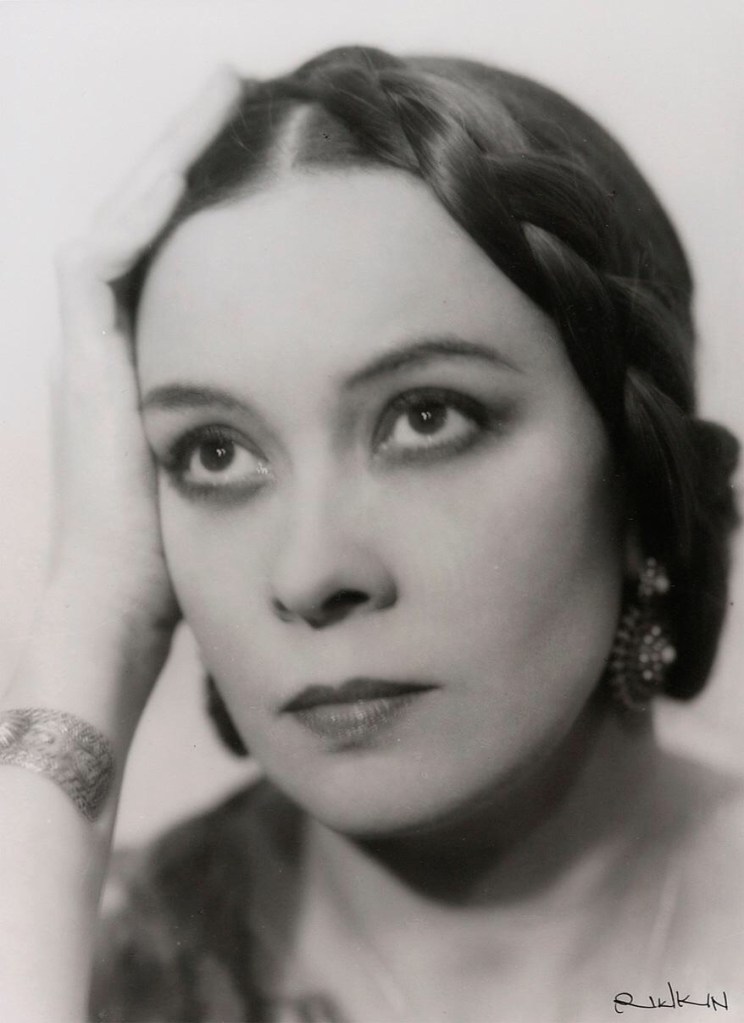
Carina Ari was born Maria Karina Viktoria Jansson in Stockholm in 1897. She went on to become one of Sweden’s most successful dancers and choreographers throughout history. For most Swedes, she may be unknown, but she certainly made a lasting mark on Swedish and international cultural life.

Carina Ari started dancing at a young age to support her infirm mother, who died when Ari was 16. Shortly afterwards, she was employed as a dancer at the Royal Theatre and within two years was promoted to solo dancer. During the 1920’s, she danced and choreographed many acclaimed performances in Stockholm, Copenhagen and in Paris for a variety of institutions and companies. In Paris, she was the prima ballerina at the controversial and experimental Swedish Ballet. In 1924, she toured Europe with her highly successful Scènes dansées. In 1927, she choreographed a much talked-about performance for the French President Loubet at the Élysée Palace. In 1930, she was appointed Director of Ballet at the Algiers Opera, where she created for many years before returning to the Opera Comique in Paris. During her active years, she was the darling of dance, a somewhat controversial prima donna and a sought-after choreographer. Married to French composer Désiré-Émile Inghelbrecht, they were a power couple on the cultural scene.

In the late 1930’s, mid divorce, Ari was holidaying in the south of France when she met, and fell in love with, a Dutch businessman. When the Second World War approached, they moved to Argentina, where they married and lived the rest of their lives. Upon his death, she inherited a great fortune and was able to maintain a residence in Stockholm and studio in Paris, both of which she frequently visited. In Argentina, she became a grand old dame, living a life of culture, entertainment and fine dining. She frequently visited the Teatro Colón and watched their dance performances. Although considered one of the best opera houses in the world, she was apparently vocally critical of the quality of their dancers.

As part of her legacy, the Carina Ari Foundation gives financial support to young, promising dancers and to older dancers who have fallen on hard times. On Holländargatan in Stockholm is the Carina Ari Library, which is the largest library of dance in Northern Europe. Additionally, the Carina Ari Medal is occasionally awarded to people who have contributed to the art of dance in Sweden.

However, her legacy is not only in dance. Carina Ari was also an accomplished sculptor. She specialized in portrait busts and some of her works are displayed at Sweden’s National Museum. Her bust of Birgit Nilsson is at the Opera House in Stockholm and her bust of Dag Hammarskjöld is located in New York in the square that bears his name.

Carina Ari died in 1970 in Buenos Aries after complications from breaking her leg, and is buried with her husband in Haarlem in the Netherlands.

Ramadan in Sweden

Today, 13 April 2021, begins the holy period of Ramadan. Millions of Muslims around the world will be celebrating today. The festival involves a month of prayer and fasting. Ramadan is the name of the ninth month in the Islamic calendar. It is also one of the Five Pillars of Islam – the principles which Muslims believe are compulsory acts ordered by God.

Ramadan is a time when Muslims are encouraged to give to charity, strengthen their relationship with God, and show kindness and patience. During this month, believers also head to the mosque for an additional night prayer called Taraweeh, only held during Ramadan.

‘Shaum’ – or fasting during daylight hours is considered to be an act of worship, which enables Muslims to feel closer to God and strengthen their spiritual health and self-discipline. It is also intended to build empathy for those less fortunate. Followers eat a meal before dawn, and then break their fast after sunset with a meal called ‘iftar’ or ‘fitoor’.

So, how does this work in Sweden – a place where daylight hours can be very long? Well, it is more difficult to do Shaum if Ramadan lands in the month of June. In June, in the North, there is no dawn and sunset – but instead the Midnight Sun. This would mean that people would not eat or drink for a long period – which is not sustainable. Nor is the intention that people should overly suffer. In these instances, it is recommended to choose a city (such as Malmö for example) and follow their timings, even if you you yourself are sitting way up north in arctic Kiruna.

However, this year Ramadan is in April, which means that those fasting in the north of Sweden will have to not eat or drink between 04.55 and 20.24 – which, if you ask me, is tough enough.

If you’d like to wish somebody a Happy Ramadan, you can say “Ramadan Kareem,” which translates into “Have a generous Ramadan,” or “Ramadan Mubarak,” which roughly translates into “Happy Ramadan.” On the last day of Ramadan, which is Eid-al-fitr, the greeting changes to “Eid Mubarak.”

Tip for Swedes travelling abroad in corona times

With bans around Europe lifting, it is time to start thinking about summer holidays. At least gingerly. Some people are waiting until the autumn to be safe, and spending their summers in ‘staycation’ mode – called ‘hemester’ or ‘svemester’ in Swedish. But for others, the pull to warmer climes is too strong.

If you are considering overseas travel, then I strongly recommend you check out the following website: http://www.swedenabroad.se

This is the official website of Sweden’s embassies and consulates. It is updated on a daily basis and has the latest information on corona restrictions. You can search specific countries and see what applies there.

http://www.swedenabroad.se

Swedish icons 18: Anders Zorn

Anders Zorn was born 1860 in Mora, county Dalarna. He is considered one of the most significant Swedish artists throughout history.

His works hang in several museums in Sweden, including the National Museum. He is also exhibited at the Metropolitan Museum of Art in New York and Musée D’Orsay in Paris. Additionally, his portrait of President William Taft from 1911 is displayed in the White House in Washington DC. He also painted acclaimed portraits of Presidents Cleveland and Roosevelt.

Zorn was often away from Sweden and sought inspiration in Europe, USA, North Africa and Russia. He was internationally and critically revered and honored with many Swedish and international awards. He is renowned for his paintings of voluptuous naked women, countryside scenes, festivities and portraits. One of his most famous paintings is Midsummer Dance.

Zorn was known to be self-confident, gluttonous and chauvinistic. He loved to drink, smoke and party. Notoriously unfaithful to his wife Emma, he even invited one of his mistresses into their home in Mora. By all accounts his wife tolerated his bohemian lifestyle, although they lived separately for most of their lives.

Zorn’s exploits led to him contracting syphilis and his hedonistic ways contributed to an early death from blood poisoning aged 60 in 1920. Earlier the same year he and his wife founded the Bellman Prize – an award that still exists today and is awarded for excellence in poetry.

When Emma Zorn died some 22 years later, their house – Zorngården- became a museum and gallery, which is today one of Sweden’s most popular tourist destinations.

Swedish icons 17: Rolf de Maré

Rolf de Maré was born 1888 in Stockholm into a wealthy family. He is one of the most important Swedish cultural profiles of the 1900’s, renowned for being an influential collector of art, a dance impresario and the founder of the world’s first museum of dance.

Rolf de Maré had the financial means to fulfill his dream of being a patron of the arts, and as such he could travel all over the world. On his many trips, he bought art directly from the artist. Among his collection, he purchased works from Picasso, Braque and Léger.

In 1920, he started the avant-garde Swedish Ballet in Paris. The Ballet was a creative power that aimed to combine dance, drama, painting, poetry, music, circus, film and pantomime, and attracted talent such as Jean Cocteau.

Rolf de Maré loved living in Paris, by all accounts. Here he could live openly as gay; something that was impossible at that time in close-minded Sweden. He had a series of romantic liaisons, the most notable with the artist Nils Dardel.

In 1933, Maré founded the world’s museum and research institute for dance, also in Paris. The museum gathered material and records about dance from all over the world. During this period he became a powerful and celebrated person on the French culture scene – and was responsible for launching the career of the legendary Josephine Baker.

After the Second World War, he attempted to hand part of the material from his dance museum archives to the Paris Opera. They took 6,000 books which are today stored at the Opera’s library. However, they did not want the rest of the material. As a result, information on the Swedish Ballet and some other documentation ended up in Stockholm at the Dance Museum, which he founded in 1953. This material can still be seen today. His modern art collection is on display at Stockholm’s Museum of Modern Art.

Rolf de Maré died of a stroke in Barcelona in 1964 and is buried at Gustaf Vasa church in Stockholm. Next to the Dance Museum is a restaurant called in his honour ‘Bistro Rolf de Maré’. The bistro has French and Swedish classic dishes on the menu. As he was grandson to the incredibly wealthy Wilhemenia von Hallwyl, also a patron and collector of the arts, a beautiful portrait of him hangs in the grandiose Hallwylska House in Stockholm. The painter? His beloved Nils Dardel.