When I was at the open-air museum Skansen, I heard a story about trolls. This got me thinking about other mythological creatures and monsters that inhabit Sweden. And a new series was born!
Today – Gloson.
If you think pigs are cute, you might not after you hear about Gloson.
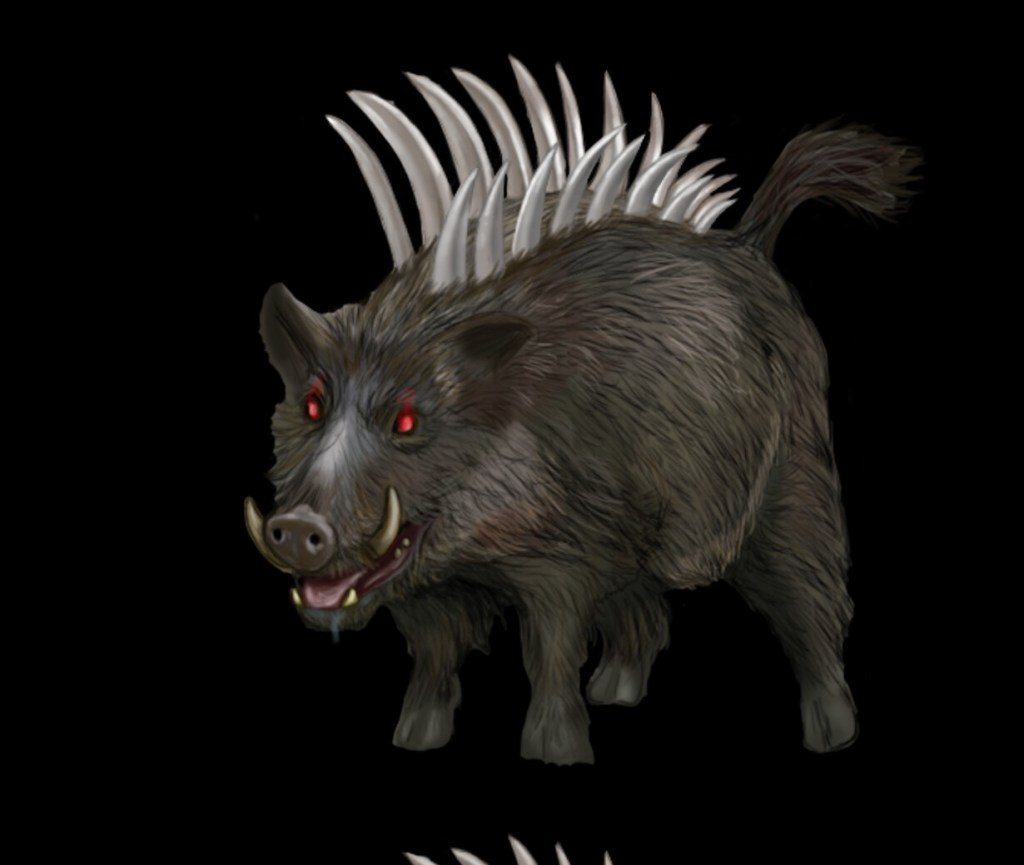
A monster from the southern part of Sweden, Gloson is a ghost-like creature that takes the shape of a giant wild boar or pig. It has piercing flaming eyes, sharp tusks and fangs and a strange snout.
Along its back, there is a spiky razored ridge which it uses to run between people’s legs and split them open at their crotch. Scary!
When I was at the open-air museum Skansen, I heard a story about trolls. This got me thinking about other mythological creatures and monsters that inhabit Sweden. And a new series was born!
Today – Gloson.
If you think pigs are cute, you might not after you hear about Gloson.
A monster from the southern part of Sweden, this creature is a ghost-like creature that takes the shape of a giant wild boar or pig. It has piercing flaming eyes, sharp tusks and fangs and a strange snout.
Along its back, there is a spiky razored ridge which it uses to run between people’s legs and split them open at their crotch. Scary!
When I was at the open-air museum Skansen, I heard a story about trolls. This got me thinking about other mythological creatures and monsters that inhabit Sweden. And a new series was born!
Today – Bysen.
If you are visiting the Baltic island of Gotland this summer, look out for Bysen!
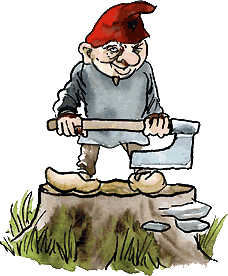
Bysen is a little Gnome-like creature that patrols and haunts the woods of the island. He carries an axe, and lures people by making them get lost and enchants their vision.
He is a mischievous character, rather like the ‘tomtar’ that inhabit barns and farms in mainland Sweden. He has been known to play tricks on foresters, delay transports, and tips loads of timber over.
He looks fairly insignificant – a small, grey man wearing a cap. It is said Bysen has done some crime within his lifetime and is therefore sentenced to wander the Earth forever. Bysen is also the ward of the forest and nature. Some people believe that there are several ‘bysens’ deep in the forest.
So be careful if you are on Gotland. If Bysen bewitches you, you might get lost in the woods forever.
When I was at the open-air museum Skansen, I heard a story about trolls. This got me thinking about other mythological creatures and monsters that inhabit Sweden. And a new series was born!
Today – Storsjöodjuret.
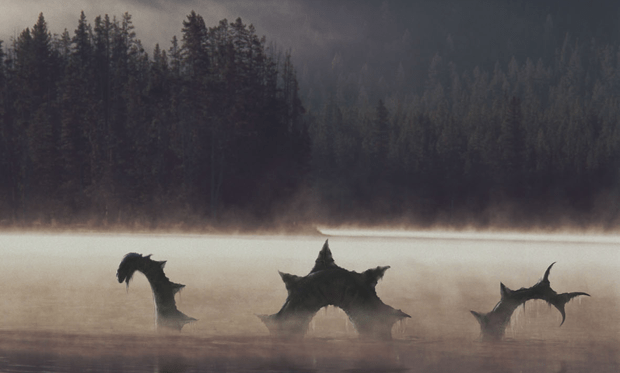
This monster is thought to inhabit the depths of Storsjön, a 300m deep lake in county Jämtland in the middle of Sweden. It has several names in English, such as Storsie, a play on the name Nessie – the more-famous Loch Ness Monster in Scotland.
This Swedish lake monster is first mentioned in a 1635 manuscript. Later folk legends claimed the Great Lake monster was created by trolls and that it was a cat-headed creature with a black snake-like body.
There have been around 500 people who have claimed to have witnessed the beast since the 19th century, giving varying details, some claiming a dog-like head, others saying it has humps and fins. Its average length is said to be around 10m. The most recent sighting was 2008, when a film crew claimed to have captured it on film.
On the southernmost tip of Lake Storsjön lies Svenstavik. Inside the local library there is an interactive research and visitor´s center for all curious to know more about the monster. The center is always standby in case there is a monster sighting via the monitors on the bottom of lake Storsjön. There are also films of true witnesses telling their stories.
At the museum Jamtli in Östersund visitors can go sliding through the belly of Storsjöodjuret downstairs to the exhibitions. In the Storsjöodjurs exhibition there are, among other things, the giant iron trap that was once used to attempt to catch the Storsjöodjur. The trap was then baited with a pig, but with no success.
There are 8 official Monster Observation Spots around the lake, positioned in places where eye witnesses have claimed to have seen the beast.
So is it true or not? Who, knows.. but despite the viewings and the legends, Swedes are not afraid to bathe in the lake. One of the most popular spots is Trönö Sandy Beach 30km outside Söderhamn.
Although people seem to believe that the monster is friendly, and rather shy, would you bathe there?
When I was at the open-air museum Skansen, I sat and listened to an old woman telling fairy tales about mythical creatures. The story I heard was about trolls. This got me thinking about other mythological creatures and monsters that inhabit Sweden. And a new series was born!
Today – The Mara.
In Swedish folklore, a mara is a supernatural creature that tortures people in their sleep by straddling them, pressurizing their chests and evoking a sense of suffocation and anxiety. It can take many forms. However it is most often in the shape of a witch-like woman, who slips in through the keyhole or any crack in the door. However, a mara can also be a cat, a monkey, or even a ball of twine.
If a Mara visits you in the night, and ‘rides’ your chest, you become paralyzed and immovable.
It is believed that the Mara can only climb into the bed by first stepping in the sleeping person’s shoes on the floor. One way to avoid this is therefore to remove your shoes to another part of the room, or put them under the bed with the toes pointing outwards.
If you ever witness somebody possessed by a Mara, go immediately to the forest and find a hollowed-out trunk. Put that in the bed next to the person and the Mara will transfer itself from them and to the piece of wood. Then you can take out the wood, and force the creature back to the forest.
An interesting point about the Mara, is that the Swedish word ‘mardröm’ and the English ‘nightmare’ originate from it.
When I was at the open-air museum Skansen, I sat and listened to an old woman telling fairy tales about mythical creatures. The story I heard was about trolls, and how a troll can do magic and disguise itself amongst humans. This got me thinking about other mythological creatures and monsters that inhabit Sweden. And a new series was born!
First out – The Lindworm.
In Swedish folklore, lindworms (’lindorm’) are giant forest serpents without limbs, living deep in the woods. They are a danger to humankind. Dark in colour, they sometimes have a brighter underbelly. They have large horse-like manes, and spit out a foul milk-like substance to blind passers-by. Once their victim is blinded, the snake captures them and drags them under rocks to devour them.
Lindworms lay eggs under linden trees and, once hatched, can become extremely long. To catch fleeing humans, they swallow their own tails and become a wheel after which they roll at high speed. This has also earned them the name ‘wheel snakes’. They are said to mostly exist in the deep forests of county Småland. But who knows where else they might be!
So, if you are out this summer hiking through the forest, take extra care that you do not fall victim to a lindworm!
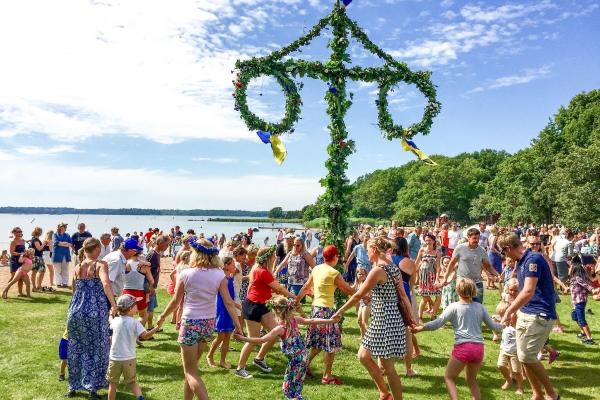
Swedish Midsummer celebrates abundance and as such, a great deal of food and drink is consumed. After guests arrive and have their first drink(s), the wreaths start to get made, the potatoes peeled, strawberries topped and the maypole gets decorated with flowers and leaves. Once erected, and danced around, it’s time for lunch.
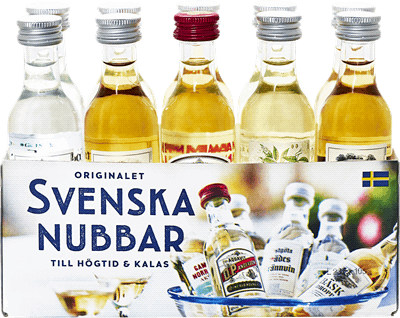
As far as drinking goes, ‘nubbe’, or snaps, is a common tipple accompanied by traditional drinking songs and washed down with beer. A popular brand of snaps is OP Anderson which is flavored with aniseed and fennel and is 40% proof. The drink has been around for 130 years on the market – the first snaps being sold in 1891! Another popular nubbe , the Danish Jubileums, is 40% proof and tastes of dill, coriander and bitter orange. There are also small-sized bottles than can be bought in fun packages that have a mixture of flavorings.
When it comes to the food, in the evening it has become popular in recent years to have a barbecue. But it is at lunch time when the traditional food is consumed, with a Midsummer smorgasbord (buffet).
On this buffet, it is common to find various types of pickled herring, soused herring, boiled new potatoes, gravlax with ‘hovmästare’ sauce, smoked salmon, Västerbotten cheese pie, crisp bread and mature cheese, chopped herbs, red onion, egg halves, ‘silltårta’ (herring cake), various sauces and mixes, fresh and smoked shrimps, fish roe.
As you can imagine, this food is very rich and fatty, which is why it is usually eaten together with the alcoholic snaps.
For dessert, the only thing to eat are Swedish strawberries and cream or a home-made strawberry cake. Anything else would be sacrilege. Some families also eat rhubarb pie.
After lunch, bolstered by the snaps, it’s usually time for garden games, a walk in the woods or a quick dip in the not-quite-yet-warm-enough lake or sea.
If the party lasts really late into the night, then there can also be a ‘vickning’. This is a ‘midnight meal’ designed to sober up drunk guests. It often includes some leftovers from the day, or can also be a very welcome hot dog. 🌭
Swedish Midsummer has many connections to fertility. Historically, it celebrated the growing season when crops, fruits and berries start to ripen, and Mother Earth graces us with her plenty.
Human fertility is also in focus, quite literally. The decoration and erection of a large phallic maypole, complete with testicles, is central to the Midsummer festivities. Once erected, people dance around said pole. This is an ancient fertility rite. One of the dances includes people imitating frogs – a tradition dating back to the French Revolution. It is thought that this particular dance was created to mock the French. Another old symbol of fertility and rebirth is the wearing of a wreath of flowers in your hair – a common practice at Midsummer.
Related to fertility, is the association of love to the festivities of Midsummer. In fact many Swedish babies are made around this weekend.
A more romantic example is the gathering of 7 types of summer flower to place under your pillow at night. It is said if you do this, in silence, then your future husband will appear to you in your dreams.
Midsummer Night is the lightest of the year, when it doesn’t really get fully dark.
Naturally, this depends on where you are in Sweden. The sky presents as a dim glow on the southern plains of Skåne. In the Arctic north, the land of the Midnight Sun, it is a bright searing daylight all night long. In Stockholm, where I live, we experience a magical dusky twilight that conjures up associations of witchcraft, druids and paganism.
At dusk, at this time of year, the light creates a strange reflection in the water. Lakes turn a petrol blue and the waves seem thick and heady with the magic of the night.
Historically, the light Midsummer night was considered a mystical night, as it was the best time for telling people’s futures. Girls ate salted porridge so that their future husbands might bring water to them in their dreams, to quench their thirst. You could also discover treasures, for example by studying how moonbeams fell.
Also that bright night, it was said, water was turned into wine and ferns into flowers. Many plants acquired healing powers on that one night of the year.
It is no wonder that Shakespeare wrote of the intoxication of a Midsummer Night’s Dream. In Sweden, the light is very intoxicating indeed.
Midsummer’s Eve is possibly the biggest public celebration in Sweden, and it’s happening this week on Friday. Swedes gather to eat, drink and be merry together.
So, what are the origins of Midsummer and why is it celebrated?
Sweden has its origins in an agrarian society, and it was on the farms that people started the celebration. Even today, some Swedes don’t consider it Midsummer unless they are ‘på landet’ – in the countryside.
The main purpose for the farmers was to welcome the summertime and the season of fertility, after a long, cold winter. These celebrations began as early as the 500’s. People lit bonfires and visited holy springs where they engaged in games and dancing. This tradition developed to dancing around a decorated maypole sometime in the 1500’s.
In the 1700-1800’s, the celebration of Midsummer spread to the industrial communities where, for example, workers were given pickled herring, beer and snaps. A food tradition that exists today.
Eventually in the 1900’s, Midsummer became a celebration for all Swedes and developed into Sweden’s most Swedish festivity!





 Watching the Swedes