Stockholm Syndrome – what is it?

The names Birgitta Lundblad, Elisabeth Oldgren, Sven Säfström and Kristin Ehnmark are not known to many people. However, they played an important role in the concept called Stockholm Syndrome.

On 23 August 1973, the four were taken hostage in Kreditbanken in Stockholm, by Jan-Erik Olsson – who was later joined by a former prison mate. Six days later when the siege ended, it became evident that the hostages had developed a positive relationship with their captors. They defended them, saying they were, for example, kind, generous and thoughtful. One of them even appealed on their behalf to Prime Minister Olof Palme. They refused to testify, and started a campaign to raise money for their kidnappers’ defense.

The syndrome was identified by criminologist Nils Bejerot. Psychiatrist Dr Frank Ochberg went on to define the syndrome as a situation where victims form positive attachment to their oppressors. He developed the process that people suffering from Stockholm Syndrome go through.

Firstly, there is an initial experience that is surprising and terrifying. The victims are certain they are going to die. Then they experience a type of infantilisation – where, like a child, they are unable to eat, speak or go to the toilet without permission. Small acts of kindness – such as being given food – prompts a primitive gratitude for the gift of life. The hostages experience a powerful, primitive positive feeling towards their captor. They are in denial that this is the person who put them in that situation. In their mind, they think this is the person who is going to let them live.

One of the Swedish hostages, Elisabeth Oldgren was allowed to leave the vault that had become their prison but only with a rope fixed around her neck. She said that at the time she thought it was “very kind” of Olsson to allow her to move around the floor of the bank.

One famous case of Stockholm Syndrome is Patty Hearst who was kidnapped by revolutionary militants in 1974. She appeared to develop sympathy with her captors and even became their partner in crime.

Natascha Kampusch was another case. Kidnapped and molested as a 10-year-old by Wolfgang Priklopil, she was incarcerated in a basement for eight years, but yet she mourned his death and lit a candle for him. Years after her escape in 2006 she still carried a photo of him in her wallet.

Today, psychologists see Stockholm Syndrome arising in other situations than kidnapping: abusive marriages, trafficking and sports coaching, for example. In popular culture, the excellent Netflix series ‘Le Casa De Papa’ depicts a robbery in the National Treasury and the ‘Síndrome de Estocolmo’ that several hostages experience.

In 2019, a film called Stockholm was released. Starring Ethan Hawke and Noomi Rapace it loosely tells the story of those fateful 6 days in 1973.

Stockholm Syndrome – what is it?

The names Birgitta Lundblad, Elisabeth Oldgren, Sven Säfström and Kristin Ehnmark are not known to many people. However, they played an important role in the concept called Stockholm Syndrome.

On 23 August 1973, the four were taken hostage in Kreditbanken in Stockholm, by Jan-Erik Olsson – who was later joined by a former prison mate. Six days later when the siege ended, it became evident that the hostages had developed a positive relationship with their captors. They defended them, saying they were, for example, kind, generous and thoughtful. One of them even appealed on their behalf to Prime Minister Olof Palme. They refused to testify, and started a campaign to raise money for their kidnappers’ defense.

The syndrome was identified by criminologist Nils Bejerot. Psychiatrist Dr Frank Ochberg went on to define the syndrome as a situation where victims form positive attachment to their oppressors. He developed the process that people suffering from Stockholm Syndrome go through.

Firstly, there is an initial experience that is surprising and terrifying. The victims are certain they are going to die. Then they experience a type of infantilisation – where, like a child, they are unable to eat, speak or go to the toilet without permission. Small acts of kindness – such as being given food – prompts a primitive gratitude for the gift of life. The hostages experience a powerful, primitive positive feeling towards their captor. They are in denial that this is the person who put them in that situation. In their mind, they think this is the person who is going to let them live.

One of the Swedish hostages, Elisabeth Oldgren was allowed to leave the vault that had become their prison but only with a rope fixed around her neck. She said that at the time she thought it was “very kind” of Olsson to allow her to move around the floor of the bank.

One famous case of Stockholm Syndrome is Patty Hearst who was kidnapped by revolutionary militants in 1974. She appeared to develop sympathy with her captors and even became their partner in crime.

Natascha Kampusch was another case. Kidnapped and molested as a 10-year-old by Wolfgang Priklopil, she was incarcerated in a basement for eight years, but yet she mourned his death and lit a candle for him. Years after her escape in 2006 she still carried a photo of him in her wallet.

Today, psychologists see Stockholm Syndrome arising in other situations than kidnapping: abusive marriages, trafficking and sports coaching, for example. In popular culture, the excellent Netflix series ‘Le Casa De Papa’ depicts a robbery in the National Treasury and the ‘Síndrome de Estocolmo’ that several hostages experience.

In 2019, a film called Stockholm was released. Starring Ethan Hawke and Noomi Rapace it loosely tells the story of those fateful 6 days in 1973.

Stockholm Syndrome – what is it?

The names Birgitta Lundblad, Elisabeth Oldgren, Sven Säfström and Kristin Ehnmark are not known to many people. However, they played an important role in the concept called Stockholm Syndrome.

On 23 August 1973, the four were taken hostage in Kreditbanken in Stockholm, by Jan-Erik Olsson – who was later joined by a former prison mate. Six days later when the siege ended, it became evident that the hostages had developed a positive relationship with their captors. They defended them, saying they were, for example, kind, generous and thoughtful. One of them even appealed on their behalf to Prime Minister Olof Palme. They refused to testify, and started a campaign to raise money for their kidnappers’ defense.

The syndrome was identified by criminologist Nils Bejerot. Psychiatrist Dr Frank Ochberg went on to define the syndrome as a situation where victims form positive attachment to their oppressors. He developed the process that people suffering from Stockholm Syndrome go through.

Firstly, there is an initial experience that is surprising and terrifying. The victims are certain they are going to die. Then they experience a type of infantilisation – where, like a child, they are unable to eat, speak or go to the toilet without permission. Small acts of kindness – such as being given food – prompts a primitive gratitude for the gift of life. The hostages experience a powerful, primitive positive feeling towards their captor. They are in denial that this is the person who put them in that situation. In their mind, they think this is the person who is going to let them live.

One of the Swedish hostages, Elisabeth Oldgren was allowed to leave the vault that had become their prison but only with a rope fixed around her neck. She said that at the time she thought it was “very kind” of Olsson to allow her to move around the floor of the bank.

One famous case of Stockholm Syndrome is Patty Hearst who was kidnapped by revolutionary militants in 1974. She appeared to develop sympathy with her captors and even became their partner in crime.

Natascha Kampusch was another case. Kidnapped and molested as a 10-year-old by Wolfgang Priklopil, she was incarcerated in a basement for eight years, but yet she mourned his death and lit a candle for him. Years after her escape in 2006 she still carried a photo of him in her wallet.

Today, psychologists see Stockholm Syndrome arising in other situations than kidnapping: abusive marriages, trafficking and sports coaching, for example. In popular culture, the excellent Netflix series ‘Le Casa De Papa’ depicts a robbery in the National Treasury and the ‘Síndrome de Estocolmo’ that several hostages experience.

In 2019, a film called Stockholm was released. Starring Ethan Hawke and Noomi Rapace it loosely tells the story of those fateful 6 days in 1973.

Tip for Swedes travelling abroad in corona times

With bans around Europe lifting, it is time to start thinking about summer holidays. At least gingerly. Some people are waiting until the autumn to be safe, and spending their summers in ‘staycation’ mode – called ‘hemester’ or ‘svemester’ in Swedish. But for others, the pull to warmer climes is too strong.

If you are considering overseas travel, then I strongly recommend you check out the following website: http://www.swedenabroad.se

This is the official website of Sweden’s embassies and consulates. It is updated on a daily basis and has the latest information on corona restrictions. You can search specific countries and see what applies there.

http://www.swedenabroad.se

Gun salutes in the UK and Sweden

To mark the recent death of the UK’s Prince Philip, a 41-gun salute was held across Great Britain yesterday. For many, it seemed like an odd number. So, why 41?

In both the UK and Sweden, gun salutes mark special royal occasions and the number of rounds fired depends on the place and occasion. The basic salute in both countries is 21 rounds.

In the UK, however if fired from a royal park, an extra 20 rounds are added – making 41. At the Tower of London 62 rounds are fired on British royal anniversaries (the basic 21, plus a further 20 because the Tower is a Royal Palace and Fortress, plus another 21 for the City of London.)

The most shots have been given from the Tower when the late Duke of Edinburgh’s birthday (62 shots) coincided with the Queen’s official birthday (62 shots). This gave a total of an annoying 124 shots booming out over the city.

So, does Sweden always have 21 shots?

No, not always. When a Royal birth takes place and the infant is the firstborn to either the reigning monarch or to the heir to the throne, an extra 21 rounds (for a total of 42) are added to the normal salute. Additionally, 19-gun salutes are used for heads of government, cabinet ministers and ambassadors.

Another gun salute consists of two rapid gunshots only. This is used by the military and was fired to identify a Swedish ship entering a harbour or on the battle field to identify the Swedish troops. This signal is called the ‘Svensk Lösen’ – the Swedish Signal. This salute is today fired on special occasions, usually within the armed forces.

21-gun salutes in Sweden occur on:

  • 28 January – the King’s Name Day
  • 30 April – the King’s birthday
  • 6 June – Sweden’s National Day
  • 14 July – Crown Princess Victoria’s birthday
  • 8 August – Queen Silvia’s Name Day
  • 23 December – Queen Silvia’s birthday.

So, why is 21 standard?

Well, it originated in British maritime tradition. Historically, ships would fire 7 shots as they approached a foreign harbour. As ships usually had seven cannons on board, this was to show they had disarmed themselves and declare the vessel to be no threat on entry.

The military on land could store more gunpowder and therefore could reload their cannons more quickly. The tradition became that they would fire three shots for every one shot made at sea – hence 21 shots – as a sign of welcome and peace.

Interestingly in Sweden’s neighbouring country, Denmark, the gun salute given to majesties is 27. Could this be based on the same thinking? 3 x 9 shots?

Swedish icons 16: Olof Palme, Sweden’s most reviled politician

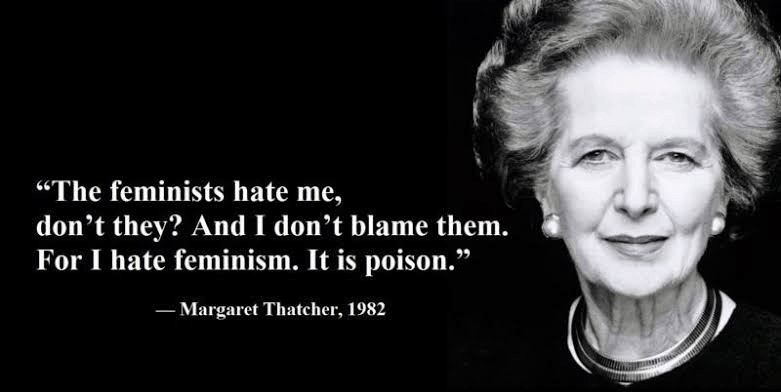
I had the weirdest of nightmares the other day involving the former British Prime Minister, Margaret Thatcher. When I checked her out, I discovered oddly that the very day was the 8th anniversary of her death.

No British Prime Minister in history has been so reviled, and also loved, as Margaret Thatcher. My dad absolutely hated her. With a vengeance. He blamed her for single-handedly causing the economic and social depression that utterly destroyed the north of England, where I’m from.

It made me think about what Swedish politician has been so despised through history. Who in Sweden is the most reviled?

While Swedish Prime Ministers such as Carl Bildt, and Göran Persson were not always popular, probably topping the list is Social Democratic Olof Palme. He was a legendary Prime Minister who was loved by many. On the other hand, there were a lot of people who absolutely loathed him, his ‘arrogance’ and his ‘radical’ politics. He was Prime Minister for 17 years, in two different periods, up until his assassination in 1986. One person said about him – ‘He had a very special personality, he was so intense, so brilliant but his brilliancy was a problem for him as well because many people got hurt by his harsh words.

Palme was most controversial in his overseas politics than his domestic ones. This gave him many enemies. He was often alone among political leaders in the western world in expressing his stand against colonialism. He railed against the Soviet crackdown in Czechoslovakia, criticized Spanish dictator Franco, befriended Cuba’s Fidel Castro and crusaded against apartheid in South Africa. He was anti Vietnam war, and therefore perceived by many as anti-US, who love to use the classic rhetoric ‘you’re either with us, or against us’.

Just like Thatcher, what people thought of Palme depended on their political leanings. For many, Palme was a beacon of hope – a living manifestation of the social-democratic ideology. For others, he was a socialist, a meddler and a rabble-rouser. Thatcher and Palme, I’m sure, detested each other. They were politically very far apart – she hated both socialism and feminism – two things that he firmly believed in.

Palme’s murder is considered by many to be the end of Swedish innocence. Margaret Thatcher wrote ‘ He will be grievously missed, not only in Sweden but really the world over.″ She herself had escaped an IRA assassination attempt in 1984, and said that other world leaders ‘have to carry on taking risks for democracy and not be deflected.’

A lot of mystery surrounded Olof Palme’s assassination. 16 years later in 2020, the perpetrator was identified as graphic designer Stig Engström. However, many people do not believe this conclusion.

Olof Palme, loved or hated, meddler or mediator, peace-keeper or political activist, is buried in the churchyard at Adolf Fredrik Church in Stockholm.

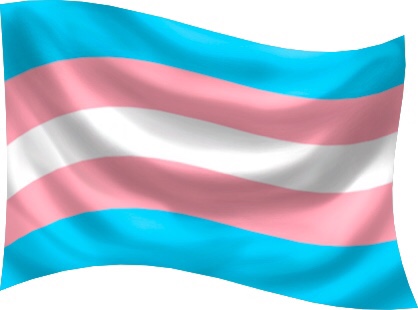
Transgender Sweden

Today is the International Day of Transgender Visibility. The day is dedicated to honouring the victories and contributions of the transgender and non binary communities while also bringing awareness to the work that is still needed to protect trans lives. In the USA during 2020, 45 trans and gender nonconforming individuals were murdered. So far in 2021, the figure is 11.

Transgender in Sweden: It has been a long and rocky road for the transgender population to receive legal protection in Sweden. This road has been lined with demands on enforced divorce and enforced sterilization. In fact, it wasn’t until 2013 that the requirements to be sterilized and undergo sex reassignment surgery in order to change gender became unconstitutional. Sterilization had been in effect since 1972, and enforced on 500 to 800 transgender people.

Today, the transgender community is protected under the Anti-Discrimination Law of 2009. Additionally, in 2018, “transgender identity and expression” was added to the hate crime legislation.

It would however be naive to believe that this has eradicated this type of discrimination and crime in Sweden. In fact, many transgender people report a constant feeling of insecurity and vulnerability in society. Around 12% of the reported hate crime in Sweden has a homophobic or transphobic motive. Who knows how much happens that isn’t reported?

Days like International Day of Transgender Visibility are hugely important for breaking the negative cycle of hate. If you would like some input on how to support the trans and non binary people in your life, go to http://www.thetrevorproject.org and look under Resources.

A Swedish walk in the park

Today, 30 March, is International ‘Take a walk in the park’ Day. While some residents in some locked down countries might not appreciate the irony of it, here in Sweden it is fully possible to celebrate today by stepping out into one of the many green areas.

Take a Walk in the Park Day was founded to celebrate small excursions and the difference they can make to our mental, physical and emotional health.

In Sweden, there are thousands of parks and 30 official National Parks. What kind of park you prefer is of course a matter of taste. However, according to our friends on the internet, the three most beautiful parks in the country are Sofiero slottsträdgårdar in Helsingborg, Hagaparken in Stockholm and Boulognerskogen in Gävle. I’m sure there are a lot of people with other opinions.

Sweden also has a tradition of the ‘Folkpark’ which is a place for entertainment, cabaret, theatre, relaxation and enjoying the great outdoors. Folkpark’s had their heydey in the 1940’s-1960’s where artists would play on the stages and there would be party party and dance. The first Folkpark was built in Hällefors in 1796. Today they still exist, but have faced a lot of competition from festivals, arenas and other outdoor entertainment spaces.

For most urban dwellers around the world, the parks are the lungs of the city. And it’s the same in Sweden’s built up regions. Living in Stockholm, I am so lucky to have many parks and green areas within easy walking distance.

So, depending on where you live, and your time zone, it might not be too late. Put on your shoes and step out into your street, and go take a walk in the park. After all, today is ‘Take a Walk in the Park Day’.

Swedish Press Freedom – the first in the world

In several countries, I would not be allowed to freely write what I want in this blog. Many nations are fighting for press freedom and against censorship – some of them not very far away. Thankfully, Sweden has solved this issue of media independence. Everyone is free to express themselves in writing, provided they do not publicly defame another person or commit an illegal act.

Obviously, Sweden didn’t always have freedom of the press. In the early days of print, Swedes fought many battles against censorship and limitations on the printed word. However, things changed when, on 2 December 1766, Sweden became the first country in the world to write freedom of the press into the constitution. The Swedish Freedom of the Press Act also allowed public access to information, which made it legal to publish and read public documents.

The Act that applies today actually came into effect in 1949. Today, laws cover press ethics, disputes, freedom of expression over digital media and protection of the individual and of whistleblowers.

Compared with other countries in the EU, Sweden is the 3rd best country in terms of media independence, preceded by Finland and Denmark. Sweden holds the 4th position on a global scale, the number one country being Norway.

According to Reporters without Borders, one reason that Sweden isn’t ranked higher is that over 50% of local media is owned only by five major companies. These control the editorial line and job security.

Additionally, one third of Swedish journalists claim they self censor due to threats and harassment from trolls, violent groups, heads of overseas states and security forces. Very few perpetrators are sentenced.

Sweden chooses its song for Europe

Finally, after six long weeks of televised qualifying competitions, Sweden voted for the song to represent the country in the Eurovision Song Contest. Called ‘Voices’, the song is about everybody’s right to be who they are and to be heard. The song won far ahead of its nearest competitor.

Perhaps the most interesting thing about the winning song is actually the singer. His name is Tousin Chiza, but he is known as Tusse. In 2019, he won the Swedish equivalent of Pop Idol.

The 19 year-old singer came to Sweden as an unaccompanied child refugee, fleeing the conflict in the Democratic Republic of the Congo in 2009. He ended up in the small village of Tällberg in county Dalarna where he still lives today and has an adopted Swedish family. He has been widely criticized for his appearance, as he often wears non gender normative outfits.

This is a moment where the lyrics of the song and the artist are closely connected, which possibly explains its popularity and success in the competition. Tusse sings:

There’s fire in the rain
But we’ll get up again
We’re thousand miles apart
But we’ll overcome
I’ll never let you down
World is turning us around
But I feel it in my heart
Let’s make a brand new start
Can’t stop us now, forget the haters
Get up and live and make it matter
There’s more to life so go ahead and sing it
out’

It’s certainly a song that is a product of its time and it remains to be seen if the message resonates with the voters of Eurovision.

On 22 May in Rotterdam, Sweden will get the answer, and we will see if Tusse is Sweden’s 7th winner. If so, Sweden joins Ireland as the country with the most Eurovision wins since the competition began.

Here you can watch the performance below.