According to svenskanamn.se, here are the most common names for men and for women in Sweden. If you’re living in Sweden, chances are you’re called one of these names – if not, you’ve definitely met one!
Most common names for men in order of frequency: Erik, Karl, Lars, Anders and Johan
Most common names for women in order of frequency: Maria, Anna, Margareta, Elisabeth, Eva.
The website also lists the most common surnames: Andersson, Johansson, Karlsson, Nilsson, Eriksson.
So technically, Erik and Maria Andersson are the most common names in Sweden.
Selma Lagerlöf was a legendary Swedish author, born in 1858 in the county of Värmland. Today, 16th March, is the anniversary of her death in 1940.
Selma Lagerlöf is considered to be one of the most groundbreaking female writers in the Nordics. Three of her many novels are ‘The Wonderful Journey of Nils’, ‘Jerusalem’ and ‘Gösta Björling’s Saga’. Her works have been translated into 50 languages.
In 1909, she was the first woman, and Swede, to win the Nobel Prize for Literature. Five years later, in 1914, she was invited to join the highly-respected Swedish Academy – the body that chooses the Nobel prize for Literature. In doing so, she became the first woman to sit at the table.
In 1991, she was the first woman to appear on a Swedish bank note. The 20 crown note, referred to as a ‘Selma’, was removed from circulation in 2016 and she was replaced with an image of another iconic writer Astrid Lindgren.
She was highly politicized, leading the fight for women’s suffrage in Sweden and an active critic of nazism and the persecution of the Jews. She never married, and had two long-standing partnerships with two women. Love between people of the same sex was illegal in her day, but their passion was undeniably clear in a series of letters that became public knowledge in the 1990’s.
Selma Lagerlöf was born into a privileged middle class in a large house called Mårbacka, which today is open for visitors. Around Sweden, there are several statues of her, as well as one in Minneapolis in the USA. When planet Venus was discovered, the larger craters were named after famous significant women. One of them is called Lagerlöf, reflecting the size of her legacy.
Selma Lagerlöf died aged 81. She is buried in the churchyard at Östra Ämtervik not far from her family home.
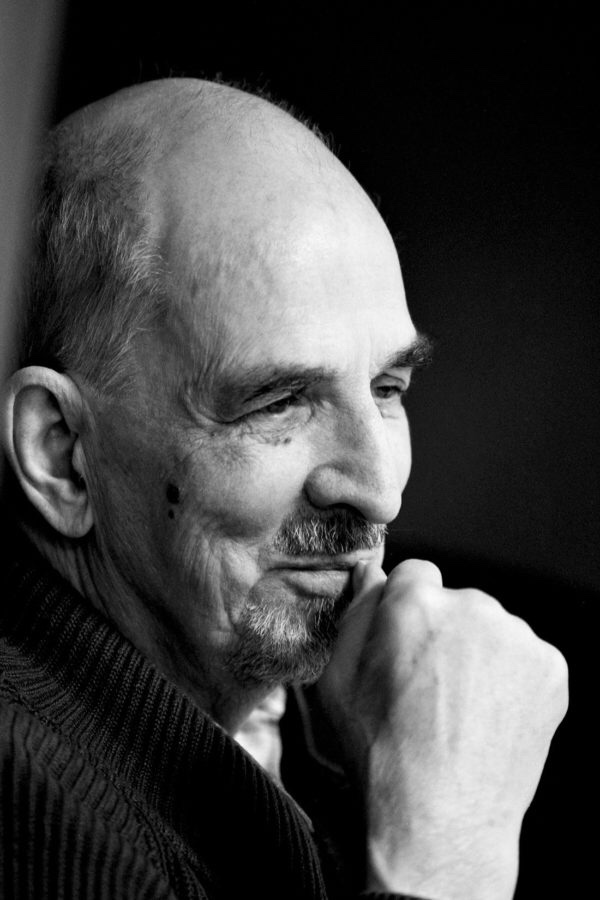
One of the most influential film directors of all time, Ingmar Bergman was born in 1918 in Uppsala, Sweden. He directed over 60 films, such as the classics ‘The Seventh Seal’, ‘Persona’, ‘Smiles of a Summer Night’, ‘Scenes from a Marriage’ and ‘Wild Strawberries’.
His films were often experimental and very dark, melancholy and miserable and many of them required patience to watch. He was nominated numerous times for an Oscar and won three times for Best Foreign Language film – ‘The Virgin Spring’, ‘Through a Glass Darkly’ and ‘Fanny and Alexander’.
He developed a legendary company of actors whom he frequently worked with, including great names such as Bibi Andersson, Max von Sydow, Liv Ullmann and Harriet Andersson.
Ingmar Bergman lived a stormy life and was notoriously hard to work and live with. He was frequently accused of being overbearing and misogynistic. Married five times, and with many other romantic connections, he fathered nine children, one of whom is the prominent Norwegian writer Linn Ullmann.
Bergman died in 2007 aged 89 in his home on the small Baltic island of Fårö, where he is buried. On Fårö today, there is a cultural center called the Bergman Center that focuses on his life and artistic achievements. Every year, they host the five-day long Bergman Week filled with film, discussions, drama, music and lectures.
One of the most influential film directors of all time, Ingmar Bergman was born in 1918 in Uppsala, Sweden. He directed over 60 films, such as the classics ‘The Seventh Seal’, ‘Persona’, ‘Smiles of a Summer Night’, ‘Scenes from a Marriage’ and ‘Wild Strawberries’.
His films were often experimental and very dark, melancholy and miserable and many of them required patience to watch. He was nominated numerous times for an Oscar and won three times for Best Foreign Language film – ‘The Virgin Spring’, ‘Through a Glass Darkly’ and ‘Fanny and Alexander’.
He developed a legendary company of actors whom he frequently worked with, including great names such as Bibi Andersson, Max von Sydow, Liv Ullmann and Harriet Andersson.
Ingmar Bergman lived a stormy life and was notoriously hard to work and live with. He was frequently accused of being overbearing and misogynistic. Married five times, and with many other romantic connections, he fathered nine children, one of whom is the prominent Norwegian writer Linn Ullmann.
Bergman died in 2007 aged 89 in his home on the small Baltic island of Fårö, where he is buried. On Fårö today, there is a cultural center called the Bergman Center that focuses on his life and artistic achievements. Every year, they host the five-day long Bergman Week filled with film, discussions, drama, music and lectures.
Finally, after six long weeks of televised qualifying competitions, Sweden voted for the song to represent the country in the Eurovision Song Contest. Called ‘Voices’, the song is about everybody’s right to be who they are and to be heard. The song won far ahead of its nearest competitor.
Perhaps the most interesting thing about the winning song is actually the singer. His name is Tousin Chiza, but he is known as Tusse. In 2019, he won the Swedish equivalent of Pop Idol.
The 19 year-old singer came to Sweden as an unaccompanied child refugee, fleeing the conflict in the Democratic Republic of the Congo in 2009. He ended up in the small village of Tällberg in county Dalarna where he still lives today and has an adopted Swedish family. He has been widely criticized for his appearance, as he often wears non gender normative outfits.
This is a moment where the lyrics of the song and the artist are closely connected, which possibly explains its popularity and success in the competition. Tusse sings:
‘There’s fire in the rain But we’ll get up again We’re thousand miles apart But we’ll overcome I’ll never let you down World is turning us around But I feel it in my heart Let’s make a brand new start Can’t stop us now, forget the haters Get up and live and make it matter There’s more to life so go ahead and sing it out’
It’s certainly a song that is a product of its time and it remains to be seen if the message resonates with the voters of Eurovision.
On 22 May in Rotterdam, Sweden will get the answer, and we will see if Tusse is Sweden’s 7th winner. If so, Sweden joins Ireland as the country with the most Eurovision wins since the competition began.
Finally, after six long weeks of televised qualifying competitions, Sweden voted for the song to represent the country in the Eurovision Song Contest. Called ‘Voices’, the song is about everybody’s right to be be who they are and to be heard. The song won far ahead of its nearest competitor.
Perhaps the most interesting thing about the winning song is actually the singer. His name is Tousin Chiza, but he is known as Tusse. In 2019, he won the Swedish equivalent of Pop Idol.
The 19 year-old singer came to Sweden as an unaccompanied child refugee, fleeing the conflict in the Democratic Republic of the Congo in 2009. He ended up in the small village of Tällberg in county Dalarna where he still lives today and has an adopted Swedish family. He has been widely criticized for his appearance, as he often wears non gender normative outfits.
This is a moment where the lyrics of the song and the artist are closely connected, which possibly explains its popularity and success in the competition. Tusse sings:
‘There’s fire in the rain But we’ll get up again We’re thousand miles apart But we’ll overcome I’ll never let you down World is turning us around But I feel it in my heart Let’s make a brand new start Can’t stop us now, forget the haters Get up and live and make it matter There’s more to life so go ahead and sing it out’
It’s certainly a song that is a product of its time and it remains to be seen if the message resonates with the voters of Eurovision.
On 22 May in Rotterdam, Sweden will get the answer, and we will see if Tusse is Sweden’s 7th winner. If so, Sweden joins Ireland as the country with the most Eurovision wins since the competition began.
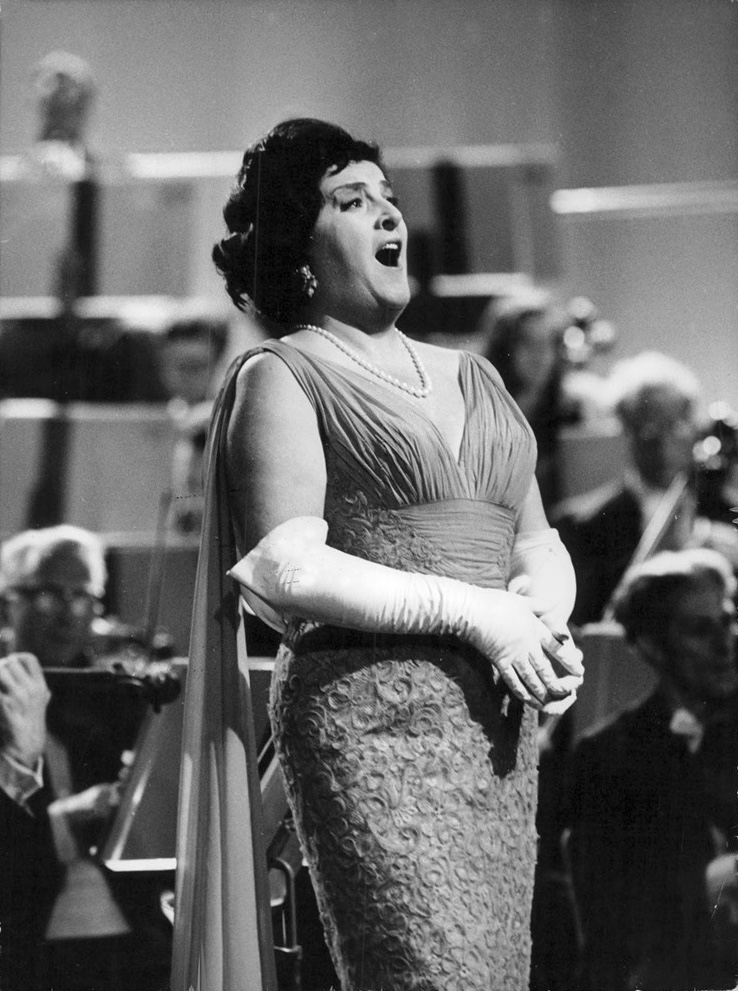
The diva of all divas, Swedish opera singer Birgit Nilsson was born 1918 in the county of Skåne in southern Sweden. She had an impressive global operatic career spanning decades, and was most known for her performances of Wagner and Strauss.
She had a belter of a voice – the New York Times referred to it as ‘a voice of impeccable trueness and impregnable stamina’. She was like an Olympian athlete, and with her enormously powerful voice, she became the most famous Wagnerian soprano of her time. During her career she played most of the significant roles for a soprano, such as Aida, Tosca, Electra, Brunhilde, Turandot and Salome.
Birgit Nilsson received numerous prestigious awards, one of which was Court Singer to the Swedish Royal Court. Once, asked what was her favourite role, she answered: “Isolde made me famous. Turandot made me rich“.
Birgitta Nilsson was often called ‘La Nilsson’ and, although she wasn’t considered difficult, she was notorious for her assertiveness, directness and her wit. When asked what it was like to sing Isolde with an unattractive male colleague, she responded : “I just close my eyes and think of Plácido Domingo.” When answering a question about her rival Joan Sutherland and if her bouffant hair was real, she gave the iconic response: “I don’t know, I haven’t pulled it yet.’’
Birgit Nilsson died in county Skåne in 2005, at the grand age of 87. She had no children but left an huge musical legacy behind her.
I can’t write a series about Swedish icons without mentioning Greta Garbo, perhaps the most famous Swedish film star of all time.
Born Greta Gustafsson in Stockholm in 1905, she first rose to international fame in the silent movies of the 1920’s. In 1930, she made a successful transition into talkies, in the film Anna Christie, which was marketed under the slogan ‘Garbo talks!’ Her first line was an iconic ‘Give me a whisky, ginger ale on the side, and don’t be stingy baby’, which was delivered with a deliberately heavy and husky Swedish accent.
She appeared in classic films such as ‘Queen Christina’, ‘Anna Karenina’, ‘Mata Hari’ and ‘Camille’. Noted for her flawless beauty, cool persona and melancholy, she retired from the screen aged 35. For the rest of her life, she lived as a recluse, which passingly echoed her most famous film line from Grand Hotel – ‘I want to be alone’.
Garbo died in 1990, and her ashes are interred in Stockholm. In the Stockholm neighbourhood of Södermalm, there is a square called Greta Garbo Square, not far from where she was born.
Swedish actor Ingrid Bergman is considered one of Sweden’s best, and most famous, actors ever. Born in 1915 in Stockholm, she moved to USA in 1939 and took the world by storm. Her poise, her beauty and her talent were showcased in classic films such as Casablanca, For Whom the Bell Tolls, Notorious and The Bells of St Mary’s.
The mother of actor Isabella Rossellini, Ingrid Bergman was highly decorated, winning three Oscars for best actress in Gaslight and Anastasia and for supporting actress in Murder on the Orient Express. She has been described by the American Film Institute as one of the world’s Top 50 most significant actors throughout history.
Ingrid Bergman died of breast cancer in 1982 in London and she is buried in Stockholm.
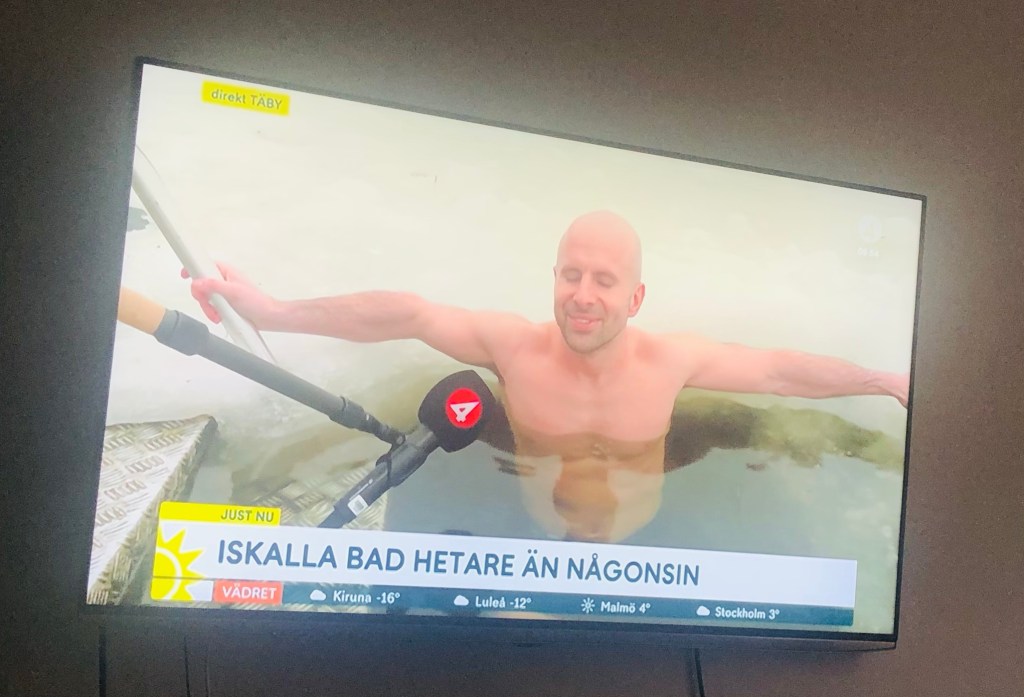
This winter, taking an outdoor ice bath has become very fashionable in Sweden. Disrobing and lowering yourself into frozen lakes at below zero temperatures is considered very healthy for the body and its ability to repair itself.
Spring has now arrived and the ice is melting but die hards are still squeezing the last out of the ice batheing season. Like this guy featured on TV, who regularly sits in the frozen lake – for 20 minutes at a time!
This may seem like a long time, but actually it is nothing compared to the world record. The world record for ice submersion is held by Austrian Josef Koerbel who, in 2020, held himself under ice for 2 hours and 30 minutes. In his case, it was in an ice box on a public square in the town of Melk.
Brrrr.
So, what about you? Do you feel enticed by the concept of plunging into the chilly depths to take an ice bath? Or would you rather keep yourself wrapped up warm and toasty on the bank of the lake?





 Watching the Swedes