The land of the lagom


One of the first words you learn as a foreigner in Sweden is ‘lagom’. In English, there isn’t one word to sum it up. Roughly translated it means ‘enough, sufficient, adequate, just right’. Lagom is widely translated as ‘in moderation’, ‘in balance’, ‘optimal’ and ‘suitable’. While words like ‘sufficient’ suggest some degree of abstinence or scarcity, ‘lagom’ carries the connotation of appropriateness.

Similar to the concept of the middle path in Eastern philosophy, or Aristotle’s ‘golden mean’ of moderation in Western philosophy, it is said that the concept of lagom penetrates the Swedish way of life. Indeed the word lagom can be used in many situations to describe something that is ‘just right’.

Living in Sweden, you hear the word ‘lagom’ often. And just when you think you’ve understood it, something happens that makes it clear that you haven’t understood it at all.

For example, a person can be ‘lagom tall’ or ‘lagom short’ but that is not necessarily the same height.

Things can be ‘lagom funny’. Although said with some irony perhaps, what does this actually mean? That something is funny – but not too funny?!?

Lagom can also be used as an adjective – ‘that jacket is lagom on you’. Does this means it fits perfectly? Or does it mean it looks good enough – perhaps even mediocre?

And finally, things can be ‘precis lagom’, or precisely lagom. A concept that is so fuzzy for those of us not indoctrinated into it, can also be really exact.

The word lagom is generally believed to stem from the days of the vikings. When the vikings would pass around the mead to be drunk, it was important to take enough but not too much. The mead should last for the whole crew (in Swedish ‘lag’ + around ‘om’ Lagom = round the whole crew). Other etymologists claim that it comes from the Swedish word for law – lag – and means according to the folk law, or ‘according to common sense’ as we would say in English.

Whatever the origin, there is a meaningful cultural significance of the word lagom. The value of “just enough” is seen favorably in society as a sustainable alternative to the hoarding extremes of consumerism. But it could also be viewed as repressive – for example, it’s less ok to be too showy about wealth and power.

In a single word, lagom is said to describe the basis of the Swedish national psyche, one of consensus and equality. Despite a shift towards individualism and risk-taking in recent years, it is still widely considered ideal to be modest and avoid extremes.

But is Sweden really as lagom as it thinks in comparison to other contries? There are research databases that claim otherwise. I’ll talk about these in a later blog.

Right now, this amount of text feels, well,….lagom.
Swearing till you’re blue in the face


Any foreigner arriving in Stockholm yesterday would have been surprised to see the tons of snow that were dumped on the city from the heavy sky. Even though they couldn’t speak Swedish, they would have picked up on one expression – a word that was heard on everybody’s lips. A word that had to be the most commmon word of the day yesterday.

The word? Fan!

The meaning? Something like fuck/shit/damn and used in this case in disappointment and dismay as the snow lashed down.

Swearing in Swedish is usually something I try to avoid. I think it’s difficult to swear in a foreign language because you don’t really understand the nuances and strength of the word in question. It’s easy to cause offence.

A recent article in a newspaper took up this issue of swearing in different cultures. All cultures have swear words and most of them are connected to what is considered taboo in that culture. Common themes are religion, genitals, toilet, sex and mothers.

In the Nordic countries, ‘mother’ isn’t such a loaded theme and therefore doesn’t feature in the common swear words. The strongest swear words are those connected to genitals, usually the female.

If you know more Swedish words than ‘fan’ and you’re interested in reading more, here’s the link:

http://www.svd.se/nyheter/idagsidan/samhalle/han-ar-expert-pa-svarande_5929059.svd

New Swedish words


In January, Sweden’s leading newspaper looks back at the year that’s been and selects all the new words that have been created. Swedish media are really good at preserving the Swedish language and creating new words, and this is an important function for all small languages. The varacious apitite of English is slowly devouring small languages around the world.

Some of the new words that came up in 2010:

Sosseväskan – Socialist Designer Handbag
Vabfebruari – February month when most parents stay home from work with sick kids
Köttklister – Glue that holds together bits of meat
Vulkanflyktning – people trapped abroad after the volcanic eruption on Iceland
Playa – to watch a program on the internet that you missed when it was broadcast on the tv
Grogghaggor – Booze bitches – relating to the Sex and the City gang (and the like)
70 percenter – a person who waits to the final week of the sales
Pinjemun – to eat a bad pine kernel and get a bad taste in the mouth for weeks
Fritzla – to hide something or somebody very successfully
Hipsterbuk – the fat that hangs over the top of too-low-cut jeans
Kaffeflicka – a woman who is invited to gentlemen’s dinners to drink coffee (revealed in a scandalous book about the king)

Dreaming of a white Christmas


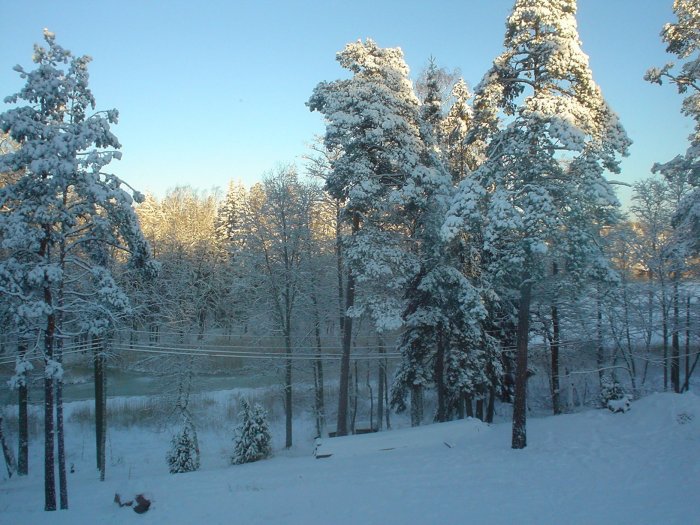
It’s snowing again. Yes, it is. It’s snowing. In fact, it’s been snowing since November so the chances of us not having a white Christmas this year are very slim. At Christmas, it should be snowy I think. It’s all part of the romanticism. But I can happily skip it the rest of the winter. Swedes will tell you that it’s better than rain. I disagree. They often justify it by saying that snow brightens up the darkness. True but I’m still not a big fan.

It’s no suprise that Sweden is a snowy country and this close relation to snow is reflected in the language. The eskimos have, apparently, 40 words for ‘snow’. I’m not sure how many words in Swedish there are for snow, but there are many. There’s just ‘snow’, then there’s ‘wet snow’ (blötsnö), ‘snow-blended rain'(snöblandad regn), ‘powder snow’ (pudersnö), ‘slush’ (slask), ´corn snow´ (kornsnö), snow hail'(snöhagel) and loads more.

And then there are fabulous words such as ‘skare’ which means snow crust and, my personal favourite, ‘dagsmeja’. This is snow that is melting on a sunny day even though it’s below freezing. Above freezing is thawing. ‘Kramsnö’ is the type of snow perfect for snowballs and ‘isnålar’ are small snow crystals that seem to float in the air.

I wonder how many words we have in English for rain?

Curling parents


Last night, on Swedish television, a new programme aired. Called ‘Young and Spoiled’, it is a reality show about a group of young people who are very spoiled by their parents. The programme could easily have been called ‘Spoilt Rotten’. These ‘kids’ are aged between 18 & 24, and have never worked a day in their lives. They are put into a house together to see how they manage fundamentals such as cooking, cleaning and getting up to go to work. Of course, they don’t. And therein lies the entertainment.

I was fascinated less by the kids and more by the parents. Misguided adults who don’t see that they are doing their offspring no favours in life by pandering to their every whim.

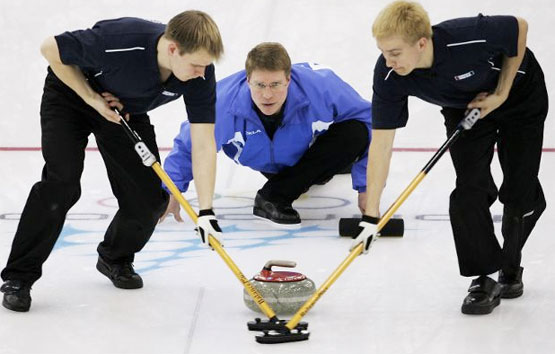
In Swedish, because it is so common, there is a word for these type of parents. They are known as ‘curling parents’ – a reference to the Olympic sport of ice curling. Just like in the icy sport, curling parents smooth the way for their children. They sweep away any obstacles and make life easier. They think they are taking their role as a parent seriously. Life is so difficult anyway that they should try to cushion the blows for their,let’s face it, grown up children. But what they’re really doing is robbing their children of the chance to develop essential life skills and feel a sense of personal responsibility and achievement.

As far as I know, there is no equivalent word in English for ‘curling parents’.

This must be because they don’t exist in the UK. Right?

Don’t be Swede-like


Working with a couple of Spanish people today, I heard an interesting comment about Swedes.

Apparently in Spanish, they have a common saying – ‘Don’t be Swede-like’ or ‘Don’t do the Swedish thing’. I asked the two Spaniards what this saying means.

In Spain, they use this expression when somebody is pretending to listen but doesn’t really care about what you have to say. They are going to do their own thing anyway, regardliess of what you think.

Interesting perspective, wouldn’t you say?

The case of the battling tools


Sometimes foreign language speaking can be just so wrong.

I was running a workshop in communication the other day, and one of the participants described a problem that he had experienced. He had a template that he wanted to introduce at work, but a colleague had a different template that he also wanted them to use.

The problem was that both had competing templates that served the same purpose. So I aked the participant how he solved the problem.

‘Well,’ he said, ‘it was very easy. I just asked him to show me his tool. Then I showed him my tool and we agreed the one with the best tool would win.’

As I said, sometimes foreign language speaking can be just so wrong.

So you think you can speak Swedish?


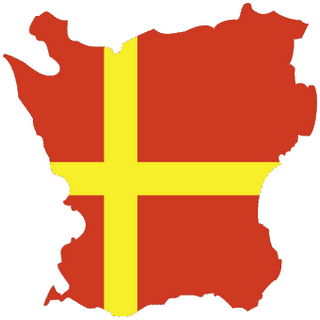
I remember the first time I visited Skåne, in the south of Sweden. I flew to Malmö airport and boarded the bus to the city. As I boarded, the driver looked up at me and spoke. Now, I thought I could speak Swedish, but I didn’t understand a word the driver said.

I asked him to repeat. He repeated. And I still didn’t understand a thing.

You see, he wasn’t speaking Swedish. Well not as I know it. He was speaking Skånish -the dialect they have in this part of Sweden. And to me, it was indecipherable.

He might as well have speaking Swahili.

Now many years later, after 3 years of living in Skåne and very many visits, I can understand the dialect a little better. But still, it is really difficult. I always get my partner to make phone calls to plumbers, electricians and the like when we need help around the house. I know I probably won’t be able to understand a thing they say to me.

To help me in my language development, a friend gave me a dictionary. It is a Swedish-Skånish dictionary, and I recommend it to anyone venturing into this part of the country and to anyone who thought they could speak Swedish.

Here are some gems:

Potato
Potatis (Swedish), Pantoffel, Pantålla (Skånish)

Penis
Penis (Swedish), Koddastake (Skånish)

Strong coffee
Starkt kaffe (Swedish), Rävegift (Skånish)

Garden
Trädgård (Swedish), Have (Skånish)

Clothes
Kläder (Swedish), Töj (Skånish)

Linguistic limbo


I find that writing this blog has heightened my awareness of my surroundings – made me more míndful. I regularly see, hear, experience things and think – yes, that’s definitely blogworthy. And I come home and write.

But one thing I’ve noticed. It’s not that easy. I struggle sometimes with my English.

Having lived in Sweden for 16 years, I find I do not speak English the way I used to. Swenglish creeps easily into my writing, often without me even noticing it. The prepositions are the worst – for example, is it ‘at’ Midsummer or ‘on’ Midsummer (‘s Eve)? I battle with myself.

And I realise something.

My English is frozen at the level it was when I left England. My Swedish is not as good as my English.

I am in lingustic limbo.

The little people


Right now, Carl Henrik Svanberg must be the most famous Swede on the planet. The CEO of BP was filmed giving his statement of apology to the American people and this film has spread like, well, an oil slick, all over the world. In his apology speech, he said,

‘We care about the small people’

And this has caused a mixture of outrage and ridicule. Of course, he meant to say ‘ordinary people’. ‘Small people’ is a direct translation from Swedish and can be equated with ‘the man on the street’. And it’s a clear example of inappropriate Swenglish.

It wouldn’t have been so bad, maybe, if ‘small people’ wasn’t such a derogatory comment in English. Small people – the insignificant, unimportant, expendible people who have suffered in the wake of the worst oil disaster in history.

In a tv interview on Swedish televsion the day after, Carl Henrik excused himself saying that his English is not perfect, it’s ‘alright’.

For me, this is not acceptable. I fully accept that people don’t speak a foreign language as well as their own. Lord knows my Swedish is no way near as fluent as my mother tongue. But I am not the CEO of a global corporation.

On that level, there is no excuse for bad English, no matter where you’re from. There’s no excuse for making stupid language mistakes that could so easily be avoided. And there’s no excuse for being so blasé about it afterwards.

So, Carl Henrik, welcome back to Sweden. You’d better enjoy it because this is where you’re going to have the rest of your career.