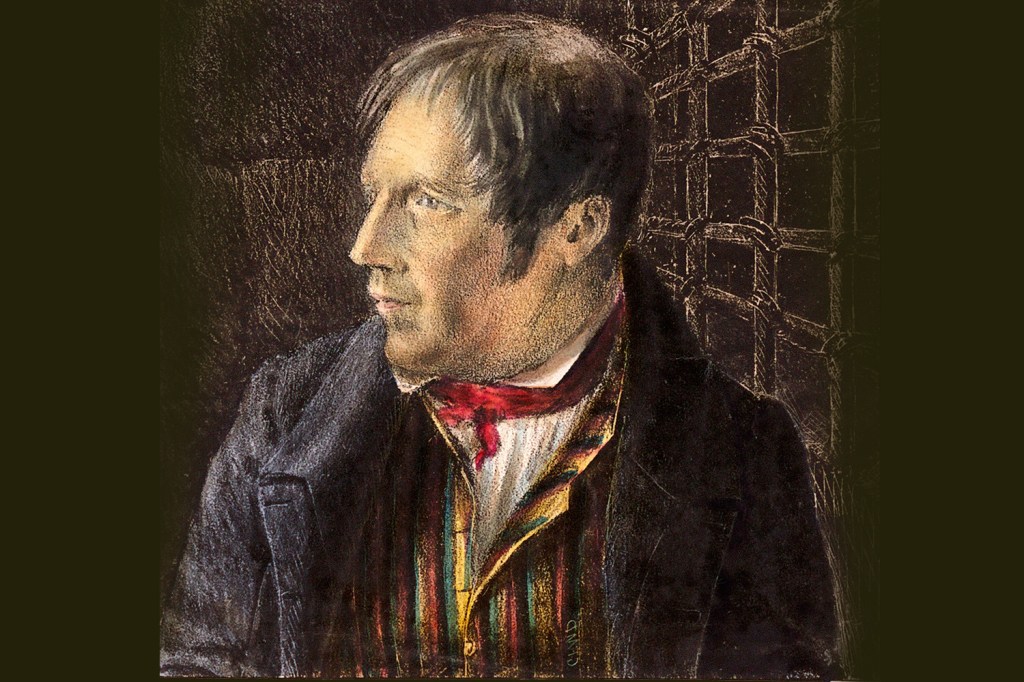
Swedish icons 21: Lasse-Maja, a legendary criminal

In my local park, there is a little urban zoo where you can see goats, sheep, rabbits, hens and two portly pigs. The hog is called Lasse and the sow is called Maja. They are named after a man called Lasse-Maja – a legendary name in Swedish culture.

It struck me, however, that I’ve only really heard his name – I didn’t really know who he was. So I researched him. And I was met by a story that was fascinating and tragic in equal measure.

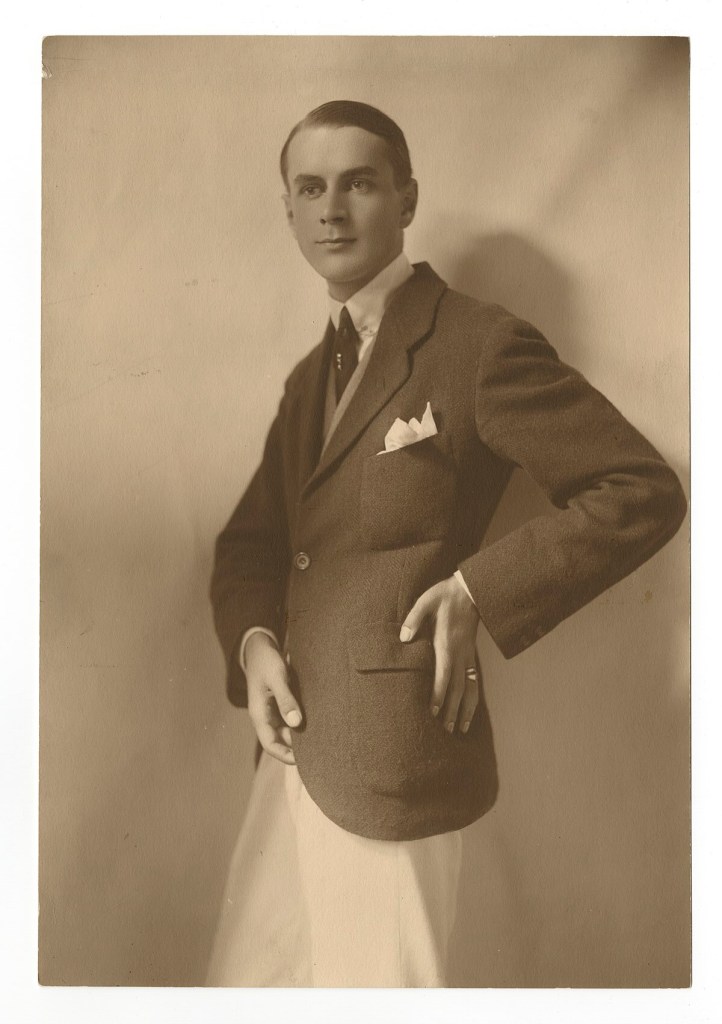
Lars Larsson, later Molin, was born in 1785, and went on to become one of Sweden’s most notorious criminals. He wrote a sensational autobiography about his escapades in 1833 and this book was extremely popular because it contained adventure and, not least, explicit sex scenes. It still continues to fascinate Swedes, with the latest publication coming out in 2016.

So, why the nickname Lasse-Maja? Lasse is a man’s name, and Maja is a female name. Well, he was given this gender-combined name because he periodically lived as a woman. He often dressed as a man when he committed his crimes, as it was more comfortable. However, he lived long periods as a woman and supported himself as a maid, housekeeper and prostitute. By today’s terms, he probably would have identified as transgender. His book is one of the few 19th Century works to describe the transgender experience, which added to its mystique and popularity. In this article, I will use the pronoun ‘he’ for ease.

Lasse-Maja’s life was one of poverty and misery. He was a serial liar and petty thief who was arrested over 30 times and frequently escaped. He became notorious amongst citizens and was written about in newspapers. However, in 1812 he stole silver from a church in Järfälla, just outside of Stockholm. He was captured, sentenced to life and shipped off to the fortress prison on the west coast island of Marstrand. He even managed to escape from this military building on one occasion, but was later caught and returned.

Lasse-Maja was an inventive and guileful person and quickly gained a position of privilege in the prison. He made sure that his reputation spread to the outside world, and convinced the authorities to arrange for tourists to visit him and hear his elaborate stories. His celebrity became so large that he was even given an audience by Crown Prince Oscar.

In 1839 he was pardoned, probably because of the popularity of his book. He traveled the country telling his stories and died in Arboga in 1845, where he is buried today. Several books and films depict his life, and in the fortress prison there is a plaque to commemorate him. He also has a walking trail, a skerry, a tv show, a pre-school and a hotel named after him.

Lasse-Maja would probably never have been remembered in Swedish culture if it wasn’t for the autobiography, the female clothing and his skill for self promotion. Popular culture depicts him as a happy-go-lucky, cheeky, lovable rogue. However, Lasse-Maja was no Robin Hood – the truth is that his life was extremely tough and without much joy. He lived a life of crime, deceit and despair.

Today, it is hard to really know Lasse-Maja’s truth. He was a first class liar, manipulator and fabulator. However, one thing is certain; Lasse-Maja holds the position of the most famous transperson in Swedish history.


Why is May 1st celebrated in Sweden?

In Sweden, and in many other countries, May 1st has been embraced as the International Workers’ Day. In 1938, May 1st became Sweden’s first non-religious public holiday and has been an important celebration of labourers and the working classes since then.

But why specifically May 1st?

The answer is found in a massacre in the USA. On 1 May 1886, laborers in Chicago went out on strike for an 8 hour working day. On 4 May 1886, Chicago police and the demonstrators clashed and 11 people died. The event is called the Haymarket massacre. Seven of the demonstrators were sentenced to death, despite lack of evidence. To commemorate the massacre, the socialist organization suggested that 1 May should become day of demonstrations every year.

Around Sweden, traffic is shut off, huge flag-waving demonstrations are held and people gather to hear speeches from their politicians and representatives. Since the demonstrations are most commonly from the political left, the streets are awash with bright red flags and banners. However, this year, like 2020, is different. As large public gatherings are banned, the speeches are instead broadcast from a studio over Facebook and YouTube.

Contrary to the stereotype, not everybody in Sweden supports left wing political groups. Many Swedes lean towards the centre or the right. For them, today is just a day off work – an opportunity to perhaps nurse hangovers from the festivities of the previous evening or to relax, watch Netflix, go for a walk and enjoy the day.

Walpurgis Eve – when spring arrives in Sweden

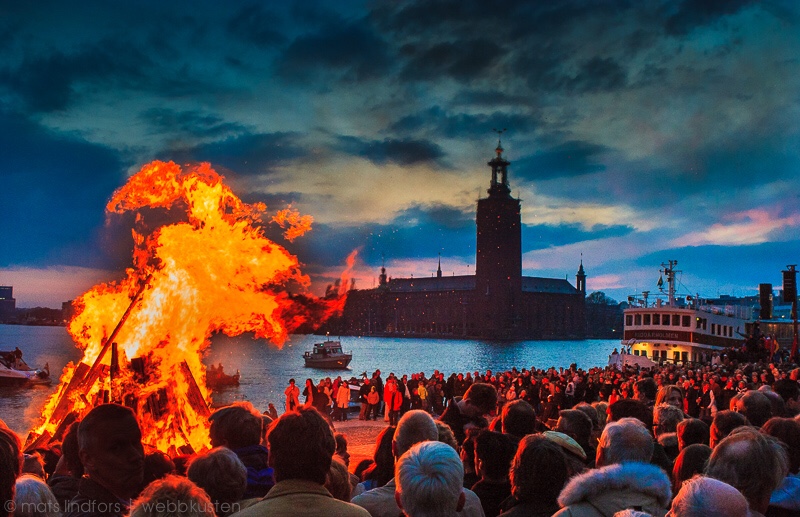
Today, 30 April, is Walpurgis Eve, called Valborgsmässoafton in Swedish. The name Walpurgis is taken from the eighth-century Saint Walburga, and in Sweden this day marks the arrival of spring.

On this evening, Swedes usually gather to celebrate together. This pandemic year is of course slightly different as crowds are not allowed.

The forms of celebration vary in different parts of the country and between different cities. Essential celebrations include lighting a large bonfire, listing to choirs singing traditional spring songs and a speech to honour the arrival of the spring season. Walpurgis bonfires are an impressive thing to see and are part of a Swedish tradition dating back to the early 18th century. At Walpurgis, cattle was put out to graze and bonfires lit to scare away predators.

The weather is often unpredictable on Walpurgis Eve. It can be sunny and warmish, or it can still snow on 30 April! Despite bad weather, Swedes still shiver around the bonfires and ironically celebrate the arrival of Spring.

Swedish icons 19: Nils Dardel

Nils von Dardel was born in 1888 in Bettna, Södermannland. He is considered one of Sweden’s most important post impressionist artists and his painting ‘Vattenfall’ is the most expensive modernistic Swedish painting ever to be sold at auction.

Born into a wealthy, cultural elite, Nils Dardel was able to spend his life as a nomad. On his travels around Europe, USA, Peru, Mexico, Asia, he painted people from varying backgrounds and all types of situations. He lived a self-destructive hedonistic lifestyle, which is apparent in several of his works , especially those from his pre-war burlesque Paris era.

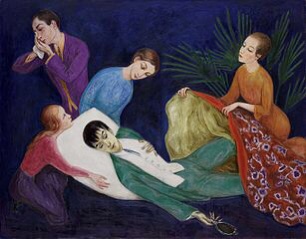
His paintings are often very colourful and depict eccentricity and ambiguous sexuality. One of his famous paintings is ‘The Dying Dandy’ which today hangs in Stockholm’s Modern Museum, and is perhaps one of the most recognisable pieces of art from Sweden. Some of his other paintings are today on display around Sweden as well as in Paris, Oslo and Hamburg.

For 12 years, Nils Dardel was married to painter and author Thora Dardel although, given his hectic and bohemian lifestyle, he had affairs with both men and women. Together, they had one child – Ingrid – also herself an artist. She, in turn, became mother to two contemporary and acclaimed artists Henry Unger and Nils Ekwall.

Nils Dardel died of a heart attack in 1953 in the artist hotel The Beaux Arts on 44th Street in New York. He is buried on the island of Ekerö outside Stockholm.

60 years ago – a momentous Swedish event

On this day, 60 years ago in 1961, something amazing happened in Stockholm’s harbour. This event would cast the Swedish people back 333 years and come to change the face of tourism in Scandinavia.

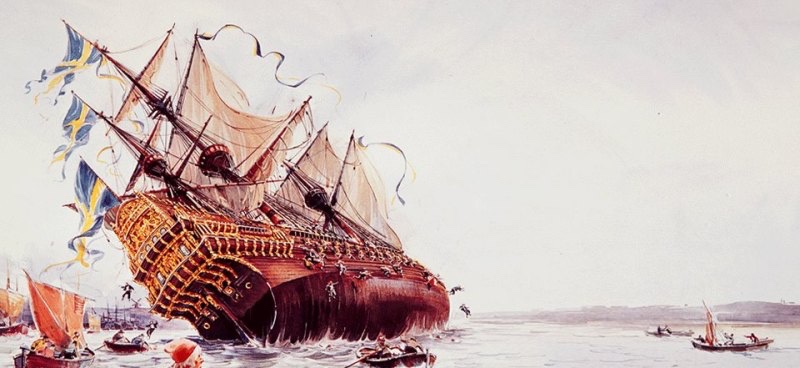
In 1626, a grand battleship was commissioned by King Gustav II Adolf. He was expanding his realm into the Baltic and wanted a battleship that would be beautiful, awe inspiring and armed to the teeth. When she was completed she was richly decorated, with bronze cannons and was one of the most powerfully armed vessels in the world. He called the ship the Vasa, after his grandfather.

However beautiful she was, the flagship Vasa was dangerously unstable, with too much weight in the upper structure of the hull. Despite her obvious lack of stability, she was sent on her maiden voyage in 1628, and after only a couple of minutes afloat, she sank to the bottom of the harbour. The King was of course livid, and after a long process, blame fell upon the ship’s designer Henrik Hybertsson. As he had been dead for a year, he couldn’t defend himself, and instead became a historic scapegoat. King Gustav II Adolf himself died 4 years later at the Battle of Lützen.

The Vasa’s bronze canons were salvaged in the 1700’s after which she was forgotten, left to her watery grave. But then, in 1956, her exact location was identified and 5 years later, on April 25th, she was raised to the surface.

The Vasa ship is the only 1600’s galleon in the world that has been salvaged in such good condition. The cold, dark, brackish waters of the Baltic meant that the wood did not rot, and the ship’s huge hull was almost completely preserved. Today, the fully-restored ship and its other contents, are displayed in an enormous museum in central Stockholm. It is the world’s best preserved 17th century ship and Scandinavia’s most visited museum. On the roof of the museum, the masts indicate how high the ship was on its day of launch.

When traveling is allowed again, and museums are reopened, you must visit Stockholm. When you’re here, your top cultural priority should be the Vasa Museum. You will be blown away by the sheer dimension of this boat and you too will be thrown back to a time when Sweden was a great military power to be reckoned with.

For more information, go to http://www.vasamuseet.se

Infidelity, despair and revenge – Swedish style

They say that revenge is best served cold, and nothing is colder than what the ‘Cuckold of Skeppsbron’ did in Stockholm.

As you walk along the road of Skeppsbron, you have the harbour and Baltic Sea on one side, and the historical houses of the Old Town on the other. When you approach number 44, take a look above the door and you’ll see a stone face sporting an exaggerated expression of despair. And below the grimace, if you look carefully, you’ll spot a carving of a vulva.

Legend has it that the face belongs to a wealthy merchant called Carl Smitt, who owned the building. He discovered that his wife had been cheating on him. In revenge, he had her genitalia sculpted and mounted on the wall, so that all the world would know her betrayal. Above her privates, he installed his own tormented face.

Wanting to add to her shame, he had the sculpture of his face designed so that on rainy days, the water would fall from his eyes like tears, splashing his wife’s genitalia below.

So revenge isn’t just best served cold. It’s also served in stone and lasts over many centuries.

Shakespeare in Sweden

Today 23 April is the anniversary of the death of William Shakespeare. The literary giant died this day in 1616, aged 52. Shakespeare was world-famous for his many plays and sonnets – one of his most noted works being based in Denmark. But what about Sweden’s relationship to the Bard of Avon?

The Swedes were initiated into the poetic musings of Shakespeare in 1592, but he didn’t gain popularity until some 150 years later. The first translation into Swedish came in 1813 and was of the macabre Macbeth. Today, Shakespeare is the second-most frequently produced playwright in Sweden. Not surprisingly August Strindberg is in first place. Romeo and Juliet seems to be the most popular play to produce, followed by Twelfth Night and Hamlet.

Three of my most memorable theatre experiences in Sweden were in fact Shakespeare. The first was at Drottningholm Palace Theatre outside of Stockholm. This amazing theatre, built in 1766 is the world’s oldest preserved theatre. Still in its original condition, with its original mechanical stage, it is a wonder to behold. In the lush gardens of the theatre I watched a performance of Macbeth – around Midsummer time. The Scandinavian blue lit background and the (luckily) balmy weather contributed to a magical evening.

The second experience was Richard III, starring the charismatic actor Rikard Wolff. The play was performed at Stockholm’s Stadsteater where we, the audience, sat in a rotating auditorium, like a fairground ride. As the play progressed, we spun around to witness scenes that were gruesome and beautiful in equal measure.

The most memorable, however, was when I was visiting the Ice Hotel in Jukkasjärvi in Swedish Lappland. The year I was there, they had built a replica of Shakespeare’s Globe Theatre completely in ice, on the edge of the Torneå river. Like the original, it was open to the heavens. There I sat, wrapped in thermal clothes in minus temperatures, on a block of ice covered in reindeer skin, and watched a performance of Hamlet in Sami. As the play progressed, the sky shifted colour and fat flakes of snow fell down onto the proceedings. It was one of the most remarkable and memorable experiences I’ve ever had. During the interval, we retreated to the ice bar, and drank vodka shots from ice glasses. A few months later and the theatre ceased to exist – it melted back into the river.

What is your most memorable experience of a Shakespeare performance?

Stockholm Syndrome – what is it?

The names Birgitta Lundblad, Elisabeth Oldgren, Sven Säfström and Kristin Ehnmark are not known to many people. However, they played an important role in the concept called Stockholm Syndrome.

On 23 August 1973, the four were taken hostage in Kreditbanken in Stockholm, by Jan-Erik Olsson – who was later joined by a former prison mate. Six days later when the siege ended, it became evident that the hostages had developed a positive relationship with their captors. They defended them, saying they were, for example, kind, generous and thoughtful. One of them even appealed on their behalf to Prime Minister Olof Palme. They refused to testify, and started a campaign to raise money for their kidnappers’ defense.

The syndrome was identified by criminologist Nils Bejerot. Psychiatrist Dr Frank Ochberg went on to define the syndrome as a situation where victims form positive attachment to their oppressors. He developed the process that people suffering from Stockholm Syndrome go through.

Firstly, there is an initial experience that is surprising and terrifying. The victims are certain they are going to die. Then they experience a type of infantilisation – where, like a child, they are unable to eat, speak or go to the toilet without permission. Small acts of kindness – such as being given food – prompts a primitive gratitude for the gift of life. The hostages experience a powerful, primitive positive feeling towards their captor. They are in denial that this is the person who put them in that situation. In their mind, they think this is the person who is going to let them live.

One of the Swedish hostages, Elisabeth Oldgren was allowed to leave the vault that had become their prison but only with a rope fixed around her neck. She said that at the time she thought it was “very kind” of Olsson to allow her to move around the floor of the bank.

One famous case of Stockholm Syndrome is Patty Hearst who was kidnapped by revolutionary militants in 1974. She appeared to develop sympathy with her captors and even became their partner in crime.

Natascha Kampusch was another case. Kidnapped and molested as a 10-year-old by Wolfgang Priklopil, she was incarcerated in a basement for eight years, but yet she mourned his death and lit a candle for him. Years after her escape in 2006 she still carried a photo of him in her wallet.

Today, psychologists see Stockholm Syndrome arising in other situations than kidnapping: abusive marriages, trafficking and sports coaching, for example. In popular culture, the excellent Netflix series ‘Le Casa De Papa’ depicts a robbery in the National Treasury and the ‘Síndrome de Estocolmo’ that several hostages experience.

In 2019, a film called Stockholm was released. Starring Ethan Hawke and Noomi Rapace it loosely tells the story of those fateful 6 days in 1973.

Stockholm Syndrome – what is it?

The names Birgitta Lundblad, Elisabeth Oldgren, Sven Säfström and Kristin Ehnmark are not known to many people. However, they played an important role in the concept called Stockholm Syndrome.

On 23 August 1973, the four were taken hostage in Kreditbanken in Stockholm, by Jan-Erik Olsson – who was later joined by a former prison mate. Six days later when the siege ended, it became evident that the hostages had developed a positive relationship with their captors. They defended them, saying they were, for example, kind, generous and thoughtful. One of them even appealed on their behalf to Prime Minister Olof Palme. They refused to testify, and started a campaign to raise money for their kidnappers’ defense.

The syndrome was identified by criminologist Nils Bejerot. Psychiatrist Dr Frank Ochberg went on to define the syndrome as a situation where victims form positive attachment to their oppressors. He developed the process that people suffering from Stockholm Syndrome go through.

Firstly, there is an initial experience that is surprising and terrifying. The victims are certain they are going to die. Then they experience a type of infantilisation – where, like a child, they are unable to eat, speak or go to the toilet without permission. Small acts of kindness – such as being given food – prompts a primitive gratitude for the gift of life. The hostages experience a powerful, primitive positive feeling towards their captor. They are in denial that this is the person who put them in that situation. In their mind, they think this is the person who is going to let them live.

One of the Swedish hostages, Elisabeth Oldgren was allowed to leave the vault that had become their prison but only with a rope fixed around her neck. She said that at the time she thought it was “very kind” of Olsson to allow her to move around the floor of the bank.

One famous case of Stockholm Syndrome is Patty Hearst who was kidnapped by revolutionary militants in 1974. She appeared to develop sympathy with her captors and even became their partner in crime.

Natascha Kampusch was another case. Kidnapped and molested as a 10-year-old by Wolfgang Priklopil, she was incarcerated in a basement for eight years, but yet she mourned his death and lit a candle for him. Years after her escape in 2006 she still carried a photo of him in her wallet.

Today, psychologists see Stockholm Syndrome arising in other situations than kidnapping: abusive marriages, trafficking and sports coaching, for example. In popular culture, the excellent Netflix series ‘Le Casa De Papa’ depicts a robbery in the National Treasury and the ‘Síndrome de Estocolmo’ that several hostages experience.

In 2019, a film called Stockholm was released. Starring Ethan Hawke and Noomi Rapace it loosely tells the story of those fateful 6 days in 1973.

Stockholm Syndrome – what is it?

The names Birgitta Lundblad, Elisabeth Oldgren, Sven Säfström and Kristin Ehnmark are not known to many people. However, they played an important role in the concept called Stockholm Syndrome.

On 23 August 1973, the four were taken hostage in Kreditbanken in Stockholm, by Jan-Erik Olsson – who was later joined by a former prison mate. Six days later when the siege ended, it became evident that the hostages had developed a positive relationship with their captors. They defended them, saying they were, for example, kind, generous and thoughtful. One of them even appealed on their behalf to Prime Minister Olof Palme. They refused to testify, and started a campaign to raise money for their kidnappers’ defense.

The syndrome was identified by criminologist Nils Bejerot. Psychiatrist Dr Frank Ochberg went on to define the syndrome as a situation where victims form positive attachment to their oppressors. He developed the process that people suffering from Stockholm Syndrome go through.

Firstly, there is an initial experience that is surprising and terrifying. The victims are certain they are going to die. Then they experience a type of infantilisation – where, like a child, they are unable to eat, speak or go to the toilet without permission. Small acts of kindness – such as being given food – prompts a primitive gratitude for the gift of life. The hostages experience a powerful, primitive positive feeling towards their captor. They are in denial that this is the person who put them in that situation. In their mind, they think this is the person who is going to let them live.

One of the Swedish hostages, Elisabeth Oldgren was allowed to leave the vault that had become their prison but only with a rope fixed around her neck. She said that at the time she thought it was “very kind” of Olsson to allow her to move around the floor of the bank.

One famous case of Stockholm Syndrome is Patty Hearst who was kidnapped by revolutionary militants in 1974. She appeared to develop sympathy with her captors and even became their partner in crime.

Natascha Kampusch was another case. Kidnapped and molested as a 10-year-old by Wolfgang Priklopil, she was incarcerated in a basement for eight years, but yet she mourned his death and lit a candle for him. Years after her escape in 2006 she still carried a photo of him in her wallet.

Today, psychologists see Stockholm Syndrome arising in other situations than kidnapping: abusive marriages, trafficking and sports coaching, for example. In popular culture, the excellent Netflix series ‘Le Casa De Papa’ depicts a robbery in the National Treasury and the ‘Síndrome de Estocolmo’ that several hostages experience.

In 2019, a film called Stockholm was released. Starring Ethan Hawke and Noomi Rapace it loosely tells the story of those fateful 6 days in 1973.