Non-binary Swedish and English

For a while now the non-binary pronoun ‘hen’ has been used in the Swedish language. ‘Hen’ is used to refer to somebody who does not relate or feel represented by the established pronouns for he (han) and she (hon). Initially met with ridicule by some people in Sweden, the ‘hen’ pronoun is slowly starting to gain in usage amongst Swedes and in ordinary vernacular.

I have long assumed that non-binary pronouns do not exist in English apart from the neutralizing use of ‘they’. Imagine my surprise when I read an article today in the Huffington Post which proved me wrong. The article talked about the queering of language. The guide to English non-binary pronouns are presented in the table.

It’ll certainly take some getting used to to add new pronouns into the vocabulary. However, language is one of our greatest tools for celebrating diversity and increasing inclusiveness.

For that alone, I think it’s worth the effort.

100 years of Swedish actresses who conquered Hollywood

alicia and greta

It can hardly have escaped anyone’s attention that Swedish actress Alicia Wikander is currently the sweetheart of Hollywood. Receiving an Oscar, marrying film star Michael Fassbender, coupled with fantastic acting ability, grace and poise, has positioned her firmly as the actress of her generation.

As I read about Alicia, I became curious about other Swedish actresses who have conquered Hollywood. To my surprise, she is the latest in a list of Swedish actresses stretching back 100 years. I found that there was at least one Swedish actress who broke through per decade (with questionable exception of the 90’s) and who made the Transatlantic step from Nordic success to international recognition and fame.

Here’s the list,

  • 2010s – Alicia Wikander
  • 2000s – Noomi Rapace
  • 1990s – Urma Thurman (pushing it I know – she has roots in Trelleborg)
  • 1980’s – Lena Olin
  • 1970’s – Maud Adams
  • 1960’s – Ann Margret
  • 1950s – Anita Ekberg
  • 1940’s – Ingrid Bergman
  • 1930’s/20’s – Greta Garbo (dominated the 20’s and 30’s)
  • 1920’s – Sigrid Holmquist
  • 1910’s – Anna Q Nilsson 

Other internationally-famous Swedish actresses, past and present

  • Rebecca Ferguson (2010’s)
  • Sofia Helin (2010’s)
  • Malin Åkerman (2000’s)
  • Britt Ekland (1960’s)
  • Viveca Lindfors (1950’s)
  • Zarah Leander (1940’s – Europe, refused to relocate to USA)

Maybe you have a favourite that I have missed out? If so, who?

So, what is wrong with the Swedes?

perfection

Dipping into a book about Swedish culture, the opening paragraph starts this way…

‘In the world at large, especially in the English-speaking world, the Swedes seem to be universally popular. Their clean-cut profile as honest, caring, well-informed, efficient plodders who produce quality goods delivered on time sits well with their frequently well-groomed appearance, good sense of dress and (forgive the stereotyping) blond hair and blue eyes. Their English, grammatically proficient, is clean and crisp, like that of Scots who went to Oxford. They have impeccable manners and say all the right things – for the first 15 minutes. It is somewhat surprising, therefore, to discover that they are unpopular inside the Nordic area. The fact that none of the Swedes’ neighbors – Denmark, Norway, Finland – have any undue reputation for aggressiveness makes their antipathy all the more unexpected. What is wrong with the Swedes?

This is a question which the Swedes themselves have been trying to answer over the last few decades.”

So I am handing the question over to you, my dear readers.

Now’s your chance! What is wrong with the Swedes?

Please post your answers in the comments below, or on my Facebook page. Feel free to also share this blog and spread the question to a wider audience.

Swedes, and non-Swedes, are all welcome to comment! But please keep a respectful tone!

All Saints’ Day – the Swedish way 

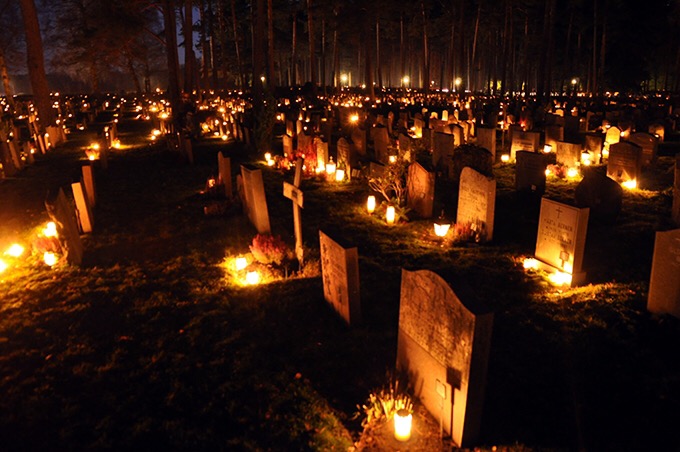
Dressing up as witches, vampires and other ghoulish things has become increasing popular in Sweden. However, the traditional way of celebrating this time of year is much more serene and romantic. 

In Sweden, the first Saturday in November is All Saints’ Day – not necessarily November 1st as in most other countries. In 1983, the Sunday after All Saints’ Day was given the official name All Souls’ Day to separate between the saints and the dead.

Since the 1800’s Swedes have, during this weekend, made pilgrimage to graveyards up and down the country to decorate the graves with candle light.

It is a beautiful experience to walk through the churchyards this weekend. In the pitch black November Nordic darkness, it is a peaceful reminder of those who have gone before us. If you happen to be in Stockholm, head for the Forest graveyard (Skogskyrkogården) for a specifically spectacular experience. 

Why are there so many gay nannies in Sweden? 

Photo: Johan Bävman 

Today was a rare Thursday. In the early afternoon, I got a moment to grab a coffee and sit in a cafe. Munching on my cardamom bun and sipping my latte, I looked around the room. Rather a large space with lots of seats. High ceilings. Modern Swedish design. And packed with people. 

A greater analysis of the demographic wasn’t really required. It was obvious from first glance that the majority of the guests were parental-leave parents – the armada of pushchairs being the biggest giveaway. 

About 50 percent of these guests were men. Bearded, beany-hatted, tattooed chillaxed dads. Trendy Swedish pappor. Taking advantage of the generous Swedish parental leave laws, these dads were enjoying their pesto pancake salads and bonding with their newborn infants. 

As I sat there I was reminded of a comment made to me some years ago by a friend visiting from Austria. After a couple of days in Sweden, observing the Swedes, she made an interesting reflection. 

She thought it was fantastic that there were so many gay nannies sitting in the cafes and patrolling the streets. 

Sweden truly is an amazing place! 

Weird Swedish rhubarb

rhubarb

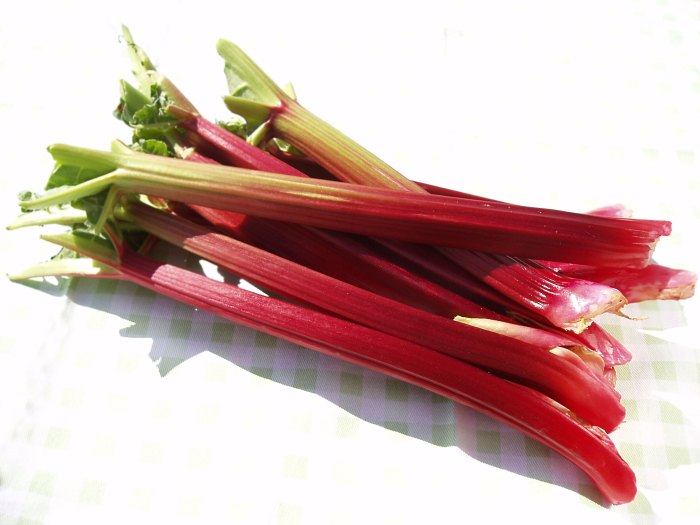
Watching TV this morning, I heard an expression I have never heard before in Swedish. It was an idiom – ‘att lägga rabarber på nåt’. Translated into English directly that is ‘to put rhubarb on something’.

This is a great example of an idiom and the fascinating thing about idioms is when translated directly, they mean nothing to those who are not initiated. But they have a clear and obvious meaning to those who understand its context. ‘Att lägga rabarber på nåt’ in English idiom would be something like ‘to stake a claim on something’ – in itself an idiom.

But why are Swedes putting rhubarb on things when they want them for themselves? Isn’t that a bit weird? Not when you understand where the saying comes from.

From the beginning, the expression was ‘att lägga embargo på nåt’ – embargo not rhubarb. The word embargo at that time was an unknown, strange word borrowed from Spanish and it meant ‘confiscate’. As it was an unusual word, it became quickly switched out for a more familiar similar-sounding one and ’embargo’ became ‘rabarber.’


What a discovery in a grave tells us about Swedish equality

female viking

Outside of Stockholm, there is an island called Björkö. On this island is a former Viking settlement called Birka. It is well worth a visit and is an active, on-going archeological site where new discoveries are constantly being made.  The area contains 3000 Viking graves, many containing high ranking warriors. Until recently, the presumption has been that these hold male remains but Swedish scientists have now revealed that the body of a warrior long presumed to be male is, in fact, female.

Scientists have assumed the skeleton to be male due to the status symbols buried along side it. However, after carrying out a DNA analysis, researchers from Stockholm University announced that the 10th Century skeleton is the first confirmed female high-ranking Viking warrior.

According to the researchers, this finding  “provides a new understanding of the Viking society, the social constructions and also norms in the Viking Age.”

“Our results – that the high-status grave on Birka was the burial of a high ranking female Viking warrior – suggest that women, indeed, were able to be full members of male dominated spheres.”

So it seems that gender equality in Sweden is not a new-found invention. It is something that stretches back, in its way, over many decades. Today, Sweden is amongst the top countries in the world to lead the Gender Equality Report. All cultural behaviour we see today stems from history and often from how we needed to survive as a society. Maybe today’s gender equality in Sweden started with the Vikings?

Warring neighbours: Sweden and Finland


finland-sweden-map,0

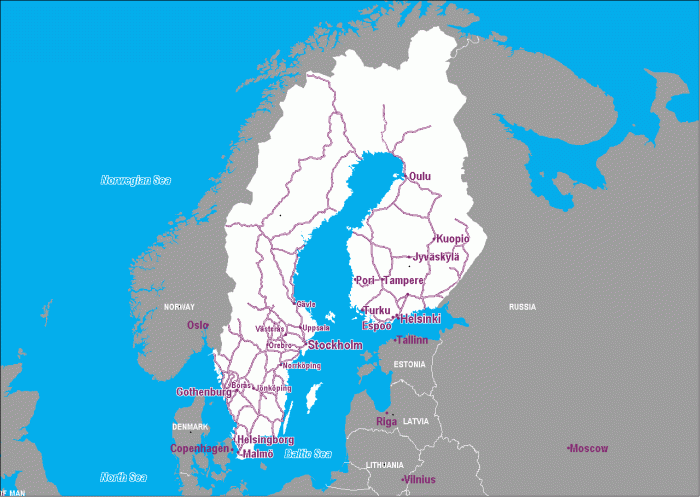
Many neighbouring countries around the world have had their fair share of conflict. Some countries are currently at war or teetering on the brink.

Thankfully, Sweden and the other Nordic countries have lived in peace with each other for centuries. However, Sweden and Finland still battle it out every year in an athletics competition between the two nations – the best type of neighbourly conflict. In Swedish, this is called ‘Finnkamp’ and in Finland it is called ‘Sverigekampen’. This year it is currently taking place in Stockholm.

The first Finnkamp took place in 1925 for men, and 1951 for women and it has taken olace every year, with a few exceptions for organisational disagreements and WWII. It is highly competitive, although friendly, and is a classic track and field event.

In total there have been78 annual competitions for the men and Finland leads 45-31 over Sweden. For the women, there have been 67 competitions and Sweden holds the lead at 41 to Finland’s 25. Let’s see how it ends up this year!

If you want to see the end of it, make your way down to Stadion in Stockholm today to catch the final events.


Amazing immigrants in Sweden: Part 2 Shori Zand

Shori-Zand-500x500

Negativity. Fear. Concern. These are some of the reactions many Swedes are experiencing about the influx of immigrants to Sweden in the last couple of years. So, I became curious to learn about some of those individuals who came here as refugees or immigrants to make a better life for themselves. People with roots somewhere else who built a home here and who contributed to Swedish society in a positive way.

For the next seven days, I will celebrate these people. My hope is that we can lift our eyes from the challenges of immigration and understand what useful contributions these people can make to society if given the chance. To our society. Our Sweden

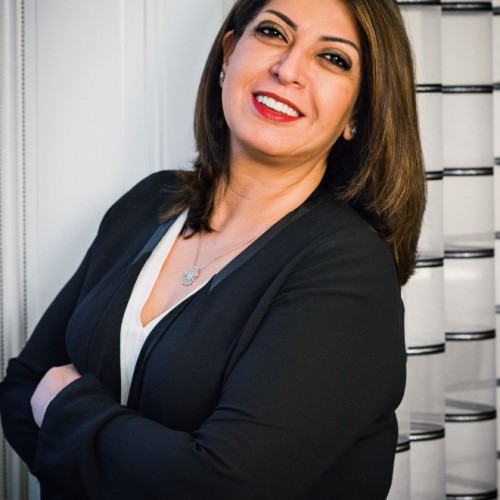
Part 2: Shori Zand, midwife and entrepreneur from Iran

Giving her sons a safer and more prosperous life was Shori Zand’s motvation when she arrived in Sweden in 1987. At the age of 25, she arrived with her husband, two small sons and three suitcases. And nothing else – except ambition.

In Iran, Shori had worked as a nurse so, once she had a command of the Swedish language, she re-trained to be a nurse in Sweden and then ultimately, a midwife.

In 2000, thanks to the relaxation of healthcare laws in Sweden, Shori saw an opportunity to open a midwife clinic in Linköping. By 2010 she had a healthcare organisation that turned over 400 million Swedish kronor. Providing care in maternity, elderly care, mammography, neurology, gynocology and hearing rehabilitation, Shori’s company ‘Avesina’ employed a staff of  1200 people.

Shori Zand is often referred to as a role model for female entrepreneurs. Apart from her successes with Avesina, she has won an array of prizes, been on the boards of ‘Svensk Näringsliv’, TLV and Nutek as well as advising the Swedish government in IT and being Vice President of the Swedish Organisation for Healthcare Entrepreneurs.

Shori Zand arrived in Sweden with almost nothing. She is now an integrated, respected and accomplished businesswoman who has enabled care for thousands of Swedes. She has also created jobs – for over a thousand people – and undeniably contributed to Sweden’s economy and society.

Starving children in a Stockholm museum 

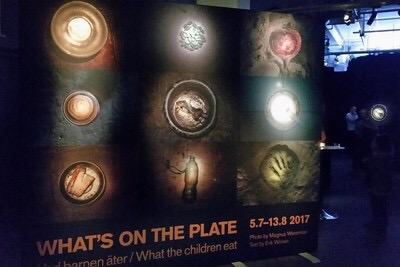
Stockholm’s Photography Museum is, in my opinion, one of the world’s best museums for seeing photographic art. If you haven’t been, I recommend one of the current exhibitions called ‘What’s on the Plate’ by Magnus Wennman and Erik Wiman. I saw it today and it is no easy exhibition to see. In fact it is very difficult to stomach. 

In picture and text, you see very recent depictions of starving children around the world and what they are forced to eat in order to survive. The exhibition asks for donations towards Save the Children. It is well worth a visit and runs until 13 August 2017. 

It is a sobering and humbling experience and a reminder of the overindulgence of our daily lives and the vast gap between the ‘haves’ and the ‘have-nots’. 
For more information: http://www.fotografiska.eu