So that’s what ‘Dackefejden’ means

As recently as today, I heard the Swedish expression ‘sedan Dackefejden’ (since the Dacke feud). It is used, often ironically, to describe something very old. ‘I haven’t heard this song since ‘dackefejden’, for example. Or ‘that car looks like something from dackefejden’.

I became curious to learn about this Dacke feud that everybody’s referring to. So I checked it out.

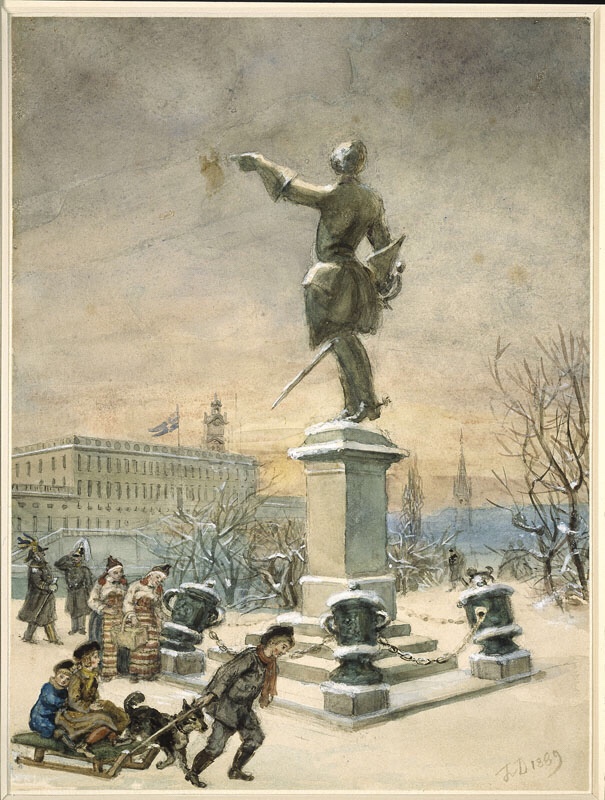
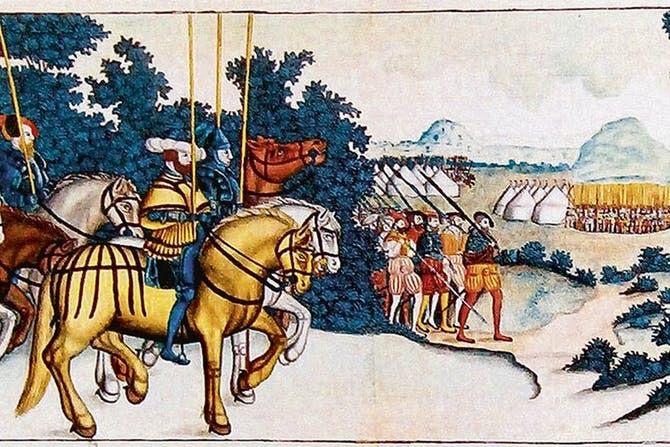
It happened 1542-1543, and was the biggest peasant uprising in Nordic history. It happened in the rural county of Småland in southern Sweden and was against King Gustav Vasa. The leader of the uprising was peasant Nils Dacke, and he was angry that the king had raised taxes and forbidden the sale of cattle and butter to the neighboring county of Blekinge, which at the time belonged to Denmark. Additionally, the king had plundered all the silver from their churches and wanted them to renounce their catholic faith.

So they rebelled, and took control of large parts of Småland and Östergötland. Such was their control, that Nils Dacke celebrated Christmas in Kronberg Castle outside of the town of Växjö.

Of course king Gustav Vasa wasn’t too happy about this feud and made various attempts to undermine the leaders. He offered sanctuary for those who surrendered, he slandered Nils Dacke as a false and unreliable person. And in 1543, he attacked – totally defeating and quashing the rebellion.

Nils Dacke was killed by the king’s soldiers. The people of Småland were punished with high taxes, the insurgents were banished to Finland, the leaders were executed and the whole of Dacke’s family was completely eradicated. So it really seemed to be a bad idea to argue with King Gustav Vasa.

And you literally won’t have met a member of the Dacke family ‘sedan dackefejden’.

5 things that are wrong with Sweden

When you’ve lived in a foreign country as long as I have, you become blind to the differences that were so obvious when you first moved here. That’s a natural development I guess. Call it emersion, or integration, or adaptation, or assimilation. Or in my case, Swedification.

However, there are still some differences in Sweden that I notice on a regular basis. Things so deeply ingrained in me from my cultural background that they still feel wrong in Sweden. Here are my top 5:

1) Front doors open the wrong way. Doors open outwards, instead of inwards. That means if you are visiting someone, ring their doorbell and stand on the landing, there is a big risk that you get smacked in the face as they open the door outwards, towards you. It’s just wrong!

2) Plumbing is often on the outside of the walls. Especially in bathrooms, and around radiators, ugly pipes are not hidden behind the plaster in the wall. They run up and down and side to side along the outside of the wall, visible to everybody. So ugly, and just wrong!

3) Driving. Swedes drive on the right side of the road. It’s just wrong.

4) The ‘tunnelbana’. On the underground (tunnelbana) in Stockholm, most people don’t wait for passengers to get off the train before trying to get on. As soon as the doors open, people pile in. At the same time people are trying to get out. The resulting caffuffle in the door opening is so unnecessary and just wrong!

5) Celebrating the Eves, instead of the Days. I’ll never get used to it. Especially at Christmas. Santa coming in the afternoon on Christmas Eve instead of the night between the Eve and the Day, is just wrong!

I know what you’re thinking. How unimportant all of this is.

And you’re not wrong.

I’m happy to live in a place where the only things that seem off to me are so minor. When it comes to values, structures, systems, behaviours, lifestyle and attitudes so much about Sweden is, for me, just right.

Take a breath – and speak Swedish.

Probably ‘antiestablishmentarianism’ is one of the most notorious long English words that exist. However, in general we don’t have so many long words in the English language. This is because we use the space bar to separate words. Unlike Swedish.

In the Swedish language, grammar rules allow many words that would be separated in English to be arbitrarily conjoined, making it one veeeerrry long word. This can be mind boggling for the new language learner trying to get a grip on the linguistic acrobatics of the Swedish language.

Here are some of the longest co-joined words in Swedish. Take a breath. And speak Swedish…

1) nagellacksborttagningmedel – nail polish remover

2) diskrimineringsombudsmannen – ombudsman for discrimination

3) realisationsvinstbeskattning – capital gains tax

4) hippopotomonstrosesquippedaliofobi – fear of long words!

5) blodsockerprovtagningsmaskin- blood sampling equipment

6) användervänlighetsundersökning – enquiry into user-friendliness

7) trafikavspärrningsarbetsupgifter – traffic barrier tasks

8) eurovisionsschlagerfestivalsfinalsdeltagare – eurovision finalist

9) korttidsanställdasommarlovspraktikanter – summer job workers with short term contracts

10) mindervärdighetskomplex – inferiority complex (what one gets trying to pronounce these words!)

And finally… try this one out. According to the Guiness Book of Records the longest Swedish word is nordvästersjökustartilleriflygspaningssimulatoranläggningsmaterielunderhållsuppföljningssystemdiskussionsinläggsförberedelsearbeten.

Non-binary Swedish and English

For a while now the non-binary pronoun ‘hen’ has been used in the Swedish language. ‘Hen’ is used to refer to somebody who does not relate or feel represented by the established pronouns for he (han) and she (hon). Initially met with ridicule by some people in Sweden, the ‘hen’ pronoun is slowly starting to gain in usage amongst Swedes and in ordinary vernacular.

I have long assumed that non-binary pronouns do not exist in English apart from the neutralizing use of ‘they’. Imagine my surprise when I read an article today in the Huffington Post which proved me wrong. The article talked about the queering of language. The guide to English non-binary pronouns are presented in the table.

It’ll certainly take some getting used to to add new pronouns into the vocabulary. However, language is one of our greatest tools for celebrating diversity and increasing inclusiveness.

For that alone, I think it’s worth the effort.

100 years of Swedish actresses who conquered Hollywood

alicia and greta

It can hardly have escaped anyone’s attention that Swedish actress Alicia Wikander is currently the sweetheart of Hollywood. Receiving an Oscar, marrying film star Michael Fassbender, coupled with fantastic acting ability, grace and poise, has positioned her firmly as the actress of her generation.

As I read about Alicia, I became curious about other Swedish actresses who have conquered Hollywood. To my surprise, she is the latest in a list of Swedish actresses stretching back 100 years. I found that there was at least one Swedish actress who broke through per decade (with questionable exception of the 90’s) and who made the Transatlantic step from Nordic success to international recognition and fame.

Here’s the list,

  • 2010s – Alicia Wikander
  • 2000s – Noomi Rapace
  • 1990s – Urma Thurman (pushing it I know – she has roots in Trelleborg)
  • 1980’s – Lena Olin
  • 1970’s – Maud Adams
  • 1960’s – Ann Margret
  • 1950s – Anita Ekberg
  • 1940’s – Ingrid Bergman
  • 1930’s/20’s – Greta Garbo (dominated the 20’s and 30’s)
  • 1920’s – Sigrid Holmquist
  • 1910’s – Anna Q Nilsson 

Other internationally-famous Swedish actresses, past and present

  • Rebecca Ferguson (2010’s)
  • Sofia Helin (2010’s)
  • Malin Åkerman (2000’s)
  • Britt Ekland (1960’s)
  • Viveca Lindfors (1950’s)
  • Zarah Leander (1940’s – Europe, refused to relocate to USA)

Maybe you have a favourite that I have missed out? If so, who?

So, what is wrong with the Swedes?

perfection

Dipping into a book about Swedish culture, the opening paragraph starts this way…

‘In the world at large, especially in the English-speaking world, the Swedes seem to be universally popular. Their clean-cut profile as honest, caring, well-informed, efficient plodders who produce quality goods delivered on time sits well with their frequently well-groomed appearance, good sense of dress and (forgive the stereotyping) blond hair and blue eyes. Their English, grammatically proficient, is clean and crisp, like that of Scots who went to Oxford. They have impeccable manners and say all the right things – for the first 15 minutes. It is somewhat surprising, therefore, to discover that they are unpopular inside the Nordic area. The fact that none of the Swedes’ neighbors – Denmark, Norway, Finland – have any undue reputation for aggressiveness makes their antipathy all the more unexpected. What is wrong with the Swedes?

This is a question which the Swedes themselves have been trying to answer over the last few decades.”

So I am handing the question over to you, my dear readers.

Now’s your chance! What is wrong with the Swedes?

Please post your answers in the comments below, or on my Facebook page. Feel free to also share this blog and spread the question to a wider audience.

Swedes, and non-Swedes, are all welcome to comment! But please keep a respectful tone!

All Saints’ Day – the Swedish way 

Dressing up as witches, vampires and other ghoulish things has become increasing popular in Sweden. However, the traditional way of celebrating this time of year is much more serene and romantic. 

In Sweden, the first Saturday in November is All Saints’ Day – not necessarily November 1st as in most other countries. In 1983, the Sunday after All Saints’ Day was given the official name All Souls’ Day to separate between the saints and the dead.

Since the 1800’s Swedes have, during this weekend, made pilgrimage to graveyards up and down the country to decorate the graves with candle light.

It is a beautiful experience to walk through the churchyards this weekend. In the pitch black November Nordic darkness, it is a peaceful reminder of those who have gone before us. If you happen to be in Stockholm, head for the Forest graveyard (Skogskyrkogården) for a specifically spectacular experience. 

Why are there so many gay nannies in Sweden? 

Photo: Johan Bävman 

Today was a rare Thursday. In the early afternoon, I got a moment to grab a coffee and sit in a cafe. Munching on my cardamom bun and sipping my latte, I looked around the room. Rather a large space with lots of seats. High ceilings. Modern Swedish design. And packed with people. 

A greater analysis of the demographic wasn’t really required. It was obvious from first glance that the majority of the guests were parental-leave parents – the armada of pushchairs being the biggest giveaway. 

About 50 percent of these guests were men. Bearded, beany-hatted, tattooed chillaxed dads. Trendy Swedish pappor. Taking advantage of the generous Swedish parental leave laws, these dads were enjoying their pesto pancake salads and bonding with their newborn infants. 

As I sat there I was reminded of a comment made to me some years ago by a friend visiting from Austria. After a couple of days in Sweden, observing the Swedes, she made an interesting reflection. 

She thought it was fantastic that there were so many gay nannies sitting in the cafes and patrolling the streets. 

Sweden truly is an amazing place! 

Weird Swedish rhubarb

rhubarb

Watching TV this morning, I heard an expression I have never heard before in Swedish. It was an idiom – ‘att lägga rabarber på nåt’. Translated into English directly that is ‘to put rhubarb on something’.

This is a great example of an idiom and the fascinating thing about idioms is when translated directly, they mean nothing to those who are not initiated. But they have a clear and obvious meaning to those who understand its context. ‘Att lägga rabarber på nåt’ in English idiom would be something like ‘to stake a claim on something’ – in itself an idiom.

But why are Swedes putting rhubarb on things when they want them for themselves? Isn’t that a bit weird? Not when you understand where the saying comes from.

From the beginning, the expression was ‘att lägga embargo på nåt’ – embargo not rhubarb. The word embargo at that time was an unknown, strange word borrowed from Spanish and it meant ‘confiscate’. As it was an unusual word, it became quickly switched out for a more familiar similar-sounding one and ’embargo’ became ‘rabarber.’


What a discovery in a grave tells us about Swedish equality

female viking

Outside of Stockholm, there is an island called Björkö. On this island is a former Viking settlement called Birka. It is well worth a visit and is an active, on-going archeological site where new discoveries are constantly being made.  The area contains 3000 Viking graves, many containing high ranking warriors. Until recently, the presumption has been that these hold male remains but Swedish scientists have now revealed that the body of a warrior long presumed to be male is, in fact, female.

Scientists have assumed the skeleton to be male due to the status symbols buried along side it. However, after carrying out a DNA analysis, researchers from Stockholm University announced that the 10th Century skeleton is the first confirmed female high-ranking Viking warrior.

According to the researchers, this finding  “provides a new understanding of the Viking society, the social constructions and also norms in the Viking Age.”

“Our results – that the high-status grave on Birka was the burial of a high ranking female Viking warrior – suggest that women, indeed, were able to be full members of male dominated spheres.”

So it seems that gender equality in Sweden is not a new-found invention. It is something that stretches back, in its way, over many decades. Today, Sweden is amongst the top countries in the world to lead the Gender Equality Report. All cultural behaviour we see today stems from history and often from how we needed to survive as a society. Maybe today’s gender equality in Sweden started with the Vikings?