Surviving our VUCA world

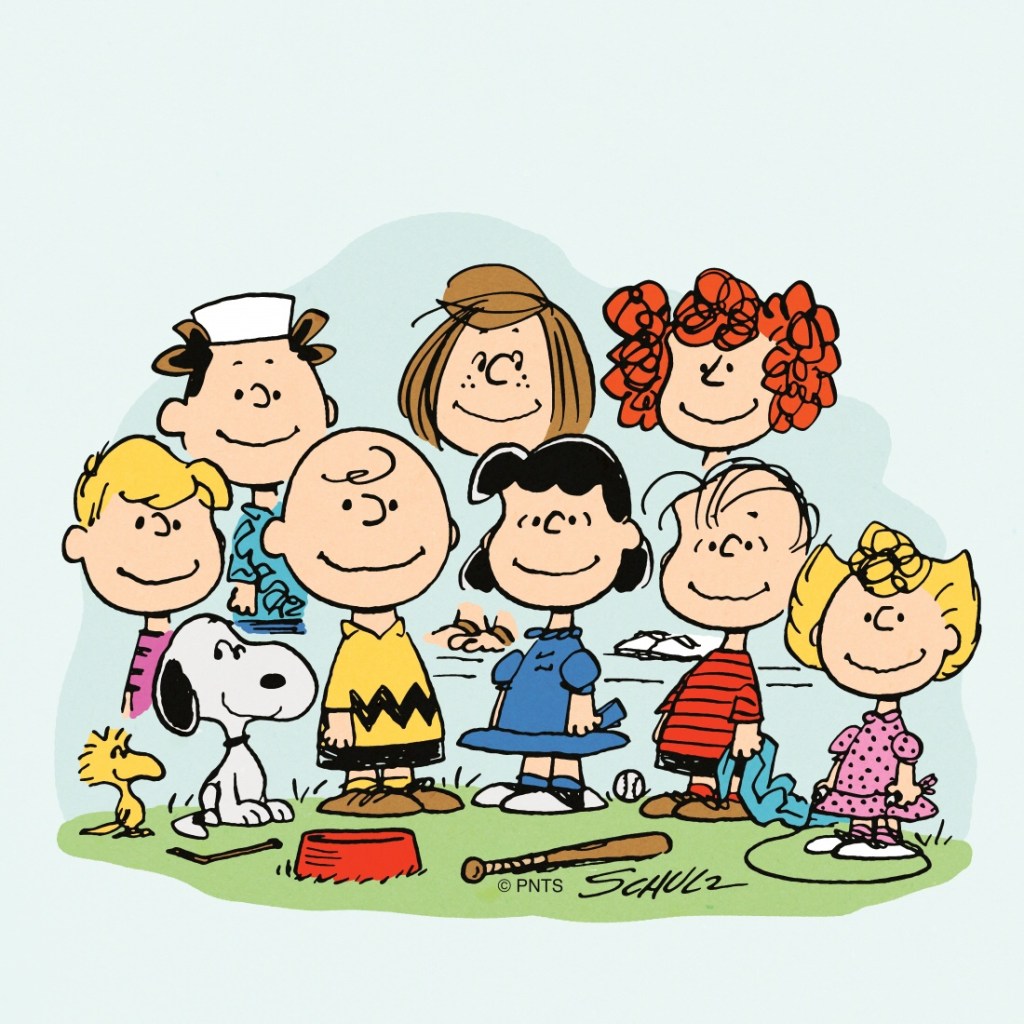
A quote from Charles M Schultz in the comic strip Peanuts goes like this ‘Worrying won’t stop the bad stuff from happening, it just stops you from enjoying the good’. Here, he is referring to our personal ability to manage a VUCA world.

Have you heard of the acronym VUCA? It’s a very useful term right now.

Defined on Wiki, VUCA was first used in the leadership theories of Bennis and Nanus to describe or to reflect on the volatility, uncertainty, complexity and ambiguity of general conditions and situations.

  • V = Volatility: the nature and dynamics of change, and the nature and speed of change forces and change catalysts.
  • U = Uncertainty: the lack of predictability, the prospects for surprise, and the sense of awareness and understanding of issues and events.
  • C = Complexity: the multiplex of forces, the confounding of issues, no cause-and-effect chain and confusion that surrounds organization.
  • A = Ambiguity: the haziness of reality, the potential for misreads, and the mixed meanings of conditions; cause-and-effect confusion.

VUCA often impacts how individuals and organisations make decisions, plan forward, manage risks, foster change and solve problems. Our ability to operate in a VUCA world is defined by our fear, comfort levels, optimism and by how much we try to control or avoid uncertainty.

More than ever, we are living in a VUCA world. None of us know how this corona virus epidemic will end. Here in Sweden, society seems to be shutting down and the economy is in the middle of a major crisis. A global recession seems inevitable.

So how do we get through it?

Our ability to get through this without emotional breakdown does not come from panic, rumour and phobia.

According to Bill George, a senior fellow at Harvard Business School, it calls for a response which he calls VUCA 2.0: Vision, Understanding, Courage and Adaptability. From the government, from employers and from each individual. Thinking and acting in this way provides us with the stability and psychological safety we will need to get through to the other side.

So, how do you personally handle the concept of VUCA?

Watching the Swedes react to corona virus

As the corona virus sweeps across the world, it’s interesting to watch how people react. While the measures the Swedish government are making do not seem as extreme as many other countries, the behaviour of some people is. Panic buying seems to be the name of the game. Panic buying and hoarding. And it doesn’t seem unique to Sweden.

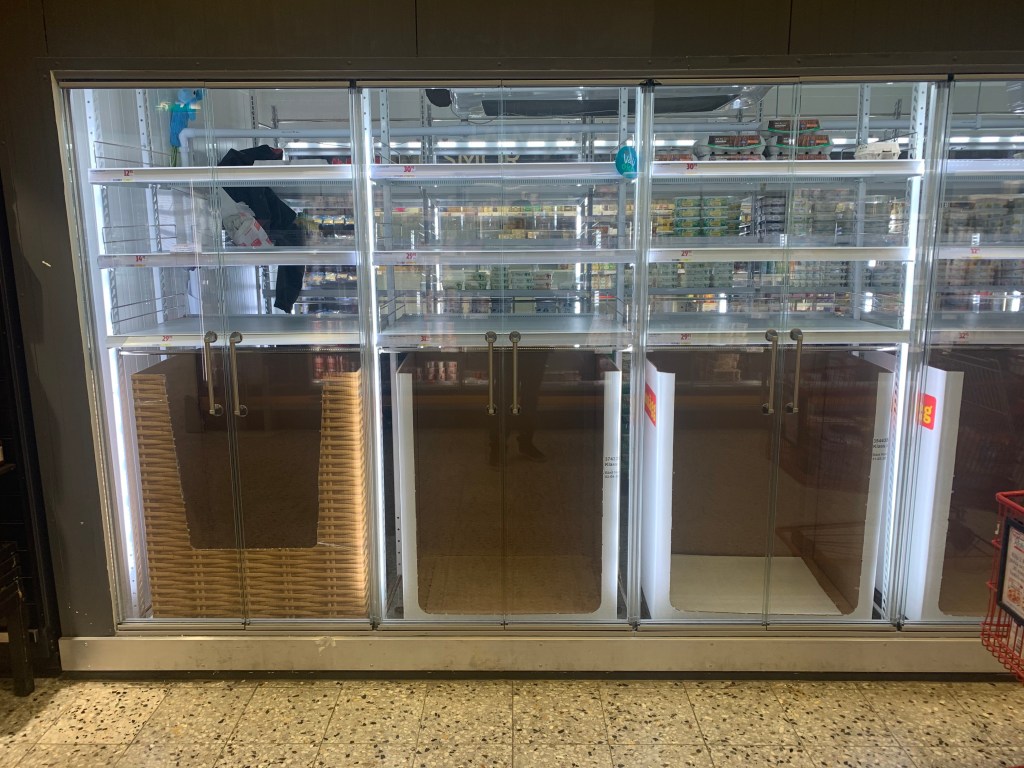
Social media is awash with images of empty supermarket shelves. People are hoarding certain obvious items – such as hand gel, pasta, eggs, rice, beans and flour. But also weird items. For example, in my local supermarket, cucumbers are totally gone! And the Italian red wine shelf was pumped dry at my local wine store!

But the item causing the most debate seems to be toilet paper. Apparently the loo roll shelves have been totally cleaned out. It seems Swedes, and many others around the world, are seriously worried about wiping their bums if they get the virus.

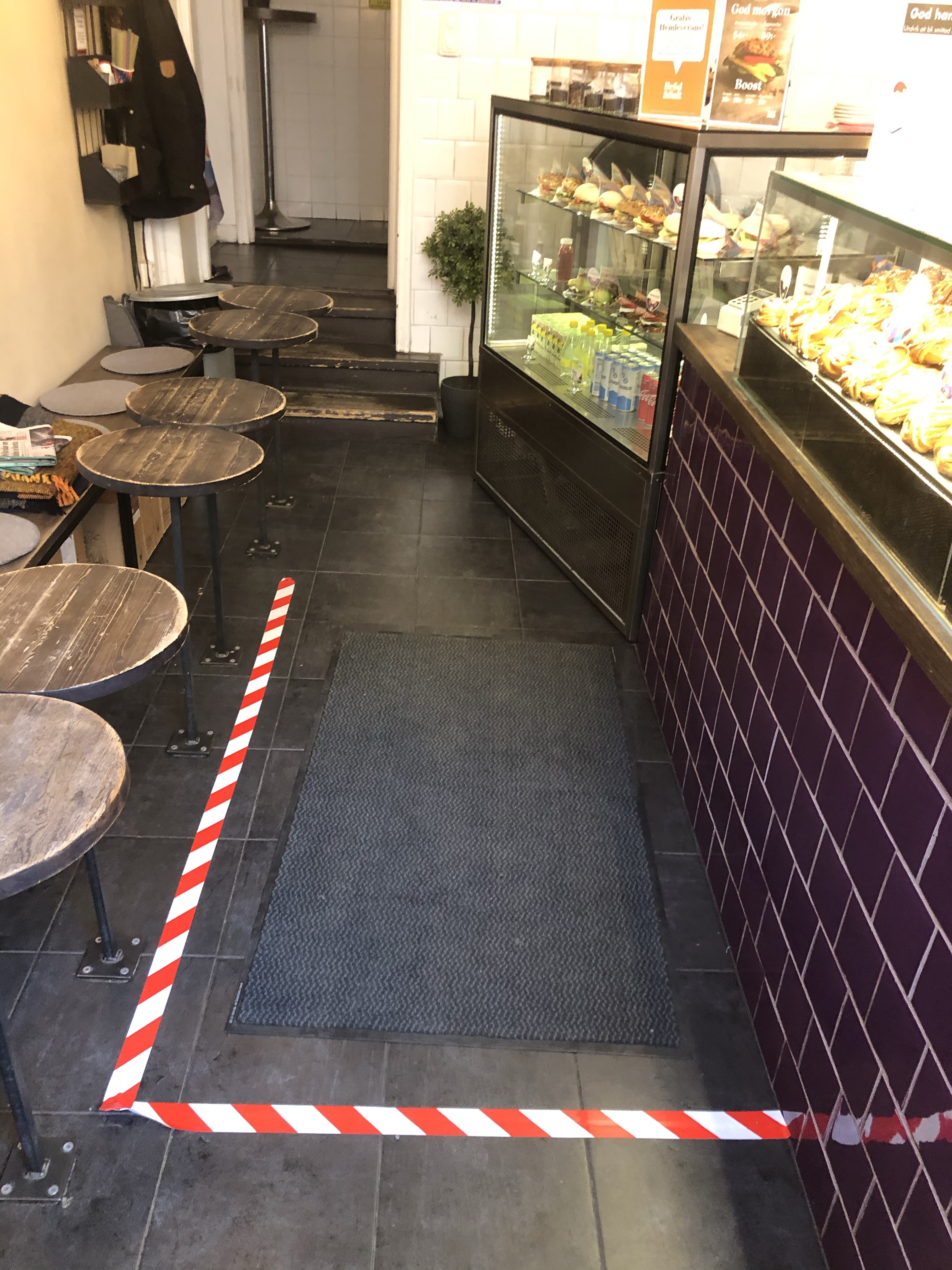
Currently in Sweden, there is no general quarantine or curfew, as in many other countries. However, many companies have temporarily closed and employees are being asked to work from home. Public gatherings of over 500 people are forbidden. At the time of writing this the borders are still open and so are the schools.

We do have to be vigilant and we do have to act responsibly. Washing hands regularly, avoiding people who show symptoms, coughing/sneezing into the fold of our arms and not participating in large gatherings of people are a few of the ways. ‘Social distancing’ is the term this has been given – a new word for the 2020 dictionary.

But wiping out the supermarket shelves? In general, it’s good to have enough food at home to last a couple of weeks I guess. But do we really need enough toilet paper and red wine to last 6 months?

Hoarding is a logical panic reaction to a crisis situation, and it’s interesting to see how quickly people succumb to herd mentality. But it’s also a selfish action. Draining the supermarket shelves means that there is nothing left to buy for lower income people (elderly, unemployed, studying, sick) who live day to day and do not have the economic means to bulk buy. So let’s remember the concept of solidarity next time we go shopping.

One thing I’ve observed so far from this crisis; how quickly self-interest and self-preservation takes over.

Am I Swedish? A reply to my haters.

After my latest blog, I was hate trolled and told to ‘go home’ because I am ‘not Swedish’. This has happened numerous times before. Normally I don’t respond to haters. I don’t think it benefits to feed the troll. But this got me thinking about what makes somebody Swedish. And I realised the answer isn’t just about me, but about anybody who moves to this country.

Here’s my reply to my haters:

Dear hater,

You are right, I wasn’t born here. I was raised in the UK. That makes me British.

I have lived in Sweden for 25 years. 9 years ago I became a Swedish citizen. That granted me the right to be Swedish.

I have a Swedish passport. That makes me a Swedish national.

Dear hater, how do you define who is Swedish? Is it citizenship, or is it birthright? Often when people discuss this subject, they mix up nationality and ethnicity. Nationality is the relationship between an individual and the nation(s) that he or she is affiliated with. Ethnicity is the identification between an individual and a particular racial, cultural or religious group.

So when you tell me to ‘go home’ because I am not ‘Swedish’, you are not referring to my nationality – because I am a Swedish citizen. You are referring to my ethnicity. And there is a word for wanting to remove people from a population based on their ethnicity – it’s called ethnic cleansing.

I can accept that I wasn’t born here. But I can’t accept being told to ‘go home’ based on the fact that I am ‘not Swedish’ and have a different opinion. I am a Swedish citizen and have as much right as you or any other Swede to voice my opinion in whatever channel I want.

In fact, not only am I a Swedish citizen, I am a model citizen. Let’s just take a look at my track record, shall we?

I am educated to Master’s degree level and all of my education was taken outside of Sweden. I haven’t cost the state a single krona for my schooling.

I have no children – so I have not taken any parental benefits in money or paid time off work. I haven’t cost the state a single krona.

In a quarter of a century, I have only received state sick benefit for two weeks.

I have never been unemployed but have always worked and paid my own way. I have never received any social benefits from the Swedish state.

I have worked for 25 years in Sweden and paid all the relevant income taxes.

I own a company and pay corporate tax. I provide a livelihood for others by employing them and paying employee tax on their salaries. And they, in turn, also pay income tax.

Should we compare my track record to yours?

So, you see dear hater, the state has earned a lot more on me than I have cost. I have contributed a great deal in financial terms to this country – just like so many new Swedes have.

I am not complaining; I am happy to contribute via my taxes. I believe in socialized healthcare, welfare and education. I strongly appreciate that the benefit system is a strong one, and that it exists to help people who need it when they need it. And maybe one day I will need it. Solidarity is one of the reasons I admire Sweden so much.

My moving here was a choice. Probably yours wasn’t. My contribution to society is positive. Probably yours isn’t. I haven’t cost Sweden a single krona. I’m guessing you are very expensive for society.

So as long as I am here, I will continue to voice my opinion. I have earned it. And if you want to keep trolling, then go ahead. But realise that your comments put fire in my belly – you are not my hater, you are my motivator.

Oh, and by the way, I will not be ‘going home’ – because I already am home.

Sweden’s ‘Vasalopp’ – the world’s longest cross-country ski race.

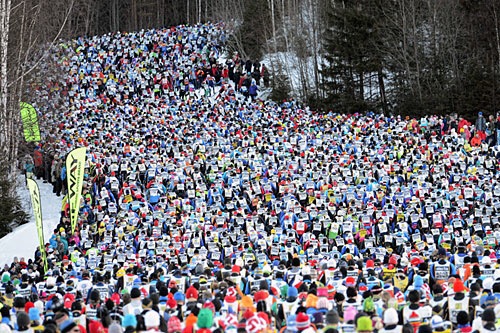
Today, the world’s longest cross country ski race takes place in Sweden. It was, this year, touch and go if it would actually happen, as there wasn’t much snow on the ground. But at 8.00 this morning the race began.

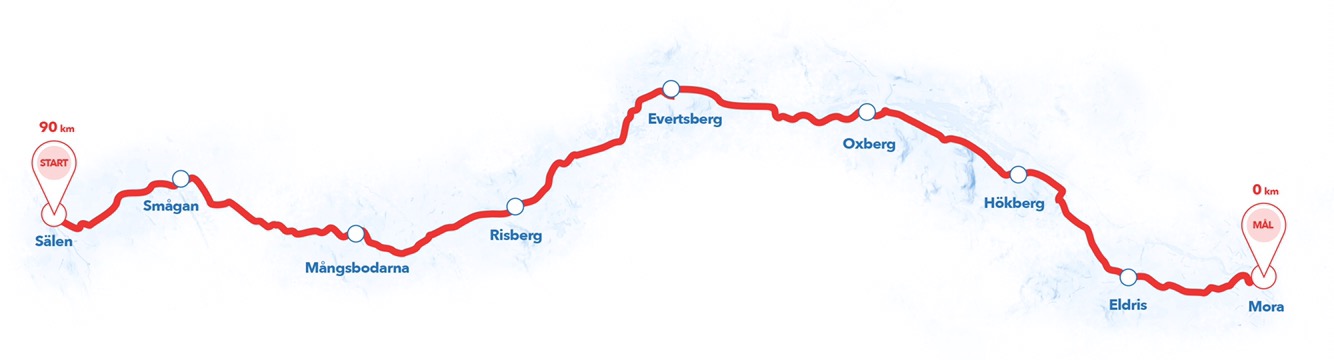
Called Vasaloppet, the race entails participants skiing 90 kilometers from start to finish. It’s an extremely popular international event, which can take up to 12 hours to complete, and which is broadcast live on tv. When tickets to participate are released, they sell out in 15 minutes – it’s that popular.

The first Vasalopp was in 1922 and it takes place annually, the first Sunday in March and it is a first sign of spring. It’s an amazing sight to watch, as more than 15000 mad, happy skiers glide along, the swishing sound of ski on snow filling the air. For the elite athletes, 12 hours to complete the race is of course unthinkable. They go considerably faster. The person who has completed the race fastest is Jörgen Brink, who in 2012 won the race in just over 3 hours 40 minutes, roughly 25 km per hour.

So why is this race called the Vasalopp? Well, it takes its name from a Swedish king. The race commemorates the escape to Norway, through the forest, of King Gustav Vasa in 1521. Legend has it that he carried out the gruelling journey on skis, but experts believe he more likely completed this escape on snow shoes. Nevertheless, out of this legend sprung the race which is so popular today.

Modern day skiers don’t see the experience as an escape, they see it as a challenge and for many of them it’s a rite of passage. And as you sit watching the TV comfortably from the sofa, under a duvet, with tea and toast, you take vicarious pleasure in this long, amazing Swedish race.

English Leap Day and Swedish ‘Skott’ Day

2020 is a leap year, and today 29 February is Leap Day. In Swedish, leap year is called ‘skottår’ and Leap Day is ’skottdag’.

So, why ‘skott’? And why indeed ‘leap’? Well, the English word refers to the fact that the extra day in February means we leap over a day for the rest of the year. For example, the 1st March would have been a Saturday, but because of the leap day, it is now a Sunday.

What about the Swedish word ‘skott’? Well, it has nothing to do with Scotland. Nor does it mean ‘leap.’ The word ‘skott’ originally means ‘inserted in between’. So ‘skottdag’ is literally an extra day inserted in between two other days.

An interesting fact, those born on 29 February are called leaplings in English, and there are about 4,000,000 of them in the world!

The month the world shrank

The existence and the spreading of the Corona virus in the last few weeks cannot have passed anybody by. In the earlier stages of the virus, flights were cancelled in and out of China, then we were advised to avoid other countries in South East Asia. Then Iran? And Italy? Should we also soon avoid Gothenburg?

The world went from a wide open planet of international travel to a closed place where we are advised to stay put. In under a month, the world shrank.

How might this impact Sweden and the Swedes? Well, business is certainly affected. Imports are stuck in China. Events are cancelled. Employees returning from affected areas are told to stay home for two weeks, in a corporately-imposed quarantine. And this might just be the beginning.

What about the Swedes themselves? Swedes are well-known for being travelers. The people of this small, cold nation set out all over the world in search of sun, warmth, light, and adventure. Will it be so easy to tell them to stop traveling? Some would say it is impossible. You can take away many things from a Swede, but don’t touch their overseas holiday. For some, it is almost perceived as a human right to travel to warmer climates. I would say how easy it is to get Swedes to stop traveling depends on how any possible travel ban is imposed.

In general, Swedes value rules. And, in general, they follow them: traffic rules, laws, deadlines and agreements. In comparative cultural research one of the frameworks that is often used is the contrast between rules/task and relationships. Simply put, some societies value rules over relationships, thinking that rules should be followed irrespective of the relationship between people. Others value relationships over rules, often seeing the rule more as a recommendation.

Consistently in research, Sweden comes out as oriented towards the rules-side of the spectrum. While this is of course a generalization, it suggests that Swedes tend to take to rules and regulations very easily, tend to prioritize them, and tend to value them. When Sweden legislated against smoking in restaurants, people’s behavior fell into line over night. It wasn’t the case in many other countries. In the EU, Sweden is one of the countries that has applied most of the EU legislation on a local level. When participating in tenant association meetings, Swedes rely heavily on the house charter to understand what is right and wrong behaviour. A customer of mine refused a friendly lunch (in my mind to build relationship) because the company had issued a decree against corruption. None of this might be the case in other countries where a higher premium is put on individual relationships and circumstances, rather than what it says in the rule book.

So will Swedes stop traveling? If it is legislated, yes. If it becomes an official ban, then most Swedes will probably follow it. The practical nature of the Swede will understand its importance. The logic of the solution will prevail. However, if it just comes as a suggestion, left to the whims of the individual, then most Swedes will probably keep traveling. They will avoid the worst areas, and reroute to somewhere they perceive as safer.

You can take a lot of things away from a Swede, but don’t touch their overseas holiday.

Fatty Tuesday – Swedish style!

Today it’s ‘Fat Tuesday’ in Sweden, known as Shrove Tuesday or Mardi Gras around the world.

While in the UK we eat pancakes (today is even called Pancake Day) and in Latin America they scoff down fried bread, Swedes celebrate by eating the traditional cream Lent bun – the ‘semla’.

I’m also clearly going to indulge. In fact, my mouth is watering just writing this post. The semla is a creamy bun filled with delicious almond paste. They were eaten traditionally in Sweden to commemorate the start of Lent and the great Fast, leading up to Easter. In the south of Sweden, they still refer to them as ‘fastlagsbullar’ – Shrovetide buns.

Nowadays however, semlas are usually sold anytime between Christmas and Easter. I just love them. I could eat a barrel load. But I’d end up looking like a barrel if I did. I love the taste of them, and the feeling of luxurious indulgence. I also love the knowledge that as you take a bite into a creamy semla, you are biting into over 500 years’ history of Scandinavian baking.

The word ‘semla’ comes from the Latin ‘simila’ which means fine flour and originally referred just to the bun without any filling. As long ago as the 1500’s, bakers started to hollow out the middle of the bun and fill it with cream and butter. As ingredients became more available, bakers started adding almond and cardemon and the type of semla that we know today developed towards the end of the 1800’s. After rationing of sugar and dairy products ceased at the end of WW2, the semla took off and became very popular.

Nowadays the semla trend has reached new heights. Every year bakers around the country try to launch new types of semla, with their own spin on it -for example, the semla wrap, the semla burger, the semla layer cake, the semla cocktail, the chocolate semla, the vanilla semla, the lactose-free, gluten-free vegan semla. But I’m a traditionalist in this matter. Give me a round fluffy cardemon-scented wheat bun brimming over with whipped cream and almond paste.

And give it to me NOOOOWWW!!!

Swedish expressions about the forest

Did you know that 69% of Sweden is covered in forest? With this statistic in mind, it’s easy to understand the importance that the woods have in Swedish cultural history. The woods have supported, saved and scared Swedes for centuries. The woods have been associated with something remote, impenetrable and often mystical. In the non secular country that Sweden is, the woods also provide a ’Church’ and a source of spiritualism, meditation and reflection.

The forest has also given the Swedish language several expressions, words and sayings. Here are some:

Dra åt skogen’ – go to the forest – a polite way to tell somebody to fuck off

Skogstokig’ – forest crazy – a word to describe a person who is really angry

Det gick åt skogen’ – it went to the forest – a phrase that means something went wrong

Att lova guld och gröna skogar’ – to promise gold and green forests – an expression to mean that someone offers you wealth and happiness, but it is often overrated. Equivalent in English to ‘promise the moon’

Träskalle’ – wood head – an insult meaning someone is stupid

Träaktig’ – tree like – a description of someone as boring.

Barka åt skogen’ – going towards the forest – meaning it’s going to go badly

Can you think of any more?

Buying sex in Sweden

In a recent police raid, over 40 men were arrested at temporary brothels in Stockholm. They were charged with buying, or attempting to buy sex. The brothels, which are also illegal in Sweden, were shut down.

So what is Sweden’s policy on prostitution? Well, it is criminalized and in fact Sweden has a trail-blazing approach to prostitution. In 1999, the Sex Purchase Act came into existence. This Act makes it illegal to purchase “sexual services” but not to sell them. So the purchaser is the criminal and not the prostitute. The rationale for criminalizing the buyer, but not the seller, was stated in the 1997 government proposition, namely that “…it is unreasonable to also criminalize the one who, at least in most cases, is the weaker party who is exploited by others who want to satisfy their own sexual desires”.

This law has since been copied and put in place in various other countries, such as Canada, Norway and Iceland. According to the statistics, the law has seen a huge decline in prostitution and trafficking, although it is by far not eradicated.

According to journalist Meghan Murphy, who has written extensively about prostitution- ‘The Swedish model is about more than just changing the law. It is also an idea — it is about changing the culture, and the culture is what needs to change as well as our legislative approach. What the model and its proponents are saying is that men are not entitled to access the bodies of women and girls, even if they pay.”

However, the law is controversial and is not without its critics.

Those who criticize it claim that the law isn’t as effective as people think and that sex work in Sweden is just driven more dangerously deeper underground. They also claim the law strips women of their control and their rights to do with their body as they wish to. An article on mic.com says ‘Sweden’s belief that prostitution is the most brutal expression of patriarchy has engendered a kind of paternalism about commodified sex that holds men responsible for their actions while assuming women can’t be. It wipes out the possibility of gray areas for men and women to be equal partners in exchanging money for sex.’ In other words, according to them, the feminist-driven Sex Purchase Act is entirely unfeminist.

So, the age old debate carries on. The discussion about if prostitution is inherently exploitative. Should it be criminalized, or can it be developed to maximize equality for everyone involved? In Sweden, the buyer is criminalized. In most other countries, the seller is criminalized. In Germany, Holland, Austria, Switzerland, Greece, Turkey, Hungary and Latvia prostitution is legal and regulated. Different approaches to the same situation.

What do you think?

Sweden’s Swexit?

In the aftermath of Brexit on Friday at midnight, I now cherish my Swedish passport even more. It is the Swedish passport that provides me with the free movement and international access that I so strongly believe in. And it is the membership in the EU that, in my opinion, gives us strength, community and a chance for peace. From living in Sweden, I have learned an important lesson – ‘tillsammans är vi starkare’ – together, we are stronger.

Watching the officials remove the Union Jack from the EU Parliament display, I noticed that it was positioned next to Sweden’s blue and yellow flag. It got me thinking that if Sweden was to leave the EU, it would be called a Swexit. But what could it be called in Swedish? Which one sits most comfortably on the tongue?

  • Svutgång
  • Svorti
  • Svutträde
  • Svupplösning
  • Svavgång

Hopefully, it will never happen. It would be truly swawful.