‘Att passa på’ and other Swedish pastimes

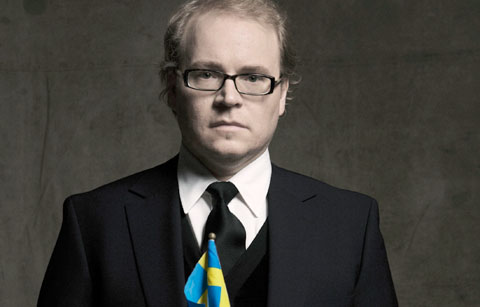
Fredrik Lindström

Yesterday, I went to see TV celebrity and academic Fredrik Lindström in his one man stand-up show called ”Swedes are also Humans” where he talks about Swedes and Swedish Culture from an inside-out perspective.

One funny thing he talked about was the Swedish pastime of ‘att passa på’. This translates roughly as ‘taking a chance, grabbing the opportunity’. Fredrik Lindström claimed that Swedes love to ‘passa på’, especially when it comes to sitting outdoors. The slightest bit of nice weather and Swedes ‘passa på’ and sit outside, even it requires a woolly jumper, a thick blanket and an infra-heater. This is quite unlike people who live in sunnier climates. He even said that Swedes are provoked by other Swedes who don’t ‘passa på’ and who choose to sit indoors on a sunny July day to watch re-runs of Falcon Crest on TV4Gold.

You probably had to be there to find it funny…..So, maybe you should ‘passa på’ and go see the show. He’s touring around the country.

How many minority languages are there in Sweden?

meänkielen

Swedish is Sweden’s official language and is spoken by most of the 9 million people who live here. Of course, people who live in Sweden speak an array of languages such as English, French, Hindi, Persian and Arabic. But did you know that there are 5 official minority languages in Sweden? In 1999, the Minority Language Committee of Sweden formally declared these five official minority languages.

Finnish – Ethnic Finns make up about 5% of the population of Sweden, and the Finnish language is used by over 200,000 people.

Meänkieli – Spoken by the people of the Torne Valley, it is so closely related to Finnish and is sometimes considered a dialect of Finnish. Between 40,000 and 70,000 people speak Meänkieli as their first language.

Sami – Sami people (formerly known as Lapps) are a people indigenous to the northern regions and who speak a closely related group of languages usually grouped together under the name “Sami”, although at least three separate Sami languages are spoken in Sweden. Between 15,000 and 20,000 Sami people live in Sweden of whom 9,000 are Sami-language speakers. Worldwide, between 20,000 and 40,000 people speak Sami languages (most Sami now speak Swedish, Norwegian, Finnish, or Russian as their first language, depending on the country in which they reside).

Romani – Romani is the language spoken by the Roma people, a nomadic ethnic group originating in northern India. Romani is an Indo-Aryan language, closely related to languages spoken in today’s India, and sometimes written with an Indic Script. Approximately 9,500 people in Sweden speak Romani.

Yiddish – Yiddish is a language formerly spoken by most Ashkenazic Jews. Although the Jewish population of Sweden was traditionally sephardic, after the 18th century, ashkenazic immigration began, and the immigrants brought with them their Yiddish language. There are around 18,000 Jews in Sweden, and about 4,000 speak Yiddish.

Globally Innovative Sweden

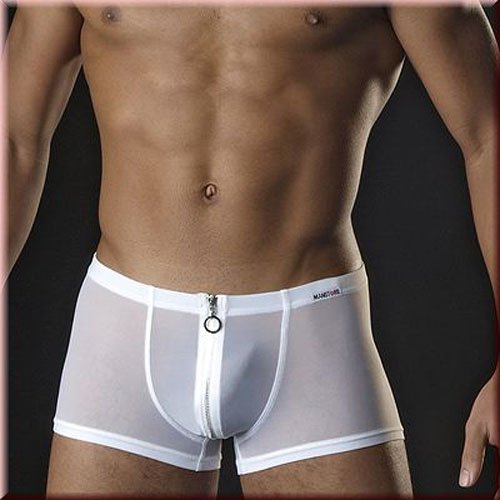
zipper

For being a relatively small country, Sweden is very creative.

The Global Innovation Index 2012 ranked Sweden as the most innovative country within the European Union and many inventions have sprung out of this Nordic country. A quick browse on the website http://www.sweden.se lists a few of these inventions.How many of them sid you know were Swedish? 

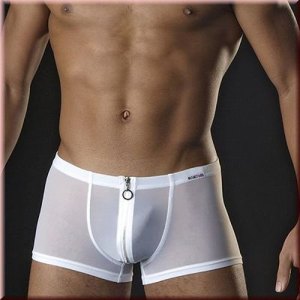
THE ZIPPER The modern-day zipper that we know today was improved by Swedish-American Gideon Sundbäck. His invention was called the seperable fastener and featured interlocking teeth pulled together and apart by a slider for, as the picture demonstrates, ease of access.

AIS Getting completely lost nowadays is difficult thanks to global positioning systems (GPS) which are now an essential part of our daily lives; embedded in various technologies from smartphones to in-car navigation systems. Swedish inventor Håkan Lans is credited with taking GPS technology one step further to create automatic identification systems (AIS) now widely used in the shipping industry for tracking ships and vessel traffic.

THE ADJUSTABLE WRENCH A staple in many toolboxes, the adjustable wrench or spanner, also popularly called “Monkey wrench” or “English key,” often comes in very handy during do-it-yourself (DIY) projects. While the first iteration of this spanner was originally invented in 1842 by British engineer Richard Clyburn, today’s adjustable wrench, the “Swedish Key,” is attributed to Johan Petter Johansson, a Swedish inventor who improved upon Clyburn’s original concept and patented it in 1891.

THE HIV TRACKER A recent addition to the list of Swedish inventions is the HIV tracker: a sensitive device used for mapping out and detecting the spread of HIV and other viruses. Conceptualized by Doctor of Biotechnology Martin Hedström and his team at Lund University, the device can detect extremely low concentrations of poisons, viruses or other substances in liquids — which also makes it potentially invaluable for fighting bioterrorism.

SPOTIFY is a commercial music streaming service providing content from a range of major and independent record labels. Launched in Sweden in October 2008, the service had approximately ten million users as of 15 September 2010 (2010-09-15)about 2.5 million of whom were paying members.Total users reached 20 million by December 2012, 5 million of them paying monthly either $4.99 or $9.99.As of February 2013, the service is available in Andorra, Australia, Austria, Belgium, Denmark, Faroe Islands, Finland, France, Germany, Ireland, Italy, Liechtenstein, Luxembourg, Monaco, the Netherlands, New Zealand, Norway, Poland, Portugal, Spain, Sweden, Switzerland, the United Kingdom and the United States

THE PACEMAKER In 1958, Rune Elmqvist developed a battery-run artificial pacemaker, which was used for the very first pacemaker operation done by surgeon Åke Senning at Karolinska University Hospital in Stockholm. The pacemaker is placed under the heart patient’s skin and the electrical pulses it generates ensure that muscles expand and contract normally, regulating the heart.

POWERTREKK PowerTrekk is a portable charger that uses eco-friendly fuel cell technology to convert hydrogen into electricity. By adding one tablespoon of water along with the fuel pack to the charger, you can connect any compatible electronic device — mobile phones, GPS, laptops, digital cameras — to the PowerTrekk to instantly charge it.

TETRA PAK Thanks to the revolutionary paper-based packaging system called Tetra Pak we can now carry our milk home from the grocery store in cartons instead of glass bottles. Conceptualized in 1946 by Erik Wallenberg and produced by Ruben Rausing, Tetra Pak’s technology is used for storing and distributing liquids, semi-liquids and dairy products.

THE THREE POINT SEATBELT Now a standard requirement in every passenger vehicle saving around one life every six minutes, the three-point seatbelt was developed by Swedish inventor and safety engineer Nils Bohlin in 1959 for Volvo. It’s designed with a Y shape to spread out energy across a moving body during an accident.

ULTRASOUND / ECG Ultrasound is so integral to healthcare today that remembering a time when it didn’t exist is difficult. Along with German researcher Carl Hellmuth Hertz, Swedish physician Inge Edler devised the modern day echocardiograms — a Doppler ultrasound of the heart — that are integral to monitoring cardiovascular health. This invention netted both Hertz and Edler a highly coveted Albert Lasker Clinical Medical Research Award in 1977.

SKYPE Skype was founded in 2003 by Niklas Zennström from Sweden.The Skype software was developed by the Estonians Ahti Heinla, Priit Kasesalu, and Jaan Tallinn, who together with Friis and Zennström were also behind the peer-to-peer file sharing software Kazaa.In August 2003, the first public beta version was released.

No kids please. we’re Swedish

no-children-480

A local café where I live, on the island of Kungsholmen in Stockholm, has recently created debate in the kingdom of Sweden. The owner of the café, tired of having ‘undisciplined kids’ running around the café, put up a sign on the entrance forbidding children. Many people were outraged. Others, me included, cheered at the bravery, the audacity, in a country where many parents let their children run riot. Many of us who want to sit in cafés and sip our macchiatos in peace were excited by this ban.

But then i thought about it, and analysed it from a cultural perspective. Forbidding children, forbidding anyone – is that actually ok? Who would be next on the ban-list? People in wheelchairs? Blacks? Gays?  

As I often write here, Sweden is a country that is leading in many humanitarian values, such as equality and accessibility to people, power and information. In a country like Sweden, a ban like this contradicts everything that most Swedes believe in. So while it may seem like a good idea at the time, it is in fact a discriminatory act.

So maybe the issue is the lack of discipline that parents seem to have for their children? Very possibly so, but kids are kids, and kids make a noise. They cry, they laugh, they talk. And while this is disturbing to other patrons like me, on one level it can be seen as their right to do so until they have learnt the ruling social codes associated with the context they find themselves in.

I believe the café owner has now removed the ban. However, I presume not because he sees the equality issues surrounding this case, but because he received so much negative press that was damaging his business.

If we want freedom in our country, we have to fiercly protect it. Freedom was not won easily but can be slowly chipped away at until one day we are living in a society we actually dont want. Freedom means for everyone. Even when we are personally irritated by certain behaviours or attitudes, freedom is for everybody. And that, to a very high degree, applies also to our children.

Tippetopptranslations

tippetopp3

A friend today asked me to translate a Swedish word for him – ‘tippetopp’.

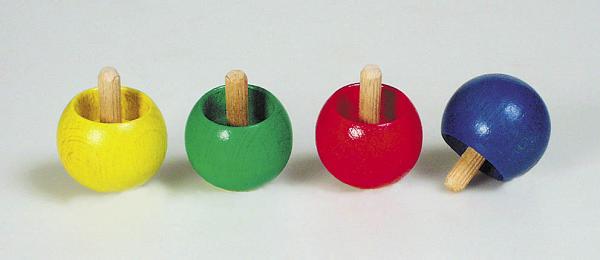
Not being familiar with the word, I researched it and found that it is an old-fashioned toy that you spin and then it rolls over to spin on its topside. It flips over. Goes all kind of topsy-turvy. Never having seen one of these before, my initial thought was to call it a ‘spinning top’ which is a similar toy we have in the UK. But then I researched further and found it’s proper translation.

The English word for ‘tippetopp’ is ‘tippe top’.

Yes, sometimes it is that easy!

The dark side of Sweden

Hate_intel

I can’t deny that I am disappointed, outraged and sad all at the same time.

As is obvious from my blog, I love Sweden. I love the values that underpin society and the social behaviours, sense of justice and attitudes that have developed from these values. I often write about the openness of society, the belief in equality and human rights.

But there is a dark side to Sweden. And it has reared its ugly head today.

In the media today and on the TV tonight, the issue of internet hate was debated. About ten Swedish journalists and media profiles, all female, had gathered to share the comments they have received from mostly anonymous people via the internet. Comments such as ‘whore’, ‘cunt’,’slag’ and ‘bitch’ were commonplace as were threats of murder, mutilation, gang rape, public humiliation and general mysogyny. All of these women had the same thing in common – they had expressed feministic views and/or they had criticized the right wing political party Sweden Democrats. They were all perceived as a threat to the patriarchal norm.

This particular case looked at the threats and personal attacks received by women and I am also sure that male journalists and media personalities also receive threats. Putting the feminist perspective aside for the moment, it is not acceptable for anybody to be threatened for expressing their viewpoint. It is not acceptable in Sweden, it is not acceptable anywhere.

Living in democracy in Sweden means freedom of expression – the political right to communicate one’s opinions and ideas. In practice, the right to freedom of expression is not absolute in any country and the right is, as in Sweden, commonly subject to limitations such libel, slander, obscenity, sedition (including, for example inciting ethnic hatred), copyright violation, revelation of information that is classified or otherwise.

In other words, in Sweden people have the right to say what we think without the fear of their lives or safety being personally threatened. Criticizing societal structures is self expression, calling somebody a ‘cunt’ and threatening to murder them is not.

In my view, these internet haters are criminals. They are blackmailers, anonymous thugs and cowards. And they bring shame on the Swedish brand, this country that paves the way internationally when it comes to human rights, gender equality and self realisation.

There needs to be a sharpening of the legislation around internet hate comments in Sweden, as the current law covers printed material, which the internet technically is not. Sweden does not live up to the conditions set out in the European convention and could in fact be sued by the EU. But how do you word new legislation without infringing on the right to self expression as seen from the Swedish perspective? This is the dilemma.And in the meantime, as policymakers decide what to do, these violations keep happening.

They say that nothing grows in the dark, but in some Swedish people, hate is thriving.

Death by music – Swedish style

Eurovision_Song_Contest_2013_official

This Saturday it starts – death by music.

Every Saturday for the next 6 weeks Swedish television is broadcasting the Swedish ‘Melodifestival’ – in which citizens choose the winning song to represent the country at the Eurovision Song Contest (ESC). Every Saturday for 90 minutes we listen to 8 songs, eventually narrowed down to a winner in the grande finale. Already, newspapers are abuzz with this event. And this year, even more so, since Sweden won the competition last year and is also hosting the ESC this year. The Melodifestival and the ESC are big news in Sweden. Probably due to the legacy of ABBA, the ESC is seen as a springboard to a fruitful and prosperous artistic career. The gateway to fame and fortune. This is quite unlike many other countries in Europe, not least the UK, where participation in the ESC is seen as a the final nail in the coffin of a dying career.

A couple of days ago, the celebrity host of ESC was announced – a controversial stand-up comedienne called Petra Mede. The nation was divided (at least those who cared). Newspapers wondered why a couple wasn’t chosen – why a woman was chosen to lead the event on her own! How would she manage without a man! What’s more, she’s pregnant! How is she going to be able to focus on the job when she has a new born baby at home?! Organisors of ESC responded to these comments quickly and categorically. Petra Mede is a very competent host, her baby will be looked after by its father and the reason we are not having a couple is to keep costs down. This is also the reason that the event will be held in a smaller concert venue than could have been possible. The organisors referred to the extreme cost of the latest final in Baku, and the fact that Portugal and Greece will not be participating this year due to financial constraints. Sweden should lead they way, they said, and take the whole competition down to a more affordable level so as not to exclude less wealthy countries.

Now, excuse me, but how is 4 televised Melodifestival competition heats in different Swedish towns, a fifth televised opportunity to qualify, a final televised Melodifestival competition in Stockholm, two televised ESC semi finals and one huge broadcasted ESC final in Malmö keeping the costs down???

Like I said, death by music.

Strange Swedish words

Swedish words

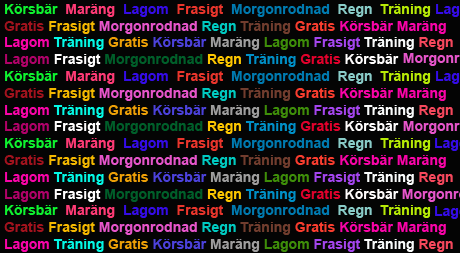
It has been said that the Swedish language is a poor language, especially when compared to English. However, in an informal survey on Facebook, I asked people for their favourite word that existed in Swedish but not in English, and I got very many fun suggestions. Here come a few of the highlights:

Sladdbarn – a child to the same parents many years after the birth of their brothers and sisters – usually as a surprise – but proof that the sexual activity of Swedes does not stop at 40
Fredagsmys – a cosy time on Fridays when Swedish families get together and eat pizza or tacos and watch the TV – and usually fall asleep
Lagom – a concept that filters through Swedish socíety and behaviour – roughly translated as ‘average, moderate, just enough, not too much’. Others translate it as ‘mediocre’
Lurifax – a sly trickster that you can’t trust (yes, they do exist even in Sweden)
Sol och vårare – a person who pretends the future is bright but actually is a confidence trixter who will then trick a person out of, for example, their kronor
Fika – the cultural process of having a coffee and cake with friends at work, at home or out on the town. One of many Swede’s favourite pass times
Möbeltass – a cotton padding that you put under the legs of furniture to stop them from damaging the floor. Directly translated as ‘furniture paw’. A necessity in the country of wooden floors and IKEA.
Julgransplundring – the event at which you dance around a whithered Christmas tree, undecorate it and then throw it out. Often aimlessly onto the street where it stays until mid March.
Jajamensan – a very jolly way of agreeing emphatically
Orka – a word commonly used by Swedish teenagers to mean that they do not have the energy to do anything, such as getout of bed, or clean up after themselves
Curlingföräldrar – a name to describe parents of the above teenagers who put no demands on them and do everything to make their lives easy

Any other words that you can suggest?

Fish-eating Swedes

It’s no surprise that Sweden is a fish-eating nation given the amount of coastline the country has. Fish features heavily in a lot of the traditional and holiday time dishes. At Christmas there’s pickled herring, smoked salmon, whitefish in lye for example. At Easter, the herring comes out again. At Midsummer, well, herring graces the traditional menu together with cured salmon and shrimps. In August, the crayfish party happens, which is my personal favourite. 

Today is New Year’s Eve. Do Swedes eat fishy food today? Yes they do, and I have proof. 66 people in the queue before us at the fish shop! Over an hour’s wait! And what were most people buying? Well, in line with Swedish new year tradition, lobster!

Have a fun New Year’s Eve – whatever you are eating!