‘Vobba’ – a brand new Swedish complaint

Image

Perspectives-taking is one of the most important skills required for working in an multicultural environment. Anybody who’s travelled abroad knows that a new perspective is often one of the main impressions we receive. This is especially true if we travel to countries that are culturally and economically different from ours. In the context of the other society, we gain perspective on our own.

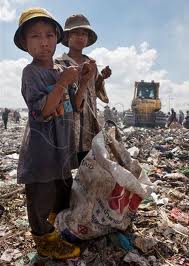
Yesterday, I returned from a trip to Thailand and Cambodia and was left, as often, with a humbling feeling. Cambodia is a dirt poor country, as yet not destroyed by tourism. The countryside, the cities and the people, raped by their recent history, are warm and humane and welcome us with open arms. Homelessness is rife, unemployment and sikness prevail. There, they really have a lot to complain about, and I’m sure at times they probably do.

Transport to Sweden, Monday  morning, breakfast television. As I sat there this morning and watched the local news to catch up on latest happenings,  I learned a new Swedish word. And this Swedish word reminded me of the importance of having perspective – ‘Vobba’.

‘Vobba’ is a combination of two Swedish words – ‘Jobba’, which means to work and ‘Vabba’ which means to be at home with a sick child and therefore free from work. In Sweden, parents receive support from the government to ‘Vabba.’

This new word ‘Vobba’ refers to parents who are home with their sick child but, thanks to technology, they also do a little work while at home, such as check emails or speak on the phone.

According to the report on the news this morning, one third of parents who have to ‘vobba’ feel stressed, and invaded, by it and find it impossible to balance their home and work lives with their sick child. 

What a problem! Oh dear me! I really don’t know how they cope! Not only are they paid to be at home by the tax payer, and their child is probably asleep in bed, but it’s really hard work to check a few emails on a smart phone while they’re having a cup of coffee.

Really??? Get some perspective!  

In countries like Cambodia, where daily survival is a struggle, they would be shocked by this new Swedish stress factor.

So, I am asking all of us to get some perspective on this issue and on all those other issues and compaints that we have. In the greater scheme of things, how important are they?

Instead of focusing on what is stressful, invasive or unfair, let’s focus on the positive! Sweden is a great country where parents get to be home with their sick child and are not forced to take a day’s holiday or leave the child with an unknown baby-sitter or force the sick child to go to school. That is fantastic!

Let’s focus on that instead and remember most people around the world don’t have it anywhere near as good as we do.


If you like this text, please spread it and share it!

A theory about Stockholmers

Stockholm

It happened again today. And, actually, it has happened once too often.

When I approached my office building this morning, there was a small group of people speaking Swedish standing outside in the cold. They couldn’t get into the building. As I have a pass card, I knew I could let them in. So, I smiled, and I said ‘I can let you in to the warmth’. There was no reaction, apart from a little wry smile. Swiping my card, I let them into the building and turned to look at them. Not one of them acknowledged what I’d done and said ‘Thank you.

This might seem like a small thing, but it happens all the time to me. I hold a door open for somebody. I get no ‘thank you’. I let somebody go on the bus before me. Nothing. Soembody bumps into me. And I apologise!

Why is this the case? Why do many Stockholmers not acknowledge or thank each other. It isn’t that they don’t see each other. Is it that they don’t care?

An interesting fact is that the vast majority of people in Stockholm come from somewhere else in Sweden. They have migrated from smaller towns and villages to seek work, love and excitement in the capital. My experience of being in towns outside Stockholm is that people are friendly, polite and acknowledging of each other. So what happens to these people when they move to the city?

I have a theory. I think that many Stockholmers who have migrated into the city have a perception of what a city should be. They seem to think a city should be fast-paced, tough, individualistic and unfriendly. That people should push themselves forward, and through, other people. That connecting with a stranger in a public place with eye contact, a small remark or a thank you does not belong in a capital city. I think that they are playing pseudo cosmopolitans.

In my opinion, this attitude is shamefully misguided. Citizens of much larger cities, such as New York or London, still find time to small talk, for politeness and to say sorry or thank you to each other. Try bumping into somebody in New York and not apologise. The price of impoliteness is sometimes harsh.

And the solution is easy. Say ‘thank you’ to the next person who does something for you today.

Really, it’s not that difficult.

Politics and hamburgers

Image


To what degree is an employer allowed to inform their staff of their personal opinion?

Is an employer allowed to urge employees to vote a certain way because a particular party has a politics that is more beneficial for the company?

Where is the line between public opinions and private opinions, between information and abuse of power?

All of these are very cultural questions. What’s your point of view?

Sweden, it’s time for ‘fredagsmys’

Bild

Soon it’s the weekend! A collective sigh of relief falls over the Swedish population, at least those who are not forced to work Saturdays and Sundays of course.

A weekend means relaxation and family time. It means late nights and parties. It means sports activities with the kids. It means sleeps-in and late breakfasts. It means cultural activities. It means computer game or TV series marathons. It means sledging and skating, drinking hot rose-hip soup.

Weekends mean so many different things to different people.

And it means a very Swedish concept: Fredagsmys

‘Fredagsmys’ loosely translated as ‘Friday Cosying’, is a modern ritual in Sweden. It is when friends and families gather together to mark the end of the working week and get ready for the approaching week. Traditions are different depending on if children are involved but one common denominator seems to be that food is easy and quick to make. Friday night is a big taco and pizza night in other words. 

Gathering around food for cosy family evenings has a long tradition in Sweden. In the 1800’s and 1900’s something called ‘Söndagsfrid’ (Sunday peace) was popular. Then in the 1970’s ‘kvällsgott’ (Evening Goodies) became a concept.

The concept ‘fredagsmys’ became popularised in a high-profile advertising campaign for crisps. With the perky slogan ”Now it’s the end of the week, it’s time for Friday cosying”, (really, it’s perky in Swedish), they captured the Swedish market and encouraged the consumer to devour potato chips on Friday nights.

So how does your Friday night look? What kind of cosying are you planning?

Olle the star gazer

Image

Long, long ago there lived a little boy called Olle. He lived in the dirtiest, coldest, noisiest part of Stockholm’s Old Town. He shared his squalid shack with his mum and dad, grandparents and five sisters and brothers, all of them squeezed into one simple room. From inside the room, you could hear the noise of the horses hooves on the cobblestones and the bustle of people outside.

Olle was always hungry but he was also a dreamer. Whenever he didn’t have to work, he could be found standing outside gazing up at the stars.  He loved the way they blinked in the night sky and how the moon lit up the dark alley ways of the Old Town.

One cold winter night, he was outside as usual looking up at the sky when he heard a whisper of voices. Looking around, he noticed that the voices came from inside a cellar, and the door was slightly open. It was so cold outside and the yellow light from the cellar stairs seemed warm and cosy, so he decided to go in. Once inside, he walked slowly down the stairs until he came to a little room with an open fire. The ceiling was very low in this room and it was lovely and warm. By the fire place, he saw a rocking chair and a side table laden down with thick pies. He looked around cautiously. The whispers had stopped, and the room was empty. He felt the hunger in his stomach and stared at the pies. Gradually, he moved closer to them, mouth watering, and in a mad moment, he grabbed a pie and shoved it into his mouth.

The door to the room slammed shut and in the shadows behind he saw a shape. He heard the whispers beginning again and from the shadows emerged an ugly old woman.

‘Oh Child,‘ she whispered ‘Are you hungry?’

Olle nodded, scared. He could hear the noise from the street above and the crackling of the fire.

‘Take Another one then. Go on. Eat’

Olle turned to the pies and took another. He was so hungry. And he stuffed it into his mouth.

‘You like my pies?’ said the old woman

Olle nodded but he started to feel a little strange. The room starting spinning slowly and he felt a odd feeling in his body. The floor seemed to be getting closer, and the ceiling further away. His clothes felt too big for him. What was happening? Was he shrinking??

A few minutes later, Olle opened his eyes. The old woman was towering over him and laughing. Everything in the room was huge, he had shrunk to the size of a tin soldier.

Bending over, the old woman grabbed him in her hand and lifted him up to her face. He could see the milky colour of her eyes and smell the foul odour of her breath.

‘So you liked my pies! You know what’s in them?

Olle shook his head.

‘Curious little boys!’ screamed the old woman.  

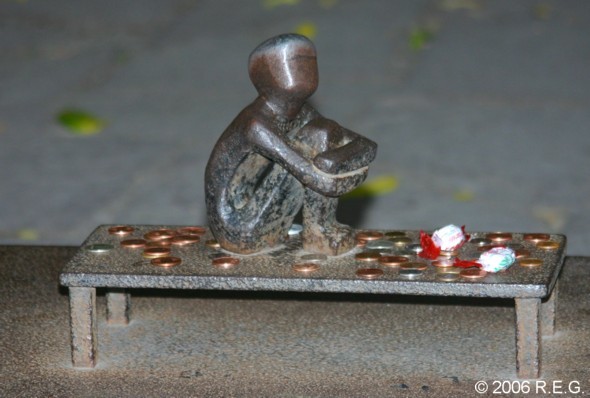
Olle never made it home that day. No one really knows what happened to him. But you can still visit him if you like. Just behind the Finnish Church in the Old Town, there’s a little statue in his honour. There he sits, little Olle, and gazes up at the stars that he loved so much.

Taking a stand for Sweden’s neighbours

Image

Finally! That’s all I can say! Finally!

The Swedish Minister for Sport, Lena Adelsohn Liljeroth, finally took a stand today against the homophobic Russian regime and announced she will not be attending the Olympic Games Opening or Closing ceremonies in a couple of weeks. In declining the invitation, she joins USA, Germany and France who have previously stated they will be boycotting the ceremonies.

Many people say sport and poltics do not belong together. However, while each individual sportsperson absolutely has the right to fulfill their personal dreams of an Olympic medal, regardless of the country where the games are being held, I believe that governments should have a different perspective. By attending a high-profile event in a country which has dubious human rights, politicians are indirectly condoning the actions of that country. By not attending, politicians are taking a stand against oppression and violence.

I am today proud of Lena Adelsohn Liljeroth and hope that other Swedish politicians and dignitaries will follow suit.

The Giant of the North’s weakness for lions

Long, long ago, when Stockholm was still a village, the people had built a big wall to protect themselves from the outside. You see Stockholm wasn’t as safe as it is today. Packs of lions, tigers and wolves roamed the countryside. And just outside the wall, there lived four one-eyed giants. The giant of the North, the giant of the South, the giant of the East and the giant of the West. These giants were brothers and of all of them, the giant of the North was the largest and the strongest and the most scary. He lived on a hill overlooking the village and watched and waited for his opportunity to attack.

Now, the people of the village couldn’t remain behind locked gates all the time. Merchants sometimes had to leave in order to trade with other towns. Builders had to leave in order to reinforce the walls and bridges from the outside. And shepherds and herdsmen had to pass through the gates in order to exercise and feed their sheep and cattle. But leaving the village was a treachorous endeavour – often people fell into the grasps of a patrolling giant and were gulped up whole.

The giant of the North didn’t care too much for people. He thought they tasted gristly and bony. His favourite food was lions. Not only were they fat and tasty but he liked the way their manes tickled his throat as he swallowed them. But lions were rare, so he had to satisfy his great hunger with sheep. Whenever the shepherds left the village, he pounced and ate as many as he could before they ran back to safety behind the wall.

The King of the village was worried about this and he announced a competition for the villagers to come up with the best idea for beating the giant of the North. Various suggestions were made but, when they tried them, none seemed to work. There were no more ideas and the King became more and more desparate.

Now, the King had a wife, Drottning Matilda. Drottning Matilda was a clever woman and she thought she might have the solution. She went to the King and asked for an audience with him.

‘How can we solve this terrible problem?’ said the King ‘the sheep are disappearing and the people are cold and starving’

‘It’s easy,’ said Drottning Matilda, ‘if he wants lions, let’s give him lions’.

The next day they set about their plan.

Anybody capable of sowing was instructed to sow sacks together and attach bushes of golden hay to one edge of the sacking. They were also told to add a long rope with a frayed knot at the other end. Then, they gathered together some sheep and draped the sacking over the top of them. The golden hay hung down to disguise the sheep’s face and the frayed rope hung from their rear ends like a long tail. Along the main street of the village, the villagers fastened two of the sheep at various intervals and they placed heavy stones under their wool. The villagers then ran to their homes and locked themselves in behind bolted doors and windows and the church bells started to ring. This was the gatekeeper’s signal to open the Northern gate. And then the villagers waited.

Up on his hill, the giant of the North was busy eating a cow when he saw the gates open, and stay open. ‘At last!’ he thought, ‘Here’s my chance!’ and he thundered down the hill and across the footbridge.

As he approached the gates, he saw that the village seemed abandoned. It was quiet and still. And then he couldn’t believe his eyes! Just inside the gates he saw two lions tied to the side of the street. As fast as he could, he pounced upon them and gobbled them up. Looking further along the road, he saw two more lions tethered by the road side and devoured the animals in two quick bites. Then incredibly he saw two more lions further along the road and ate them up as fast as he could.

And so it went on.

Slowly, the giant of the North ate himself to the end of the road and to the final two sheep disguised as lions. But he was starting to feel a bit odd. Strangely, he felt heavy, as though he’d eaten stones! But that wasn’t possible, he’d eaten lions – not stones! He looked over at the final two lions, which were tied atop a wooden platform, and the giant, mad with gluttony, moved heavily towards them. Finally his big heavy feet reached the wooden platform and his increased weight made the wooden planks bend and groan.

And then suddenly, they snapped! And the giant fell. He feel deep and far into the river rapids below. Struggling to keep his head above the water, the weight of the stones he had eaten pulled him under until eventually he could no longer struggle and was flushed lifelessly downstream and into the sea.

The people of the village rejoiced! The giant is dead!

The King, overjoyed, decided to rename the street after his wife – Drottninggatan and he commanded the village sculptor to make and place statues of lions all along the road to commemorate her cleverness.

The street is still there today, and so are the statues. And if you follow the road to the end, you’ll even see the rapids where the giant perished.

So that’s how the people of Stockholm defeated the giant of the North. But what about the giants of the East, West and South?

Well, that’s another story all together.

lions on drottninggatan

Riddusola the Gorgon and the stone statues

Image


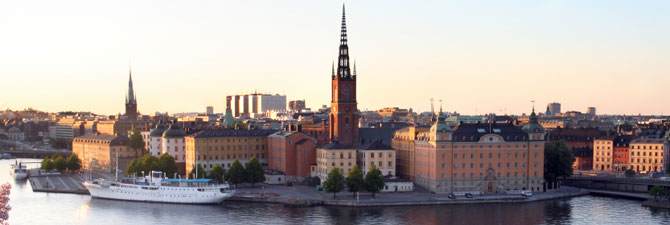
Long, long ago, in Stockholm there was a very grand building which stood alone on its own private island.

This grand building was the place where all the decisions were made. The King, the Prime Minister, the Mayor and the other dignitaries used to meet there to discuss the problems of their times. To get to the building, they had to take a small boat from the town and cross the choppy waters of lake Mälaren. 

Around the same time, slightly to the North of the town, there was a deep grotto and inside lived a gorgon that went by the name of Riddusola. Riddusola was a terrible, terrible gorgon. She had the head of a black goat and the slimy body of a snake. Attached to her back, she had huge wings which were covered in sharp spikes. Riddusola could travel fast over land and water, and she had a terrifying stare. With one look into her eyes, a person would be immediately turned to stone.

Now and again Riddusola would appear from her grotto and descend upon the town. She would slither down streets and across squares, she would glide through the canals and lakes and she would hunt her prey. She wasn’t so fussy. She would eat anything as long as it was alive. But what she liked best was the taste of human flesh. On regular occasions, pigs would go missing, or even children, and their dull cries would be heard from the deepest depths of the gorgon’s grotto.

Early one autumn evening, Riddusola was out in the town hunting for pray when she saw the little boat carrying passengers across to the grand buidling which stood on its own island. Quickly, she jumped into the water and eeled her way towards the boat. As she neared, she saw the boat arrive at the island and the passengers disembarked. There were some lovely, juicy fat people in that boat she thought as she ploughed closer. Suddenly a soldier looked into the water and saw the gorgon approaching. He urgently ushered the dignitaries into the building and slammed the door. But that pathetic door was nothing for a gorgon and Riddusola crashed into the building sending its occupants fleeing in all directions. Oh how she feasted that day! And those she didn’t eat had looked her in the eyes and were immediately turned to stone.

Then Riddusola had an idea. The grand building was rather comfortable she thought – the perfect place for her to live. It was close to the town and also on the edge of the lake. But how could she live here undisturbed? She knew if she was so close then the townspeople would try to kill her in her sleep. So she had another idea – she would have to terrify them!

The next morning, the townspeople of Stockholm awoke and went about their daily business. Down by the waterside, they were doing their laundry when they noticed something strange about the grand building on the ísland. They approached it and looked from the other side of the water. No! Could it be true? They witnessed a horrific sight and they ran as fast as they could back to the safety of their homes. There, on the grand building, Riddusola had made a change. Stone figures now ordaned the roof. The stone figures were facing different directions and were clearly the putrified remains of the King, the Prime Minister, the Mayor and other dignitaries,

The grand building is still there, although no longer on an island. It is surrounded by roads and is today called Riddarhuset, Thankfully, the gorgon is long gone. But if you look to the roof, you will see them. The stone remains of the people who looked Riddusola in the eyes.