So, what is wrong with the Swedes?

perfection

Dipping into a book about Swedish culture, the opening paragraph starts this way…

‘In the world at large, especially in the English-speaking world, the Swedes seem to be universally popular. Their clean-cut profile as honest, caring, well-informed, efficient plodders who produce quality goods delivered on time sits well with their frequently well-groomed appearance, good sense of dress and (forgive the stereotyping) blond hair and blue eyes. Their English, grammatically proficient, is clean and crisp, like that of Scots who went to Oxford. They have impeccable manners and say all the right things – for the first 15 minutes. It is somewhat surprising, therefore, to discover that they are unpopular inside the Nordic area. The fact that none of the Swedes’ neighbors – Denmark, Norway, Finland – have any undue reputation for aggressiveness makes their antipathy all the more unexpected. What is wrong with the Swedes?

This is a question which the Swedes themselves have been trying to answer over the last few decades.”

So I am handing the question over to you, my dear readers.

Now’s your chance! What is wrong with the Swedes?

Please post your answers in the comments below, or on my Facebook page. Feel free to also share this blog and spread the question to a wider audience.

Swedes, and non-Swedes, are all welcome to comment! But please keep a respectful tone!

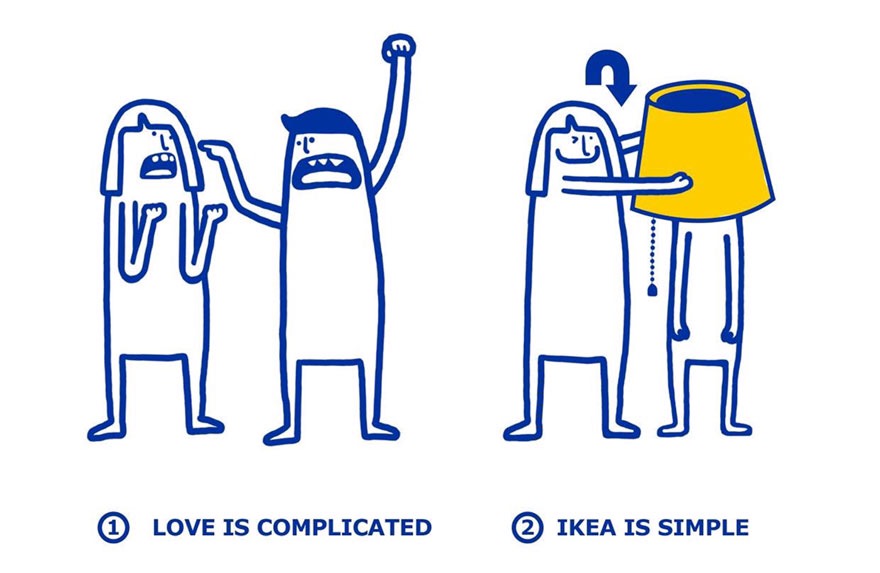
IKEA’s secret Swedish code


Anyone who’s ever been in one of the 350 + IKEAs in the world, has experienced a tiny slice of Sweden. 

In the stores, one thing that reflects Swedish and Scandinavian culture is the name of the thousands of products. 

What many people don’t know is that there are strict rules for the naming of the merchandise. Fascinatingly, these rules were devised by IKEA’s founder Ingvar Kamprad because he struggled with dyslexia and had trouble remembering the order of numbers in item codes of the inventory. 

So what’s the secret? Here are the guidelines: 

  • Bathroom articles = Names of Swedish lakes and bodies of water
  • Bed textiles = Flowers and plants
  • Beds, wardrobes, hall furniture = Norwegian place names
  • Bookcases = Professions, Scandinavian boy’s names
  • Bowls, vases, candle and candle holders = Swedish place names, adjectives, spices, herbs, fruits and berries
  • Boxes, wall decoration, pictures and frames, clocks = Swedish slang expressions, Swedish place names
  • Children’s products = Mammals, birds, adjectives
  • Desks, chairs and swivel chairs = Scandinavian boy’s names
  • Fabrics, curtains = Scandinavian girl’s names
  • Garden furniture = Scandinavian islands
  • Kitchen accessories = Fish, mushrooms and adjectives
  • Lighting = Units of measurement, seasons, months, days, shipping and nautical terms, Swedish place names
  • Rugs = Danish place names
  • Sofas, armchairs, chairs and dining tables = Swedish place names

There are some exceptions to these rules where the product’s name is a Swedish verb reflecting the function of the item, eg a spice mill called ‘krossa’ (to crush) or a lamp called ‘böja’ (to bend). 

Obviously, IKEA’s branders try to vet any words that are offensive locally. And with a few notable exceptions, they seem to succeed. More about this in a later blog. 

All Saints’ Day – the Swedish way 

Dressing up as witches, vampires and other ghoulish things has become increasing popular in Sweden. However, the traditional way of celebrating this time of year is much more serene and romantic. 

In Sweden, the first Saturday in November is All Saints’ Day – not necessarily November 1st as in most other countries. In 1983, the Sunday after All Saints’ Day was given the official name All Souls’ Day to separate between the saints and the dead.

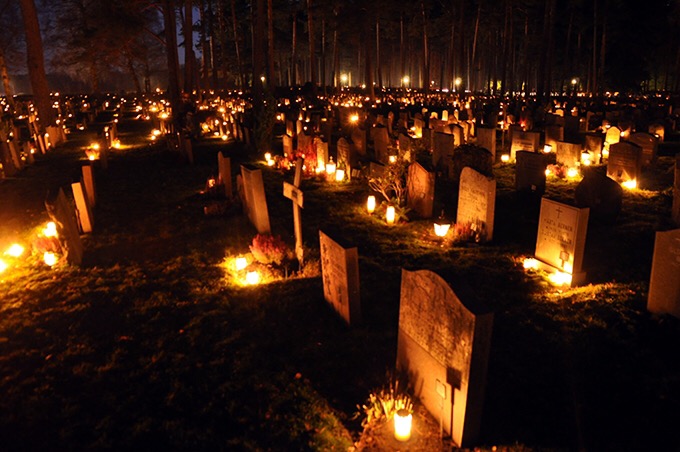
Since the 1800’s Swedes have, during this weekend, made pilgrimage to graveyards up and down the country to decorate the graves with candle light.

It is a beautiful experience to walk through the churchyards this weekend. In the pitch black November Nordic darkness, it is a peaceful reminder of those who have gone before us. If you happen to be in Stockholm, head for the Forest graveyard (Skogskyrkogården) for a specifically spectacular experience. 

Why are there so many gay nannies in Sweden? 

Photo: Johan Bävman 

Today was a rare Thursday. In the early afternoon, I got a moment to grab a coffee and sit in a cafe. Munching on my cardamom bun and sipping my latte, I looked around the room. Rather a large space with lots of seats. High ceilings. Modern Swedish design. And packed with people. 

A greater analysis of the demographic wasn’t really required. It was obvious from first glance that the majority of the guests were parental-leave parents – the armada of pushchairs being the biggest giveaway. 

About 50 percent of these guests were men. Bearded, beany-hatted, tattooed chillaxed dads. Trendy Swedish pappor. Taking advantage of the generous Swedish parental leave laws, these dads were enjoying their pesto pancake salads and bonding with their newborn infants. 

As I sat there I was reminded of a comment made to me some years ago by a friend visiting from Austria. After a couple of days in Sweden, observing the Swedes, she made an interesting reflection. 

She thought it was fantastic that there were so many gay nannies sitting in the cafes and patrolling the streets. 

Sweden truly is an amazing place! 

A casebook example of civil courage

baudin-jpg

Sometimes the best thing we can do is protest with our wallets.

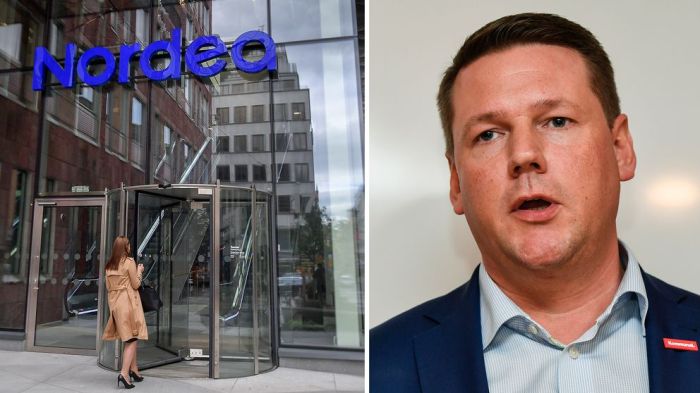
Swedish bank giant Nordea announced recently that they are moving from Sweden to Finland because of a new bank tax that the Swedish government is planning to put in place. The final decision will be made at an annual meeting next year. The threat to move has caused a lot of hoo-ha from both sides of the equation – those who criticise the bank for tax evasion and greed, and those who criticise the government for forcing companies to leave Sweden due to unattractive taxation laws.

Criticising the banks is Sweden’s largest trade union ‘Kommunal.’ – the union that represents council and municipal workers. Just today they announced that if the move happens, they will remove all their money from the bank. We are not talking about a small amount of money either. The amount is one billion Swedish crowns.

‘ We choose banks that reflect our morals and values and who act responsibly. Neither Nordeas MD or board do this,‘ says Kommunal’s chair Tobias Baudine

Kommunal joins other trade unions ‘Handels’ and ‘Seko’ who have also decided to leave Nordea and take with them investments to the value of half a billion Swedish crowns respectively.

Agree or disagree, this is definitely a great example of moral and civil courage. Sometimes as consumers, the best thing we can do is protest with our feet and our wallets.

  • If a business is acting in a way that is contradictory to our values and beliefs then leave them as a customer.
  • If a newspaper is spreading lies and hate, do not buy it or go to its website.
  • If an industry is employing dubious methods, then stop consuming their product.

Do not fund hate. Do not fund greed. Do not fund unethical behaviour (whatever that means for you).

By taking a stance, we have the power to change the world around us. If only we would realise it.


A Swedish thing, or a generational thing? 

Sitting in a restaurant yesterday beside two Swedish women in their mid 20’s. Eavesdropping on their conversation. They were talking about their employment situation. As I sat listening, I was caught between the emotions of affection and horror. 

One said ‘I don’t think employers should be able to place demands on us employees. If they keep placing demands on us, don’t they get that we won’t be happy. Then they’ll have a hard time finding staff’ 

The second woman nodded in agreement. And added ‘yeah, what if we decide we want to do something else like go to Thailand for three months? I want to be able to just go tomorrow if I feel like it.’ 

A Swedish thing, or a generational thing? 

Weird Swedish rhubarb

rhubarb

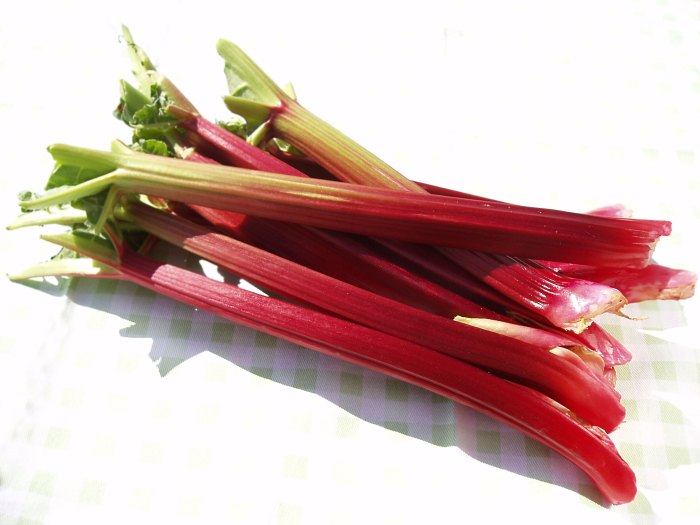
Watching TV this morning, I heard an expression I have never heard before in Swedish. It was an idiom – ‘att lägga rabarber på nåt’. Translated into English directly that is ‘to put rhubarb on something’.

This is a great example of an idiom and the fascinating thing about idioms is when translated directly, they mean nothing to those who are not initiated. But they have a clear and obvious meaning to those who understand its context. ‘Att lägga rabarber på nåt’ in English idiom would be something like ‘to stake a claim on something’ – in itself an idiom.

But why are Swedes putting rhubarb on things when they want them for themselves? Isn’t that a bit weird? Not when you understand where the saying comes from.

From the beginning, the expression was ‘att lägga embargo på nåt’ – embargo not rhubarb. The word embargo at that time was an unknown, strange word borrowed from Spanish and it meant ‘confiscate’. As it was an unusual word, it became quickly switched out for a more familiar similar-sounding one and ’embargo’ became ‘rabarber.’


What a discovery in a grave tells us about Swedish equality

female viking

Outside of Stockholm, there is an island called Björkö. On this island is a former Viking settlement called Birka. It is well worth a visit and is an active, on-going archeological site where new discoveries are constantly being made.  The area contains 3000 Viking graves, many containing high ranking warriors. Until recently, the presumption has been that these hold male remains but Swedish scientists have now revealed that the body of a warrior long presumed to be male is, in fact, female.

Scientists have assumed the skeleton to be male due to the status symbols buried along side it. However, after carrying out a DNA analysis, researchers from Stockholm University announced that the 10th Century skeleton is the first confirmed female high-ranking Viking warrior.

According to the researchers, this finding  “provides a new understanding of the Viking society, the social constructions and also norms in the Viking Age.”

“Our results – that the high-status grave on Birka was the burial of a high ranking female Viking warrior – suggest that women, indeed, were able to be full members of male dominated spheres.”

So it seems that gender equality in Sweden is not a new-found invention. It is something that stretches back, in its way, over many decades. Today, Sweden is amongst the top countries in the world to lead the Gender Equality Report. All cultural behaviour we see today stems from history and often from how we needed to survive as a society. Maybe today’s gender equality in Sweden started with the Vikings?

English words that tickle the Swedes

laughing minions

I have written a lot about funny Swedish words, such as prick, fart and slut.

I was wondering the other day about how many funny English words there are….words that Swedes find funny? To be honest, I could only actually think of a few.

Please help me to add to this list!

English words that Swedes find funny

  • Pink – a delightful color in English – means pee in Swedish
  • Kiss – a gesture of love in English – means pee in Swedish
  • Goodbyes – as in ‘saying your goodbyes’ – means good poo in Swedish
  • Pippa – the posh girl’s name as in Pippa Middleton – means to shag in Swedish
  • Bra – as in supportive underwear – means good in Swedish
  • Fan – a tool for cooling us down – means fuck (as in damn) in Swedish
  • Rap – the music form – ironically means burp in Swedish
  • Skit – as in a satirical sketch – means shit in Swedish


Warring neighbours: Sweden and Finland


finland-sweden-map,0

Many neighbouring countries around the world have had their fair share of conflict. Some countries are currently at war or teetering on the brink.

Thankfully, Sweden and the other Nordic countries have lived in peace with each other for centuries. However, Sweden and Finland still battle it out every year in an athletics competition between the two nations – the best type of neighbourly conflict. In Swedish, this is called ‘Finnkamp’ and in Finland it is called ‘Sverigekampen’. This year it is currently taking place in Stockholm.

The first Finnkamp took place in 1925 for men, and 1951 for women and it has taken olace every year, with a few exceptions for organisational disagreements and WWII. It is highly competitive, although friendly, and is a classic track and field event.

In total there have been78 annual competitions for the men and Finland leads 45-31 over Sweden. For the women, there have been 67 competitions and Sweden holds the lead at 41 to Finland’s 25. Let’s see how it ends up this year!

If you want to see the end of it, make your way down to Stadion in Stockholm today to catch the final events.