Swedish expressions about the forest

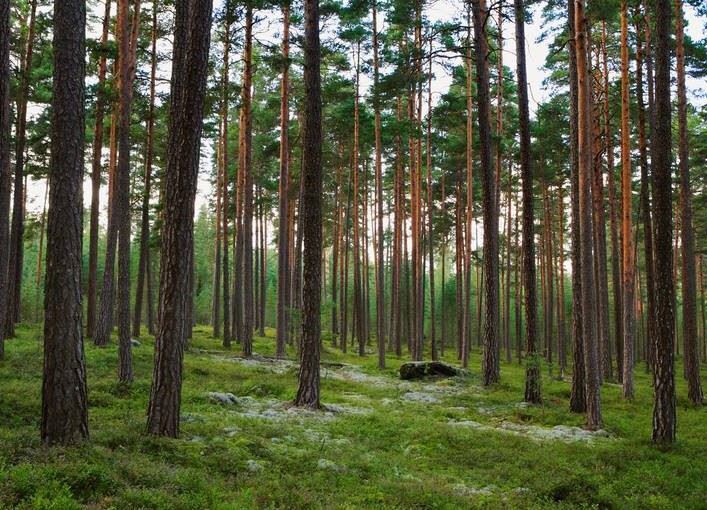
Did you know that 69% of Sweden is covered in forest? With this statistic in mind, it’s easy to understand the importance that the woods have in Swedish cultural history. The woods have supported, saved and scared Swedes for centuries. The woods have been associated with something remote, impenetrable and often mystical. In the non secular country that Sweden is, the woods also provide a ’Church’ and a source of spiritualism, meditation and reflection.

The forest has also given the Swedish language several expressions, words and sayings. Here are some:

Dra åt skogen’ – go to the forest – a polite way to tell somebody to fuck off

Skogstokig’ – forest crazy – a word to describe a person who is really angry

Det gick åt skogen’ – it went to the forest – a phrase that means something went wrong

Att lova guld och gröna skogar’ – to promise gold and green forests – an expression to mean that someone offers you wealth and happiness, but it is often overrated. Equivalent in English to ‘promise the moon’

Träskalle’ – wood head – an insult meaning someone is stupid

Träaktig’ – tree like – a description of someone as boring.

Barka åt skogen’ – going towards the forest – meaning it’s going to go badly

Can you think of any more?

Swedish politics for the uninitiated

For those of you unfamiliar with the Swedish political system, here is a quick crash course.

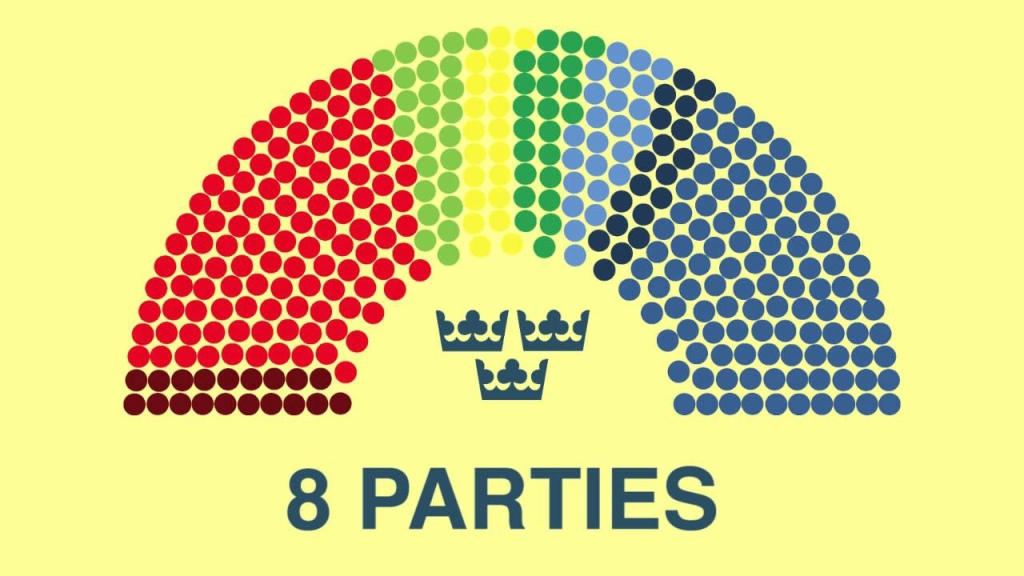
Sweden is governed by a democratically elected government, led by a Prime Minister. Legislation is proposed by the government and decided by a multi-party parliament. The system of election to parliament is one of proportional representation. This means that there are several smaller parties, and sometimes they end up holding the balance of power. To hold one of the parliament’s 349 seats, parties must have a minimum of 4% of the vote. This barrier was put in place to prevent very small parties getting in.

Every four years, in September, a General Election is held in Sweden. At the same time, elections for the 290 local council authorities, and 20 county authorities are held. Sweden had a 87.18% voter turn-out in the last election in 2018, which shows a strong democratic interest from the electorate.

There are currently 8 parties in the Swedish Parliament. In the last election, the Social Democrats (left of center) gained the largest percentage of the vote – 28.26%. The next largest party was the Moderate (Conservative) party with 19.84%. Since proportional representation is the method, no single party receives their own mandate in Swedish politics. This means a process of discussion, negotiating and wheeling-dealing with smaller parties is required to gain majority, come over 50% and to gain a position of government.

Sweden’s current government took a very long time to finalise. After each general election, the Speaker of the House announces the preliminary Prime Minister, initially the leader of the party with the most votes. This person then has the task of forming a government and getting it passed through parliament. After the last election, the government was finally approved after an enormous 129 days of negotiation. It is a minority government led by the Social Democrats and containing the Greens (4.41%). It is supported by 3 opposition parties – the Left Party (8%), the Center Party (8.61%) and the Liberals (5.49%). This is a very unusual coalition which has shuffled around the political map and brought together parties with many opposing views. Some people think of it as an unholy and unsustainable grouping. However, despite their different political ideologies, this middle-ground alliance are united in one ambition – keeping the right-wing nationalistic party Sweden Democrats (17.53%) out of government.

It remains to be seen how long this alliance will hold, and indeed what will happen in the next election in 2 years time. It seems that Sweden might be caught in the jaws of political populism. In a recent opinion poll, the nationalists Sweden Democrats came out as number 1.

So is Sweden in a conservative renaissance – will the next coalition government be conservative-right wing?

Time will tell.

Buying sex in Sweden

In a recent police raid, over 40 men were arrested at temporary brothels in Stockholm. They were charged with buying, or attempting to buy sex. The brothels, which are also illegal in Sweden, were shut down.

So what is Sweden’s policy on prostitution? Well, it is criminalized and in fact Sweden has a trail-blazing approach to prostitution. In 1999, the Sex Purchase Act came into existence. This Act makes it illegal to purchase “sexual services” but not to sell them. So the purchaser is the criminal and not the prostitute. The rationale for criminalizing the buyer, but not the seller, was stated in the 1997 government proposition, namely that “…it is unreasonable to also criminalize the one who, at least in most cases, is the weaker party who is exploited by others who want to satisfy their own sexual desires”.

This law has since been copied and put in place in various other countries, such as Canada, Norway and Iceland. According to the statistics, the law has seen a huge decline in prostitution and trafficking, although it is by far not eradicated.

According to journalist Meghan Murphy, who has written extensively about prostitution- ‘The Swedish model is about more than just changing the law. It is also an idea — it is about changing the culture, and the culture is what needs to change as well as our legislative approach. What the model and its proponents are saying is that men are not entitled to access the bodies of women and girls, even if they pay.”

However, the law is controversial and is not without its critics.

Those who criticize it claim that the law isn’t as effective as people think and that sex work in Sweden is just driven more dangerously deeper underground. They also claim the law strips women of their control and their rights to do with their body as they wish to. An article on mic.com says ‘Sweden’s belief that prostitution is the most brutal expression of patriarchy has engendered a kind of paternalism about commodified sex that holds men responsible for their actions while assuming women can’t be. It wipes out the possibility of gray areas for men and women to be equal partners in exchanging money for sex.’ In other words, according to them, the feminist-driven Sex Purchase Act is entirely unfeminist.

So, the age old debate carries on. The discussion about if prostitution is inherently exploitative. Should it be criminalized, or can it be developed to maximize equality for everyone involved? In Sweden, the buyer is criminalized. In most other countries, the seller is criminalized. In Germany, Holland, Austria, Switzerland, Greece, Turkey, Hungary and Latvia prostitution is legal and regulated. Different approaches to the same situation.

What do you think?

Sweden’s Swexit?

In the aftermath of Brexit on Friday at midnight, I now cherish my Swedish passport even more. It is the Swedish passport that provides me with the free movement and international access that I so strongly believe in. And it is the membership in the EU that, in my opinion, gives us strength, community and a chance for peace. From living in Sweden, I have learned an important lesson – ‘tillsammans är vi starkare’ – together, we are stronger.

Watching the officials remove the Union Jack from the EU Parliament display, I noticed that it was positioned next to Sweden’s blue and yellow flag. It got me thinking that if Sweden was to leave the EU, it would be called a Swexit. But what could it be called in Swedish? Which one sits most comfortably on the tongue?

  • Svutgång
  • Svorti
  • Svutträde
  • Svupplösning
  • Svavgång

Hopefully, it will never happen. It would be truly swawful.

Sweden’s romance with Germany

Sweden has many connections with Germany throughout its long history. As a nod to the growing German readership I have, I thought I would list a few of those connections.

German language influence

The Swedish language belongs to the North Germanic branch of the Germanic languages. Many words in Swedish are similar in German. I remember when I was on a trip to Hamburg, I could understand a lot of what was written in the German paper Der Spiegel. This was not because I speak any German, but because I speak Swedish. In fact the word ‘spiegel’, meaning mirror, is ‘spegel’ in Swedish. A friend of mine, originally from Rostock in Germany, learned Swedish very quickly. When I asked her how she had done it, she responded rather matter-of-factly that ‘Swedish is just German light’.

German merchants

In Stockholm’s Old Town there is an imposing church whose large Gothic spire dominates the skyline. This church is called ‘Tyska kyrkan’ – the German Church. During the 1500’s there were a lot of German merchants trading and living in Stockholm. In fact, they made up about half of the population. The King wanted to attract and keep as many Germans as possible, so he gave them attractive tax breaks and, in 1571, awarded them the right to start their own parish and place of worship. The church that we see today was finished in 1886, after restoration after a large fire. The German Church today holds services in German, and still serves Stockholm’s much smaller German population. Sweden today has still a lot of German merchants, in the form of large retail chains. Big players include the food chain Lidl, shoe shop Deichmann, home electronics retailer MediaMarkt and DIY store Bauhaus.
German Queens

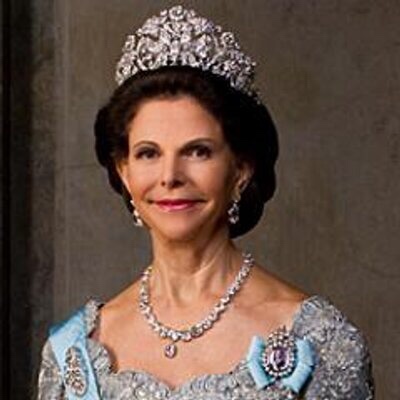
Sweden’s current queen, Queen Silvia, originates from Heidelberg. Her German accent resonates clearly when she speaks Swedish. But she’s not the only connection the Swedish Royal House has with Germany. In fact, the King’s mother was also German – Princess Sibylla – from Gotha. And both his grandmothers. And, well, throughout history the Swedish Royal House has been peppered with German aristocracy and royalty. According to Wikipedia, 22 of Sweden’s monarchs were of German descent. So, one could probably say that the Swedish royals are more German than anything else.

German tourists

Sweden is an extremely popular destination for German tourists who are attracted by the forests, lakes, open spaces, cute red cottages and fresh air. German tourists spend approximately 3,000,000 hotel nights in Sweden according to the Swedish Tourism Institute. Sweden’s three main cities are popular destinations, as well as Skåne, which is the closest county to Germany. Due to the fame of writer Astrid Lindgren, her birthplace village of Vimmerby in Småland is also very well visited. Sweden’s attractiveness is also thanks to a long-running German tv show. Since 2003, the show ‘Inga Lindström’ has entertained Germans with an idyllic, romantic image of Sweden. The program is a series of stories set in Sweden, where the characters speak German, but have Swedish-sounding names, and the attractive Sweden that is depicted makes German tourists want to flock here in droves.
German sausages

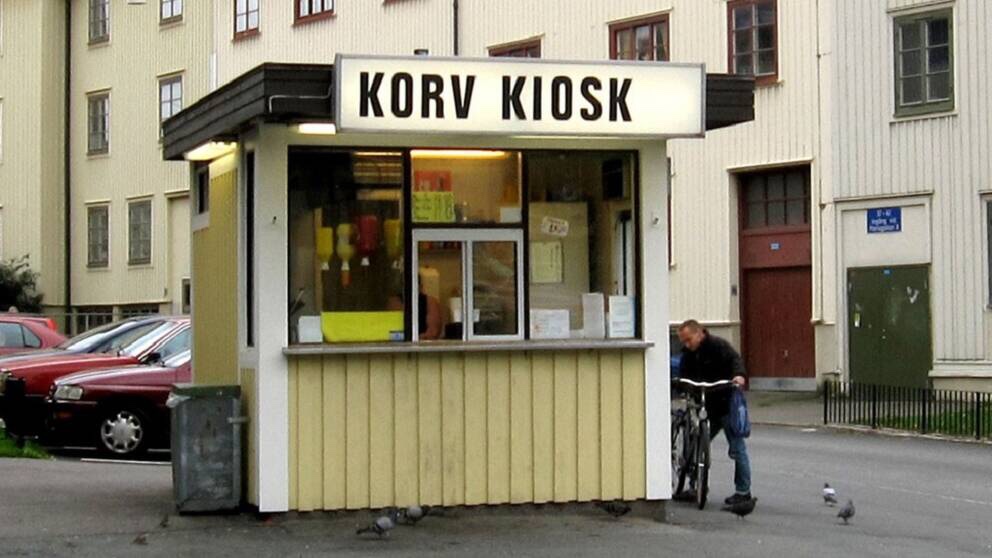
Although food trucks are a standing feature in Sweden’s current street food culture, the original fast food place was, and is, the sausage kiosk. One can not underestimate how much Swedes love their hot dogs and they eat them late at night, for a quick lunch, at sport events, in cars, at weddings, barbecues, communal cleaning days, shopping excursions. You name it. The sausage is ever-present. Evidence exists that sausage-like foods were eaten by the Vikings, but it was in Frankfurt, Germany that the sausage was really developed as a snack. This food culture arrived in Sweden, via USA, in the 1800’s and has remained a firm favourite ever since. Even Sweden’s own patented sausage, the Falukorv, apparently came into existence by German immigrants training the Swedes in how to make them. Sweden’s leading hot dog brand is called Sibylla. Named after the current King’s German mother, this was said to be an honour and not born out of ridicule.

So, there you have it. Germany and Sweden have very close ties linguistically, socially, politically, in royalty, in business, in tourism and, even on the street corners.

Are Swedes Nordic or Scandinavian?

This question seems to confuse people in other parts of the world and the description ‘Nordic’ and ‘Scandinavian’ are often mistakenly used interchangeably.

Simply put, Scandinavia consists of Sweden, Denmark and Norway and is largely a geographical description. The Nordic region seems less clear but is a cultural description and consists of Sweden, Denmark, Norway, Finland and Iceland. The political organisation The Nordic Council also includes the autonomous territories of Faroe Islands, Greenland and the Åland Islands. So all Scandinavians are Nordic, but not not all Nordic people are Scandinavian.

Then, to confuse things slightly, there are the FennoScandinavian countries which include Scandinavia, Finland and Karelia, but minus Denmark. Then there are the Baltic States which are Estonia, Latvia and Lithuania. So, although Sweden is on the Baltic Sea, it is not a Baltic State.

So, in summary, Swedes are Scandinavians, Nordics and FennoScandinavians but not Baltics.

Swedes and their dubious use of the English language

Swedes are generally good at English – but not always. Here are some funny examples people have shared with me:

A Swedish tour guide is on a study visit to an airport in the USA. Suddenly, he points up to the sky and says ‘oh look! A fish moose!’ (Seagull is ‘fiskmås’ in Swedish)

A Swedish visitor in the USA is impressed by the car he is travelling in and says ‘it must be nice to have a fart-controller in the car‘ (speed-control)

A Swedish woman wanted to explain to her English boyfriend why there were so many cars parked along the road side in a woodland area. ‘It’s bear-picking time’ she explained. (Berry)

On a sunny day in May, a conversation was overhead between a pilot and a Swedish air steward over Malmö airport. The pilot wondered what all the fields of yellow were. The steward replied ‘they’re rape fields‘. To which the pilot responded ‘oh you have special fields for that in Sweden?!‘ (it’s better to say rape seed).

A Swede and an Irishman met for the first time. The conversation went like this,

You’re not English are you?’

‘No I’m Irish’

‘Yes I could tell by your R’s’

The Irishman was confused as to how the Swede could tell this by looking at his backside. (Arse = backside in English)

A Swedish man stood at a hot dog stand in Trollhättan and was waiting for some new mashed potato to be made. Another customer arrived, who was not from Sweden. ‘You must wait for the moose’, the Swede informed him.

Two Swedish friends were drinking glögg at Skansen and they were approached by a group of tourists who wondered what they were drinking. ‘It’s warm red wine with Russians in’ said one of the Swedes. (Raisins would be the better word)

A Swedish tourist in a hotel was asked if everything was to their satisfaction. ‘It’s pretty fishy’ replied the tourist to the hotel representative’s confusion. (Pretty fishy means something is untrustworthy. The Swede wanted to say ‘fina fisken’ which means everything is really great).

And one that happened to me. When I was newish in Sweden and met my then mother in law, we were walking in Stockholm. She was telling me about the buildings in the city and she pointed at the city hall with its three crowns on the roof. ‘That’s the city hall’ she said, ‘that building with the three pricks in’. (Prick is dot in Sweden, but means penis in English).

Do you have any funny examples? Please share them with me!

If you liked this post, please share it!

Swedish Life Balance

It’s said that Swedes have an enviable work life balance and this festive season has been no exception.

Similar to many countries, Christmas and New Year are both bank holidays in Sweden. Similar to a few countries, today – 6 January – is also a bank holiday. In Sweden it’s called ‘Trettondag jul’ which translates as ’13th day of Christmas’. In other places, it’s known as Kings’ day, Day of the three magi, or epiphany.

Biblically it signifies the arrival of the three wise men and the baptism of Jesus. Secularly, it means another day off for most people.

In Sweden, it is the official end of the Christmas season, although the Christmas tree and decorations might stay up for a little longer.

This festive season has been a great opportunity for time off. By taking only 6 days’ holiday, workers have been able to be off for two and a half weeks.

A strong belief in work life balance is behind this. In general, Swedes work really hard and are dedicated. Coupled with the darkness at this time of the year, many people are exhausted by the time Christmas comes around. A long break is seen as a necessary way to recharge batteries, and regain motivation.

There’s a great Swedish word that you frequently hear after these long breaks – a person might describe themselves as ‘utvilad‘. This translates as ‘thoroughly rested’, and is essential to survive the long, dark winter season.

Who 20 Swedish airports should be named after

Naming airports after individuals is common – for example Paris’ Charles de Gaulle, or New York’s JFK or Liverpool’s John Lennon airports. But not in Sweden. No naming commercial airports after celebrities here. Who the hell do you think you are?

In Sweden, it is tradition to name commercial airports after the location they are in – so Stockholm is called ‘Arlanda’, Gothenburg is called ‘Landvetter’ and Malmö includes the village of ‘Sturup’.

There was loose talk about changing Stockholm Arlanda to Alfred Nobel, but the idea didn’t fly. So, I thought, who could the airports be named after? There are about 38 airports in Sweden – here is my name list for 20 of them:

  1. Stockholm – ABBA Airport
  2. Gothenburg – Ace of Base Airport
  3. Malmö – Zlatan Ibrahimovic Airport
  4. Linköping – Louise Hoffsten Airport
  5. Nyköping Skavsta – Tess Merkel Airport
  6. Östersund Åre – Henrik Lundqvist Airport
  7. Ängelholm – Jill Johnson Airport
  8. Borlänge – Mando Diao Airport
  9. Västerås – Tomas Tranströmer Airport
  10. Jönköping – Dag Hammarskjöld Airport
  11. Växjö – Vilhelm Moberg Airport
  12. Hemavan – Anja Pärson Airport
  13. Ronneby – Viktor Balck Airport
  14. Örebro – Prince Daniel Airport
  15. Karlstad – Selma Lagerlöf Airport
  16. Kristianstad – Axel Anderberg Airport
  17. Skellefteå – Stieg Larsson Airport
  18. Halmstad – Gyllene Tider Airport
  19. Visby – Josefin Nilsson Airport
  20. Umeå – Eva Dahlgren Airport

Sweden through the 2010’s – a retrospective

The Guardian newspaper describes the 2010’s as ‘The Age of Perpetual Crisis – a decade that disrupted everything but resolved nothing.’

Looking internationally it’s easy to see this. But is it the case in Sweden? Partially yes, but everything wasn’t bad.

Here’s a look back at the second decade of the century and a chance to remember some of the good and bad things that happened during 2010-2019 – in Sweden.

2010 – Crown Princess Victoria marries Daniel Westling, her former personal trainer. The last öre coin (50 öre) disappears from circulation. A suicide bomber blows himself up in central Stockholm – with no other casualties. Sweden accuses Julian Assange of rape, and issues an international arrest warrant.

2011 – Håkan Juholt replaces Mona Sahlin as leader of the Social Democrats, but it is very short-lived – he resigns a few months later. Over 50,000 people emigrate from Sweden – the largest ever exodus (as a percentage) in the country’s history.

2012 – Friends Arena opens in Solna and becomes Sweden’s national arena hosting 75,000 people. Loreen wins Eurovision with the popular song ‘Euphoria’ in Baku. Princess Estelle is born and thereby secures the future of the Swedish monarchy. Swedish Candy Crush Saga took the gaming world by storm.

2013 – Riots occur in Stockholm suburb Husby with at least 100 cars set on fire. A train derails outside Stockholm (Saltsjöbanan) and crashes into an apartment building. The man bun trend kicks off. The ABBA museum opens and quickly becomes a popular tourist attraction in Stockholm.

2014 – 80,000 refugees come to Sweden and one person sets fire to himself outside the Migration office in Karlstad. Suspected Russian u-boat in Stockholm’s archipelago. In a general election, sitting Prime Minister Fredrik Reinfeldt loses to Stefan Löfven.

2015 – Måns Zelmerlöw wins Eurovision with ‘Heroes’. A rare earthquake occurs outside Gothenburg. Unrelated knife attacks in a school in Trollhättan and an IKEA in Västerås. Henning Mankell, author of the Wallander books, passes away. Passport control is introduced at Sweden’s bridge border to Denmark in an attempt to stem illegal immigration.

2016 – Swedish actress Alicia Wikander wins an Oscar for The Danish Girl. Singer Josefin Nilsson dies from the aftermath of domestic abuse. Sweden goes Pokemon crazy. A massive snow storm disables the capital. Henrik Stenson becomes the first male Swedish golfer to win the Open. The expensive and heavily-criticised New Karolinska hospital finally opens and receives its first patients.

2017 – Sweden’s population reaches 10,000,000. A terrorist attack on Stockholm’s main shopping street, Drottninggatan, kills 7 and scars the nation for ever. The MeToo movement sweeps over Sweden.

2018 – Sex scandal in the Swedish Academy with the consequence of many members resigning and no Nobel prize for literature being decided. Journalist Kim Wall is murdered in a submarine in Copenhagen. Using a mobile and driving at the same time becomes illegal. Swedish DJ Avicii commits suicide. Swedish legend Lill Babs dies. Massive forest fires devour Sweden.

2019 – 16 year old environmental activist Greta Thunberg sails the Atlantic, speaks at the UN and is named Person of the Year by Time magazine. The King makes symbolic changes to the Royal court. American rapper ASAP Rocky is arrested in Stockholm for assault. Sweden is rocked by a series of shootings and bombings throughout the country. Swedish Democrats become the second largest party in opinion polls. Swedes become more climate aware – the number of electric-driven cars increases and the amount of meat consumption decreases.

What sticks in your memory from the decade gone by?

Guardian article