Swedish icons 4: Birgit Nilsson

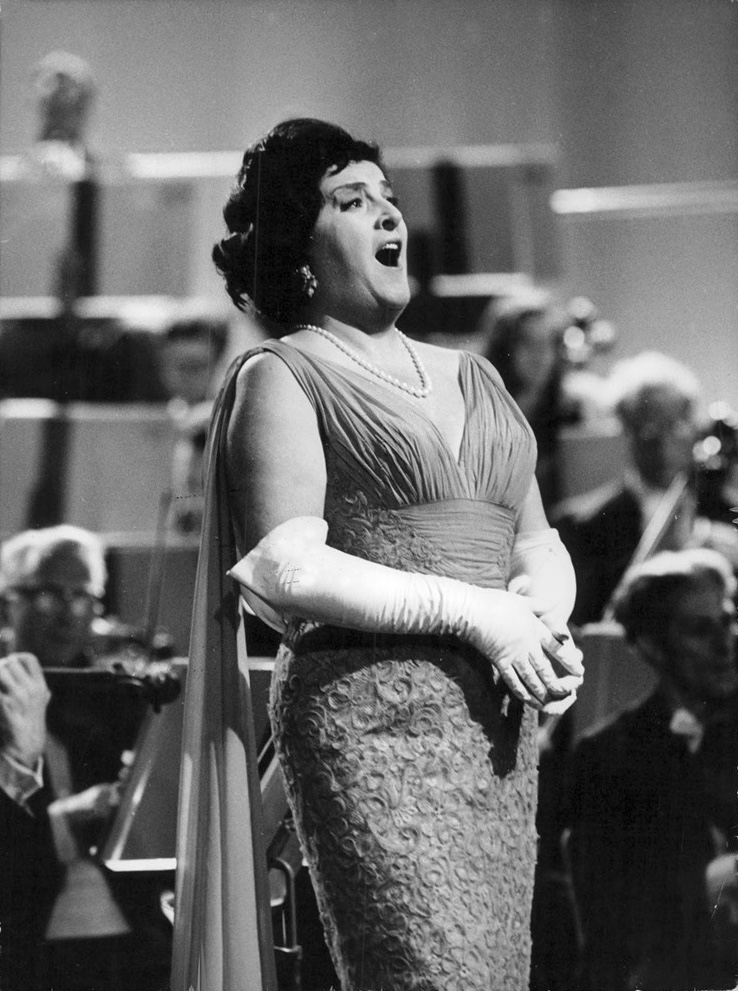
The diva of all divas, Swedish opera singer Birgit Nilsson was born 1918 in the county of Skåne in southern Sweden. She had an impressive global operatic career spanning decades, and was most known for her performances of Wagner and Strauss.

She had a belter of a voice – the New York Times referred to it as ‘a voice of impeccable trueness and impregnable stamina’. She was like an Olympian athlete, and with her enormously powerful voice, she became the most famous Wagnerian soprano of her time. During her career she played most of the significant roles for a soprano, such as Aida, Tosca, Electra, Brunhilde, Turandot and Salome.

Birgit Nilsson received numerous prestigious awards, one of which was Court Singer to the Swedish Royal Court. Once, asked what was her favourite role, she answered: “Isolde made me famous. Turandot made me rich“.

Birgitta Nilsson was often called ‘La Nilsson’ and, although she wasn’t considered difficult, she was notorious for her assertiveness, directness and her wit. When asked what it was like to sing Isolde with an unattractive male colleague, she responded : “I just close my eyes and think of Plácido Domingo.” When answering a question about her rival Joan Sutherland and if her bouffant hair was real, she gave the iconic response: “I don’t know, I haven’t pulled it yet.’’

Birgit Nilsson died in county Skåne in 2005, at the grand age of 87. She had no children but left an huge musical legacy behind her.

Swedish icons 3: Greta Garbo

I can’t write a series about Swedish icons without mentioning Greta Garbo, perhaps the most famous Swedish film star of all time.

Born Greta Gustafsson in Stockholm in 1905, she first rose to international fame in the silent movies of the 1920’s. In 1930, she made a successful transition into talkies, in the film Anna Christie, which was marketed under the slogan ‘Garbo talks!’ Her first line was an iconic ‘Give me a whisky, ginger ale on the side, and don’t be stingy baby’, which was delivered with a deliberately heavy and husky Swedish accent.

She appeared in classic films such as ‘Queen Christina’, ‘Anna Karenina’, ‘Mata Hari’ and ‘Camille’. Noted for her flawless beauty, cool persona and melancholy, she retired from the screen aged 35. For the rest of her life, she lived as a recluse, which passingly echoed her most famous film line from Grand Hotel – ‘I want to be alone’.

Garbo died in 1990, and her ashes are interred in Stockholm. In the Stockholm neighbourhood of Södermalm, there is a square called Greta Garbo Square, not far from where she was born.

Swedish expression: ‘to suspect owls in the moss’

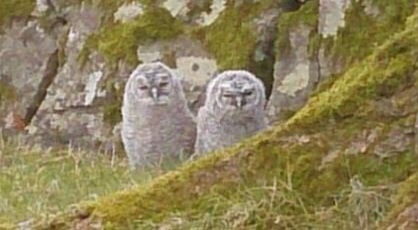
In English, when we suspect something isn’t quite right we ‘smell a rat’. In Swedish, they suspect ‘owls in the moss’.

The expression – ‘att ana ugglor i mossen’ – has Danish origin. The original saying dates to the 1600’s and was ‘det är ulve i mosen’ which translates as ‘there’s a wolf in the moss’. The expression makes sense and was used when a dangerous situation was suspected.

So, how did a wolf turn into an owl? There are two theories. One theory is that it happened as a mistake. The sound of the Danish word for wolf ‘ulve’ was misheard as ‘uggla’ the word for owl – and the creature hiding in the moss became a wise bird rather than a viscous predator.

Another theory is that the saying was consciously changed when wolves disappeared from Denmark. The wolf was replaced by an owl because it hoots a warning at the presence of danger.

Confusing Swedish time

One of the differences in languages in the way people tell time. There are a few differences between Swedish and English that can be confusing.

The biggest difference is how Swedes say half past the hour. They actually say ‘half to’, so they refer to the hour that’s coming and not the one that’s gone. So, half past five (5.30) in English is called ‘half six’ in Swedish. You can imagine the confusion. This is probably why Swedes usually apply the 24 hour clock in writing – ie 17.30.

As an extension of the ‘half to’ concept, the time between 5.31 and 5.44 is also interesting. In Swedish 5.35, for example, is explained as ‘five past half six’. Once the clock hits 5.45, it becomes a recognizable ‘quarter to’.

Another interesting concept in Swedish time is that she is female. What is the time is ‘hur mycket är klockan?’ (How much is the clock?) but it can also be ‘hur mycket är hon?’ (How much is she?). The answer is ‘hon är klockan tre’ (she is three o’clock).

Finally, Swedes write dates in the year-month-day format, which can also be confusing at times. Today’s date, for example, is 21-03-12.

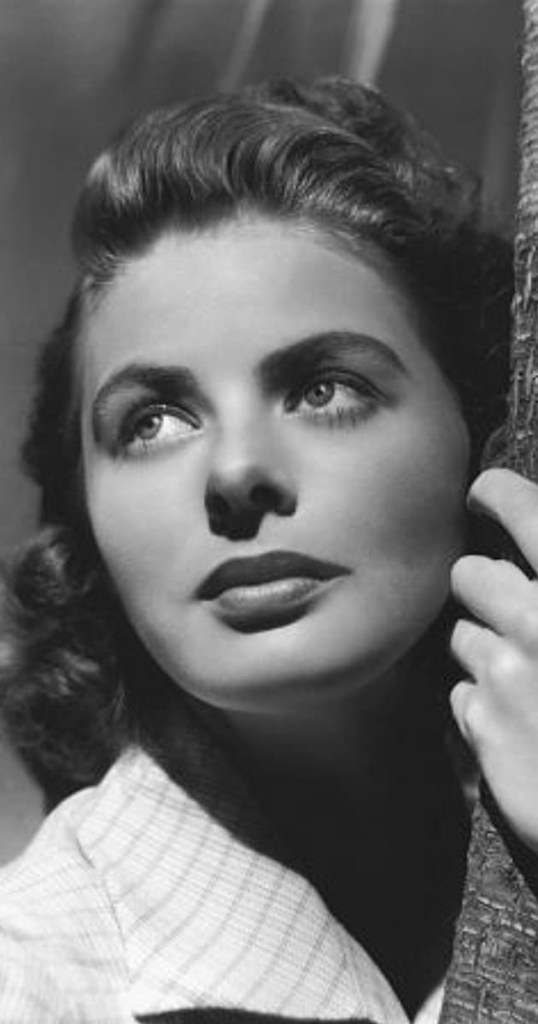
Swedish icons 2: Ingrid Bergman

Swedish actor Ingrid Bergman is considered one of Sweden’s best, and most famous, actors ever. Born in 1915 in Stockholm, she moved to USA in 1939 and took the world by storm. Her poise, her beauty and her talent were showcased in classic films such as Casablanca, For Whom the Bell Tolls, Notorious and The Bells of St Mary’s.

The mother of actor Isabella Rossellini, Ingrid Bergman was highly decorated, winning three Oscars for best actress in Gaslight and Anastasia and for supporting actress in Murder on the Orient Express. She has been described by the American Film Institute as one of the world’s Top 50 most significant actors throughout history.

Ingrid Bergman died of breast cancer in 1982 in London and she is buried in Stockholm.

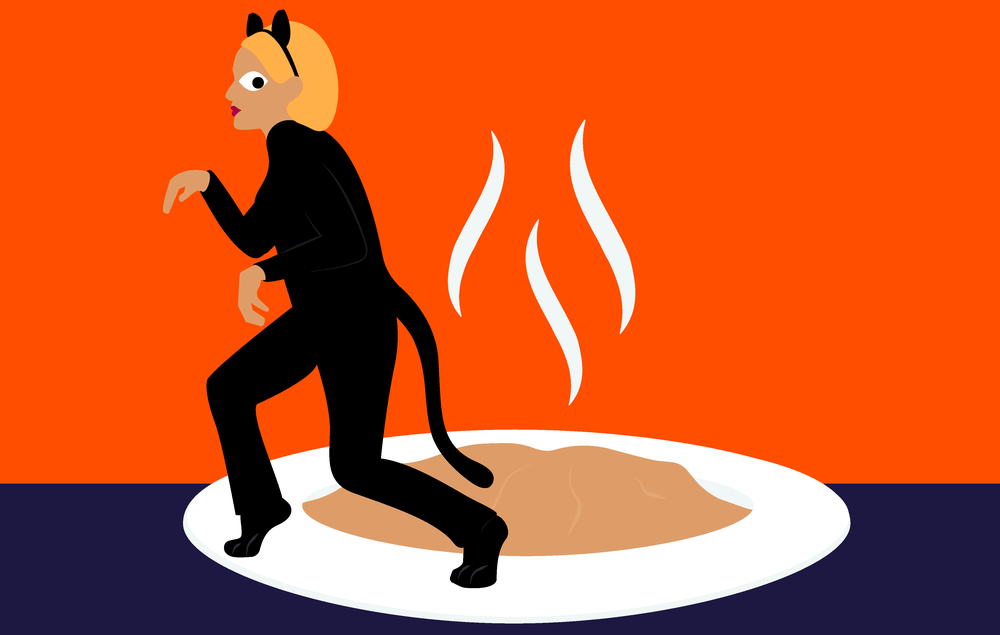
Swedish expression: ‘to walk like the cat around hot porridge’

Given the historical relationship between humans and cats, it’s not surprising that there are lots of expressions using the cat as a metaphor. ‘Att gå som katten runt het gröt’ literally translates as ’to walk like the cat around hot porridge’ and refers to the fact that a cat does not want to eat the porridge before it has cooled. But what does it mean as a saying?

The idiom was first documented in 1641 and means to avoid speaking or acting directly about something – to skim the periphery. The English equivalent is ‘to beat around the bush’, which is a hunting reference, or ‘pussyfooting about’ which also refers to the tentative nature of the cat’s gait.

Graphic by Andrea Johansson

Vasaloppet in Sweden – the world’s longest cross country ski race


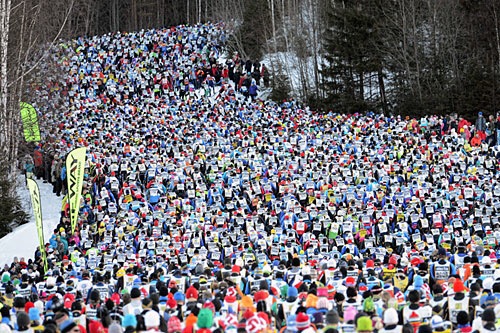
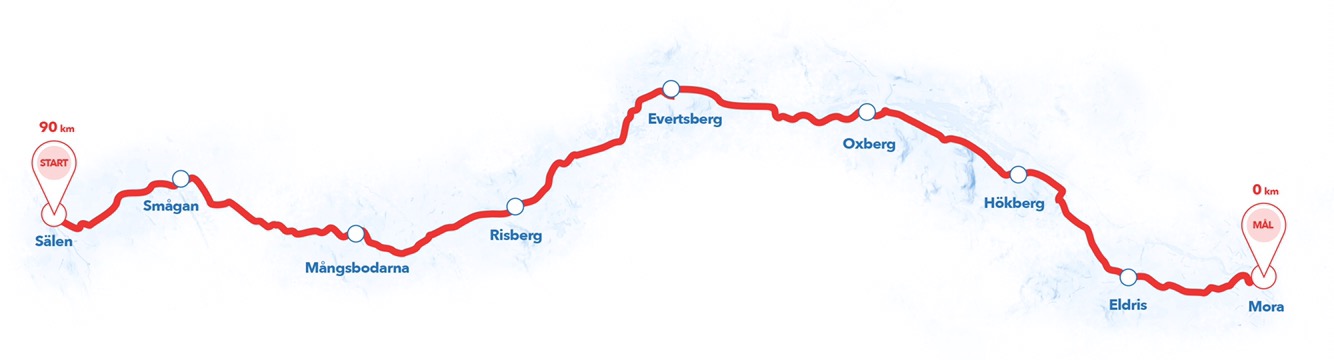
From 15000 to 400, and from 12 hours to 4. Today, the world’s longest cross country ski race takes place in Sweden. Called Vasaloppet, it entails participants skiing 90 kilometers from start to finish. It’s an extremely popular international race which is broadcast live on tv. When tickets to participate are released, they usually sell out in 15 minutes – it’s that popular.

This year is, however, a bit different. Normally 15000 people participate in the race, but because of the pandemic, this year only 400 people are taking part. These 400 are the elite athletes.

The first Vasalopp was in 1922 and takes place annually, the first Sunday in March and it is a first sign of spring.  Normal participants can take up to 12 hours to complete the gruelling course, but the elite athletes do it in a comparatively speedy time of around 4 hours.

So why is this race called ‘Vasaloppet’? Well, it takes its name from a Swedish king. The race commemorates the escape to Norway, through the forest, of King Gustav Vasa in 1521. Legend has it that he carried out the long journey on skis,  but experts believe he more likely completed this escape on snow shoes. Nevertheless, out of this legend sprung the race which is so popular today. ‘Vasa’ after the king, and ‘loppet’ meaning ‘the race’.

Modern day skiers don’t see the experience as an escape, they see it as a challenge and for many of them it’s a rite of passage.

And as you sit watching the TV comfortably from the sofa, with tea and toast, you take vicarious pleasure in this long, amazing Swedish race.

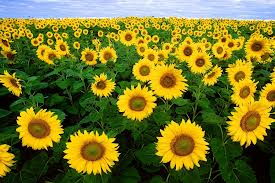
Swedish sunflowers

sunflowers

Sunflowers might not be the first thing you think of when you think of Sweden. But at this time of year, the place is full of them. Well, not really sunflowers per se, but a type of sunflower.

The fantastic thing about sunflowers, apart from their brash yellow colour and the flocks of butterflies that they attract, is the way in which they move. Their big, open faces look up at the sky, reaching for the light, and when the sun is out the sunflower moves its face to follow the its path across the sky. They really enjoy soaking up the rays of light and the warmth that the sun provides. It’s a fantastic sight to behold as you drive through the countryside in France or Italy.

But we’re not in France or Italy, we’re in Sweden. So what has this got to do with Sweden then?

Well, Swedes are like sunflowers.

Confused? Let me explain.

After a long, dark, cold winter, Spring eventually arrives.  This year, it seemed to arrive early. This week, temperatures already soared to 14 degrees celcius, the sky was blue and people hit the streets. Everybody emerged from their winter, and corona, hybernation.

They sat on park benches, on window ledges, outside restaurants, on balconies. They leaned up against sunny walls. And as they sat there, they lifted their faces, just like sunflowers, to face the sun and to feel the warming rays of light on their pale wintery skin. Sometimes people just stopped randomly on street corners and lifted their faces up to the sun, eyes closed, to soak up the light.

So you see, Swedish sunflowers are the Swedes themselves. And you’d be hard pushed to find a more sun-worshipping, thankful population at this time of the year.

Swedish ice batheing

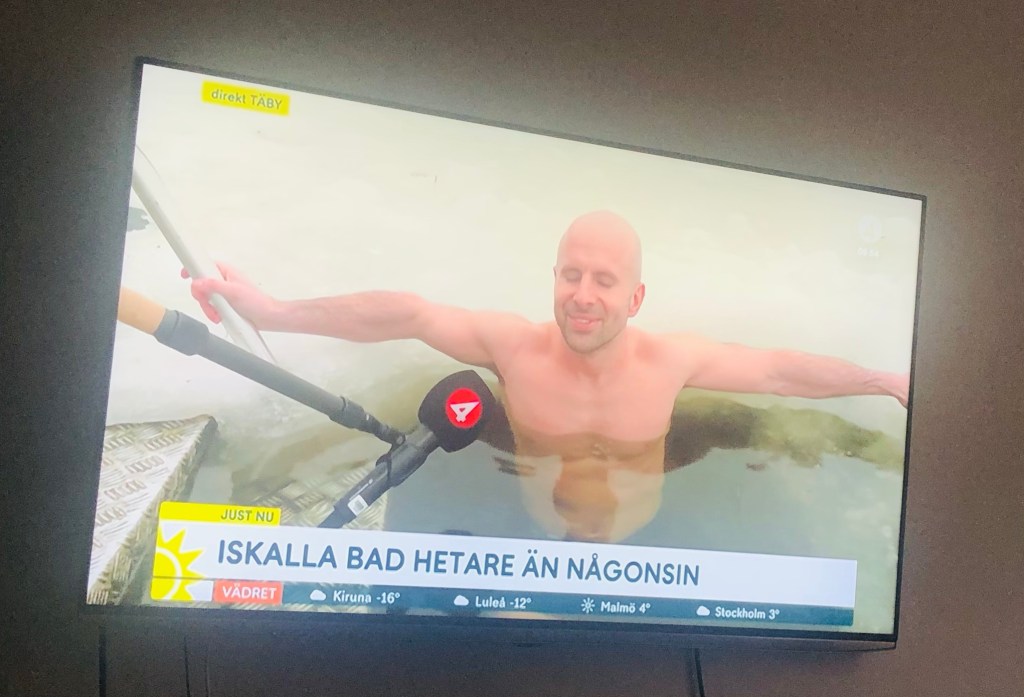
This winter, taking an outdoor ice bath has become very fashionable in Sweden. Disrobing and lowering yourself into frozen lakes at below zero temperatures is considered very healthy for the body and its ability to repair itself.

Spring has now arrived and the ice is melting but die hards are still squeezing the last out of the ice batheing season. Like this guy featured on TV, who regularly sits in the frozen lake – for 20 minutes at a time!

This may seem like a long time, but actually it is nothing compared to the world record. The world record for ice submersion is held by Austrian Josef Koerbel who, in 2020, held himself under ice for 2 hours and 30 minutes. In his case, it was in an ice box on a public square in the town of Melk.

Brrrr.

So, what about you? Do you feel enticed by the concept of plunging into the chilly depths to take an ice bath? Or would you rather keep yourself wrapped up warm and toasty on the bank of the lake?

Swedish Icons 1: Anita Ekberg

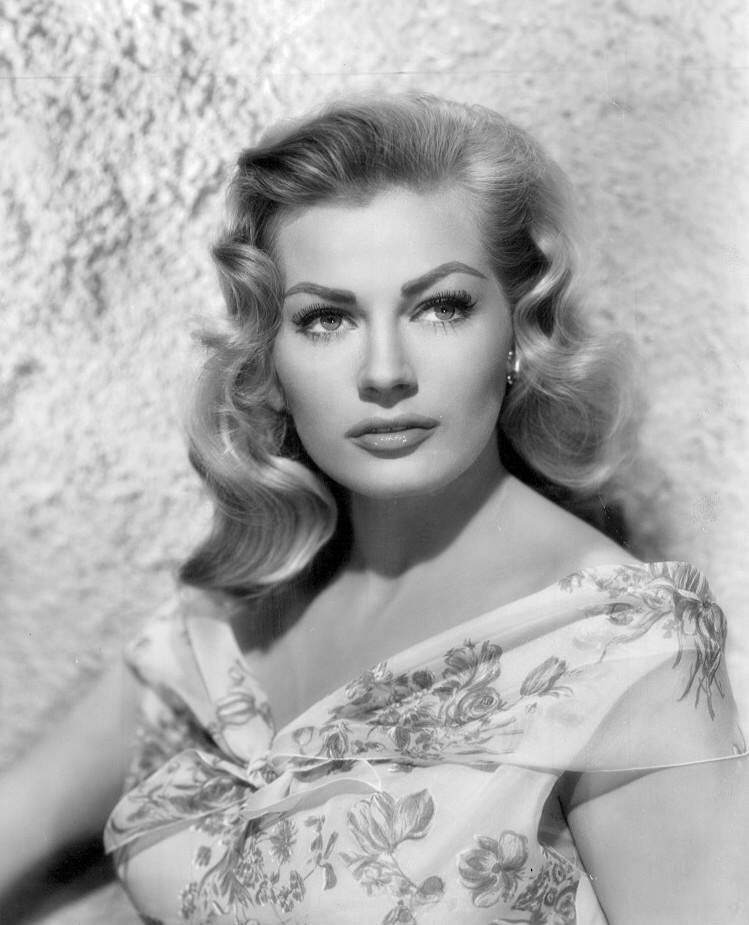
Swede Anita Ekberg, from Malmö in Skåne, played an iconic leading role in Federico Fellini’s La Dolce Vita (1961). She is notably remembered for the scene where she bathed in la Fontana di Trevi. Born in 1931, she won the Miss Sweden title at the age of 20, and then went to USA to compete in Miss Universe. Although she didn’t win, she worked as a model and a hostess and got small film roles.

She was famously opinionated and refused to change her surname saying that if she became famous everybody would learn her name, and if she didn’t it wouldn’t matter.

Ekberg appeared in many films, but interestingly never a Swedish one. She retired from acting in 2002 and died in 2015 at age 83 in Rome.