Neil Shipley on Swedish culture – the strange, the special and the sublime
Author: Neil Shipley's watching the Swedes
Since 1994, I've been watching the Swedes. Not in a creepy, obsessive way, but like an adventurer in unknown territory who carefully observes his surroundings.
I run a training company with my American business partner in Stockholm. We hold seminars and workshops in Cultural Awareness and Communication.
For more info about this check out www.keytraining.se
Today, 16 April, is Patrikdag – Patrik Day in Sweden. Not to be confused with the Irish St Patrick’s Day and nothing to do with partying, drinking and dancing.
No, this day is to with agriculture, and crops. In Sweden’s old agrarian society, spring was an intensive time. It was important to sow at the right moment in order to have a successful harvest. In the southern-most county of Skåne farming calendar, Patrik Day was marked as being the last day to sow. If it was too cold, and the ground too hard, then the tradition was to sow inside the barn. In other more northern parts, this was the absolute last day to begin ploughing the fields.
The name Patrik comes from the Swedish tradition of giving each day a name. Yesterday was Olivia, tomorrow is Elias. And today is Patrik Day.
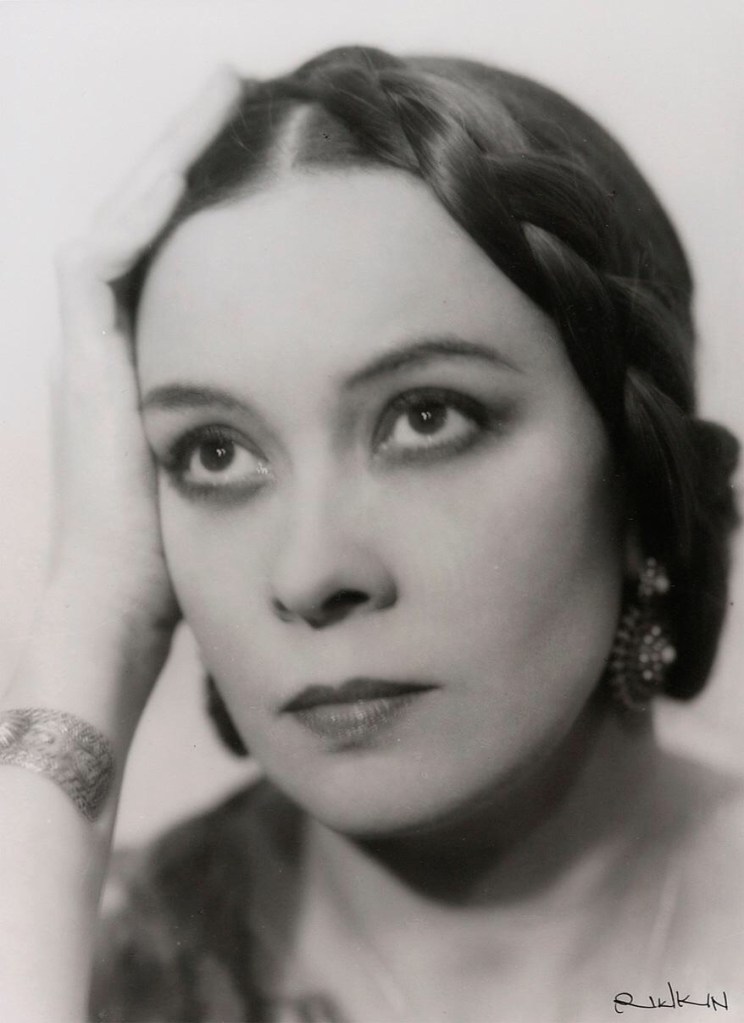
Carina Ari was born Maria Karina Viktoria Jansson in Stockholm in 1897. She went on to become one of Sweden’s most successful dancers and choreographers throughout history. For most Swedes, she may be unknown, but she certainly made a lasting mark on Swedish and international cultural life.
Carina Ari started dancing at a young age to support her infirm mother, who died when Ari was 16. Shortly afterwards, she was employed as a dancer at the Royal Theatre and within two years was promoted to solo dancer. During the 1920’s, she danced and choreographed many acclaimed performances in Stockholm, Copenhagen and in Paris for a variety of institutions and companies. In Paris, she was the prima ballerina at the controversial and experimental Swedish Ballet. In 1924, she toured Europe with her highly successful Scènes dansées. In 1927, she choreographed a much talked-about performance for the French President Loubet at the Élysée Palace. In1930, she was appointed Director of Balletat the Algiers Opera, where she created for many years before returning to the Opera Comique in Paris. During her active years, she was the darling of dance, a somewhat controversial prima donna and a sought-after choreographer. Married to French composer Désiré-Émile Inghelbrecht, they were a power couple on the cultural scene.
In the late 1930’s, mid divorce, Ari was holidaying in the south of France when she met, and fell in love with, a Dutch businessman. When the Second World War approached, they moved to Argentina, where they married and lived the rest of their lives. Upon his death, she inherited a great fortune and was able to maintain a residence in Stockholm and studio in Paris, both of which she frequently visited. In Argentina, she became a grand old dame, living a life of culture, entertainment and fine dining. She frequently visited the Teatro Colón and watched their dance performances. Although considered one of the best opera houses in the world, she was apparently vocally critical of the quality of their dancers.
As part of her legacy, the Carina Ari Foundation gives financial support to young, promising dancers and to older dancers who have fallen on hard times. On Holländargatan in Stockholm is the Carina Ari Library, which is the largest library of dance in Northern Europe. Additionally, the Carina Ari Medal is occasionally awarded to people who have contributed to the art of dance in Sweden.
However, her legacy is not only in dance. Carina Ari was also an accomplished sculptor. She specialized in portrait busts and some of her works are displayed at Sweden’s National Museum. Her bust of Birgit Nilsson is at the Opera House in Stockholm and her bust of Dag Hammarskjöld is located in New York in the square that bears his name.
Carina Ari died in 1970 in Buenos Aries after complications from breaking her leg, and is buried with her husband in Haarlem in the Netherlands.
Today, 13 April 2021, begins the holy period of Ramadan. Millions of Muslims around the world will be celebrating today. The festival involves a month of prayer and fasting. Ramadan is the name of the ninth month in the Islamic calendar. It is also one of the Five Pillars of Islam – the principles which Muslims believe are compulsory acts ordered by God.
Ramadan is a time when Muslims are encouraged to give to charity, strengthen their relationship with God, and show kindness and patience. During this month, believers also head to the mosque for an additional night prayer called Taraweeh, only held during Ramadan.
‘Shaum’ – or fasting during daylight hours is considered to be an act of worship, which enables Muslims to feel closer to God and strengthen their spiritual health and self-discipline. It is also intended to build empathy for those less fortunate. Followers eat a meal before dawn, and then break their fast after sunset with a meal called ‘iftar’ or ‘fitoor’.
So, how does this work in Sweden – a place where daylight hours can be very long? Well, it is more difficult to do Shaum if Ramadan lands in the month of June. In June, in the North, there is no dawn and sunset – but instead the Midnight Sun. This would mean that people would not eat or drink for a long period – which is not sustainable. Nor is the intention that people should overly suffer. In these instances, it is recommended to choose a city (such as Malmö for example) and follow their timings, even if you you yourself are sitting way up north in arctic Kiruna.
However, this year Ramadan is in April, which means that those fasting in the north of Sweden will have to not eat or drink between 04.55 and 20.24 – which, if you ask me, is tough enough.
If you’d like to wish somebody a Happy Ramadan, you can say “Ramadan Kareem,” which translates into “Have a generous Ramadan,” or “Ramadan Mubarak,” which roughly translates into “Happy Ramadan.” On the last day of Ramadan, which is Eid-al-fitr, the greeting changes to “Eid Mubarak.”
With bans around Europe lifting, it is time to start thinking about summer holidays. At least gingerly. Some people are waiting until the autumn to be safe, and spending their summers in ‘staycation’ mode – called ‘hemester’ or ‘svemester’ in Swedish. But for others, the pull to warmer climes is too strong.
If you are considering overseas travel, then I strongly recommend you check out the following website: http://www.swedenabroad.se
This is the official website of Sweden’s embassies and consulates. It is updated on a daily basis and has the latest information on corona restrictions. You can search specific countries and see what applies there.
Anders Zorn was born 1860 in Mora, county Dalarna. He is considered one of the most significant Swedish artists throughout history.
His works hang in several museums in Sweden, including the National Museum. He is also exhibited at the Metropolitan Museum of Art in New York and Musée D’Orsay in Paris. Additionally, his portrait of President William Taft from 1911 is displayed in the White House in Washington DC. He also painted acclaimed portraits of Presidents Cleveland and Roosevelt.
Zorn was often away from Sweden and sought inspiration in Europe, USA, North Africa and Russia. He was internationally and critically revered and honored with many Swedish and international awards. He is renowned for his paintings of voluptuous naked women, countryside scenes, festivities and portraits. One of his most famous paintings is Midsummer Dance.
Zorn was known to be self-confident, gluttonous and chauvinistic. He loved to drink, smoke and party. Notoriously unfaithful to his wife Emma, he even invited one of his mistresses into their home in Mora. By all accounts his wife tolerated his bohemian lifestyle, although they lived separately for most of their lives.
Zorn’s exploits led to him contracting syphilis and his hedonistic ways contributed to an early death from blood poisoning aged 60 in 1920. Earlier the same year he and his wife founded the Bellman Prize – an award that still exists today and is awarded for excellence in poetry.
When Emma Zorn died some 22 years later, their house – Zorngården- became a museum and gallery, which is today one of Sweden’s most popular tourist destinations.
Rolf de Maré was born 1888 in Stockholm into a wealthy family. He is one of the most important Swedish cultural profiles of the 1900’s, renowned for being an influential collector of art, a dance impresario and the founder of the world’s first museum of dance.
Rolf de Maré had the financial means to fulfill his dream of being a patron of the arts, and as such he could travel all over the world. On his many trips, he bought art directly from the artist. Among his collection, he purchased works from Picasso, Braque and Léger.
In 1920, he started the avant-garde Swedish Ballet in Paris. The Ballet was a creative power that aimed to combine dance, drama, painting, poetry, music, circus, film and pantomime, and attracted talent such as Jean Cocteau.
Rolf de Maré loved living in Paris, by all accounts. Here he could live openly as gay; something that was impossible at that time in close-minded Sweden. He had a series of romantic liaisons, the most notable with the artist Nils Dardel.
In 1933, Maré founded the world’s museum and research institute for dance, also in Paris. The museum gathered material and records about dance from all over the world. During this period he became a powerful and celebrated person on the French culture scene – and was responsible for launching the career of the legendary Josephine Baker.
After the Second World War, he attempted to hand part of the material from his dance museum archives to the Paris Opera. They took 6,000 books which are today stored at the Opera’s library. However, they did not want the rest of the material. As a result, information on the Swedish Ballet and some other documentation ended up in Stockholm at the Dance Museum, which he founded in 1953. This material can still be seen today. His modern art collection is on display at Stockholm’s Museum of Modern Art.
Rolf de Maré died of a stroke in Barcelona in 1964 and is buried at Gustaf Vasa church in Stockholm. Next to the Dance Museum is a restaurant called in his honour ‘Bistro Rolf de Maré’. The bistro has French and Swedish classic dishes on the menu. As he was grandson to the incredibly wealthy Wilhemenia von Hallwyl, also a patron and collector of the arts, a beautiful portrait of him hangs in the grandiose Hallwylska House in Stockholm. The painter? His beloved Nils Dardel.
To mark the recent death of the UK’s Prince Philip, a 41-gun salute was held across Great Britain yesterday. For many, it seemed like an odd number. So, why 41?
In both the UK and Sweden, gun salutes mark special royal occasions and the number of rounds fired depends on the place and occasion. The basic salute in both countries is 21 rounds.
In the UK, however if fired from a royal park, an extra 20 rounds are added – making 41. At the Tower of London 62 rounds are fired on British royal anniversaries (the basic 21, plus a further 20 because the Tower is a Royal Palace and Fortress, plus another 21 for the City of London.)
The most shots have been given from the Tower when the late Duke of Edinburgh’s birthday (62 shots) coincided with the Queen’s official birthday (62 shots). This gave a total of an annoying 124 shots booming out over the city.
So, does Sweden always have 21 shots?
No, not always. When a Royal birth takes place and the infant is the firstborn to either the reigning monarch or to the heir to the throne, an extra 21 rounds (for a total of 42) are added to the normal salute. Additionally, 19-gun salutes are used for heads of government, cabinet ministers and ambassadors.
Another gun salute consists of two rapid gunshots only. This is used by the military and was fired to identify a Swedish ship entering a harbour or on the battle field to identify the Swedish troops. This signal is called the ‘Svensk Lösen’ – the Swedish Signal. This salute is today fired on special occasions, usually within the armed forces.
21-gun salutes in Sweden occur on:
28 January – the King’s Name Day
30 April – the King’s birthday
6 June – Sweden’s National Day
14 July – Crown Princess Victoria’s birthday
8 August – Queen Silvia’s Name Day
23 December – Queen Silvia’s birthday.
So, why is 21 standard?
Well, it originated in British maritime tradition. Historically, ships would fire 7 shots as they approached a foreign harbour. As ships usually had seven cannons on board, this was to show they had disarmed themselves and declare the vessel to be no threat on entry.
The military on land could store more gunpowder and therefore could reload their cannons more quickly. The tradition became that they would fire three shots for every one shot made at sea – hence 21 shots – as a sign of welcome and peace.
Interestingly in Sweden’s neighbouring country, Denmark, the gun salute given to majesties is 27. Could this be based on the same thinking? 3 x 9 shots?
I had the weirdest of nightmares the other day involving the former British Prime Minister, Margaret Thatcher. When I checked her out, I discovered oddly that the very day was the 8th anniversary of her death.
No British Prime Minister in history has been so reviled, and also loved, as Margaret Thatcher. My dad absolutely hated her. With a vengeance. He blamed her for single-handedly causing the economic and social depression that utterly destroyed the north of England, where I’m from.
It made me think about what Swedish politician has been so despised through history. Who in Sweden is the most reviled?
While Swedish Prime Ministers such as Carl Bildt, and Göran Persson were not always popular, probably topping the list is Social Democratic Olof Palme. He was a legendary Prime Minister who was loved by many. On the other hand, there were a lot of people who absolutely loathed him, his ‘arrogance’ and his ‘radical’ politics. He was Prime Minister for 17 years, in two different periods, up until his assassination in 1986. One person said about him – ‘He had a very special personality, he was so intense, so brilliant but his brilliancy was a problem for him as well because many people got hurt by his harsh words.’
Palme was most controversial in his overseas politics than his domestic ones. This gave him many enemies. He was often alone among political leaders in the western world in expressing his stand against colonialism. He railed against the Soviet crackdown in Czechoslovakia, criticized Spanish dictator Franco, befriended Cuba’s Fidel Castro and crusaded against apartheid in South Africa. He was anti Vietnam war, and therefore perceived by many as anti-US, who love to use the classic rhetoric ‘you’re either with us, or against us’.
Just like Thatcher, what people thought of Palme depended on their political leanings. For many, Palme was a beacon of hope – a living manifestation of the social-democratic ideology. For others, he was a socialist, a meddler and a rabble-rouser. Thatcher and Palme, I’m sure, detested each other. They were politically very far apart – she hated both socialism and feminism – two things that he firmly believed in.
Palme’s murder is considered by many to be the end of Swedish innocence. Margaret Thatcher wrote ‘ He will be grievously missed, not only in Sweden but really the world over.″ She herself had escaped an IRA assassination attempt in 1984, and said that other world leaders ‘have to carry on taking risks for democracy and not be deflected.’
A lot of mystery surrounded Olof Palme’s assassination. 16 years later in 2020, the perpetrator was identified as graphic designer Stig Engström. However, many people do not believe this conclusion.
Olof Palme, loved or hated, meddler or mediator, peace-keeper or political activist, is buried in the churchyard at Adolf Fredrik Church in Stockholm.
Today, 8 April, is International Romani Day. It marks the first World Romani Congress that was held in London in 1971, making today the 50th occasion it has been celebrated. The day exists to shine a light on the ongoing persecution and abuse that the Roma population of the world has been forced to endure throughout history.
The Romani originate from northern India. They are dispersed, and their most concentrated populations are located in Europe, and Western Asia, since around 1007. Nobody really knows why the Roma left India in the first place, as no records were kept. However theories abound: from early persecution based on caste, to banishment from angering the king, and religious war.
The estimated 12 million Roma are consequently a nomadic people with no land to call their own. Their mobility and the fact that they lived in temporary camps contributed through the centuries to associations with poverty and accusations of high rates of crime. The discomfort that others felt about their presence led to perceptions of the Roma as antisocial, unsophisticated or even dangerous. Partly for this reason, discrimination against the Romani people has continued to the present day.
Romani have existed in Sweden since at least the 1500’s and today they are classed as one of Sweden’s five national minority groups (together with Jews, Sami, Swedish Finns and Tornedalers). Romani chib has the status of official minority language.
Over the centuries, the people of Sweden discriminated against, marginalised and excluded its Roma population. For 40 years, Sweden had a legal policy of enforced sterilization of people to avoid ‘unacceptable offspring’. Much suggests that Roma women were particularly subjected to this abuse, and mostly it was involuntary. Sweden removed this law in 1976. The Pew Research Poll of 2016 found that 42% of Swedes held strong anti-Roma views (compared to 82% in Italy, and 37% in Holland).
A Romani political activist in Sweden was Singoalla Millon, who died in 2020, and spent her entire life fighting for education, housing and acceptance. Another was Katarina Taikon who dedicated herself to improving conditions for Romani people in Sweden. She tried to convince the Swedish government to see the Romani as political refugees. She died in 1995. Today, the politician Soraya Post has worked as an EU politician defending the rights of the Romani and other minorities.
In 2012, the Swedish government introduced an 20-year equal opportunities strategy for Roma people. The strategy includes objectives and measures within several areas such as schooling, employment; housing, health, social care, culture and language. Of course, discrimination and marginalization are still very real in Sweden, but this is at least a step in the right direction.