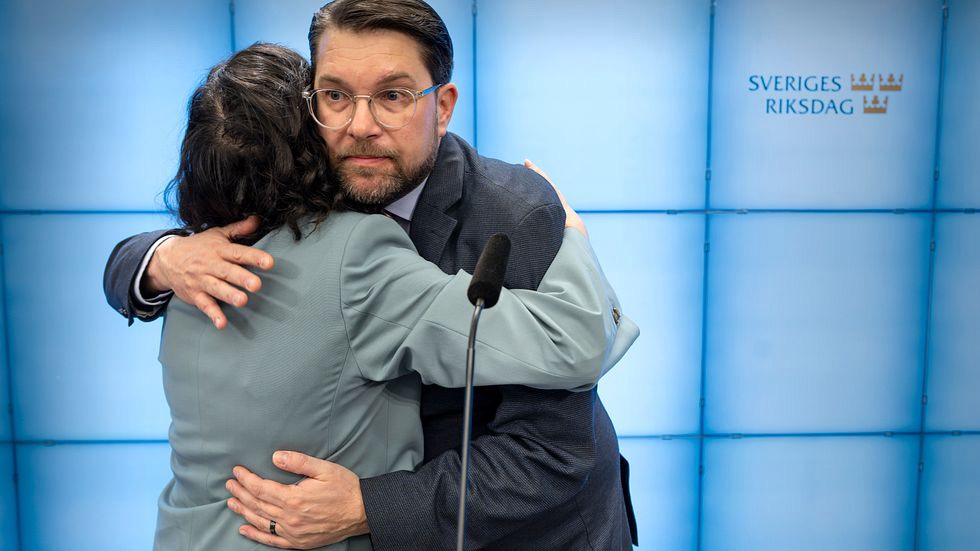
This is an election year in Sweden and already the parties are manoeuvring. The most recent change came from the Liberal Party yesterday.
The Liberals are a very small party, but in Sweden’s system of proportional representation, they sit in the center-right government. Historically, the Liberals have vehemently said that they will never allow the Swedish Democrats (SD) into government because SD is a right-wing, populistic party. The Liberals have repeatedly attacked SD for its racism, unpredictability and lack of empathy. As recently as 4 months ago, the leader of Liberals, Simona Mohamsson, said a determined ‘NO!’ to the question of allowing SD a minister position.
Yesterday, she turned coat. She announced that they have changed their mind. They have switched loyalties and now do support SD in a governmental position.
The interesting thing here is that how quickly a longly-defended, deeply-felt principle can be abandoned at the drop of a hat. In all the recent election predictions, the Liberals are below the parliamentary threshold of 4%. This means, in all likelihood, they will fall out of the parliament at the next election.
Turning coat is a desperate attempt to save their skin. If it works remains to be seen – it could also be the death of their party if voters abandon them.
Once again, this just shows the degraded state of politics. We see it playing out on an international stage, but Sweden is no exception. When politicians promise one thing and then radically change their minds 4 months later, how can we voters trust anything they say? When fundamental principles are so easily discarded, how can we voters believe that politicians will work for our interests?
And this poses a larger democratic question – When politicians are willing to so easily betray their voters, how can any of us know who to elect?


 Watching the Swedes