Swedish Monsters: 10) the Troll

When I was at the open-air museum Skansen, I heard a story about mythical creatures. This started me on a series of Swedish monsters. Today, I wrap the series up with one remaining creature – the Troll!

Today – the Troll

The trolls in Scandinavian legend are not the same as the cute shock-haired characters in the animated movies that came out in the late 2010’s. Oh no, they are something altogether more sinister.

According to legend, trolls are described as being extremely old, hairy, very strong, with bulging eyes and large noses. Some are giants and some are dwarves. They are depicted as slow and dim-witted. They are voracious – feared for eating livestock, and children.

However, noticing a troll isn’t always easy. Trolls can actually take the shape of anything, including human beings. Sometimes they have a tail that they hide under their clothes. They reside far away from human habitation but frequently kidnap people and overrun farmsteads and human dwellings.

Living in forests, mountains and caves, trolls are said to fear iron and steel. Placing items made of those materials on your threshold prevents them from entering.

Trolls are also said to turn to stone in the sunlight. Luring them out of their hideaways and into the light is a way to get rid of them. Petrified trolls are associated with stony Scandinavian landmarks such as Trolltungen (troll tongue) Trollstigen (troll path), Trollveggen (troll wall) and Trollberget (troll mountain).

Trolls have been sighted everywhere in Sweden – from Värmland to Småland, Norrland to Skåne. So be careful this summer when you are strolling through the forests of Sweden and Scandinavia!
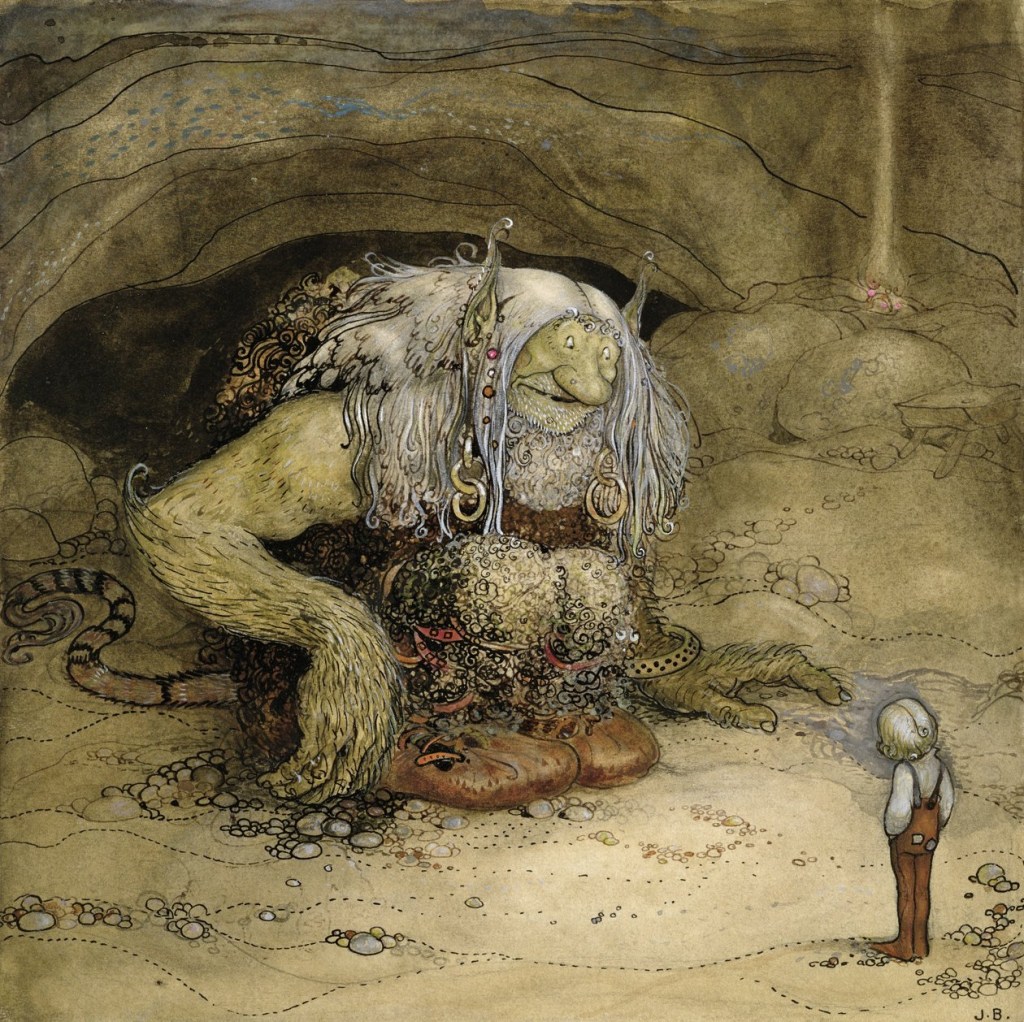
Illustration: John Bauer

Swedish Monsters: 1) The Lindworm

When I was at the open-air museum Skansen, I sat and listened to an old woman telling fairy tales about mythical creatures. The story I heard was about trolls, and how a troll can do magic and disguise itself amongst humans. This got me thinking about other mythological creatures and monsters that inhabit Sweden. And a new series was born!

First out – The Lindworm.

In Swedish folklore, lindworms (’lindorm’) are giant forest serpents without limbs, living deep in the woods. They are a danger to humankind. Dark in colour, they sometimes have a brighter underbelly. They have large horse-like manes, and spit out a foul milk-like substance to blind passers-by. Once their victim is blinded, the snake captures them and drags them under rocks to devour them.

Lindworms lay eggs under linden trees and, once hatched, can become extremely long. To catch fleeing humans, they swallow their own tails and become a wheel after which they roll at high speed. This has also earned them the name ‘wheel snakes’. They are said to mostly exist in the deep forests of county Småland. But who knows where else they might be!

So, if you are out this summer hiking through the forest, take extra care that you do not fall victim to a lindworm!

How Swedes indoctrinate their children

tittamaxgrav

A friend of mine was visiting at the weekend with her small child, and she forgot one of her books when she left. I looked through it and was struck by how the story book reflected Swedish society and lifestyle: a picture book designed to groom children in the Swedish way.

The book is called ‘Titta Max grav’‘Look, Max’s grave!‘ – and it was first published in 1991 and written by Barbro Lindgren and Eva Eriksson. The book is a fascinating account of the life of a little boy called Max from the cradle to the grave. He is born, learns to walk and talk, gets a dog, goes to school, becomes a banker, finds a woman (unclear if they are married), has a child. But then it all goes downhill for Max. He watches too much television, so his woman gets sick of him and leaves. He gets sick, wants to consume Swedish ‘snus’ (snuff), gets sicker and eventually dies alone. And the final picture – look, Max’s grave.

The ‘simple’ story promotes many Swedish values which guide Swedish society: all children receive an education, men and women don’t have to be married to have children, women are empowered to leave useless men, everybody receives healthcare, many people die alone.

There’s nothing specifically unique about this particular book. All cultures pass on their values to their children via stories. Sometimes these are verbal stories told by grandparents as they entertain their grandchildren. Sometimes these are communicated via tv or other screens to curious minds.

Very often they are transmitted via ‘simple’ books full of pictures and easy words by parents at bedtime. But these books are actually not simple at all: they are cultural mechanisms designed to pass on values and ethics and indoctrinate children into the prevailing sense of morality.

So those of you with small children. Have you refelcted over what the stories are teaching your children? How are you indoctrinating them?