Amazing immigrants in Sweden Part 6: Hanif Azizi


Negativity. Fear. Concern. These are some of the reactions many Swedes are experiencing about the influx of immigrants to Sweden in the last couple of years. So, I became curious to learn about some of those individuals who came here as refugees or immigrants to make a better life for themselves. People with roots somewhere else who built a home here and who contributed to Swedish society in a positive way.
For the next seven days, I will celebrate these people. My hope is that we can lift our eyes from the challenges of immigration and understand what useful contributions these people can make to society if given the chance. To our society. Our Sweden

   
Part 5: Hanif Azizi

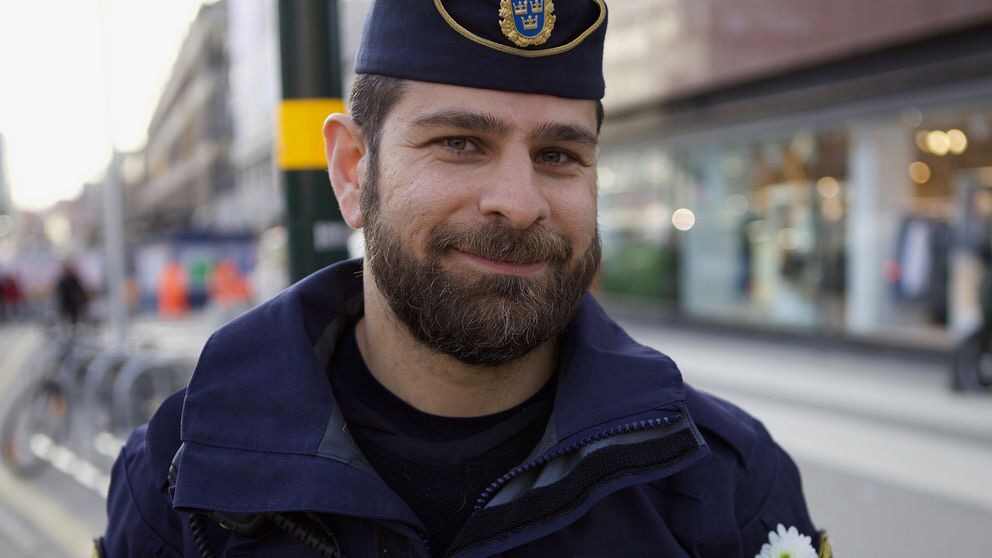
At the age of 9 years old, Hanif Azizi arrived in Sweden as an unaccompanied refugee. His parents were active in a political military organisation, a rebel Group fighting against the regime in Iran. When he was 6 years old, his father was killed in battle and his mother decided to send her children away to safety.

In 1991, Hanif arrived in Sweden with his younger brother and were placed in a host home. In this home, they were subjected to physical and pyschological abuse and were eventually removed by the Swedish Social Services and placed in a secure and supportive environment.

Today, Hanif is 35 and works as a policeman based in the Stockholm suburb of Järva. Here, he works to prevent crime but also to support youths who are at risk of falling into criminality. In Järva there are lots of individuals with an ethnic background. Hanif tries to help them feel involved in Swedish society so as to avoid radicalisation and crime. 

His contribution to Swedish society is extremely valuable. Hanif is an amazing immigrant in Sweden and a positive role model and contributor to Swedish society. 
Starving children in a Stockholm museum 

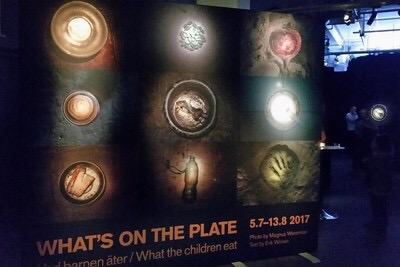
Stockholm’s Photography Museum is, in my opinion, one of the world’s best museums for seeing photographic art. If you haven’t been, I recommend one of the current exhibitions called ‘What’s on the Plate’ by Magnus Wennman and Erik Wiman. I saw it today and it is no easy exhibition to see. In fact it is very difficult to stomach. 

In picture and text, you see very recent depictions of starving children around the world and what they are forced to eat in order to survive. The exhibition asks for donations towards Save the Children. It is well worth a visit and runs until 13 August 2017. 

It is a sobering and humbling experience and a reminder of the overindulgence of our daily lives and the vast gap between the ‘haves’ and the ‘have-nots’. 
For more information: http://www.fotografiska.eu

10 reasons Europe is good for Sweden

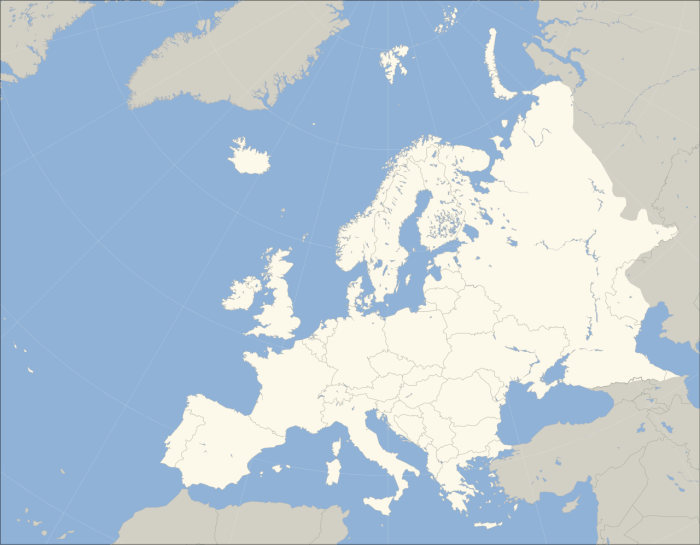
Europe_polar_stereographic_Caucasus_Urals_boundary_svg

Today, May 9th, is Europe Day. This is an annual celebration of peace and unity in Europe. Sweden has been a part of the European continent since continents were first described and a member of the EU since 1995. As a continent, Europe has 50 sovereign states and speaks around 225 languages – diverse to say the least.

High up here in the North, it’s easy to forget the benefits of being on the European continent and what the access to all the diversity has provided Sweden with.

Here is a list of ten reasons why Sweden has benefited from its geographical location as part of Europe.

  1. Pizza. One of Sweden’s most popular cheesy weekend foods would probably not have been on the menu if Sweden and Italy were not part of the same continent.
  2. The Bernadottes. The Swedish Royal family would not have existed if Napoleon and his French army were not available to lend a king to a dying Nordic monarchy.
  3. ABBA. One of the members of ABBA, Anni-Frid, was Norwegian. Without the country of Norway, the megagroup would have been known as ABB.
  4. The Canary Islands. Had Spain not settled the Canaries, Swedes would have had no sunny paradise to travel to in the long, cold winters. Brrrr.
  5. Visby. The medieval town of Visby on the Swedish island of Gotland would just have been a windy hell hole if it wasn’t for the German Hansa traders who built houses and churches and pretty walls.
  6. The Economy. Sweden exports goods and services of over 50 billion SEK to Europe on a yearly basis. Just that.
  7. The Eurovision Song Contest. Just think how long and boring February, March and May would be if Sweden wasn’t in the Eurovision region. What else would SVT televise if it wasn’t for endless Melodifestival heats and Eurovision semis, and finals and summaries and retrospectives.
  8. Speaking Swedish. If it wasn’t for Germany, France and the UK, people in Sweden wouldn’t have a language. Everybody would walk around in silence. Oh…hang on a minute…
  9. City breaks. Without Europe on the doorstep, people wouldn’t be able to go to Berlin or Barcelona for long weekends or bank holiday breaks. They would have to satisfy themselves with a long weekend in Börås or Flen instead.
  10. Europe. Not the place, the Swedish hard rock band, founded in a suburb outside of Stockholm with vocalist Joey Tempest and hits such as ‘The Final Countdown’. If they hadn’t been inspired by Sweden’s position in Europe, what would they have called themselves? ‘Upplands Väsby’?!

What kind of streets does Sweden want?

majority-rule--1

Yesterday, hundreds of people gathered for a peaceful manifestation in the centre of Stockholm. They listened to live music and speeches and they sang and danced. The manifestation was being held to shine a light on the rights of unaccompanied refugee children in Sweden.

About 30 people from a right-wing group decided to attack the demonstrators with verbal abuse, threats, kicks and punches. Many of the victims were teenagers who were left shocked, scared and even more isolated from the society that is hosting them.

Is this what we want the streets of Sweden to be like? Groups of thugs attacking peaceful demonstrators and youngsters? In my world, this is totally unacceptable.

Democracy in Sweden is about having the right to express your opinion, whatever the political colour. It is about creating change through dialogue and activism. It is about getting involved and giving your opinion. It is not about employeeing violent methods to subdue and placate contradicting points of view. It is not about threatening and trolling and spewing hate. It is not about spreading fear in others just because I am fearful myself.

As members of an open, democratic country, each and every one of us should verbally and actively condemn what happened yesterday in Stockholm. A few short weeks after the love manifestation that filled the streets of the capital, we should not accept this attempt to drag our democracy into the shadows. This is not what we want on our streets, in our homes or in our society.

Yesterday, after the attack was over, people stayed behind to console and comfort the teenagers who has been brutally attacked. According to a witness, one of the teenagers found a thread of strength from within. He stood up and held a heartfelt, dignified speech – in Swedish. And he finished with a song – ‘Sverige’ (Sweden) by pop group Kent. One of the lines goes something like this:

‘Welcome, welcome here. Whoever you are, wherever you are.’

In that one song, this teenager showed us all what is means to be dignified and strong in the face of adversity. Violence and hate is not welcome here.


Why I am so proud to be watching the Swedes


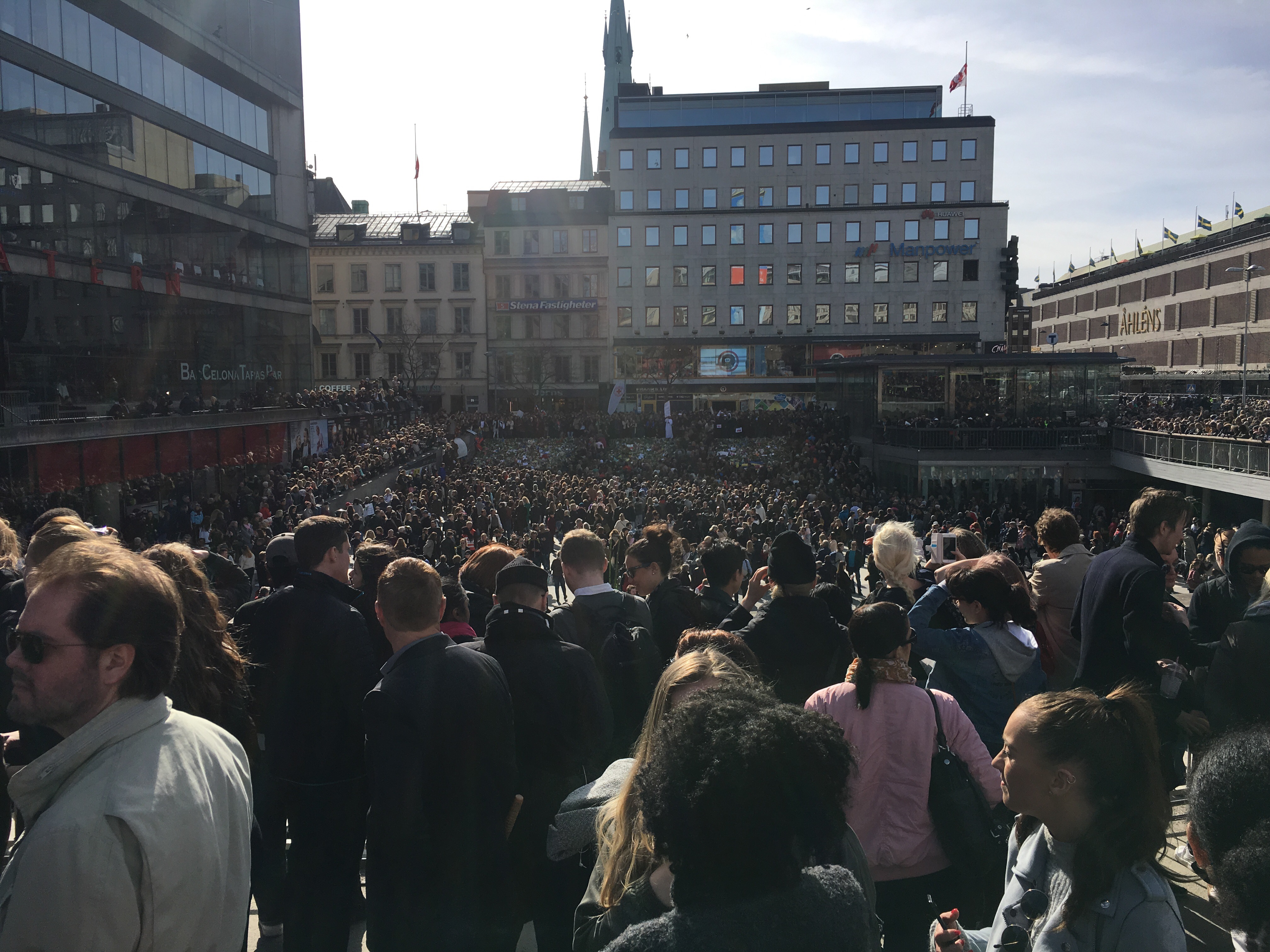
A young woman with a pushchair walks past me and pins a pink rose onto the wire fence. She stops a moment to reflect, clearly taken by the gravity of the moment. A middle-aged couple huddle together holding tightly onto their teenage son. A woman wearing a hijab gently puts a consoling hand on a crying stranger’s shoulder as she passes silently by. 

There are tens of thousands of people gathered here on Sergel’s Torg Plaza in Stockholm but the noise level is subdued. A respectful silence hangs in the air. The sun is high and shines down on us on this, the warmest day of the year so far. 

A few meters from here, 48 hours ago, 4 people lost their lives in a terrorist attack, and many more were injured. Amongst the murdered victims were a Belgian tourist, a British man living in Stockholm and two Swedes, one of which was a 11 year old girl on her way home from school. 

Today, Stockholmers are gathered in a ‘Love manifestation’ vigil to pay their respects to the victims and their families. The place is packed with people of all ethnic, religious, political and social backgrounds. But today none of this matters, they are united as one. 

I have never been more proud to be watching the Swedes as I am at this moment. When faced with a national trauma, what do these people do? Do they meet it with fear? No, they meet it with love. It is almost palpable at this moment. And with their love, they beat terrorism. 

Minutes after the terrorist attack, the hashtag #openstockholm appeared on which people opened their hearts to each other. They offered sanctuary, support, a sofa for the night, a lift home, food to anyone who needed it. They responded with love, not fear. 

The day after, they went in their droves to the location of the attack and attached flowers to a fence and lit candles. They hugged emergency workers and covered a police car with flowers to show their gratitude. They responded with love, not fear. 

And today, they came in their tens of thousands to show that they are not afraid. They listened to inspirational speeches and moving music. They took back the streets and they did it with love, not fear. 

I’ve spent many years writing about these people – the Swedes. I write sometimes in despair, sometimes in frustration but often with fondness and humor. But today I write with pride. An immense pride. 

As I linked arms with a stranger, an old white-haired lady, and participated in a one-minute silence, I felt inspirited. I was a part of something larger than myself. I don’t know what it was, but it was significant: a meaningful moment in Sweden’s history that will affect the national psyche for a long time to come. 

One of the speakers at the vigil encouraged people to continue to open their hearts and their doors. Showing solidarity and keeping Stockholm an open city is a priority. But this is something we can only achieve if we do it together. 

The final quote of the vigil summed everything up. A quote from Martin Luther King – 

Darkness can not drive out darkness; only light can do that. Hate cannot drive out hate; only love can do that.’


Swedish art – a new world?

karin-mamma-andersson
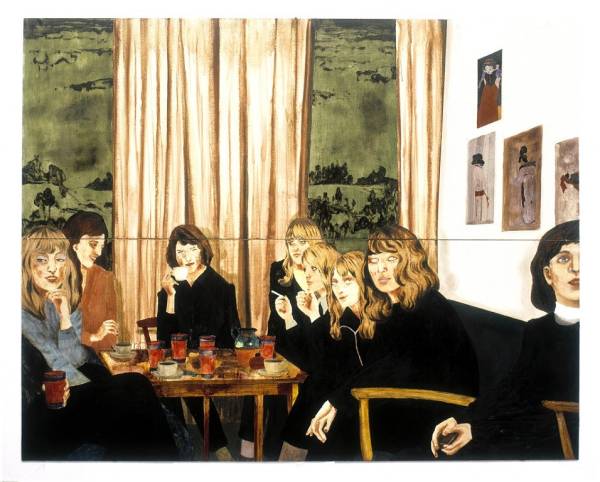
Karin Mamma Andersson – About a girl, (2005)


Going to the supermarket this weekend? Well, maybe not in the way you think….

This weekend, in Stockholm, is an art fair called Supermarket, which is an international artist-run fair that showcases artists from Sweden and all over the world. If you’re in Stockholm, it could be worth a visit. Here’s the link:SupermarketArtFair2017

Sweden and Art – is that a natural connection for you? How much do you know about Swedish art? If you are an art lover, then Sweden may very well be an undiscovered treasure trove for you.

Sweden has a strong artistic tradition and the art that is produced here often reflects the time and place in which it’s created. Art is good at that – at being the window to our souls, a kind of visual temperature check on how we as a society are feeling at that precise moment.

Let’s take the art form of painting as an example.

Looking back through history, there are many Swedish painters who became giants in their field. Very famous here, maybe not so famous outside of Sweden to those other than the die hards.

Ask somebody to name an artist and names such as Picasso, Rembrandt, Monet, Van Gogh, Kahlo probably come up. Probably names such as Larsson, Zorn, Bauer, Brate, Nyström, Jolin don’t come up in the first pass.

But maybe this is exactly what makes it so exciting. If you know nothing about Swedish artists, a whole world is waiting for you to discover.

Maybe you’re interested in discovering new Romantic art? Then check out traditionalists Carl Larsson and Anders Zorn. They were contemporaries and painted delightful pictures of Swedish pastoral life in the 1800’s, early 1900’s.

Or what if expressionism is more your cup of tea? Then check out Einar Jolin’s and Isaac Grunewald’s fabulous interpretations of Swedish society around the 1920’s. Or look up the post-impressionist Nils Dardel and his renound painting ‘The Dying Dandy’ painted in 1918.

Or is it contemporary art that rings your bell? Current painters who are worth looking into are Karin Mamma Andersson, Lars Lerin, Marie Louise Ekman, Linn Fernström, Peter Dahl and Sara-Vide Ericsson. And there are many more.

Or perhaps you want to buy some art, or make some connections? Then get yourself along to Supermarket and get inspired!

Top 10 things I miss about Sweden

swebuildings

I’ve been hearing and reading a lot of Sweden-bashing recently. While we are free to think what we want, I believe it’s all too simplistic to focus on the negative and complain about Sweden or Swedes. It’s very easy to focus on what Sweden is not, rather than what it is.

Recently, I’ve been a lot in Asia and Latin America, far away from Sweden and my family and friends. Sometimes when we’re confronted by new environments, it is then we realize what we appreciate about our home locations. I’ve been putting some thought into it. Apart from my loved ones, what is it that I miss about Sweden when I’m away?

Here are my top 10, in no particular order of priority.

  1. the feeling that the sky is big and endless, giving a sense of freedom in my mind and spirit
  2. knowing that I can take a deep breath and fill my lungs with fresh oxygen instead of polluted toxic fumes
  3. the calmness in my thoughts and that I don’t have to battle with external noises in order just to hear myself think
  4. my anonymity and just blending in with the crowd
  5. the certainty of knowing how things function and how I am supposed to behave
  6. walking outside without interruption, confusion or danger
  7. the knowledge that I don’t have to keep buying bottled water – I can drink directly from the tap without getting seriously sick as a consequence
  8. the evening light cascading on the colorful buildings – the umbras, the rusty reds and the deep golds
  9. the sting of the cold air on my nose and cheeks (never thought I’d admit to that one)
  10. the Swedish aesthetic – environments filled with stylish modern design, cool Nordic solutions and healthy-looking easy-on-the-eye people

None of this is to say that I don’t enjoy traveling, because I do very much so. I just think that sometimes it’s worth taking a moment to reflect over what you appreciate about where you live.

I’m sure, if you do, you’ll find there’s a lot more than you think.

What do you appreciate about Sweden when you’re not here? I’d love to hear your thoughts – write them in the comments below.

If you like this blog, please share it with your friends.

This thing about being tall 

At a height of 193 cm, I am at the tall end of the man scale. However, in Sweden, I am rarely reminded of it. While I am taller than the Swedish 182 cm average, I still blend in. It isn’t until I visit another country that I become reminded that I am towering over other people and height becomes a source of attention or in worse case ridicule. 

This makes me think of visibility in relation to the intercultural experience. Does the more visible we are affect the authenticity of the experience? 

I remember my first time in Asia how people pointed at me and laughed. I remember in Mexico how people wanted to touch me and in China how they wanted to take a photo with me. My physicality was strange to them and, as such, my presence was impossible for them to ignore. 

I genuinely think that my experience of other countries is coloured by the fact that I can’t hide. I am seen by everybody wherever I go. Shorter people can more easily disappear in the crowd and, as such, can more neutrally observe their surroundings. Through no choice of my own, I am often influencing mine, which consequently makes my surroundings less authentic. 
In Sweden, people don’t notice. Or maybe they just don’t care. Or are too polite to point it out. Whatever the reason, I perceive that my feeling of physical sameness rather than difference is something that helped me adapt quickly to Swedish society and acknowledge it as the place I feel at home. 

Swedish women fight back

Strength-woman-arms

In response to the hoards of ‘Vikings’ roaming Stockholm’s streets to protect their ‘women’ from ‘muslim rapists’, the women of Sweden have spoken up. In a social media campaign called ‘inteerkvinna’ – ‘not your woman’ – they are fighting back.

‘Den rasistiska lynchmobben som drog fram i Stockholm i fredags (29/1) och misshandlade barn och andra som inte är vita, påstår, likt andra rasistiska och fascistiska grupperingar, att de vill “skydda” vita/”svenska” kvinnor. De talar inte för mig. Deras “skydd” är i själva verket en önskan om att dominera, kontrollera, stänga in och äga kvinnor samtidigt som de försöker skrämma, misshandla och till och med utrota andra människor. De talar inte för mig. Internationell solidaritet är grunden för jämlikhet, rättvisa och fred. ‪#‎inteerkvinna‬

‘The racist lynch mob that rampaged through Stockholm on Friday attacking children and other non-white people, claim, like other racist and fascist groups, that they they want to protect white/Swedish women. They do not speak for me. Their ‘protection’ is in actual fact a desire to dominate, control, imprison and possess women. At the same time, they try to scare, abuse and exterminate other people. They do not speak for me. International solidarity is the basis of equality, justice and peace. I am Not Your Woman.


The sound of the city


Often when we travel, we return with stories of food, climate, people. But one of the things that strikes me when I’m abroad is sound. Each city, each place, seems to have its own sound identity. I love sitting in the evenings looking out over cityscapes and drinking in the melodies of the night. In Stockholm, there is the hum of boats or of water lapping gently against shores, wind blowing through trees. In Bangkok it’s the sound of the tuk-tuks and the tinkle of chimes. In Delhi it’s the distant voices from temples and markets and all night traffic. In New York, it’s the hum of traffic and people, the buzzing of neon lights and the scream of emergency vehicles. Here in Nairobi, where I am today, it’s the sound of traffic interspersed with drum beats and wailing music.  Distant voices carrying through the night full of woeful stories. 

As I sit and listen, I experience another layer of the city, another layer of the culture. With full respect to food and climate, it’s the sound of the city that rules the night.