Spotifree time

spotify sketch

It’s common knowledge that Sweden has one of the world’s best systems for paid leave in connection with the birth of a child – thirteen months parental leave which can be shared between both the parents. The payment received is equivalent to about 80% of salary up to a certain level.

Now, Swedish company Spotify has announced an upgrade to this system for employees working in their company. Parents at Spotify are allowed to take free time, or parental leave, for 6 months at full pay. This is for either parent so is not gender, or role, specific. When the employee returns to work, there is also a ‘welocme back’ month where they can work part-time and from home to ease themselves back into the workplace and from their infant. The great thing about this is that it’s not just Sweden. It’s GLOBALLY! For all employees everywhere in the world.

It’s great to see private organisations taking responsibility for their employees. The government and the tax payer can only do so much, if they even do anything at all. The Head of HR at Spotify says

“This policy best defines who we are as a company, born out of a Swedish culture that places an emphasis on a healthy work-family balance, gender equality and the ability for every parent to spend quality time with the people that matter most in their lives.”

The Gentle Minister

Anders_Ygeman

Reading on social media recently, I am struck by the amount of praise given to Sweden’s Home Secretary, Anders Ygeman. The minister is appearing a lot in newspapers and on the TV at the moment commenting on the tragic events of Paris and the impact terrorism has on the increasing security levels on Swedish soil. He also regularly informs the public on the refugee situation and the political reasons behind the government’s actions to reintroduce border controls.

On the face of it, Anders Ygeman should not be considered a good communicator. He has a very gentle, apologetic manner. He avoids eye contact at times. He speaks with a very quiet voice and a very flat tone. He is, in fact, the opposite of everything that a leader is said to be – inspiring, charismatic and energetic.  In the USA, or the UK, he would probably be ridiculed. But in Sweden, it seems to work.

From a cultural perspective, this is really interesting. What is it about Anders Ygeman that works so well in Sweden? Maybe it is a case of content over packaging. Often how we say something has more impact than what we say, but in Anders Ygeman’s case, it’s the opposite. He might not be charismatic, but he is clear and very direct. And is this an approach that Swede’s prefer in times of crisis – a no frills, humble and direct communication?

Swedish Dads

60 days or lose them. That’s the deal in Sweden when it comes to dads taking out parental leave. 

Sweden has one of the world’s most generous parental leave systems in the world – 480 days per child, with a paid allowance from the state. These days can be divided between the parents however they like, apart from 60 days that must be taken by the father (presuming heterosexual partners).  If he doesn’t do this, the days are simply lost. 
This is an effort by the government to promote gender equality around child nurturing – and a more equal sharing of child benefit and leave. 

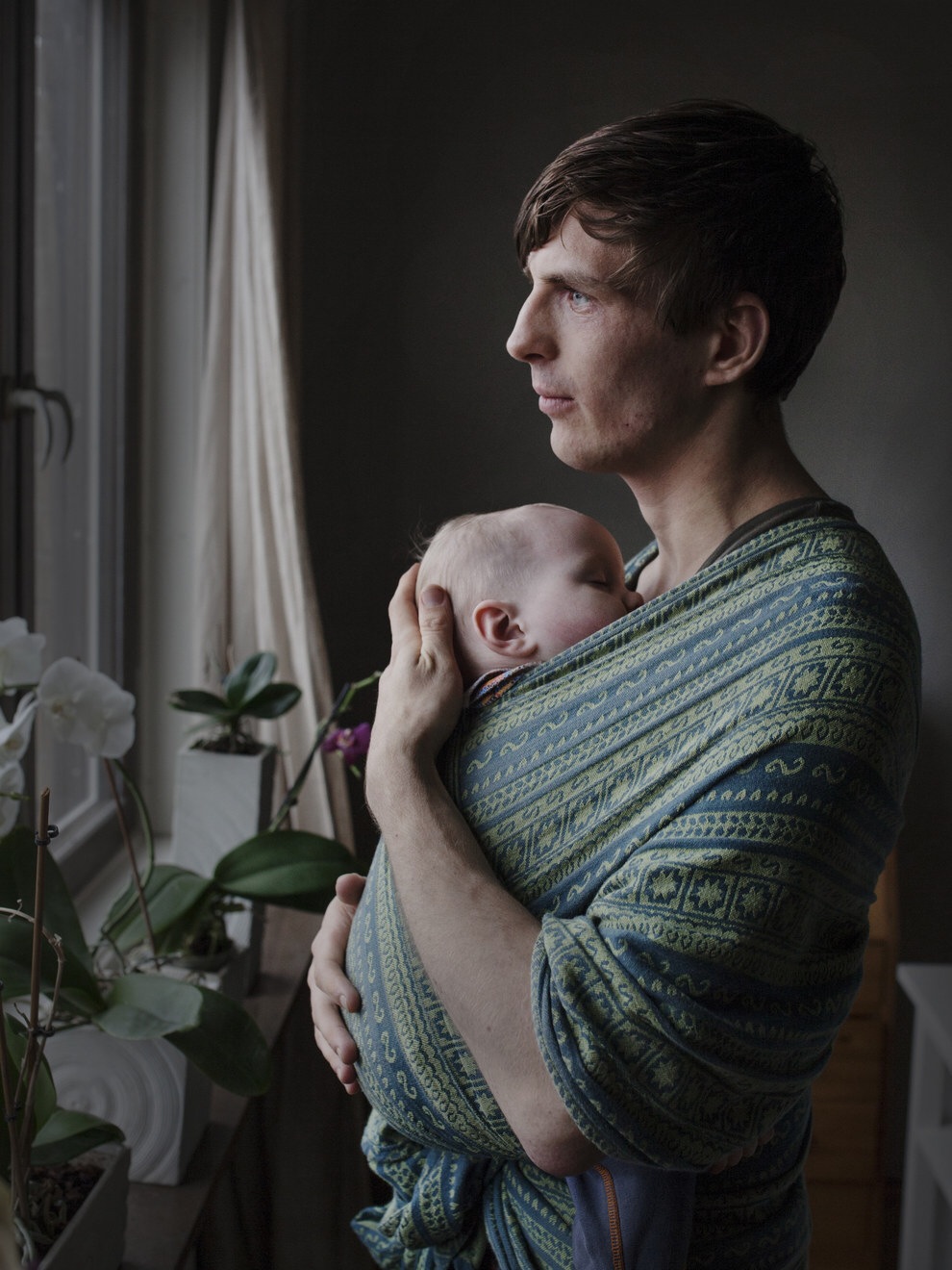
Photographer Johan Bävman found this so interesting that he has documented various fathers during their paternity leave. The exhibition called ‘Swedish Dads’ has raised interest around the world as it challenges traditional stereotypes about gender roles in the family. Johan himself says that he wants to show pictures of role models so that more dads take the opportunity to be home with their newborns.   

Photo: Johan Bävman

It’s no surprise that this initiative comes out of Sweden. According to one piece of cultural research, Sweden is extreme when compared to other countries in the area of gender overlap (men doing historically ‘traditionally female’ things and women doing historically ‘traditionally male’ things). This system and also this photo series seem to just reinforce the findings in this research. 

Can it be that Swedish men are the best dads in the world? Or is it just that the system allows them the freedom and approval to develop their relationships early on with their children? 

To see the pictures go to http://www.johanbavman.se

Dorky Swedes – Töntiga Svenskar

dork

For all of their advancement in technology, social issues and equality politics, many Swedes are also hiding a less sophisticated side to their culture. Scratch the surface, and its not far to their dorky side.

I’ve often reflected over this when I go to clubs here in Stockholm. Like many venues around the world, Stockholm nightclubs can have more than one dance floor. The dance floors are often divided into music types, for example, techno, house, pop…..and Eurovision. Usually, the Eurovision dance floor is the smallest one, as the club owners probably don’t want to appear unrefined.  But it is usually the fullest of all the dance floors. It is packed with Swedes shaking their stuff and screaching – loudly – to the lyrics of Carola, Conchita and Loreen. It is so unbelievably dorky. And I love them for it.

Let’s change scenario and go to a house party. Hand shaking, polite conversation and rosé wine. All very cultivated. Fast forward five hours when people have knocked down a couple of bottles of plonk. The cool bossa-jazz background music has been changed and a Spotify competition has evolved playing…….Eurovision. Party guests are bopping around to the old-time Euro melodies such as ‘Good Vibrations’, ‘It Hurts’ and ‘ABC’. It is so unbelievably dorky. And I love them for it.

So what’s the deal? Why do the otherwise cool Swedes turn into a bunch of yahoos when they are at parties or  nightclubs? Well, maybe in a world of technology, of digital communication, of stress and demands, Eurovision music provides escapism. Its simple melodies and inane lyrics don’t require any effort or thought. The basic rhythms can just wash over you and, for a moment, you can forget the seriousness of the world beyond.

It’s either that or the fact that Swedes are just dorks when they drink.

Don’t let those Swedes fool you

april fool

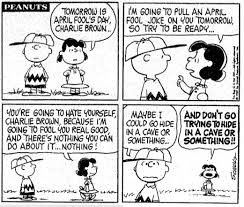
Today is April 1st, which is celebrated in many countries, including Sweden, as April Fool’s Day. On this day, you are allowed to commit pranks and jokes on people – all in good spirit of course. The earliest reference to April Fool’s Day is in Chaucer’s Canterbury Tales from 1392, but nobody really knows the origin of this tradition.

One common place these jokes take place are in the newspapers, and it’s fun to sift through them to see if you can identify what’s real news and what’s a hoax.

Today, a few of the jokes that have been identified in the Swedish press are:

– Banks are going to start charging entrance fees, roughly the same as a cinema ticket

– Princess Madeleine plans to give birth at Västervik’s Hospital in Kalmar. The hospital is currently investing in trendy uniforms in order to appeal to the princess, who is very interested in fashion.

– The three naked beaches in Varberg are going to be closed. Nudity is no longer ok.

–  On the island of Gotland, in the Baltic Sea, the local council will introduce parking fees for the entire Island. In this way, the people who live in the countryside are treated the same way as those who live in the main town.

– In Karlstad, a wind turbine has mysteriously disappeared

– In Katrineholm, 300 house owners are being offered fiber broadband for one krona if, today, they fax in their name, address and a motivation in poem form as to why they deserve fibre at such a low price

– An American hamburger chain is launching a perfume in Japan that smells of hamburger. Called ‘Flame Grilled Fragrance’ it will cost 360 kronor.

In Sweden’s largest national paper, Dagens Nyheter (Daily News), I Think I have identified not one, but two, April jokes!

– 700 000 homes are going to lose their TV channels since the Swedish broadband supplier has failed to reach agreement with SBS Disney. Alot of very popular TV programs will be inaccessible from today.

– In a studio in a Stockholm suburb, a designer has developed figure-huggin outfits for female priests. Now her clothes are a global success.

I’m sure there are a lot more out there in the media. What others have you seen?

If you fall for these lies, the expression to say in English is ‘April Fool!!

In Sweden it’s ‘April! April! You stupid herring!‘ (Now, that I’m afraid is the truth!)

Why do Swedes have a winter sport break? 

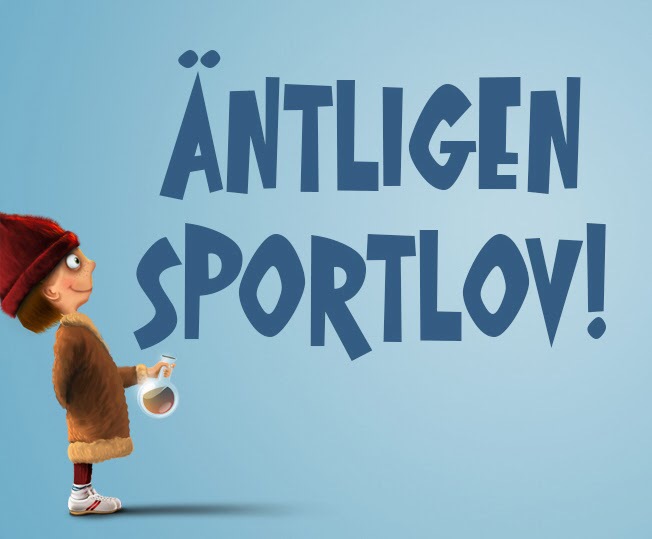
Around this time of the year, schools have a week’s holiday. Called Sportlov it’s a traditional time for a winter sport break. 

This tradition was introduced in 1940 and was initially a way to save energy. Heating up schools cost money and, due to rationing, councils were instructed to drastically reduce their heating expenses. To give the pupils something meaningful to do while the school was shut, the authorities organised various activities, many focused on being outdoors and exercising. During the 50’s, experts realised that infection spread less widely at this time of the year if schools were closed for a week. So the winter sport break became cemented and an official disease control method. 

Nowadays, many families head off to the mountains to go skiing, some head off to the Alps for the same purpose.

For those of us left in town, it’s sheer bliss. 

There is hardly anybody on the buses and tube, traffic is significantly thinner and less noisy and it’s easy to get a seat at lunch time. 

And the fact that there are hardly any children in town means the rest of us don’t get infected with kid flu bacteria on our way to work. 

A literal Swedish Christmas

/home/wpcom/public_html/wp-content/blogs.dir/6dc/32262531/files/2014/12/img_4734.jpg

Swedish is often a very literal language. Today, the 26th December, is a good example of that.

In the UK, today is known as ‘Boxing Day’. In Finland, it’s ‘Stefani Day’. In Ireland it’s ‘Wren’s Day’. In South Africa, it’s the ‘Day of Goodwill’.

And in Sweden? Well, here comes the literalness.

It’s called ‘Second Christmas Day’.

Stockholm A-Z: Under ground city

IMG_4409.JPG

Deep under the bowels of Stockholm runs a comprehensive underground system taking travellers quickly around the centre and out to the suburbs. Stockholm’s underground (Tunnelbana) dates from year 1933 and consists of three lines: blue, red and green with all lines passing through the middle point of T-Centralen, Central Station. The underground is a perfect way to get around in a city where the climate can be challenging for half of the year. However, being tucked under the earth doesn’t mean a lost opportunity. In fact, Stockholm’s underground is said to be the world’s longest art gallery with 90 of the 100 stations being decorated with mosaic, paintings or sculptures. The blue line is by far the most interesting with eye-popping Kungsträdgården, Solna and Rådhuset being of particular interest.

Stockholm A-Z: Restaurant scene

IMG_4406.JPG

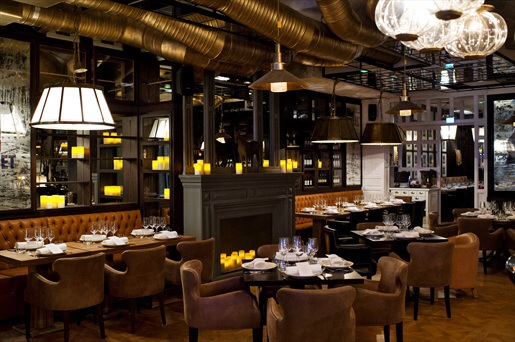
Stockholmers are real foodies and the restaurant scene in the city is second to none. From simple food trucks to Michelin restaurants, Stockholm can offer everything, whatever your culinary taste. All types of international kitchens are represented and eating out is a favourite pastime for many residents. The cheapest time to eat is at lunch and is often great value for money. The restaurant scene changes frequently but here are a few of the hottest restaurants right now:

The Flying Elk, Gamla Stan
B.A.R, Norrmalm
Urban Deli, Södermalm
Nytorget 6, Södermalm
Nosh and Chow, Norrmalm
Mathias Dahlgren, Norrmalm
Gastrologik, Östermalm
Ekstedt, Östermalm
Lilla Ego, Vasastan
Oaxen Krog, Djurgården
Esperanto, Vasastan

For an exhaustive list of restaurants, with a useful grading system, check out http://www.whiteguide.se

Stockholm A-Z: Parklife

IMG_4402.JPG

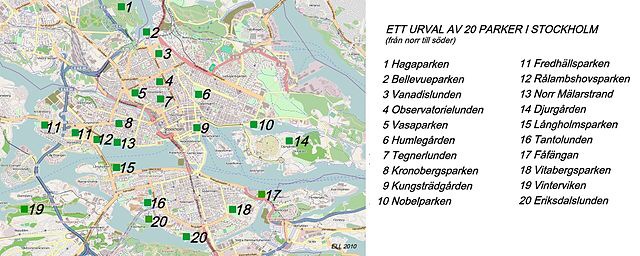
As a visitor to Stockholm, one of the first things many notice is just how green it is. The 400 parks in Stockholm make up about 40% of the land in the region so it’s not surprising.

One of the unique things about Stockholm’s parks stems from the 1930’s when city planners introduced the idea that parks should be functional and be used actively for play, picnic, demonstrations, theatre and socializing. The concept of Park Theatre was a central part of this and today in many parks, free open air theatre performances are offered to city dwellers. This approach to park-building became later known as ‘the Stockholm Style’.

Two of the oldest parks in Stockholm are Kungssträdgården in Norrmalm and Humlegården in Östermalm. Both were originally gardens where fruit and vegetables were grown and they became public parks in the 1800’s. Today, they both provide escape from the buzz of the city as you sit on a park bench, eat an icecream and enjoy the view.

The 1800’s were a time of park development in Stockholm. On Södermalm, Vitabergsparken startled to be built on a hill. At that time an impoverished shanty town existed on the hill and, though many of the houses were removed, a few still exist today. This is a popular park with picnickers and sunbathers and those playing the Swedish stick-throwing game of kubb. It’s well worth it to go to the Park Theatre here and watch a play or listen to some live music of a summer’s evening.

If you visit Stockholm City Hall, why not extend your stay by strolling along the water’s edge along Norr Mälarstrand to Rålambshovsparken. Along this trail, you’ll find many cafés and restaurants and benches to relax on. Rålambshovsparken is a park for picnicking and playing sports. Here you can play or watch basketball, boule, football, rounders, volleyball. There’s also a skateboard park where death-defying stunts can be witnessed, and an amphitheater for park theater and live music. Just a little step beyond the park and you will find Smeduddsbadet, one of Stockholm’s many beaches.

For Baroque style parks, nothing beats the park at Drottningholm’s Palace, just outside of the city. This is the residence of the Royal Family and it is surrounded by wonderful structured gardens from the 1600’s and English parkland from the1700’s. There’s also a cafe here, a dog island, a theatre and a Chinese pavilion.

In the north of Stockholm, you will find one of the city’s biggest parks – Hagaparken. This park used to be the place where the royal sheep would graze. Today, the sheep are gone but the park still boasts lakes, lawns, pavilions, palaces, cafés, temples, trails and ruins. The official residence of Crown Princess Victoria is also located here.

One of the most popular park destinations for Stockholmers is Djurgården. This pleasure island offers museums, fun fair, cafés, beaches, restaurants, trails and art galleries. Here you will also find Rosendalsträdgård which is a popular, high-end nursery selling plants, fruit and vegetables and flowers. Grabbing a cup of coffee in one of the green houses or picnicking in the orchard are popular summer weekend activities. In the winter, visiting the market and drinking hot chocolate over an open fire is rather relaxing.

For more information about Stockholm’s parks: http://www.stockholm.se