What the f***! Was moving to Sweden a mistake?


I clearly remember thinking this to myself on May 13th 1995.  

I was at the airport waiting for a flight to London – my first visit home after moving to Sweden the previous autumn. 
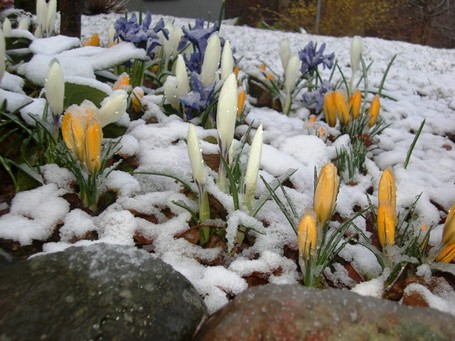
Over the loudspeaker I heard an announcement. My flight was delayed. Due to snow. Yes, snow! Outside the window, snow billowed down on the runway and visibility was limited. In May! ‘What the f***!?’ I recall thinking. ‘Is this what it’s like here? I think I might have made a massive mistake moving here’. Eventually the flight took off and I landed two hours later in the British capital. There, in London, the sun was shining and people were walking around in shorts, t-shirts and shades. This, of course, cemented my concern. 

Now it seems as if history might be repeating itself. Yesterday it snowed in Stockholm. And haled. In May. Ok, not May 13th. But May 9th! Today more snow is forecast. And I am wondering if we’re going to break my 1995 record for the latest snowfall in Stockholm!? (Although the actual record seems to be June 12th in 1982). 

But I have learned something after 20 years in Sweden. If there is one thing we can rely on, it is that the weather does change. Have faith! The claws of winter are soon released and spring will finally and definitively be upon us. 

10 reasons Europe is good for Sweden

Europe_polar_stereographic_Caucasus_Urals_boundary_svg

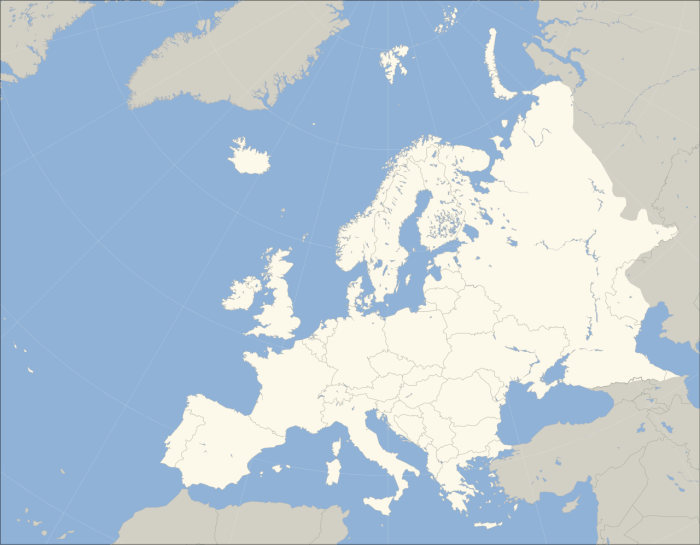
Today, May 9th, is Europe Day. This is an annual celebration of peace and unity in Europe. Sweden has been a part of the European continent since continents were first described and a member of the EU since 1995. As a continent, Europe has 50 sovereign states and speaks around 225 languages – diverse to say the least.

High up here in the North, it’s easy to forget the benefits of being on the European continent and what the access to all the diversity has provided Sweden with.

Here is a list of ten reasons why Sweden has benefited from its geographical location as part of Europe.

  1. Pizza. One of Sweden’s most popular cheesy weekend foods would probably not have been on the menu if Sweden and Italy were not part of the same continent.
  2. The Bernadottes. The Swedish Royal family would not have existed if Napoleon and his French army were not available to lend a king to a dying Nordic monarchy.
  3. ABBA. One of the members of ABBA, Anni-Frid, was Norwegian. Without the country of Norway, the megagroup would have been known as ABB.
  4. The Canary Islands. Had Spain not settled the Canaries, Swedes would have had no sunny paradise to travel to in the long, cold winters. Brrrr.
  5. Visby. The medieval town of Visby on the Swedish island of Gotland would just have been a windy hell hole if it wasn’t for the German Hansa traders who built houses and churches and pretty walls.
  6. The Economy. Sweden exports goods and services of over 50 billion SEK to Europe on a yearly basis. Just that.
  7. The Eurovision Song Contest. Just think how long and boring February, March and May would be if Sweden wasn’t in the Eurovision region. What else would SVT televise if it wasn’t for endless Melodifestival heats and Eurovision semis, and finals and summaries and retrospectives.
  8. Speaking Swedish. If it wasn’t for Germany, France and the UK, people in Sweden wouldn’t have a language. Everybody would walk around in silence. Oh…hang on a minute…
  9. City breaks. Without Europe on the doorstep, people wouldn’t be able to go to Berlin or Barcelona for long weekends or bank holiday breaks. They would have to satisfy themselves with a long weekend in Börås or Flen instead.
  10. Europe. Not the place, the Swedish hard rock band, founded in a suburb outside of Stockholm with vocalist Joey Tempest and hits such as ‘The Final Countdown’. If they hadn’t been inspired by Sweden’s position in Europe, what would they have called themselves? ‘Upplands Väsby’?!

What kind of streets does Sweden want?

majority-rule--1

Yesterday, hundreds of people gathered for a peaceful manifestation in the centre of Stockholm. They listened to live music and speeches and they sang and danced. The manifestation was being held to shine a light on the rights of unaccompanied refugee children in Sweden.

About 30 people from a right-wing group decided to attack the demonstrators with verbal abuse, threats, kicks and punches. Many of the victims were teenagers who were left shocked, scared and even more isolated from the society that is hosting them.

Is this what we want the streets of Sweden to be like? Groups of thugs attacking peaceful demonstrators and youngsters? In my world, this is totally unacceptable.

Democracy in Sweden is about having the right to express your opinion, whatever the political colour. It is about creating change through dialogue and activism. It is about getting involved and giving your opinion. It is not about employeeing violent methods to subdue and placate contradicting points of view. It is not about threatening and trolling and spewing hate. It is not about spreading fear in others just because I am fearful myself.

As members of an open, democratic country, each and every one of us should verbally and actively condemn what happened yesterday in Stockholm. A few short weeks after the love manifestation that filled the streets of the capital, we should not accept this attempt to drag our democracy into the shadows. This is not what we want on our streets, in our homes or in our society.

Yesterday, after the attack was over, people stayed behind to console and comfort the teenagers who has been brutally attacked. According to a witness, one of the teenagers found a thread of strength from within. He stood up and held a heartfelt, dignified speech – in Swedish. And he finished with a song – ‘Sverige’ (Sweden) by pop group Kent. One of the lines goes something like this:

‘Welcome, welcome here. Whoever you are, wherever you are.’

In that one song, this teenager showed us all what is means to be dignified and strong in the face of adversity. Violence and hate is not welcome here.


Sweden’s fickle weather Gods

aprilväder

Living in a country with such distinct seasons, the subject of the weather is always up for discussion. In Sweden, there is a concept known as ‘aprilväder’ or April weather. This term describes the unpredictability and fickleness of the Nordic weather gods in the month of April.

Just in the few minutes I have been sitting here looking out of my window, the sun has been shining, it has snowed, the sun has shone again, it has clouded over and got windy and then snowed again. A week ago it was around 15 degrees celsius. Now it’s around 4.

April is often a frustrating month for Swedes.

Periods of sunny, warming weather tantalise the nation and lull them into a false sense of security. Once people have put away their winter coats and folded their thick jumpers up onto the top shelf, the snow hits again and ice forms on roads. Cars with their summer tires slip and slide along and people in their short, thin spring jackets freeze, get a cold and have to call sick in to work.

You’d think we’d be used to it by now. But no. It seems to be an annual phenomenon. Maybe it’s a reflection of that most human of emotions – hope. Every year we hope that the spring has finally arrived. And usually those hopes are dashed in a flurry of snow and a plummet of the themometer.

And as I sit here and look out, it has started snowing yet again. The warm weather seems very far away.

But hope lives on and I console myself that with every snowflake that falls, we are one snowflake closer to Spring!

Swedish farts

Infart

One of the fun things about learning a foreign language are the words that are rude, or funny in your own language.

Swedish has a few of them: slut, kräpp, plopp, kock, spurt

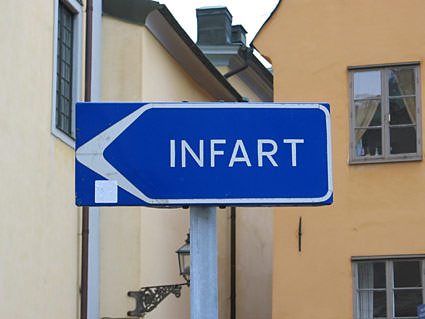
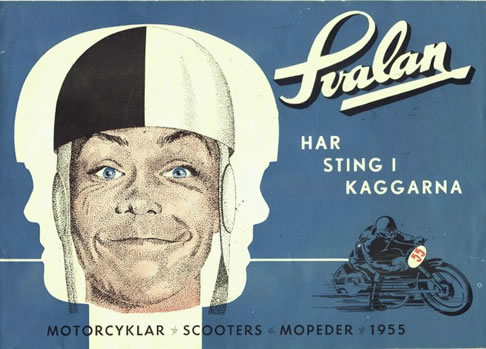
But the funniest one is probably the most purile; it is the ever prevailing ‘fart’, especially when you see it on street signs. This is the word that has most visitors to Sweden holding their sides with laughter.

Even after all these years, I can still have a little giggle when I think about the word ‘fart’ and its various usages in Swedish. In Swedish, ‘fart’ can mean a lot of things such as speed, drive, route, pace, spirit, vivacity, rate. But it is when it is put together with another word that it becomes amusing. Childish, I know…but here we go…

  1. utfart – ‘out fart’ – exit from a building
  2. uppfart – ‘up fart’ – driveway
  3. infart – ‘in fart’ (sounds painful) – entrance
  4. avfart – ‘of fart’ – exit from a motorway
  5. framfart – ‘forward fart’ (quite an accomplishment) – progress
  6. fartkamera – ‘fart camera’ (didn’t know these existed) – speed camera
  7. kringfart – ‘circular fart’ (also sounds painful) – causeway
  8. fartfylld -‘full of fart’ (know a few people like that) – speedy
  9. krypfart – ‘crawl fart’ – crawl
  10. luftfart – ‘air fart’ (the worst) – air travel
  11. fartrand – ‘fart stripe’ – go faster stripe on a car
  12. maxfart -‘maximum fart’ – top speed
  13. farthållare – ‘fart holder’ (dangerous) – cruise control
  14. blixtfart – ‘flash fart’ – flash speed
  15. fjärrfart -‘distant fart’ – transocean traffic
  16. halvfart – ‘half fart’ – half speed
  17. snigelfart – ‘snail fart’ – snail speed
  18. förbifart – ‘passing fart’ – ring road
  19. fartgräns – ‘fart limit’ – speed limit
  20. marschfart – ‘marching fart’ (like a hit and run!) – cruise speed
  21. överljudsfart – ‘supersonic fart’ (impressive!) – supersonic speed
  22. fartblind – ‘fart blind’ (although deaf is probably preferable) – when you become desensitised to the speed you are driving and stop noticing it


Segregation on a Swedish school bus

school bus

In Sweden, the school system contains many independant schools run with a specific focus such as music, sport, art or specific religions. They should all follow the national curriculum and, in the case of religious schools, they should teach but not preach.

Yesterday, it was revealed that a Stockholm junior school with an islamic orientation has been segregating children on the school bus – boys go through the front entrance and sit at the front, girls go in the rear entrance and sit at the back of the bus. The headmaster of the school has claimed to be unaware of this. This act of segregation has caused a hot debate in Sweden about the ‘islamifying of Sweden’, ‘gender apartheid’ and comments such as it being ‘unSwedish’.

The Swedish Schools Inspectorate are planning on investigating the school further to see if any other ‘undemocratic activities’ are taking place. The Inspectorate has previously allowed segregated classrooms and gender-separated sport lessons.

What can we learn from this?

When this kind of occurance happens in society, it is a great opportunity to reflect on what we learn from it. What is our immediate reaction when we hear examples like this?

  • Do we run straight to the barracades and start defending our cultural heritage?
  • Do we condemn the occurance as, for example, undemocratic or unacceptable?
  • Do we weigh up the pros and cons and try to arrive at a balanced conclusion?
  • Do we think people are allowed to do whatever they want, so anything goes?

All of these are perfectly normal reactions, and one is not better than the other. Obviously, we react in different ways.

I think that these occurances in society provide us with a great opportunity to discuss intercultural competence. Being interculturally competent is generally defined as having an open mindset and the cultural sensitivity to see different perspectives so that one is able to flexibly adapt ones behaviours accordingly. But that doesn’t necessarily mean it’s about accepting that anything is ok. Intercultural competence can also mean balancing up the various perspectives and standing up for what one thinks is acceptable.

Intercultural competence differs significantly from racism and nationalism. Racism and nationalism focus on others being of lower value than myself or the place I come from. Intercultural competence is about accepting everybody’s perspectives are equally as valid – no matter how tough they are and even if I personally don’t agree with some of them.

So how do we arrive at this place of understanding that all perspectives are equally as valid? We can ask ourselves a simple, but complex, question:

‘What do they think is good about segregating boys and girls on a school bus?’

If we can arrive at the answer(s) to that question, we are becoming more interculturally aware and more interculturally competent. We are seeing the situation from their perspective and not only our own. We are presuming they have a good reason, from their perspective, for their behaviour, rather than immediately judging or condemning it.

Once we have reflected over that, we can decide what we personally think. Does it change our point of view? Can we accept their behaviour more easily? Or does it make me hold my view even more stongly? In that situation, we can say something like:

‘I understand why you think it’s good to segregate boys and girls. I understand your perspective. However, I disagree with it. And here in Sweden, we believe in equal treatment of all regardless of their gender, which is why that behaviour is not something we as a society can accept.’

Compared this to the more reactionary ‘the Islamists are trying to take over Sweden!’ and ‘this country is going down the drain’, you see how the ability to perspectives-take creates a more open, less fearful debate.

It is my belief that if we approach occurances like this in a more interculturally competent way, and try to perspectives-take, we can create a society built on mutual understanding and respect for prevailing values rather than a society built on fear and suspicion.

And that has to be a good thing moving forward, doesn’t it?



Top ten English words originally from Swedish

moped

As we all know, language is organic and we constantly borrow and interchange words between languages. The word kiosk is for example originally Turkish, restaurant is French, gnu is African Knoisan and alcohol is Arabic.

But what words has Sweden contributed with that have been adpoted into English, and even into other languages?

Well, there are a few…

  1. Moped – comes from ‘trampcykel med motor och pedaler’
  2. Smorgasbord – from the Swedish ‘smörgåsbord’ meaning buffet
  3. Gravlax – from the Swedish ‘gravad lax’ meaning cured salmon
  4. Ombudsman – a Swedish word meaning representative
  5. Orienteering – from Sweden’s ‘orientering’
  6. Tungsten – Heavy stone in Swedish
  7. Monday, Tuesday, Wednesday, Thursday, Friday, Saturday, Sunday – ok, technically Norse but partially Sweden!
  8. To glean – from the Swedish dialectal verb ‘att glena’
  9. Gauntlet – from Sweden’s ‘gatlopp’
  10. Canoodle – debated, but likely to be from Sweden’s word for fornicate – ‘knulla’

This list is probably incomplete. Any other words you would like to add?

Tricking Sweden – April Fool’s jokes 2017

april-fools-day-2015

Playing April Fool’s jokes on each other on the first of April is a tradition in many countries – Sweden included. In fact it is an old tradition – the oldest written reference being in 1392 in Chaucer’s ‘The Cantebury Tales’.

In Sweden, when someone is tricked, the tradition is to say ‘April, April din dumma sill!‘. This translates as ‘April, April you stupid herring!’. This is however not as weird as it might sound. In many countries, such as Italy, France and Holland, April 1st is known as “April fish”. On this day, people try to attach paper fish onto the backs of their victims.

April Fool’s pranks flourished this year in newspapers and in social media. Here are a couple of the main ones that tricked Sweden this year:

  • Furniture giant IKEA is branching out into the airline business. Furnishing all the flights with Ikea furniture, the airline will offer low-cost flights to popular destinations. And the name of the airline? FLYKEA.
  • Since military service is to be introduced again in Sweden, a high tech computer company will take over the castle in the town of Örebro. The thick walls and moat will make it inpenetrable for data hijacking.
  • Theresa May needs help to fullfil the Brexit process and calls in British businessman Chris O’Neil, who is married to Sweden’s Princess Madeleine.
  • Finnish-Swedish IT Company, Tieto, are opening a sauna next to their data service center. The sauna is heated from the excess heat from the data center and is a way to environmentally reuse the waste energy
  • Airline SAS have introduced a selfie button next to the seek assistance button. In that way, passengers can photograph themselves without needing to take out their phones.
  • Swedish supermarket chain ICA introduced a new product together with Marabou. The product is toothpaste with the taste of chocolate. It might be brown, but it makes your teeth white.


The top 10 most satisfying Swedish words to pronounce

mumsfillibababba

I’ve spent over 20 years struggling with the Swedish language. Grammar is always a challenge for me – but it is pronunciation that still continues to drag me down.

That said, there are a few Swedish words that I just love to say. They have to be the most fun words in the Swedish language. Here, in no particular order, are my top 10.

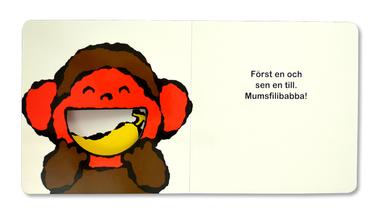
  1. Mumsfilibaba – a hysterically satisfying way to say that something is really delicious
  2. Sjuksköterska – the Swedish word for nurse – try saying it after a couple of beers – it’s really fun
  3. Kackerlacka – the Swedish word for cockroach is somewhat onomatopoeic – the perfect way to describe these disgusting little bugs
  4. Sura uppstötningar – horrible to experience acid reflux but really fun to say the word
  5. Smidig – a useful word that’s fun to say and that means everything from easy and adaptable to flexible and pliable and even loose-limbed.
  6. Yxskaft – the handle of an axe – ok not a word that you say very often, but enromously satisfying when you get the chance
  7. Grönsaksbuljongtärning – a long word for a vegetable stock cube. Sometimes I go inte a supermarket and ask a shop assistant where to find them just so I get a chance to say it.
  8. Toppen – an uplifting way to say that all is good
  9. Hjärnsläpp – the Swedish word for drawing a blank. But it doesn’t matter if you can’t remember what you were going to say – because then you get to say ‘hjärnsläpp’ instead.
  10. Bajskorv – childish I know, but the Swedish word for ‘poo sausage’ is just hysterical.


Other Swedish words I love are ‘ångestframkallande‘, ‘slickepott’, ‘snöslask’, ‘oroväckande‘, ‘knäckebröd‘, ‘mångata’ and ‘underrättelsetjänsten‘.

What are some of your most satisfying Swedish Words to pronounce?

Let me know in the comments below….


Sweden’s nazi sympathiser, secret agent, communist spy, musical diva!!

ZarahLeander

Long before Swedish pop sensation Zara Larsson became famous, she had another famous namesake from Sweden.

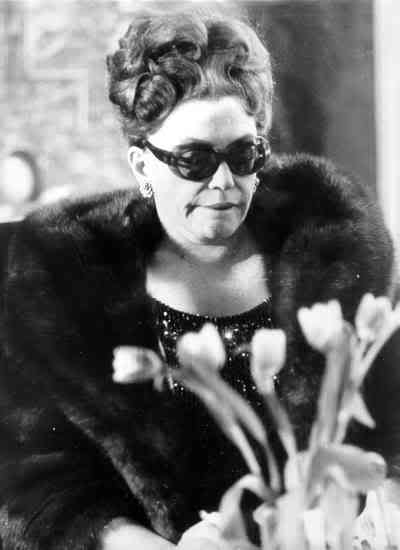
Also a singer, Zarah Leander was her name, and she remains an enigma to this day. Active during the war years, was she a source of pride or a source of shame for Sweden? Nobody really knows.

Zarah Leander was born in the town of Karlstad in 1907 by the name of Sara Stina Hedberg. She began her singing career in the late 1920s, and by the mid-1930s she was hugely successful in Scandinavia and in Europe. In particular, the Germans loved her and in 1936, she was contracted to work for the German Film Foundation for whom she made many movies. As her employer was subordinate to the Third Reich, many people viewed her films and her music as nazi propoganda, although Zarah Leander herself never took a public political stance or officially joined the Nazi party. She performed live at many concerts, even after Nazi Germany had invaded Denmark and Norway. She profited from being the biggest, and most well-paid, star in Germany at that time.

After her home in Berlin was bombed towards the end of the war years, she returned to Sweden under much criticism. She was shunned by the artistic community but eventually managed to resume her career. She died in 1981 in Stockholm at the age of 74.

So was Zarah Leander a source of shame for Sweden? Was she a cold-blooded, fame-seeking, profiteering, Nazi sympathiser? On paper it would seem so. But who really knows?

Or was she a source of pride? Was she, as she herself claimed, just an entertainer working to please an enthusiastic audience in a difficult time?

Or was she in fact a spy? Soviet intelligence officer Pavel Sudoplatov claimed, just before his death, that Leander had been a Soviet agent with the codename “Rose-Marie”. He claimed she was a secret member of the Swedish Communist Party and conducted the work for political reasons.

Zarah Leander talked openly about her past and consistently denied that she had any sympathies with the Nazi or the Communist parties or that she worked as a spy for any country. But was she telling the truth? The mystery of Zarah Leander followed her to the grave and today the only legacy we have is her music and her films.

Zarah Leander, 1907-1981. Nazi sympathiser? Communist spy? Secret Agent? Musical Diva!!!