Warring neighbours: Sweden and Finland


finland-sweden-map,0

Many neighbouring countries around the world have had their fair share of conflict. Some countries are currently at war or teetering on the brink.

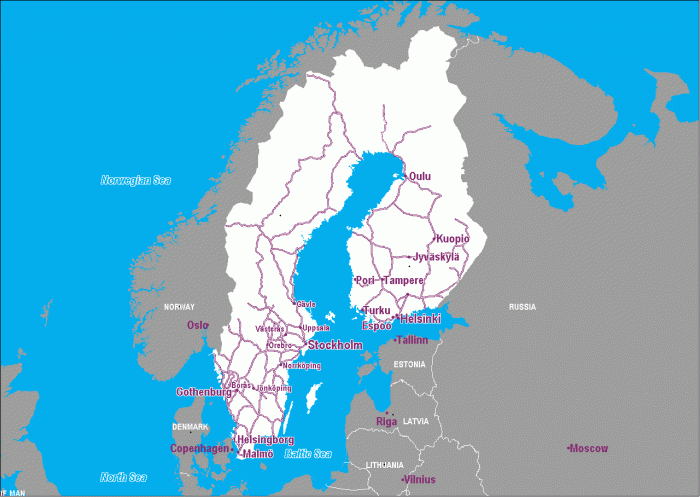
Thankfully, Sweden and the other Nordic countries have lived in peace with each other for centuries. However, Sweden and Finland still battle it out every year in an athletics competition between the two nations – the best type of neighbourly conflict. In Swedish, this is called ‘Finnkamp’ and in Finland it is called ‘Sverigekampen’. This year it is currently taking place in Stockholm.

The first Finnkamp took place in 1925 for men, and 1951 for women and it has taken olace every year, with a few exceptions for organisational disagreements and WWII. It is highly competitive, although friendly, and is a classic track and field event.

In total there have been78 annual competitions for the men and Finland leads 45-31 over Sweden. For the women, there have been 67 competitions and Sweden holds the lead at 41 to Finland’s 25. Let’s see how it ends up this year!

If you want to see the end of it, make your way down to Stadion in Stockholm today to catch the final events.


Amazing immigrants in Sweden: Part 7 Mustafa Can 


Negativity. Fear. Concern. These are some of the reactions many Swedes are experiencing about the influx of immigrants to Sweden in the last couple of years. So, I became curious to learn about some of those individuals who came here as refugees or immigrants to make a better life for themselves. People with roots somewhere else who built a home here and who contributed to Swedish society in a positive way.
For the next seven days, I will celebrate these people. My hope is that we can lift our eyes from the challenges of immigration and understand what useful contributions these people can make to society if given the chance. To our society. Our Sweden


Part 5: Mustafa Can 

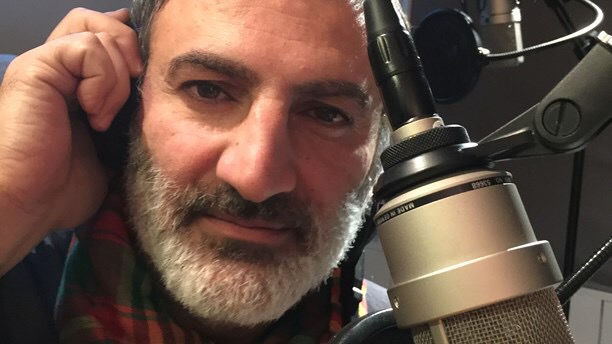
In Sweden, every summer there is a radio series called ‘Radio Talkers’ where various people get a chance to tell their stories and play music. It was in this program some years ago that I first heard of Mustafa Can. His program was very moving and focused around his mother. It was so moving that he won many radio and media prizes as a result.

Mustafa Can works as a prize-winning author, independent journalist and public speaker. His recent work focuses mostly on cultural diversity, identity and xenophobia in Sweden. He provides a controversial voice to the Swedish integration debate.

Mustafa has lived in Sweden for over 40 years. Orginally from Northern Kurdistan in Turkey, he fled with his family when he was 6 years old. He is a great example of someone who arrived in Sweden as a child, became well integrated and uses his position and his voice to try to make Swedish society a better place for everybody.

Amazing immigrants in Sweden Part 6: Hanif Azizi


Negativity. Fear. Concern. These are some of the reactions many Swedes are experiencing about the influx of immigrants to Sweden in the last couple of years. So, I became curious to learn about some of those individuals who came here as refugees or immigrants to make a better life for themselves. People with roots somewhere else who built a home here and who contributed to Swedish society in a positive way.
For the next seven days, I will celebrate these people. My hope is that we can lift our eyes from the challenges of immigration and understand what useful contributions these people can make to society if given the chance. To our society. Our Sweden

   
Part 5: Hanif Azizi

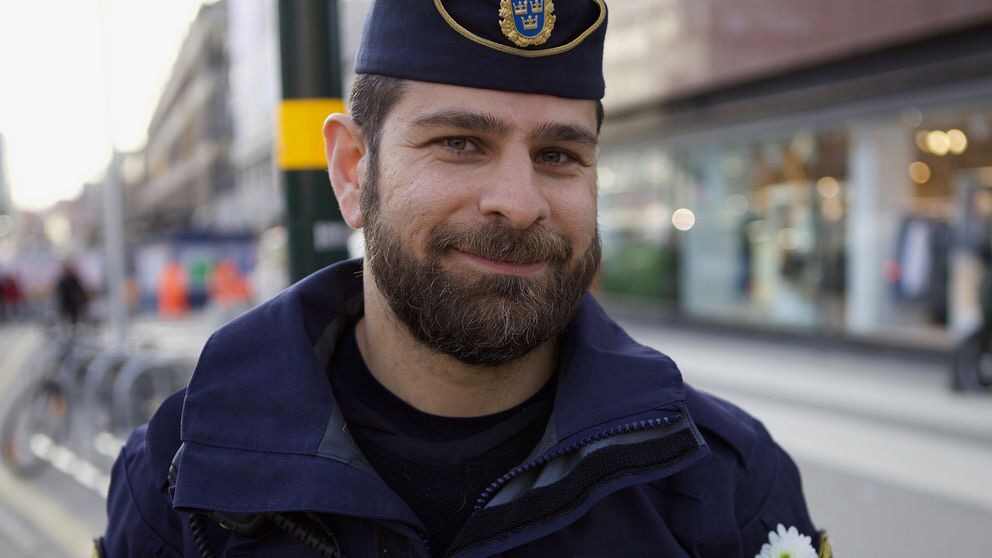
At the age of 9 years old, Hanif Azizi arrived in Sweden as an unaccompanied refugee. His parents were active in a political military organisation, a rebel Group fighting against the regime in Iran. When he was 6 years old, his father was killed in battle and his mother decided to send her children away to safety.

In 1991, Hanif arrived in Sweden with his younger brother and were placed in a host home. In this home, they were subjected to physical and pyschological abuse and were eventually removed by the Swedish Social Services and placed in a secure and supportive environment.

Today, Hanif is 35 and works as a policeman based in the Stockholm suburb of Järva. Here, he works to prevent crime but also to support youths who are at risk of falling into criminality. In Järva there are lots of individuals with an ethnic background. Hanif tries to help them feel involved in Swedish society so as to avoid radicalisation and crime. 

His contribution to Swedish society is extremely valuable. Hanif is an amazing immigrant in Sweden and a positive role model and contributor to Swedish society. 

Amazing immigrants in Sweden: Part 4 Madubuko A. Robinson Diakité

madubuko

Negativity. Fear. Concern. These are some of the reactions many Swedes are experiencing about the influx of immigrants to Sweden in the last couple of years. So, I became curious to learn about some of those individuals who came here as refugees or immigrants to make a better life for themselves. People with roots somewhere else who built a home here and who contributed to Swedish society in a positive way.

For the next seven days, I will celebrate these people. My hope is that we can lift our eyes from the challenges of immigration and understand what useful contributions these people can make to society if given the chance. To our society. Our Sweden


Part 4: Madubuko A. Robinson Diakité

Many people in Sweden know who Swedish rapper Timbuktu is. His many hits and TV appearances have made him a household name. However, very few know about his father – a human rights lawyer, writer and documentary filmmaker – who emigrated to Sweden in the 1960’s. – Madubuko A Robinson Diakite.

Madubuko was born in Harlem, USA and moved as a teenager to Africa after his mother married a Nigerian journalist. Inspired by his step father to work with social injustice, he returned to the USA in the 60’s and earned a degree in law. In 1968, he moved to Sweden to study film-making and continued on with a Ph.D. In 1992, he earned a Law degree at Lund University. Currently, he researches in human rights at the Raoul Wallenberg Institute in Lund and is active in anti-discrimination organisations in Sweden.

He has published articles on film and human rights law for several international publications, and has headed several projects on the rights of people of African descent.  he also wrote the book Not Even in Your Dreams, a semi-autobiographical work studying child abuse in Africa.

Madubuko Diakite came to Sweden as a student and has become a strong voice in the academic and human rights communities. With his own experiences and competence, he has worked to make Swedish society a more open place.

His conviction passes on through the lives he has helped and through the popular music of his successful son.


Amazing immigrants in Sweden: Part 3 Negra Efendic

negra efendic

Negativity. Fear. Concern. These are some of the reactions many Swedes are experiencing about the influx of immigrants to Sweden in the last couple of years. So, I became curious to learn about some of those individuals who came here as refugees or immigrants to make a better life for themselves. People with roots somewhere else who built a home here and who contributed to Swedish society in a positive way.

For the next seven days, I will celebrate these people. My hope is that we can lift our eyes from the challenges of immigration and understand what useful contributions these people can make to society if given the chance. To our society. Our Sweden

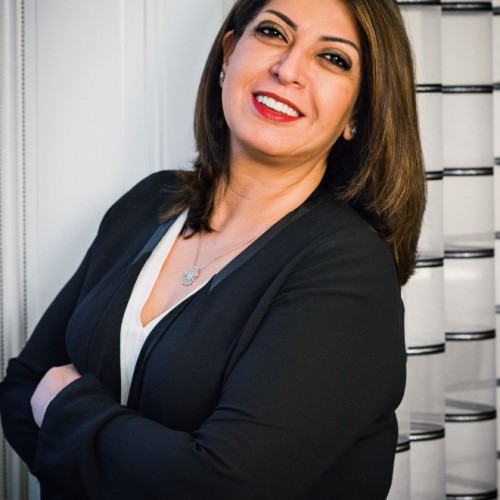
Part 3: Negra Efendić

Sometimes when we imagine groups of immigrants and refugees, it is easy to forget the children. At the age of 13, with her parents, Negra Efendic fled the war in Bosnia. She was born in a town called Srebenica where, in 1995, 8000 men and boys were executed.  Her father managed to escape and flee to Sweden.

After a difficult period, her family settled and Negra went to school and ultimately studied journalism in the small Swedish town of Motala. After working at the newspaper in Borås, she started working at national paper ‘Svenska Dagbladet’ where she covers migration and immigration issues. In 2016, she published the book ‘Jag var precis som du’ – ‘I was just like you’ – where she recounts the experience of fleeing to Sweden and living as a refugee here.

She is living proof that refugees in Sweden have valid stories, often stories of horror. Are we prepared to listen?

Amazing immigrants in Sweden: Part 2 Shori Zand

Shori-Zand-500x500

Negativity. Fear. Concern. These are some of the reactions many Swedes are experiencing about the influx of immigrants to Sweden in the last couple of years. So, I became curious to learn about some of those individuals who came here as refugees or immigrants to make a better life for themselves. People with roots somewhere else who built a home here and who contributed to Swedish society in a positive way.

For the next seven days, I will celebrate these people. My hope is that we can lift our eyes from the challenges of immigration and understand what useful contributions these people can make to society if given the chance. To our society. Our Sweden

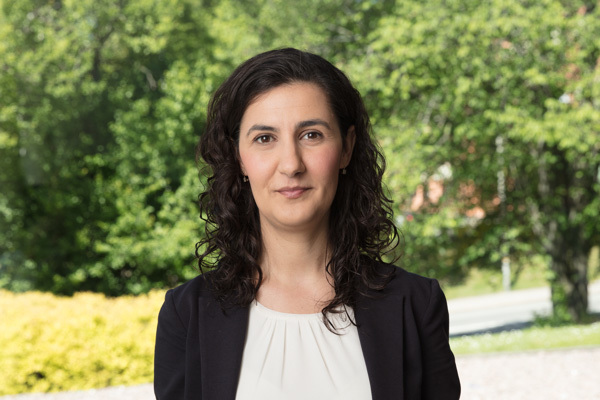
Part 2: Shori Zand, midwife and entrepreneur from Iran

Giving her sons a safer and more prosperous life was Shori Zand’s motvation when she arrived in Sweden in 1987. At the age of 25, she arrived with her husband, two small sons and three suitcases. And nothing else – except ambition.

In Iran, Shori had worked as a nurse so, once she had a command of the Swedish language, she re-trained to be a nurse in Sweden and then ultimately, a midwife.

In 2000, thanks to the relaxation of healthcare laws in Sweden, Shori saw an opportunity to open a midwife clinic in Linköping. By 2010 she had a healthcare organisation that turned over 400 million Swedish kronor. Providing care in maternity, elderly care, mammography, neurology, gynocology and hearing rehabilitation, Shori’s company ‘Avesina’ employed a staff of  1200 people.

Shori Zand is often referred to as a role model for female entrepreneurs. Apart from her successes with Avesina, she has won an array of prizes, been on the boards of ‘Svensk Näringsliv’, TLV and Nutek as well as advising the Swedish government in IT and being Vice President of the Swedish Organisation for Healthcare Entrepreneurs.

Shori Zand arrived in Sweden with almost nothing. She is now an integrated, respected and accomplished businesswoman who has enabled care for thousands of Swedes. She has also created jobs – for over a thousand people – and undeniably contributed to Sweden’s economy and society.

Amazing immigrants in Sweden: Part 1 Georg Klein

georgklein

Negativity. Fear. Concern. These are some of the reactions many Swedes are experiencing about the influx of immigrants to Sweden in the last couple of years. So, I became curious to learn about some of those individuals who came here as refugees or immigrants to make a better life for themselves. People with roots somewhere else who built a home here and who contributed to Swedish society in a positive way.

For the next seven days, I will celebrate these people. My hope is that we can lift our eyes from the challenges of immigration and understand what useful contributions these people can make to society if given the chance. To our society. Our Sweden.

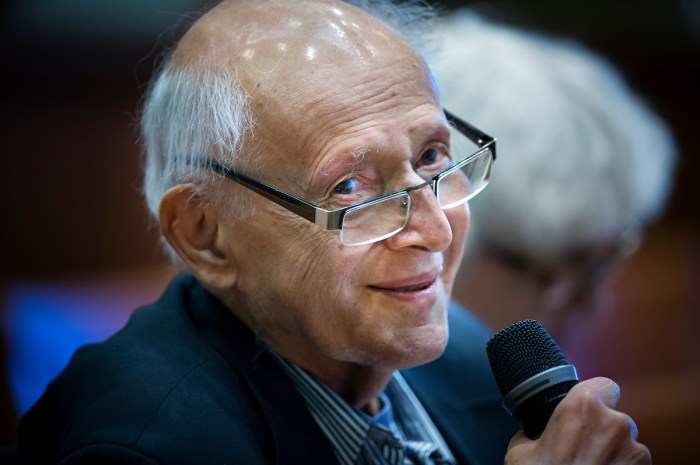
First out is Georg Klein – Hungarian refugee and cancer researcher

Georg Klein was born 28 July 1925 in Budapest, Hungary. He died in Stockholm in December 2016. Born into a Jewish family, he survived the Haulocaust by escaping from a deportation train. In 1947, this time to escape the Soviet occupation, he arrived in Stockholm where he studied medicine at Karolinska Institute. Georg Klein arrived as a young refugee and became one of Sweden’s most important cancer researchers.

Together with his wife, Eva Klein, who also emigrated from Hungary, he built up an institute for tumor biology at Karolinska which became a world-leading research institute for over 4 decades. Georg and Eva Klein are responsible for a long row of discoveries within cancer research and lay the foundation for modern tumor immunotherapy. In addition to this, Georg Klein authored 10 books on a broad variety of subjects.

Arriving in Sweden with nothing, Georg and Eva had drive and ambition. They integrated into Swedish society, had three children and several grandchildren.

Their important contribution to cancer research has saved the lives of countless Swedes and other people all over the world.


Battle of the Swedish generations

angry-old-lady

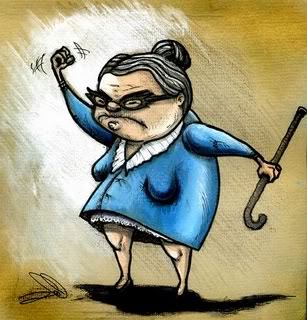
Strolling into work this morning, I was behind an elderly lady who was walking along and taking in the beautiful views.

Behind me I heard a stressed voice. Suddenly, a pushchair rushed past me steered by a stressed young mother wearing designer sneakers. She was talking loudly on her iPhone, via her ‘hands-free’, her aim set on accomplishing this conversation and arriving at her destination rapidly and without delay. She forced on past me and I watched as she approached the elderly lady from behind.

At the exact moment she swished past, the old lady took a small step to the left and was almost mowed down. The young mother didn’t react, she just kept walking forward, talking loudly on her phone with full egocentric focus. I don’t even think she noticed she had almost ploughed into the pensioner –  it seemed that to her the elderly lady was invisible.

The old lady stopped in her tracks and then raised her head in the direction of the woman, now scurrying into the distance. She opened her mouth and shouted loudly:

‘Men kära lilla! Förlåt att jag existerar!’ (Well, my dear. Sorry that I exist)

As I walked within earshot, the old lady muttered under her breath – ‘jävla kärring!’ (fucking bitch)

Your helpful Guide to Surviving Midsummer in Sweden 

midsommar

With Midsummer rapidly approaching, it is worth planning for your survival. Midsummer’s Eve is the craziest custom in the Swedish calender and the time of the year when Swedes go a little bonkers.

As a non-Swede, get ready to brace yourself. And follow this simple survival guide to make sure you make it to Midsummer’s Day in one piece.

  1. Greet like a Swede. In Sweden it is considered polite to greet everybody individually, even if you plan to never speak to them again or remember their name. The appropriate way is as follows, shake hands and look direct in eyes, say ‘hej’ followed by your name. They will do the same. If you are feeling adventurous, follow it up with a ‘trevligt’ or even a ‘Glad Midsommar’. Job done. Now you can hit the booze.
  2. Snaps is not the same as a shot. A lot of alcohol gets drunk on Midsummer’s Eve, especially beer and snaps  With the popularity of shots in recent years, it’s easy to make the mistake that Swedish snaps is the same thing. Believe me, it is not. Snaps can be up to 40% proof, considerably more than your normal shot. So, go easy and sip the snaps or see yourself slipping sideways off your chair before the dessert has even been put on the table.
  3. Take tissue. Midsummer’s Eve is a looong day and you probably will need the loo at some point. The trouble is, so will everybody else – to the detriment of the supply of toilet paper. There’s a big chance you will be seeking relief in the woods so come equipped with the appropriate amounts of paper for your needs.
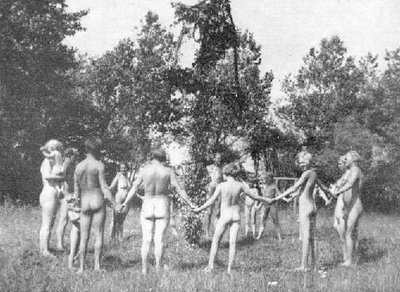
  4. If shy, bring swimwear. Bathing in the icy June waters is a common activity at Midsummer. Swedes generally are not afraid of showing a bit of genital when they do this. If you are, then come prepared with swimwear and a towel.
  5. Shelve your maturity. Part of Midsummer is dancing around the maypole, playing silly games, pretending to be a frog, participating in competitions. To survive this, it helps to conjour up your inner child and forget you are an adult for a while.
  6. Rubbers will save the day. Given the amount of alcohol consumed at Midsummer, it is no surprise that the most babies in Sweden are made on this day. If you don’t want to join the ranks of parents, remember to put in on before you put it in.
  7. Throw in the thermals. Perhaps you think it’s going to be sunny and warm on Midsummer’s Eve? Well, think again. It is not unusual that temperatures fall into single figures and that pesky rain pours down onto the smorgasbord. So bring a jumper, a rain jacket and even thermals to enhance your experience.
  8. Same, but different. Don’t expect culinary excesses on Midsummer’s Eve. The food is exactly the same as is eaten at Christmas and Easter, with a few small exceptions – strawberries and new potatoes.
  9. Learn a drinking song. On Midsummer’s Eve, food and alcohol is accompanied by Swedish drinking songs.  Learn one in advance and shine at the table. Even better sing one in your own language and you are guaranteed to use those rubbers you packed just for the occasion.
  10. Argue over the rules. At Midsummer a popular Swedish garden game is called kubb. Involving the throwing of sticks, everybody seems to have their own understanding of the way to play. If you want to feel really Swedish, make sure you start an argument about the rules.

That’s it! Follow this guide and you are sure to have a wonderous Midsummer’s Eve in Sweden. Glad Midsommar!

Bringing politics to the people


politikerveckan

If the election in the UK and USA has shown us anything, it is this. Bring politics closer to the people and you will win.

In the USA, it meant successfully manipulating the beliefs of the disillusioned and the sceptical.

In the UK, it meant focusing on the issues closest to people’s hearts and putting a fire under the asses of young voters.

Politicians in Sweden are, in my opinion, too often remote from the electorate and their reality. This is with one notable distinction in a quickly-growing, right-wing, populist party. This party has now taken the position as the second largest party in Sweden and poses a real threat to the other established parties and their ability to form governments in the future.

Every summer in Sweden, politicians hold a politics week on the island of Gotland in the Baltic Sea. This week brings together all the parties and they discuss and debate the current issues at hand, all televised to a broader Swedish public. I am all for politics and media debates but recently the Gotland Politics Week sits a little uneasy with me. In many ways, it is fantastic but it has moved far from its initial intention of putting politics in focus for the ordinary person. Today, it is more of an elitist gathering of lobbyists, journalists, aides and corporate partners standing in tents sipping free rose wine and partying until the early hours. How can people of the electorate relate to this? How can they even participate when, for example. it costs a lot to travel to remote Gotland and is difficult to find affordable accomodation?

As an alternative to this, a new Politics Week has risen. Initiators from the Stockholm suburbs have decided to bring politics to the people and have arranged a week of political debate and discussion on a football field.

On their website, they write:

‘The purpose of Järva Politics Week is to reduce the distance between politicians and citizens, create better conditions for ordinary people to engage themselves in politics, and put the issues of the local residents on the political agenda. This week gives politicians the opportunity to put forward their policies on exclusion, education, security and marketplace integration directly to the groups who are most impacted.’

It seems like all of the parties have accepted the invitation and most of the party leaders will attend this event to hold a speech.

Hopefully, in the suburbs, looking the real electorate in the eyes, they will realise what is needed to create positive integration, positive change and a positive future for everybody in Sweden.