Swedish icons 7: Evert Taube

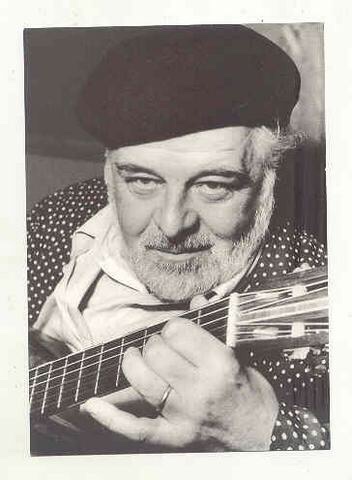
If you are not familiar with the name Evert Taube, you should check him out. A more legendary name is hard to find in a Sweden. Born in 1890 in Gothenburg, he was a writer, musician, composer and singer. He is one of the most respected musicians and foremost troubadours in the folk ballad tradition of the 20th century.

He was most known for his idyllic folk songs about the Swedish countryside, the sea, the archipelago and the flora and fauna of the country. He is so engrained in the national psyche that there is no Midsummer celebration in Sweden without the playing of Taube’s songs. He is the soundtrack of summer.

Evert Taube didn’t restrict himself to pastoral romanticism however, he also wrote famous songs about Latin America and the Mediterranean as well as anti-war and anti-fascism anthems. Many of his songs have been translated and recorded in other languages. He had four children, one of whom is the popular Swedish crooner Sven-Bertil Taube, today 86 years old, and an icon in his own right.

Evert Taube died in Stockholm in 1976 aged 85. In 1990, he was immortalized when a statue was raised in his honour on Evert Taube’s Terrace in central Stockholm. There he sits, holding his faithful lute in his hand. A second statue of him stands discretely in the corner of Järntorget Square in the Old Town.

My favourite Taube ballad below is performed beautifully by Roxette’s singer Marie Fredriksson. The song called ‘Så Skimrande Var Aldrig Havet’ translates loosely as ‘The Sea Was Never So Shimmering’ and is about the magic of a first kiss.
Swedish icons 6: Ingmar Bergman

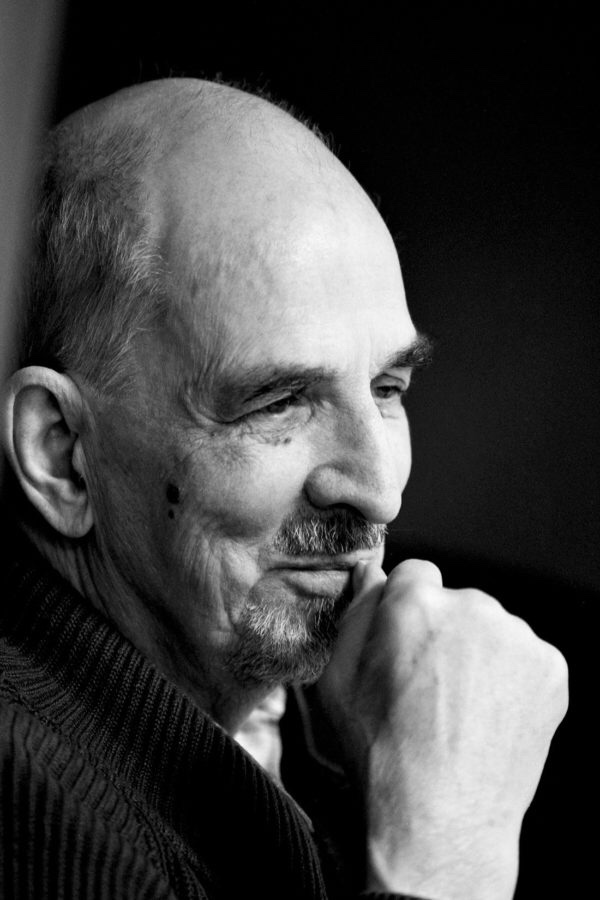
One of the most influential film directors of all time, Ingmar Bergman was born in 1918 in Uppsala, Sweden. He directed over 60 films, such as the classics ‘The Seventh Seal’, ‘Persona’, ‘Smiles of a Summer Night’, ‘Scenes from a Marriage’ and ‘Wild Strawberries’.

His films were often experimental and very dark, melancholy and miserable and many of them required patience to watch. He was nominated numerous times for an Oscar and won three times for Best Foreign Language film – ‘The Virgin Spring’, ‘Through a Glass Darkly’ and ‘Fanny and Alexander’.

He developed a legendary company of actors whom he frequently worked with, including great names such as Bibi Andersson, Max von Sydow, Liv Ullmann and Harriet Andersson.

Ingmar Bergman lived a stormy life and was notoriously hard to work and live with. He was frequently accused of being overbearing and misogynistic. Married five times, and with many other romantic connections, he fathered nine children, one of whom is the prominent Norwegian writer Linn Ullmann.

Bergman died in 2007 aged 89 in his home on the small Baltic island of Fårö, where he is buried. On Fårö today, there is a cultural center called the Bergman Center that focuses on his life and artistic achievements. Every year, they host the five-day long Bergman Week filled with film, discussions, drama, music and lectures.

For more information see: http://www.bergmancenter.se

Swedish icons: Ingmar Bergman

One of the most influential film directors of all time, Ingmar Bergman was born in 1918 in Uppsala, Sweden. He directed over 60 films, such as the classics ‘The Seventh Seal’, ‘Persona’, ‘Smiles of a Summer Night’, ‘Scenes from a Marriage’ and ‘Wild Strawberries’.

His films were often experimental and very dark, melancholy and miserable and many of them required patience to watch. He was nominated numerous times for an Oscar and won three times for Best Foreign Language film – ‘The Virgin Spring’, ‘Through a Glass Darkly’ and ‘Fanny and Alexander’.

He developed a legendary company of actors whom he frequently worked with, including great names such as Bibi Andersson, Max von Sydow, Liv Ullmann and Harriet Andersson.

Ingmar Bergman lived a stormy life and was notoriously hard to work and live with. He was frequently accused of being overbearing and misogynistic. Married five times, and with many other romantic connections, he fathered nine children, one of whom is the prominent Norwegian writer Linn Ullmann.

Bergman died in 2007 aged 89 in his home on the small Baltic island of Fårö, where he is buried. On Fårö today, there is a cultural center called the Bergman Center that focuses on his life and artistic achievements. Every year, they host the five-day long Bergman Week filled with film, discussions, drama, music and lectures.

For more information see: http://www.bergmancenter.se

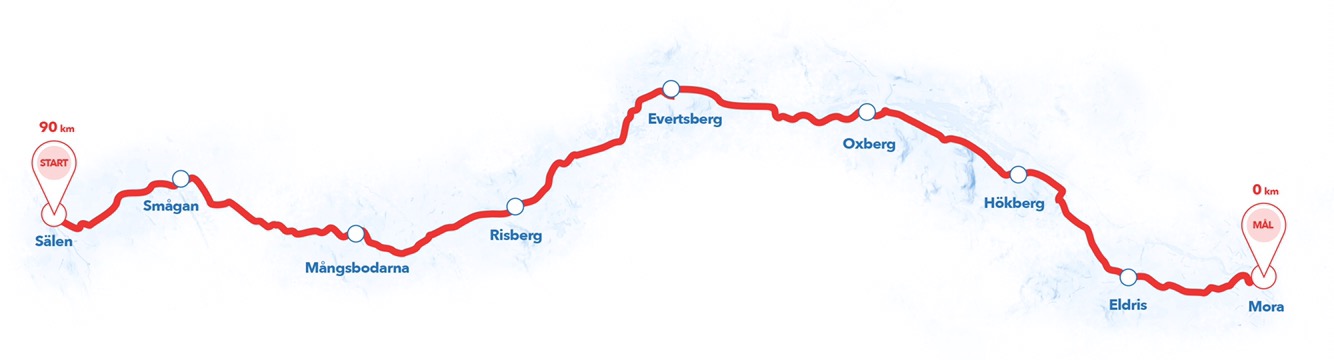
Vasaloppet in Sweden – the world’s longest cross country ski race


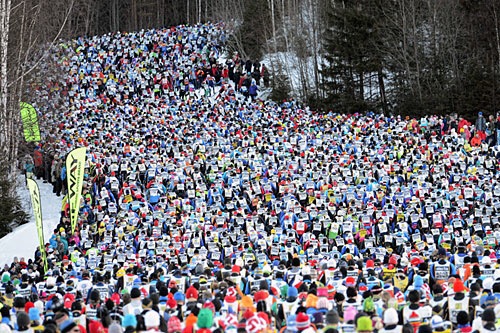
From 15000 to 400, and from 12 hours to 4. Today, the world’s longest cross country ski race takes place in Sweden. Called Vasaloppet, it entails participants skiing 90 kilometers from start to finish. It’s an extremely popular international race which is broadcast live on tv. When tickets to participate are released, they usually sell out in 15 minutes – it’s that popular.

This year is, however, a bit different. Normally 15000 people participate in the race, but because of the pandemic, this year only 400 people are taking part. These 400 are the elite athletes.

The first Vasalopp was in 1922 and takes place annually, the first Sunday in March and it is a first sign of spring.  Normal participants can take up to 12 hours to complete the gruelling course, but the elite athletes do it in a comparatively speedy time of around 4 hours.

So why is this race called ‘Vasaloppet’? Well, it takes its name from a Swedish king. The race commemorates the escape to Norway, through the forest, of King Gustav Vasa in 1521. Legend has it that he carried out the long journey on skis,  but experts believe he more likely completed this escape on snow shoes. Nevertheless, out of this legend sprung the race which is so popular today. ‘Vasa’ after the king, and ‘loppet’ meaning ‘the race’.

Modern day skiers don’t see the experience as an escape, they see it as a challenge and for many of them it’s a rite of passage.

And as you sit watching the TV comfortably from the sofa, with tea and toast, you take vicarious pleasure in this long, amazing Swedish race.

Swedish ice batheing

This winter, taking an outdoor ice bath has become very fashionable in Sweden. Disrobing and lowering yourself into frozen lakes at below zero temperatures is considered very healthy for the body and its ability to repair itself.

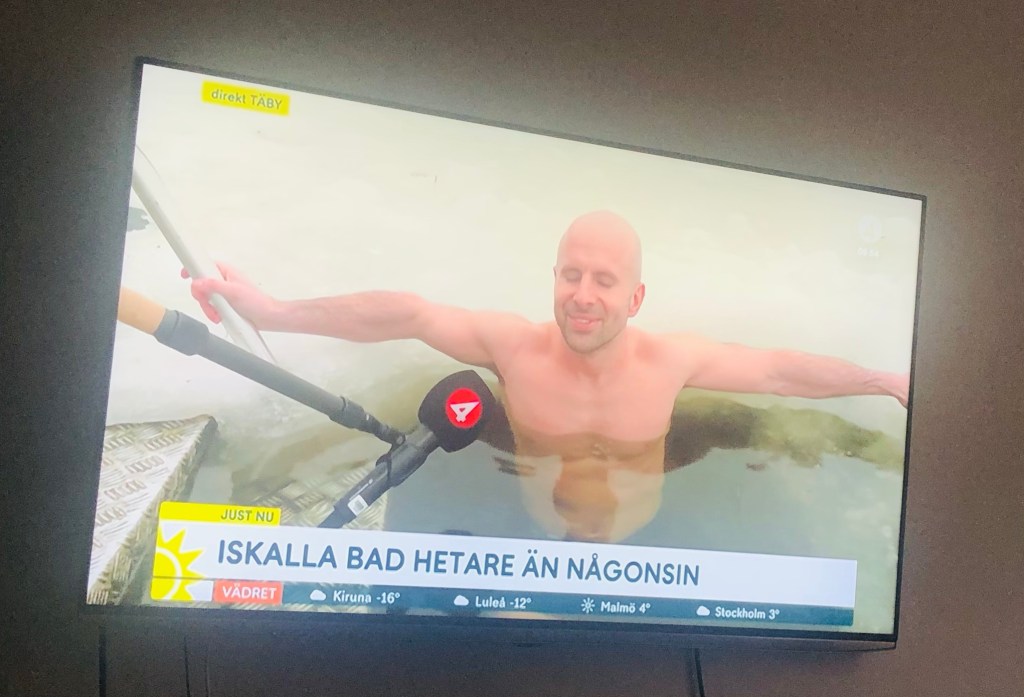
Spring has now arrived and the ice is melting but die hards are still squeezing the last out of the ice batheing season. Like this guy featured on TV, who regularly sits in the frozen lake – for 20 minutes at a time!

This may seem like a long time, but actually it is nothing compared to the world record. The world record for ice submersion is held by Austrian Josef Koerbel who, in 2020, held himself under ice for 2 hours and 30 minutes. In his case, it was in an ice box on a public square in the town of Melk.

Brrrr.

So, what about you? Do you feel enticed by the concept of plunging into the chilly depths to take an ice bath? Or would you rather keep yourself wrapped up warm and toasty on the bank of the lake?

Swedish Icons 1: Anita Ekberg

Swede Anita Ekberg, from Malmö in Skåne, played an iconic leading role in Federico Fellini’s La Dolce Vita (1961). She is notably remembered for the scene where she bathed in la Fontana di Trevi. Born in 1931, she won the Miss Sweden title at the age of 20, and then went to USA to compete in Miss Universe. Although she didn’t win, she worked as a model and a hostess and got small film roles.

She was famously opinionated and refused to change her surname saying that if she became famous everybody would learn her name, and if she didn’t it wouldn’t matter.

Ekberg appeared in many films, but interestingly never a Swedish one. She retired from acting in 2002 and died in 2015 at age 83 in Rome.

The Swedish Law of Sexual Consent

I’ve been watching the interesting Martin Scorsese documentary series on Netflix called ‘Pretend it’s a City.’ The programme is based on a series of interviews with sardonic writer Fran Lebowitz. In one episode, she talks about MeToo, and how when a woman accuses a man of rape the focus has shifted from ‘prove to me that she’s telling the truth’ to ‘prove to me that she’s lying.’

This is merely a change of perspective in most places and not enshrined in law. Except in a few countries, including Sweden. In 2018, a new law was introduced in Sweden – called the samtyckeslag – the Law of Sexual Consent. The basic principle of the law is that sex should be voluntary and that sex without explicit consent is considered rape. This applies whatever the gender.

The Swedish verb for ‘to rape’ is ‘våldta’ which literally translates as ‘to take by violence’. This reflects the previous definition of rape which involved some form of violence, force or threat or that the victim had been in a vulnerable position. An important part of the previous legislation was that the victim decisively said ‘no’. Since 2018, this is not the case.

A crime called ‘negligent rape’ was introduced which is a sexual act that occurs when there has not been an explicit statement of consent, but in which the perpetrator had not intended to commit rape or assault. In other words, before sex there has to be a clear ‘yes’ or active demonstration of consent. If there isn’t, it is rape.

Today, if a woman accuses a man of rape, she does not have to provide evidence that he was violent or coercive, that she had to fight him off or prove that she said ‘no’. The victim does not have to prove she is telling the truth, the accused has to prove she is lying.

The new law has been significant in many convictions in recent years. In one case, the Supreme Court wrote: ‘A person who is subjected to sexual acts against their will does not have any responsibility to say no or express their reluctance in any other way.’

So a ‘yes’ is a ‘yes’. And a lack of a ‘yes’ is a ‘no’

2020 – the year most Swedes want to forget

A quick look at social media reveals the general Swedish attitude to 2020 – ‘a shit year’, ‘throw the year in the bin’, ‘go to hell 2020’.

Obviously, people are referring to the global pandemic that swept the world, limiting our freedoms, making us sick and killing 8727 people in Sweden. So far, about 10% of the Swedish population has had Covid 19, and as we enter 2021, that number is quickly rising.

However devastating the pandemic is, 2020 wasn’t all doom and gloom. There were some positive news stories in Sweden as well, even though media coverage was totally dominated by the virus. Let’s reflect over some of the rays of light:

– The Convention on the Rights of the Child became enshrined in Swedish law. This expands legal protection to children.

– The planet got a much-needed breathing space. Fewer planes in the sky and cars on the roads improved air quality and reduced pollution. Biggest impacts of this were seen in other places, such as New Delhi, where the sky turned blue again.

– Despite physical distance, people showed solidarity and care for each other. People shopped for each other, walked each other’s dogs, serenaded each other and checked in on each other. 2020 was a year of neighborliness.

– People gathered up and down the country to protest against oppression and racism as part of the global BLM movement. While gatherings might have been illegal, it showed a strong commitment to equality in Swedish society.

– The Golden bridge was inaugurated in Stockholm by the King. This feat of engineering, manufactured in and shipped from China, creates an important link at the hub between Södermalm and the Old Town.

– Pope Francis defended the right of same sex couples to enter into legal partnership. This political statement was welcomed by catholic LGBT people in Sweden and abroad.

– Swedish pole vaulter Armand Duplantis broke the world record – twice! And Swedish biathletes gave a sense of national pride as they repeatedly crushed their competition, especially the Norwegians.

– The Swedish economy recovered better than expected, with a growth in GDP. Good news for everybody given the global impact of the pandemic. And a glimmer of hope for 2021 and beyond.