The dangers of direct translation


A colleague of mine was running a course for a group of Swedish people. As part of the course, participants had to get up and make a presentation. One after one, participants stood up and presented, with varying success.

It came to the turn of the second from last person. Feeling nervous, she stood up and started to talk. Her nerves got the better of her and she started to cough and splutter. She stumbled over her words.

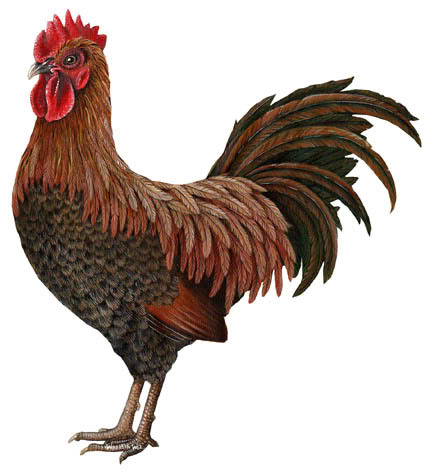
Embarrassed, she said, ‘Excuse me, I’ve had a cock in my throat all morning.’

How wrong it can be when we directly translate!

Note: The Swedish expression ‘tupp i halsen’ translates literally as ‘a cock in the throat’. In English, the closest we get is ‘a frog in the throat.’

Not that this makes more sense, but at least it’s not as dirty.

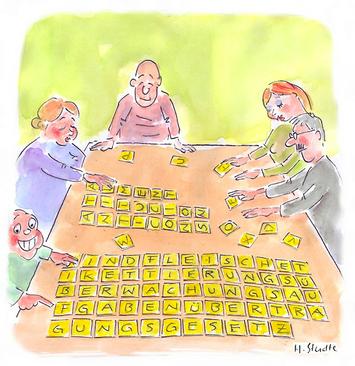
The longest Swedish word


A Swedish word you often hear this time of year is ‘vintervår’ or ‘vårvinter’. You hear it on the tv and the radio, read it in the newspapers, hear it on the underground.

Literally translated, it means ‘winterspring’ or ‘springwinter’. It is used to describe this time of the year, when winter slowly but surely crawls exhausted over into spring. It’s a word that boulsters the self-confidence of Swedes because it means that spring is on the way. It also acts as a way for Swedes to deceive themselves that spring is already here even though it still might be snowing.

This is also a great example of Swedish language structure. Putting two separate words together, in this case ‘spring’ and ‘winter’ to form a new word which has a new meaning. This is one of the reasons why Swedish words ofter seem inscrutable to the foreign eye. It also means that Swedish words can sometimes get very long.

According to the Guiness Book of Records, the longest Swedish word is:

‘Nordösterssjökustartilleriflygspaningssimulatoranläggningsmaterielunderhållsuppföljningssystemdiskussionsinläggningsförberedelsearbeten’

Scary, huh?

It translates as something like “Coast artillery flight searching simulator area material maintaining follow-up system discussion preparation tasks of the Northern Baltic Sea”.

Still doesn’t really make sense, but then I’m not a translator.

By the way, did you know that the fear of long words is called ‘hippopotomonstrosesquipedaliophobia’?

Now that’s just cruel isn’t it?

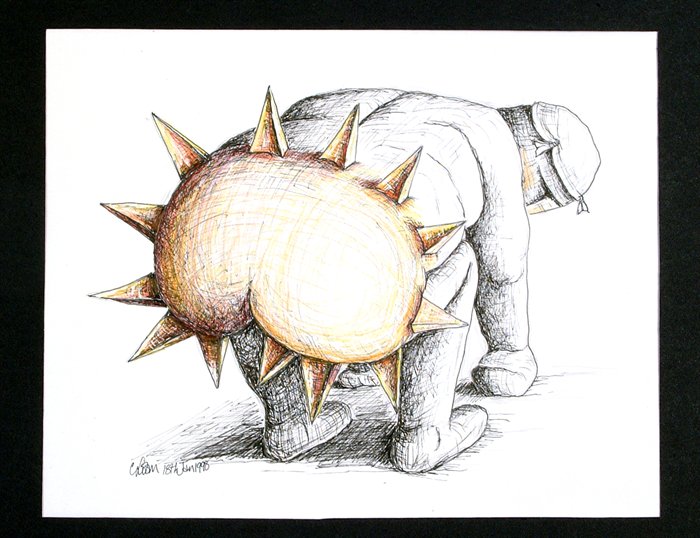
The Swedish pricks


When I was new in Sweden, I was walking down Katarinavägen on Södermalm with my Swedish mother-in-law. Katarinavägen has a fantastic view over the harbour and the city and far across the lake Mälaren. It was a beautiful day, the sun was shining and the air was crisp.

My mother-in-law, who doesn’t speak very good English, was struggling to keep the conversation going. She was pointing out different features in the cityscape. Over there is the animal park, over there is the green fairground.

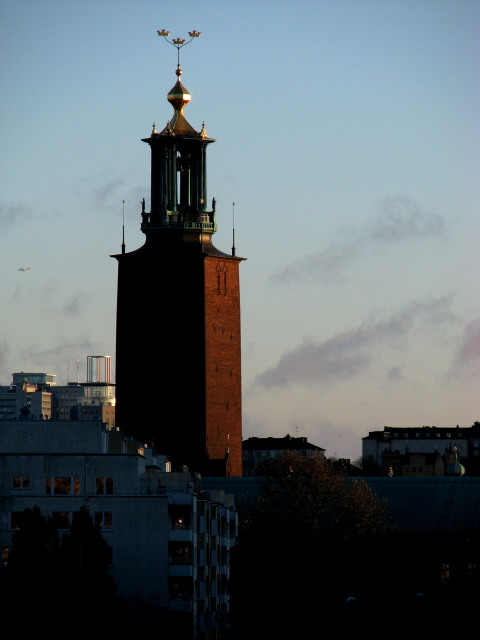
She pointed at the large building looming into the sky behind the old town. I knew this red-brick building to be the city hall. The city hall has a large tower and embellishing the top of the tower is the symbol of Sweden – three shining crowns.

My mother-in-law pointed at the tower and said proudly,

‘That is the town hall – the house with the pricks in.’

She was referring to the crowns as ‘the pricks’ and she meant to say ‘on’ the roof.

However, without knowing it, she couldn’t have been closer to the truth.

This year is election year. Let’s make sure that the pricks stay on the roof and not inside the building.

Somewhere over Skåne


On a sunny May day a few years ago, a conversation was overheard between a pilot (nationality unknown) and a Swedish air steward approaching Malmö airport.

Pilot: “What are those yellow fields below us?”
Steward: “They’re probably rape fields.”
Pilot: “Oh, you have special fields for that in Sweden?”

(Note to all Swedes: It’s often better to say ‘rape-seed’)

To do a poodle


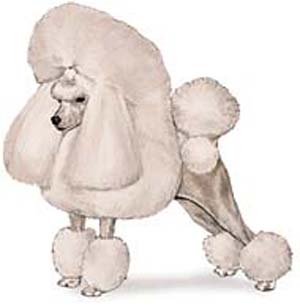
One thing I love about the Swedish language is picking up all the idioms and expressions. Things that don’t make sense when you translate them but have cultural meaning in their context. Things like ‘clear as sausage juice’ and ‘she’s on the thump'(hon är på smällen) are fabulous. But my favourite has to be the one for when somebody apologises after they have made a fool of themselves in public. ‘To do a poodle’. Makes sense, right?

Sweden is a nation of dog-lovers. You see lots of dogs everywhere. But not many poodles. But in this year of national elections and royal weddings I guess we’re going to see quite a few poodles being done, at least.

I can tell by your arse


No matter how natural Swedes sound when speaking English, their pronunciation often gives them away. One common example is the ‘z’ sound, which doesn’t exist in Swedish. It’s a dead giveaway when Swedes pronounce ‘muzic’ as ‘musssic’, say ‘pleasse’ instead of ‘pleaze’, ‘wass’ instead of ‘waz’. Their ‘s’ is pronounced as in the word sit.

It’s a classic mistake made by many international recording artists (Nina Persson, Marit Bergman, Abba, Moneybrother to name but a few) and it gives them away immediately.

This mispronunciation can lead to mísunderstandings too. One story I heard is about a Swede and an Irishman who met for the first time. The conversation went something like:

Swede: “You’re not English are you?”
Irish: “No, I´m from Ireland.”
Swede: “Yes, I thought I could tell from your R:s.”

The Irishman was confused and wondered how his nationality was obvious by looking at his arse.

The cat needs to meditate

If you ask Brits or Americans what they think about Swedes, they are usually impressed by their high level of English.

So, why might this be? Well, it’s partly owing to the educational system in Sweden. It’s also due to the wide-spread acceptance of, and interest in, all things American and British and the fact that Swedes are well-travelled.

I also believe that the high level of English in Sweden also has to do with something else: subtitles. Unlike in Germany and many other European countries, Swedish television is not dubbed. This means that Swedish tv-audiences see the programmes in their original language. This approach increases vocabulary and English competence and is a great method for improving language skills.

However, we cannot fully rely on subtitles and presume that the ones we read on Swedish television are always correct. Sometimes, they can be very, very wrong indeed. Just the other night I was watching the television – a hospital drama – and a female doctor said to her male colleague ‘That was a close shave’ (Det var nära) when she saved a patient’s life. The subtitle said ‘Du har rakat dig’ (You’ve shaved).

Below, you will find some irritating, but classically wrong, subtitles.

Independence Day
‘Oh my God! There’s nothing left!’
‘Åh, herregud, det är ingenting till vänster’
(oh god, there’s nothing to the left)

Oprah Winfrey Show
‘This is a lovely dress from Banana Republic’ (an American chain of shops)
‘Det här en elegant klänning sydd i bananrepubliker’
(This is an elegant dress sown in banana republics)

Living Single
‘You’re 20 minutes late with the moonshine’ (hembränt)
‘Du är 20 minuter för sent med månskenet’
(You are 20 minutes late with the moon rays)

The Cider House Rules
‘We are all bound by these Ciderhouse rules’
‘Vi är alla bundna av reglerna på den här sidan huset’
(We are bound by the rules on this side of the house)

Interview with singer, Cindy Lauper
’He’s got a nice bum’ (= rumpa)
‘Han är en trevlig lodare’ (He’s a nice tramp)

Simpsons
‘The cat needs medication’
‘Katten behöver meditera’ (The cat needs to meditate)