In the middle of Sweden’s ‘Tranquil Week’

Did you know that today is ‘Dymmelonsdag’ – Clapper Wednesday? It is part of Sweden’s ‘Stilla Veckan’, which literally translates as ‘tranquil week’ or ’quiet week’. It is historically intended to be a week of reflection and melancholy leading up to Easter. In English this week is known as Holy Week and every day has a special name.

Last Sunday, the Sunday before Easter, is called ’Palmsöndag’ – Palm Sunday. According to scripture, it commemorates Jesus’ triumphant arrival into Jerusalem. The crowds threw palm branches in front of him as he approached.

The Monday before Easter is commonly called Blå Måndag – Blue Monday – although it can have other names. The Tuesday before Easter is called ‘Vittisdagen’ (White Tuesday). Both Blue Monday and White Tuesday were originally four weeks before Easter. At some point in history, they were moved to describe the Monday and Tuesday before Easter instead. Blue Monday refers to the colour that church rooms were painted on this day. Since White Tuesday is an old name for Shrove Tuesday, Fettisdag in Swedish, it probably refers to the flour that was used to make the Lent buns.

That takes us to today – the Wednesday before Easter – ‘Dymmelonsdag’. This literally translates as ‘Clapper Wednesday’. The clapper that this is referring to is a wooden clapper that was traditionally put inside the church bells on this day so that the chimes would have a more subdued, mournful sound during Easter weekend.

The Thursday before Easter is called ‘Skärtorsdag’ in Swedish. This translates as ‘Clean Thursday’ and refers to the ritual of Jesus washing the feet of the disciples before the Last Supper. In English, this day is called Maundy Thursday.

The Friday is called Good Friday in English – from an obsolete meaning of the word good as being holy. In Old English, this day was called Long Friday, which is the name that was adopted in Swedish – ‘Långfredag’.

And finally, the weekend arrives consisting of Holy Saturday which is called ’Påskafton’ in Swedish – Easter Eve. Then comes ‘Påskdagen’ – Easter Sunday, and ‘Annandag påsk’ (literally second day Easter) – Easter Monday in English.

So Clapper Wednesday is not about fervent clapping, or going like the clappers, or getting the clap. Instead, take a moment of quiet reflection on this, the most holy of Wednesdays.
Clocks forward in Sweden

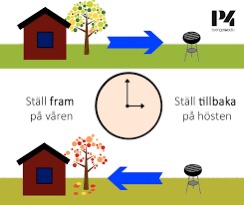
Tonight the clocks go forward in many countries, Sweden included. In English, we say ‘spring forward, fall back.’ It’s a handy way of remembering that the clocks go forward one hour in spring, and back one hour again in autumn.

This pun doesn’t work in Swedish though. Instead they use a metaphor of a barbecue, or garden furniture. In the spring you ‘ställa fram grillen’ (literally put forward the barbecue, also meaning put out the barbecue.) And in the autumn you ‘ställa tillbaka grillen’ (put the grill back, meaning put it away.)

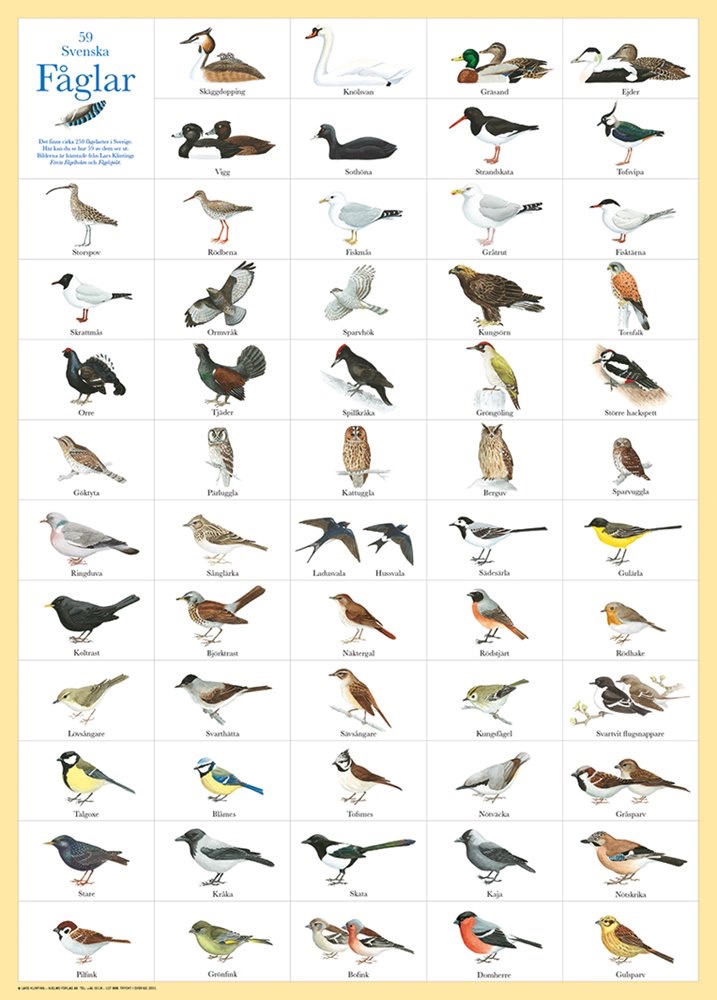
The most common birds in Sweden

I woke up early this morning to the wonderful Spring sound of birds twittering outside the window. It made me think about how many birds are in Sweden, and what are the most common?

There are an estimated 140 million birds in Sweden, consisting of 275 different species, and numerous subspecies. The vast majority of these are migrating birds that nest in Sweden. Around 25 species pass through Sweden on their way to nesting sites on the Siberian tundra. Birds exist all over Sweden, from the southern-most coast of the country to the northern glaciers.

So what are the most common bird species? Interestingly, I’ve never heard of the first one on ornithologist Richard Ottvall’s list:

1) Lövsångaren – 16.4 million (Willow warbler)

2) Bofinken – 16.8 million (Chaffinch)

3) Rödhake – 7.6 million (Robin)

4) Kungsfågel – 6 million (Goldcrest)

5)Talgoxe – 5.2 million (Great tit)

6) Trädpiplärke – 4.8 million (Tree pipit)

7) Bergfink – 4.2 million (Brambling)

8) Taltrast – 2.8 million (Thrush)

9) Koltrast – 3.6 million (Blackbird)

In the winter, the Great Tit, the Pilfink (Sparrow) and the Gråsiska (Redpoll) are the most common. In my garden, the Domherre (Bullfinch), the Skata (Magpie), the Gulsparv (Yellowhammer) and the Kaja (Jackdaw) are frequent visitors. Maybe it’s one of them I can hear? Being close to the harbour, I also hear the hungry screech of the seagulls.

One thing this small piece of research has made me realise is how little I know about birds. We are outnumbered by them 14:1, and yet I pay little attention. Maybe I should buy a book and some binoculars and head out into the countryside?

Swedish expressions: Bang on the beetroot

There’s an expression in Swedish that I’ve often wondered about where it comes from. The expression – ‘pang på rödbetan‘ – bang on the beetroot. It’s a weird idiomatic expression that in its earlier meaning, referred to getting straight down to penetrative sex without any foreplay. However, today it is used to describe any situation in which we get straight down to it, for example in a meeting, in a discussion, in a conflict.

The ‘pang på’ is easy to understand as it means straight forward or slap-bang. But where does the beetroot come from?

Well, according to a common theory, it originated from the word ‘robota’ in Polish. This word came with temporary labourers to southern Sweden in the 1800’s and was Swedified by the locals. The expression ‘pang på rödbeta’ was used in Sweden’s southern Skåne region already in the 1900’s. So what does the word ‘robota’ mean? Well, it is defined as hard work, repetitive work and routine work.

So ‘pang på robata’ – getting straight down to hard work.

Interestingly, the word ‘robata’ is also the origin of the word ‘robot’ – something that does repetitive, routine work.

The most common names in Sweden

According to svenskanamn.se, here are the most common names for men and for women in Sweden. If you’re living in Sweden, chances are you’re called one of these names – if not, you’ve definitely met one!

Most common names for men in order of frequency: Erik, Karl, Lars, Anders and Johan

Most common names for women in order of frequency: Maria, Anna, Margareta, Elisabeth, Eva.

The website also lists the most common surnames: Andersson, Johansson, Karlsson, Nilsson, Eriksson.

So technically, Erik and Maria Andersson are the most common names in Sweden.

Swedish expression: ‘to suspect owls in the moss’

In English, when we suspect something isn’t quite right we ‘smell a rat’. In Swedish, they suspect ‘owls in the moss’.

The expression – ‘att ana ugglor i mossen’ – has Danish origin. The original saying dates to the 1600’s and was ‘det är ulve i mosen’ which translates as ‘there’s a wolf in the moss’. The expression makes sense and was used when a dangerous situation was suspected.

So, how did a wolf turn into an owl? There are two theories. One theory is that it happened as a mistake. The sound of the Danish word for wolf ‘ulve’ was misheard as ‘uggla’ the word for owl – and the creature hiding in the moss became a wise bird rather than a viscous predator.

Another theory is that the saying was consciously changed when wolves disappeared from Denmark. The wolf was replaced by an owl because it hoots a warning at the presence of danger.

Confusing Swedish time

One of the differences in languages in the way people tell time. There are a few differences between Swedish and English that can be confusing.

The biggest difference is how Swedes say half past the hour. They actually say ‘half to’, so they refer to the hour that’s coming and not the one that’s gone. So, half past five (5.30) in English is called ‘half six’ in Swedish. You can imagine the confusion. This is probably why Swedes usually apply the 24 hour clock in writing – ie 17.30.

As an extension of the ‘half to’ concept, the time between 5.31 and 5.44 is also interesting. In Swedish 5.35, for example, is explained as ‘five past half six’. Once the clock hits 5.45, it becomes a recognizable ‘quarter to’.

Another interesting concept in Swedish time is that she is female. What is the time is ‘hur mycket är klockan?’ (How much is the clock?) but it can also be ‘hur mycket är hon?’ (How much is she?). The answer is ‘hon är klockan tre’ (she is three o’clock).

Finally, Swedes write dates in the year-month-day format, which can also be confusing at times. Today’s date, for example, is 21-03-12.

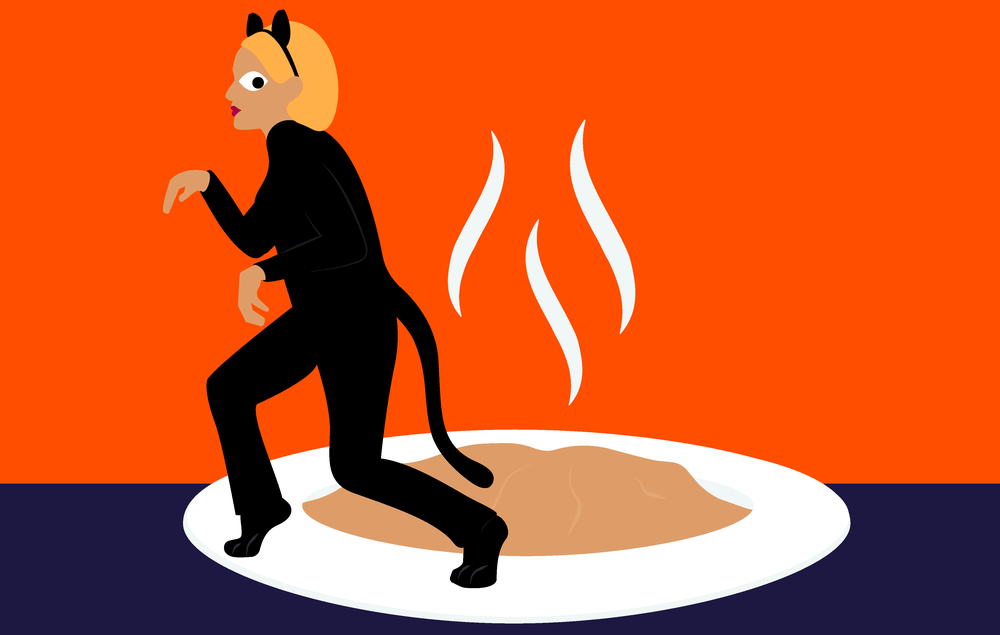
Swedish expression: ‘to walk like the cat around hot porridge’

Given the historical relationship between humans and cats, it’s not surprising that there are lots of expressions using the cat as a metaphor. ‘Att gå som katten runt het gröt’ literally translates as ’to walk like the cat around hot porridge’ and refers to the fact that a cat does not want to eat the porridge before it has cooled. But what does it mean as a saying?

The idiom was first documented in 1641 and means to avoid speaking or acting directly about something – to skim the periphery. The English equivalent is ‘to beat around the bush’, which is a hunting reference, or ‘pussyfooting about’ which also refers to the tentative nature of the cat’s gait.

Graphic by Andrea Johansson

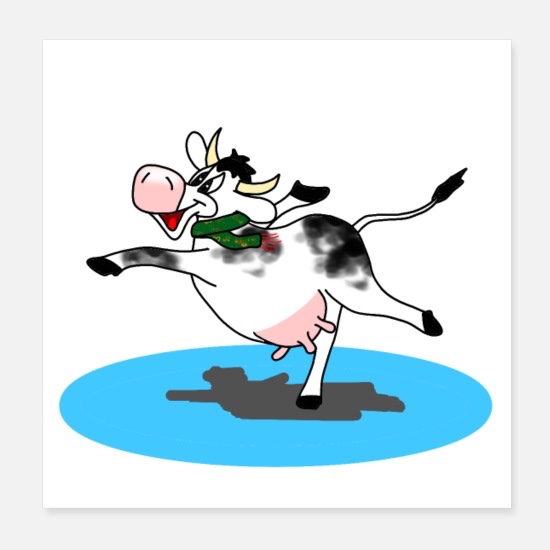
Swedish expression: ’There is no cow on the ice’.

With all the open air ice skating going on at the moment, I am reminded of the Swedish expression ‘Det är ingen ko på isen’ or ’there’s no cow on the ice’. This expression is used to mean there is ‘ no need for worry’ or ‘don’t be concerned’. So, where does the expression originate?

Well, like many Swedish expressions, this one also has a rural origin. In the old days, farmers that had no running water would take their cows down to the lake to drink. As long as the cows stayed on land, and didn’t venture onto the frozen waters, there was no risk of them falling through the ice and drowning. In fact, the expression is an abbreviation of the longer saying ‘there’s no cow on the ice as long as their rear end is on land’. (Det är ingen ko på isen så länge stjärten är i land.) As long as they had a firm footing, they could rescue themselves if the ice broke around the periphery of the lake.

So it would seem that the original meaning of the saying might have been ‘there is no need for worry as long as you take precautions.’

Swedish expression: ’There is no cow on the ice’.

With all the open air ice skating going on at the moment, I am reminded of the Swedish expression ‘Det är ingen ko på isen’ or ’there’s no cow on the ice’. This expression is used to mean there is ‘ no need for worry’ or ‘don’t be concerned’. So, where does the expression originate?

Well, like many Swedish expressions, this one also has a rural origin. In the old days, farmers that had no running water would take their cows down to the lake to drink. As long as the cows stayed on land, and didn’t venture onto the frozen waters, there was no risk of them falling through the ice and drowning. In fact, the expression is an abbreviation of the longer saying ‘there’s no cow on the ice as long as their rear end is on land’. (Det är ingen ko på isen så länge stjärten är i land.) As long as they had a firm footing, they could rescue themselves if the ice broke around the periphery of the lake.