Do we have to respect other cultures?

colour and culture fooditerranean

Somebody wrote the following question on Facebook today – ‘to what degree do I have to respect other cultures?’ and it got me thinking.

Since I work with diversity and intercultural competence, you would think my answer would be clear for me – a resounding ‘YES!’ but it’s actually not that straightforward. I think, in fact, the answer depends on what we mean by ‘respect’. If by respect, we mean to accept and acknowledge that other cultures exist within the boundaries of what seems good and right to them, then the answer is ‘yes!’ If disrespect comes from an ethocentric perspective, a sentiment of right/wrong, good/bad, then I don’t think that’s ok. The ethnocentric always thinks their way is best and that other perspectives, or world views, are in some way faulty. This borders on the racist. So how can we balance the acceptance of other cultures with the discomfort we experience when reading or witnessing actions that are unacceptable to us?

It’s not easy but I think that we should accept other cultures, and that we should genuinely repect there are many different ways to view and to be in this world. But, that in no way means that I have to like everything that others do, especially if it compromises what I value or what I perceive as ethical. Intercultural competence is about accepting differences but also about being authentic in your own cultural beliefs without being xenophobic.

So let’s not mix up respect and liking. In my mind, they’re two different things.

Please like and share this post!

The top 5 most disgusting Swedish foods

Swedish cuisine in later years has acheived critical aclaim and is considered trendy, healthy and modern by many foodies around the world. But, like every kitchen, the Swedish kitchen has some real humdingers lurking behind the trendy facade of smoked slmon, creme fraiche and fresh dill. Here, in reverse order, is my list of the 5 most revolting foods that Sweden has produced. Yuck!!
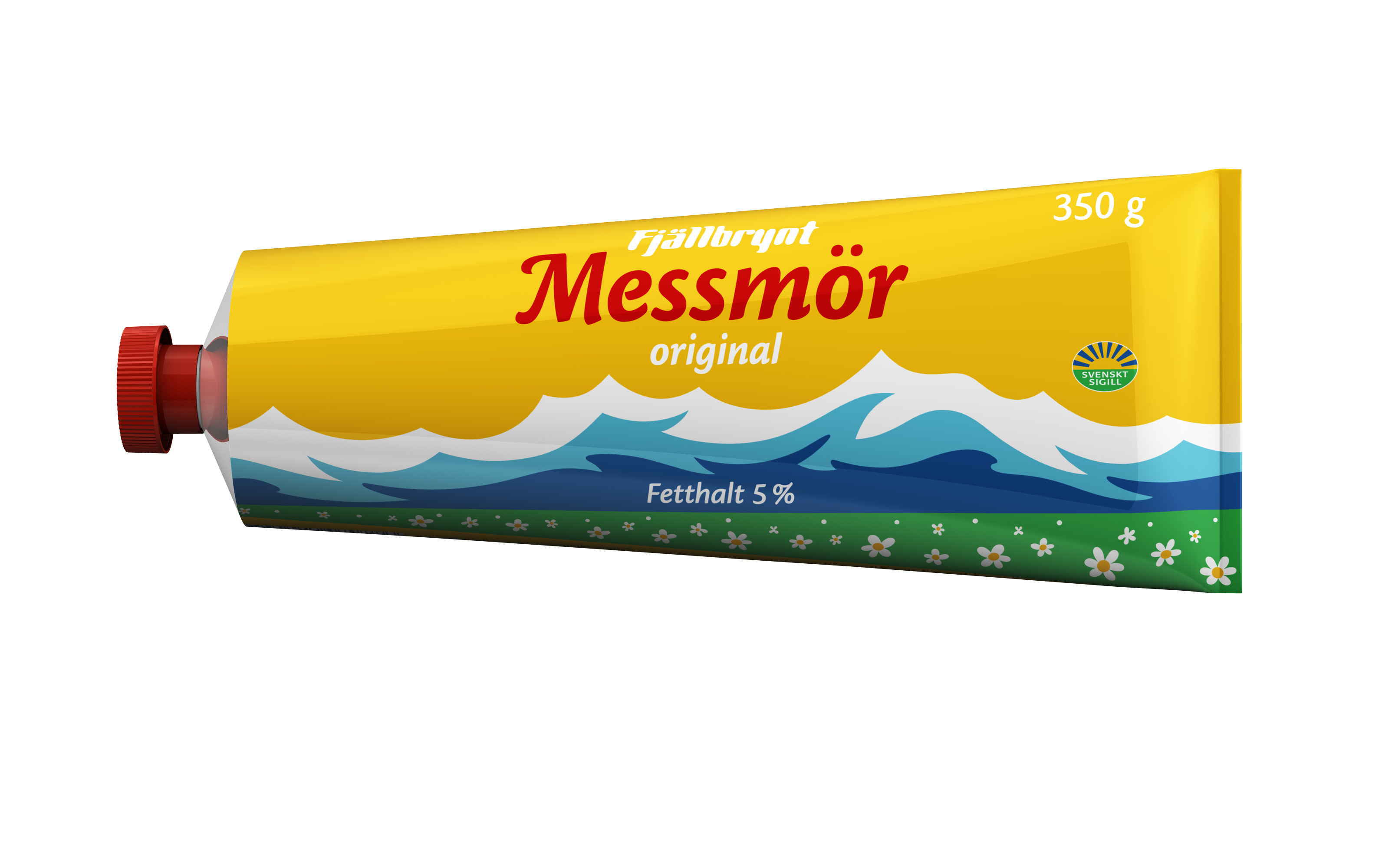
messmor_350g_original_front 5: Messmör – Soft whey butter

Translated as soft whey butter, this disgusting sandwich topping and comes in two delightful choices: goat milk-based and cow milk-based. Whey is pressed out from cheese and then boiled until it caramlises and gets an unappetising brown colour. It looks nasty and tastes revolting.
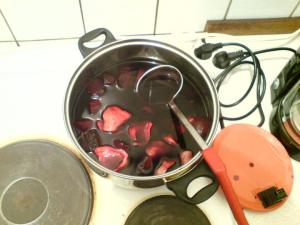
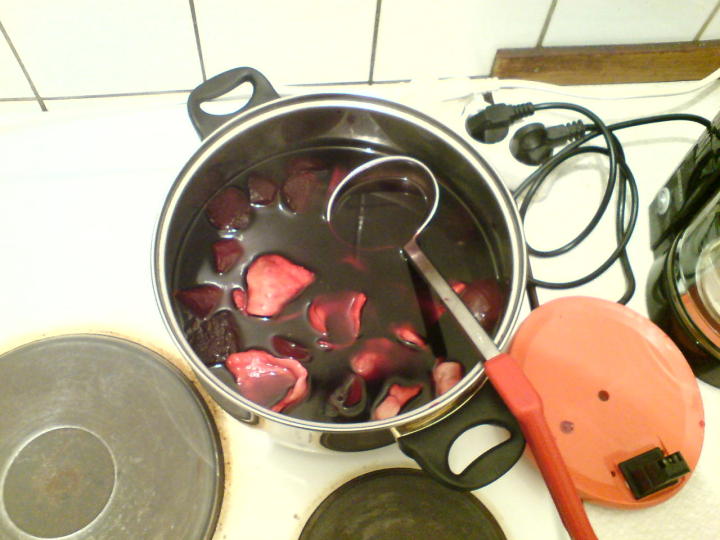
blodspoppa 4. Blodsoppa – Blood soup

Blood soup is a soup made of stock and goose blood which is thickened and flavoured with syrup, wine, cognac, vinegar, cloves, ginger and pepper. It is traditionally eaten with a roast goose dinner and it dates back to the Renaissance period. Historically, probably it was a useful source of iron, but in modern Sweden it just feels babaric and, well a little vampire-like. Maybe this is how Swedes get through the long, dark nights without biting each other’s necks?

palt 3. Palt – Potato and pork dumplings

Palt is a kind of gross potato dumpling stuffed with boiled pork. The dumpling is boiled in very salty water. It is normally eaten with butter and lingonberry jam and Swedes drink milk when they eat it just in case it doesn’t already slink down the throat. It is similar to another dish that Swedes eat called ‘body cakes’ which are just as nasty as they sound.
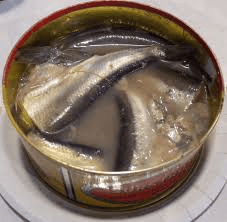
surströmming 2. Surströmming – fermented Baltic herring

This offensive dish consists of herring that is caught just prior to spawning and packed into a tin of brine to ferment. The fermentation starts from an enzyme in the spine of the fish, together with bacteria. Hydrogen sulphide is produced in the tin. Sounds appetizing? The salt in the brine allows the bacteria responsible for rotting to thrive. This bacteria prospers and decomposes the fish, making it sour. When the tin is opened, the contents release a strong and sometimes overwhelming odour which smells like human excrement. The dish is ordinarily eaten outdoors as the reek will fill out an entire building if eaten indoors. The fish is usually eaten on crispbread, or rolled in thin bread, with potatoes and sour cream. This way of preparing food was historically a process of preserving food in order to survive through the winter. But in modern-day Sweden, it is so unnecessary – now we have fridges!!!

lutefisk-akta 1. Lutfisk – Sodium Hydroxide fish

Imagine your mouth full of jelly. Wobbly, quivering jelly. Now add a creamy sauce to that consistency. Slush it round in the mouth. Now add the flavour of fish! And there you have it! Lutfisk! This revolting food is a dish consisting of dried whitefish prepared with lye (deadly sodium hydroxide) and a sequence of particular treatments. The first treatment is to soak the dried stockfish in cold water for five to six days. The saturated stockfish is then soaked in cold water and lye for an additional two days. The fish swells during this soaking, and produces a jelly-like consistency. When this treatment is finished, the fish (saturated with lye) is caustic and therefore poisonous. To make the fish edible, a final treatment of yet another four to six days of soaking in cold water is needed. Eventually, the lutfisk is ready to be boiled and then served with a creamy spiced white sauce and potatoes. This has to be the most vile thing I have ever eaten, it is truly repugnant. The good news is however that Lutfisk is a Christmas dish, so it only ever gets dumped infront of you once a year! Thank Santa for small mercies!

The illusion of the collective Swede

welfare state

Is the notion of the collective Swede just an illusion?

Sweden is famous around the world for its welfare state – the system of tax that provides for the country’s citizens from the cradle to the grave. This system was introduced by politicians from Sweden’s social democratic history and I think that it’s great that it exists. Many assume that the Welfare state is the product of collective thinking and solidarity. Maybe it is. But I’d like to offer an alternative perspective.  

In collective-oriented societies, individuals operate within the context of what is best for the group, even if that means surpressing their individual needs. In exchange for this, they receive loyalty and support from the other members of the group.  

In Sweden, it would be easy to look at the welfare state and relate it to the above definition of a collective. In Sweden, citizens comply to the tax laws and in exchange they are taken care of in times of need.

But let’s look at the welfare state through the lens of individualism instead. According to research, Swedes are amongt the most individualistic countries in the world. Individualistic from the perspective of self-development, self-expression, right to live life the way I want to, self actualization,, freedom to make individual choices about my life. Amongst Swedes, it is very important to have individual choice, to the point that some people feel violated if they experience another person has in some way limited their choices, however minor that might seem.

 So what about the Welfare state? In Sweden, the strong individualistic drive of the citizens created a system in which they don’t have to take responsibility for the group. Once tax is paid, the state takes care of the unemployed, the sick, the elderly so the citizens don’t have to, and consequently people can go about their lives fulfilling their individual dreams and satisfying their individual needs.

When you look at it this way, Sweden’s Welfare state is not an exercise in social solidarity. It’s an exercise in pure individualism.

So is the notion of the collective Swede just an illusion?

Swedish charity

panini

I’ve always been under the perception, valid or not, that charity (corporate and private) is not big in Sweden. In recent years, a mass of different TV galas might have been changing this – eg, ‘Children of the World’, ‘Cancer Gala’. My impression still, however, is that charity is not something yor average Swede involves themselves so much in. One explanation for this might be the welfare state structure that exists in Sweden – we pay our taxes and the state should take care of the needy. Another explanation might be that we don’t want to accept that there is such a large need for charitable actions in a modern, developed country like Sweden. A third reason is that corporate charitable donations are not tax deductable in Sweden like they are in many other countries such as the USA.

Whatever, the reason, something happened today that really impressed me.

Normally, I love the sandwich and salad shop ‘Panini’ , I buy a lot of lattes and lunches there. Today I love them even more.

Earlier this morning, as I was buying my morning latte, I noticed a sign behind the counter. The sign read:

‘Food should be eaten, not thrown away. At the end of the day, Panini gives Everything that has not been sold to ‘Stadmissionen”s shelter for the homeless’.

This really impressed me. British sandwich chain Prêt-a-Mangér has been doing this for years, and I am so happy to see it in Sweden. Everyone’s a winner – Panini, the consumer, the receivers of the donations.

So, more of this please!!!!! Sometimes, charity does begin at home.

The Nobel Death Prize

image

We are currently in the times of  Nobel prize announcements. Pakistani schoolgirl Malala did not win the peace prize but she has left an indelible mark on our collective memories. She will certainly be remembered. 

But why is there a peace prize in the first place? Well the story goes like this. Alfred Nobel, the inventor of dynamite, woke up one day to his own obituary in the newspaper. Mistakenly, the paper had declared him dead, when in fact it was his brother. As a title for the obituary, the newspaper had written a rather unflattering ‘the angel of death is dead’ and that Alfred Nobel had made it possible to kill more people than anyone who had ever lived. 

Suddenly he understood this is how he would be remembered and, to change it, he founded the Nobel Prizes. Now his name is synonymous with science, literature and peace.

It makes for an interesting reflection. If we could read our own obituary, would we be proud of what we read? Would we also change our behaviours to influence the memory of us and, if so, why not do it now?

Death by music – Swedish style

Eurovision_Song_Contest_2013_official

This Saturday it starts – death by music.

Every Saturday for the next 6 weeks Swedish television is broadcasting the Swedish ‘Melodifestival’ – in which citizens choose the winning song to represent the country at the Eurovision Song Contest (ESC). Every Saturday for 90 minutes we listen to 8 songs, eventually narrowed down to a winner in the grande finale. Already, newspapers are abuzz with this event. And this year, even more so, since Sweden won the competition last year and is also hosting the ESC this year. The Melodifestival and the ESC are big news in Sweden. Probably due to the legacy of ABBA, the ESC is seen as a springboard to a fruitful and prosperous artistic career. The gateway to fame and fortune. This is quite unlike many other countries in Europe, not least the UK, where participation in the ESC is seen as a the final nail in the coffin of a dying career.

A couple of days ago, the celebrity host of ESC was announced – a controversial stand-up comedienne called Petra Mede. The nation was divided (at least those who cared). Newspapers wondered why a couple wasn’t chosen – why a woman was chosen to lead the event on her own! How would she manage without a man! What’s more, she’s pregnant! How is she going to be able to focus on the job when she has a new born baby at home?! Organisors of ESC responded to these comments quickly and categorically. Petra Mede is a very competent host, her baby will be looked after by its father and the reason we are not having a couple is to keep costs down. This is also the reason that the event will be held in a smaller concert venue than could have been possible. The organisors referred to the extreme cost of the latest final in Baku, and the fact that Portugal and Greece will not be participating this year due to financial constraints. Sweden should lead they way, they said, and take the whole competition down to a more affordable level so as not to exclude less wealthy countries.

Now, excuse me, but how is 4 televised Melodifestival competition heats in different Swedish towns, a fifth televised opportunity to qualify, a final televised Melodifestival competition in Stockholm, two televised ESC semi finals and one huge broadcasted ESC final in Malmö keeping the costs down???

Like I said, death by music.

Swedish dinners

food

Food is in the highest degree cultural. Our memories of childhood and our upbringing are often connected to food. What we eat, how we cook it, when we eat it and who with and the rituals around the consumption of food are all cultural. What generations pass down through generations – recipes, stories, table manners, traditions – all of them cultural.

Often when we travel or live abroad many of the strongest and lasting memories we have are connected to cuisine. That sloppy stew we ate at Clara’s Place in Soweto, or that fresh tuna that we devoured in Bodega Bay, the vegetarian street food from Penang and the spicy mango salad in Bangkok are often what we think of when we recall the visit to that particular country.

I am fascinated by rituals around food, and I have had a couple of recent experiences in Sweden connected to this. At the weekend, I was going out for dinner in Stockholm with a large party of about 60 people. The non-Swedish owner of the restaurant had declared that everybody should pay their dinner on arrival. The result of this was a mood-testing long queue partly in the restaurant and partly out into the snowy and windy winter street. Each person waited patiently to pay at the counter, some in cash and some with card, and bought a drink before sitting down. The process was insufferable and took the best part of an hour until everyone was seated and the food could be delivered. I know that Swedes typically prefer queuing, just like us Brits, but this was ridiculous and not the best start to what was later a pleasant evening.

Another food ritual is happening this evening in the City Hall in Sweden. Today is the anniversary day of Albert Nobel’s death in 1896 and for over 100 years has been the day of the Nobel banquet when the Nobel winners receive their prizes from the King and then sit through a 5-hour long banquet. This is an evening full of ritual, of glamour, intelligence, royalty and gossip. The whole thing is televised and many Swedes sit infront of the television to watch it, me included. To watch people eating for 5 hours. It is rather a strange and idiosynchratic cultural event. I am not aware of any other country in the world that has this kind of culinary celebration.

Now if you’ll excuse me, I need to go back to my potato crisps.

Always wear gloves to wipe tears

It has been a while since I blogged about Swedish culture. I guess I needed a break. I have seen many blogworthy things during the last months but chose not to comment, until now.

On Swedish TV, a new drama is being broadcast which is causing a lot of reaction in social media and in the press. Author Jonas Gardell has decided to tell the story of the AIDS era in 1980’s Sweden. This is a story that has never been told – and it is  high time.

Although it may seem like a long time ago, the so-called AIDS crisis was only 25-30 years ago. A short time in the history of humanity. And Jonas Gardell’s story portrays a cold and uncaring Sweden, a country where Hiv patients were treated with disrespect and utter disgust, nursed by people in rubber gloves and face masks and then disposed of. Where it was acceptable to call gay men revolting, say that they spread AIDS, that they were a threat to society, that they should be incarcerated against their will, that they deserved to die. This was only 25 years ago. This opens a gaping wound in a Swedish society that prides, and markets, itself on equality and human rights. Where were these for gay men 25 years ago?

Of course, Sweden wasn’t alone in this. In the UK and the USA and many other countries the attitides were the same and in many parts of the world, such as our neighbouring Baltic countries. this is still a reality today. In Sweden, it is something that belongs to the past, thankfully, although the stigma of Hiv still weighs heavily in society.

AIDS decimated a whole generation, my generation.  Jonas Gardell’s drama has brought back a lot of terrible memories for me. These ghosts from my past are welcome in my life however. And I thank Jonas Gardell for that. But as I watch the programme, I am reminded of something that Astonomer Carl Sagan once said ‘you have to know the past to understand the present’ and I wonder how the younger generations of gay people see this story. Do they relate to it? Can they relate to it? Do they see this as part of their heritage, their cultural identity? Or is it a case of having to be there…

Our stories have been consciously erased from the history books by people in power. We have been made invisible.

But now our story is being told. And it steps out into the cold light of day to be seen and known by everyone.

http://www.svt.se/torka-aldrig-tarar-utan-handskar/

You can’t believe everything you read


Scanning the internet, I discovered the following description of Sweden. Talk about the internet being a great way to spread false information! You can’t believe everything you read!

‘Sweden is the homeland of the great Moose and the majority of Swedes are dependent on it for their survival. Don’t go to Sweden for business purposes in September. It is most likely that the firm you’ll supposed to visit is closed down because of flu which is a swedish nickname for Moosehunt.

The yearly moosehunt, this is Sweden remember, is a folk feast heavily regulated by govermental legislation. Each county, every village, down to the very individual landowner gets a statistically based yearly quota on how many moose they have the right to shoot. For the average landowner this counts down to 0.0342 moose. Now how do you shoot 0.0342 moose? The best way is to team up with other hunting neighbors until you reach score one and then hump off to the woods with walkie-talkies and hope that you not shot each other or even worse – more than one moose, a catastrophy that could prevent your hunting rights for decades.

Swedish hunters always use the latest weaponry when hunting. However after an incident in 1912 when a tactical nuke accidentally killed some polish lingonberry-pickers, hunters were banned from using anything more destructive than paper airplanes. The ban was lifted 19 years later after country-clown Markoolio had been successfully assassinated with a flame thrower.

Now direct hunting is not the most important way to survive on the Swedish moose. More profitable is either to sell hunting rights to germans or moose related souvenirs to everyone else. The Swedish Moose Souvenir Industry is surpassed in the field of cheap mass produced gizmos only by toy production in Taiwan and lately the Wal-Mart’s Republic of China.

Even if the demand for Swedish moose puppets has rocketed on world market, business analyst believe that the sign of the future is export of the Moose warning traffic signs.

Moose manure paper is a huge profitable industry. Recently the paper quality has been good enough for printing dollars on, something that greatly has improved Swedens trade balance with the US.

Another successful product related to moose is the popular drink Tomtebloss, served at all nightclubs concerned of their reputation. The ingredients are: 1/3 home made booze 1/3 blueberry juice 1/3 lobster broth and a dash of Moose piss. This drink usually occurs together with Surströmming.’

Are you an Extreme Swede?


We’re participating in a trade show called ‘Personalmässan’ today and tomorrow. After Day 1, it’s looking promising. The theme that we have is ‘Are you an Extreme Swede?’. We held a lecture on the subject which was well-visited and popular and we also have a quiz card with 4 simple questions to help people analyse if they are an extreme Swede.

So the question is…..are you an Extreme Swede?

Here are the questions, answer ‘yes’, ‘maybe’ or ‘no’:

1. It is ok to call the boss by his/her first name
2. I have the right to give my opinion on matters that affect me
3. Religion should always be considered in government decisions and policies
4. I am irritated if people are late without letting me know

If you answered 1. Yes, 2. Yes, 3. No, 4. Yes – then you are, according to research and Extreme Swede!

Congratulations!